The future is arriving faster than ever, and it’s walking – or rather, stepping – into view.
For years, depictions of robots resembling humans have felt firmly rooted in science fiction, but that perception is rapidly changing thanks to significant advancements across robotics and artificial intelligence.
We’re witnessing a tangible shift as sophisticated machines move beyond factory automation and specialized tasks, demonstrating increasingly complex movements, balance, and even problem-solving abilities.
A key driver of this revolution is the expanding field of humanoid robots, which are designed to mimic human anatomy and locomotion for greater versatility and adaptability in diverse environments – from logistics and healthcare to search and rescue operations and beyond. Unitree’s H2, with its impressive agility and affordability, exemplifies this exciting trend, showcasing how accessible these technologies are becoming to a wider range of developers and industries. Its capabilities offer a glimpse into what’s possible when cutting-edge engineering meets ambitious design goals.
Unitree H2: A New Era of Accessible Humanoids
The Unitree H2 marks a significant shift in the landscape of humanoid robots, signaling a new era of accessibility for these complex machines. Standing at 5.1 feet tall and weighing around 63 kilograms (approximately 139 pounds), the H2 boasts impressive physical capabilities thanks to its 28 high-torque servomotors – a key innovation allowing for dynamic movement and balance. Unitree has focused on streamlining the design, resulting in a robot that’s both powerful and relatively compact compared to earlier models. While advanced features like object recognition are still in development, the H2’s core functionality—walking, running, basic manipulation—is readily available, making it a compelling platform for experimentation and development.
What truly sets the H2 apart is its price point: $30,000 USD. This represents a dramatic reduction compared to other humanoid robots currently on the market, many of which cost upwards of hundreds of thousands or even millions of dollars. Boston Dynamics’ Atlas, for example, remains prohibitively expensive for most researchers and educational institutions. Unitree’s ability to offer a capable humanoid at this price is largely attributed to its vertically integrated manufacturing process, allowing them to control costs throughout the production chain. This lower barrier to entry has the potential to unlock significant advancements in robotics research and development.
The accessibility of the H2 has profound implications for the wider adoption of humanoid robots across various sectors. Researchers can now more easily experiment with advanced locomotion algorithms, grasp planning, and human-robot interaction techniques without facing crippling financial constraints. Educational institutions are likely to integrate the H2 into their curricula, providing students with hands-on experience in robotics engineering. While consumer applications remain further down the line, the H2’s affordability could eventually pave the way for more widespread use in tasks like warehouse automation, elder care assistance (though ethical considerations will be crucial), and even potentially as personal assistants – although significant improvements in AI and safety protocols are still required.
Ultimately, the Unitree H2 isn’t just a robot; it’s a catalyst. By democratizing access to humanoid robotics technology, it empowers a wider range of individuals and organizations to contribute to its evolution. As developers build upon the H2’s foundation, we can expect to see even more innovative applications emerge, further blurring the lines between science fiction and reality in the realm of robotics.
Design & Specifications

The Unitree H2 represents a significant step towards democratizing humanoid robotics with its relatively compact design and ambitious feature set. Standing at 4 feet 7 inches (140 cm) tall and weighing approximately 55 pounds (25 kg), the H2 is designed to be more manageable than many of its larger counterparts. Its dimensions allow for easier maneuverability in various environments, a key consideration for practical applications beyond research labs. The robot’s frame utilizes lightweight aluminum alloys to optimize both strength and portability.
A core innovation within the H2 lies in its motor design. Unitree employs custom-designed, high-power density servomotors throughout its 28 joints – significantly more than many competing robots. These motors are optimized for torque and efficiency, enabling fluid movements and a greater payload capacity. The robot’s functionality extends beyond simple walking; it can perform tasks such as object manipulation (though dexterity is still evolving) and navigate complex terrains thanks to advanced balance control algorithms and integrated sensors.
At a price point of around $30,000 USD, the H2 is considerably more affordable than many other humanoid robots currently available. For comparison, Boston Dynamics’ Atlas robot reportedly costs millions of dollars to develop and manufacture (though not publicly priced), while Figure AI’s robot is expected to be in the hundreds of thousands. While still a substantial investment, Unitree’s pricing strategy aims to open up access to humanoid robotics for smaller businesses, research institutions, and even hobbyists – accelerating innovation and exploration within the field.
Implications for Robotics Adoption

The introduction of the Unitree H2 represents a potentially pivotal moment for humanoid robot adoption. Historically, developing or acquiring sophisticated humanoids has been prohibitively expensive, limiting their use primarily to research institutions and specialized industrial applications. The H2’s comparatively accessible price point – reportedly around $25,000 – significantly lowers this barrier, opening doors for broader experimentation and integration across diverse sectors.
Several areas stand to benefit from the increased availability of humanoid robots like the H2. Research labs can leverage it for algorithm development in areas such as locomotion control, manipulation, and human-robot interaction without requiring massive budgets. Educational institutions could incorporate them into curricula to provide hands-on experience with robotics principles. While consumer applications remain further off, the H2’s capabilities suggest potential future roles in tasks like elder care assistance or even basic household chores, though significant safety and reliability advancements would be needed.
Beyond specific use cases, the H2’s impact extends to fostering innovation within the robotics ecosystem. Its open platform encourages developers to build custom applications and modifications, accelerating the overall pace of progress. This democratization of humanoid technology is likely to spur new business models, inspire further competition among robot manufacturers, and ultimately contribute to a more rapid evolution of this exciting field.
Beyond Unitree: Other Notable Humanoid Developments
While Unitree’s H2 has captured significant attention for its impressive agility and affordability, the broader landscape of humanoid robotics is brimming with diverse innovations. Research teams worldwide are pushing the boundaries of what’s possible, exploring different approaches to locomotion, dexterity, and overall functionality. It’s clear that the current wave of development isn’t just about replicating human form; it’s about leveraging robotic capabilities to address specific challenges and unlock new possibilities across industries.
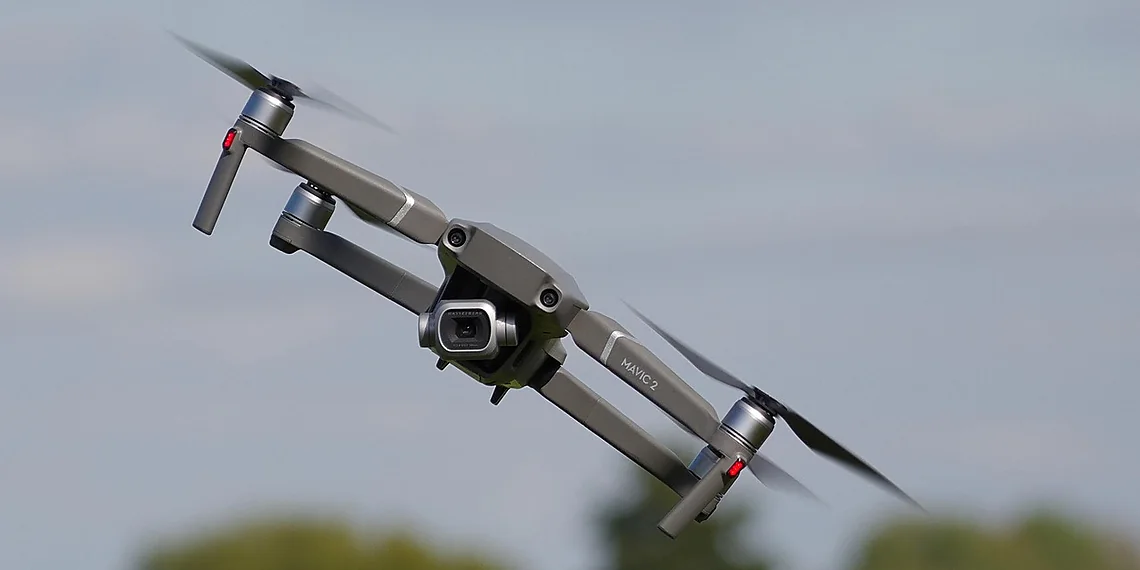
A particularly fascinating example comes from Seoul National University, where researchers have made strides in miniaturizing robotic arms and integrating them with drones. Their work demonstrates a remarkable focus on reducing size and weight while maintaining performance. These lightweight arms are powered by innovative motor technology, allowing for surprisingly complex manipulation tasks to be performed remotely – imagine precision repairs or inspections in hard-to-reach locations facilitated by these compact drone-mounted systems.
Beyond miniaturization, the pursuit of natural and fluid movement is also a key area of development. LimX Dynamics’ Oli robot exemplifies this trend. Unlike many humanoid robots that exhibit jerky or mechanical motions, Oli boasts an exceptionally high degree of freedom – meaning it has numerous joints allowing for incredibly nuanced control. This allows it to move with remarkable grace and fluidity, approaching the natural biomechanics of human movement much more closely than earlier generations of robots.
Ultimately, the advancements showcased by Unitree’s H2 and projects like those from Seoul National University and LimX Dynamics represent just a snapshot of the ongoing revolution in humanoid robotics. The sheer variety of approaches being explored – from lightweight drone-mounted arms to highly articulated robotic bodies – underscores the immense potential for these machines to transform our world.
Drone-Assisted Robotics & Lightweight Arms
Beyond the impressive strides made by companies like Unitree, significant progress is also occurring at research institutions. Seoul National University (SNU) has been pioneering work on incredibly lightweight robotic arms designed for attachment to drones. This research directly addresses a key challenge in humanoid robotics: portability and maneuverability.
The SNU team’s innovation lies not only in the miniaturization of these arms – some weighing less than 100 grams – but also in their motor technology. They’ve developed custom, high-density motors utilizing advanced materials and designs to maximize power output while minimizing weight and size. This allows for surprisingly complex movements despite the arm’s diminutive stature.
The integration of these lightweight arms with drones opens up exciting possibilities for aerial manipulation tasks, such as search and rescue operations or precision agriculture. By combining drone flight capabilities with robotic dexterity, SNU’s research is pushing the boundaries of what’s possible in mobile robotics and contributing to a broader ecosystem supporting more versatile humanoid-inspired platforms.
Fluid Motion & Degrees of Freedom
While Unitree’s H2 has garnered significant attention for its affordability and accessibility, another company, LimX Dynamics, is pushing the boundaries of humanoid robot locomotion with their Oli model. What sets Oli apart isn’t just its design but its remarkably fluid and natural movements, a direct result of its innovative mechanical architecture.
Oli boasts an impressive 28 degrees of freedom (DOF), significantly more than many competing robots. This high DOF allows for intricate adjustments and nuanced control during movement, mimicking human-like agility and adaptability. LimX Dynamics has prioritized achieving this level of dexterity through a unique series of interconnected links and actuators designed to minimize jerky motions and maximize responsiveness.
The company emphasizes that Oli’s design focuses on enabling complex tasks requiring balance and precise manipulation. Demonstrations have showcased the robot’s ability to recover from pushes, navigate uneven terrain with relative ease, and even perform simple actions like picking up objects – all hallmarks of a humanoid robot approaching true functional versatility.
The Future of Robotics: AI & Learning
The rapid advancements we’re seeing in humanoid robots like Unitree’s H2 aren’t solely due to improved mechanics and actuators; a crucial element driving this progress is the burgeoning integration of generative AI. Traditionally, training robots involved painstakingly crafted datasets and complex programming – a slow and resource-intensive process. Generative AI offers a paradigm shift, enabling robots to learn from significantly less data and adapt more quickly to new environments and tasks. This represents a fundamental change in how we approach robotics development, moving away from rigid, pre-programmed sequences towards systems capable of continuous learning and improvisation.
MIT’s Generative AI Impact Consortium has identified several key areas where generative AI is poised to revolutionize robotics. These include the creation of synthetic training data – allowing robots to ‘practice’ in simulated environments before interacting with the real world – and generating novel control strategies that would be difficult or impossible for humans to design. Professor Suraj Nair’s work at Physical Intelligence, focused on embodied intelligence and learning through interaction, further underscores this trend. His research demonstrates how generative models can facilitate rapid adaptation to unforeseen circumstances, allowing robots to learn directly from their experiences in a way previously unattainable.
However, integrating generative AI into robotics isn’t without its challenges. Ensuring the safety and reliability of AI-driven systems remains paramount; unpredictable or ‘hallucinated’ behaviors stemming from flawed training data can have serious consequences. Scaling these solutions – ensuring they work consistently across diverse hardware platforms and operating conditions – is another significant hurdle. Despite these difficulties, the potential rewards are enormous: robots that learn faster, adapt more readily, and ultimately perform tasks with greater autonomy and dexterity.
Looking ahead, we can expect to see generative AI become increasingly interwoven into every aspect of robot design and operation. From optimizing gait patterns for bipedal locomotion to enabling sophisticated object manipulation, the ability of these models to generate creative solutions will be a defining factor in the next generation of humanoid robots. The convergence of advanced hardware, like Unitree’s H2, with powerful AI algorithms is paving the way for a future where robots are not just tools, but intelligent partners capable of collaborating seamlessly with humans.
Generative AI’s Role in Robotics
Generative AI is rapidly transforming robotic learning by enabling robots to acquire skills with significantly less data than traditional methods. Previously, training a robot to perform even simple tasks required vast datasets of demonstrations or trial-and-error interactions – a process that was both time-consuming and expensive. Generative AI models, like diffusion models and variational autoencoders (VAEs), are now being utilized to synthesize realistic simulated environments and generate synthetic data. This allows researchers to ‘scale’ training data artificially, effectively teaching robots complex maneuvers from relatively few real-world examples. Companies like Unitree, demonstrated in their H2 humanoid robot, are leveraging these techniques to accelerate development cycles and improve overall performance.
The work of Professor Suraj Nair at Physical Intelligence highlights a particularly promising approach: using generative AI to create ‘morphological computation’ – essentially designing robots with physical characteristics (like limb lengths or joint stiffness) that inherently optimize for specific tasks. MIT’s Generative AI Impact Consortium is also exploring how generative models can be used to design robot controllers and even entire robotic architectures, moving beyond simply training existing designs. This goes further than just data scaling; it represents a shift towards AI actively participating in the *creation* of robots themselves. The ability to generate novel robot designs and control strategies could unlock entirely new capabilities for robotics applications.
Despite the immense potential, challenges remain. Ensuring that synthetic data accurately reflects real-world physics and complexities is crucial to avoid ‘sim2real’ transfer failures – where a robot trained in simulation performs poorly in reality. Furthermore, current generative AI models can be computationally intensive and require significant resources to train and deploy. Addressing these limitations through advancements in model efficiency and improved simulation fidelity will be key to realizing the full potential of generative AI in advancing humanoid robots like the Unitree H2 and beyond.
Conclusion: A Glimpse into Tomorrow
The emergence of companies like Unitree and their H2 humanoid robot marks a pivotal moment in robotics. We’ve witnessed an acceleration in the development cycle, with increasingly sophisticated capabilities appearing at a surprisingly rapid pace. Just a few years ago, bipedal locomotion alone was a significant achievement; now, we’re seeing robots capable of complex movements, object manipulation, and even rudimentary navigation – all powered by advancements in AI, motor control, and affordable hardware.
The Unitree H2’s ability to walk, run, and perform basic tasks demonstrates that the barrier to entry for humanoid robot development is lowering. This isn’t just about creating impressive demos; it signals a potential shift towards practical applications across various industries, from logistics and manufacturing to healthcare and even personal assistance. While full autonomy remains a challenge, the progress observed in recent years suggests that we are closer than ever to robots seamlessly integrating into our daily lives.
Looking ahead, the future of humanoid robots is likely to be defined by improvements in energy efficiency, sensory perception (particularly vision and tactile feedback), and adaptive learning capabilities. We can anticipate more robust AI algorithms allowing these robots to handle unforeseen circumstances and collaborate effectively with humans. Imagine a world where specialized humanoid robots perform repetitive or dangerous tasks alongside human workers, enhancing productivity and safety – the H2 is offering us an early glimpse of that potential.
Ultimately, the rise of humanoid robots like Unitree’s H2 isn’t just about technological advancements; it’s about reshaping our understanding of what machines can achieve and how they will interact with humanity. The journey from research lab prototype to widespread deployment still has hurdles to overcome, but the current trajectory points towards a future where these increasingly capable robots become an integral part of our society.
The journey through Unitree’s H2 and the broader landscape of humanoid robotics has revealed a rapidly evolving field, brimming with potential and pushing the boundaries of what’s possible.
We’ve seen incredible strides in agility, balance, and even expressive capabilities, demonstrating that these machines are moving beyond simple automation towards genuine interaction and assistance.
The advancements aren’t solely about hardware; sophisticated AI and machine learning algorithms are crucial for enabling nuanced movement and decision-making processes, ultimately shaping the future roles we envision for humanoid robots in various industries – from logistics and healthcare to manufacturing and even companionship.
Looking ahead, expect further refinements in energy efficiency, material science, and sensor integration, leading to more robust and adaptable systems capable of tackling increasingly complex tasks. The potential impact on society is significant, demanding careful consideration alongside continued innovation. The evolution of these machines promises a future where collaborative robots become commonplace, augmenting human capabilities in ways we’re only beginning to imagine. We’re witnessing the dawn of a new era, one where sophisticated algorithms meet advanced mechanics to create increasingly capable and versatile partners. This is particularly exciting as research continues to refine areas like dexterity and environmental awareness, paving the way for more seamless integration into our daily lives. Further exploration will undoubtedly uncover even more fascinating developments in this dynamic sector. For those captivated by the progress showcased here, we’ve compiled a selection of related articles and videos – check them out using the links below! We’d love to hear your perspectives on the future; what applications for humanoid robots excite you most? Share your thoughts and predictions in the comments section below.
Continue reading on ByteTrending:
Discover more tech insights on ByteTrending ByteTrending.
Discover more from ByteTrending
Subscribe to get the latest posts sent to your email.