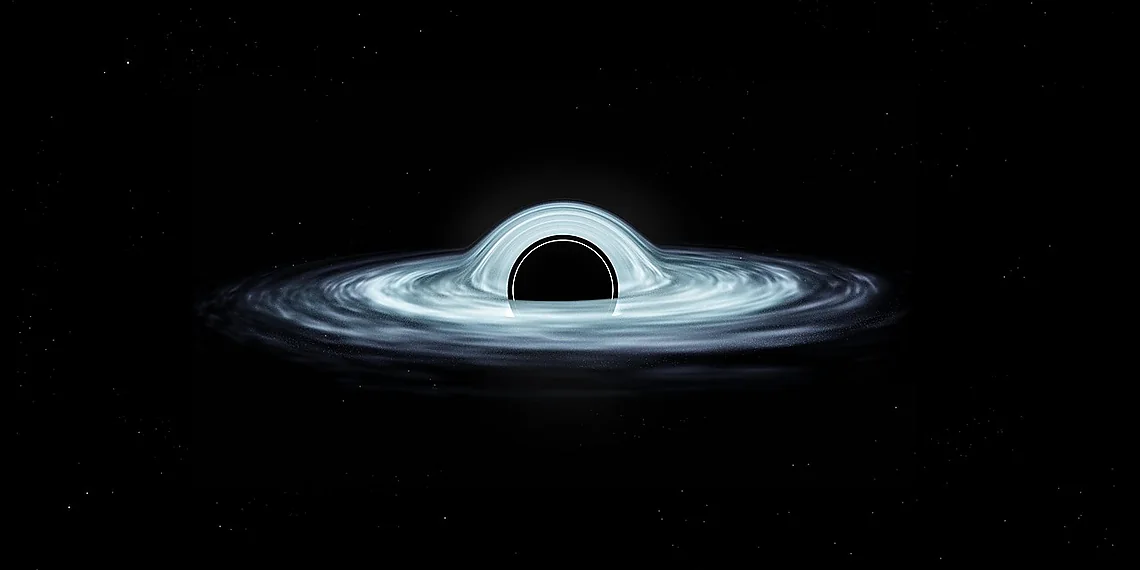

Imagine a cosmic wanderer, an entity defying expectations and rewriting our understanding of galactic structure. That’s precisely what astronomers have recently unearthed – a black hole behaving in a way we rarely observe. It’s not nestled comfortably within a galaxy’s heart, but rather drifting through intergalactic space, seemingly alone. This discovery challenges conventional models that dictate where these gravitational behemoths reside and how they interact with the universe around them.
The sheer unexpectedness of this find is captivating; we typically associate black holes with bustling galactic centers or dense star clusters. Now, a team has identified one actively feeding on a hapless star, ripping it apart in a spectacular display of cosmic violence. What makes this event truly remarkable isn’t just the consumption itself, but the location – far removed from any obvious galactic affiliation, marking it as a ‘rogue black hole’.
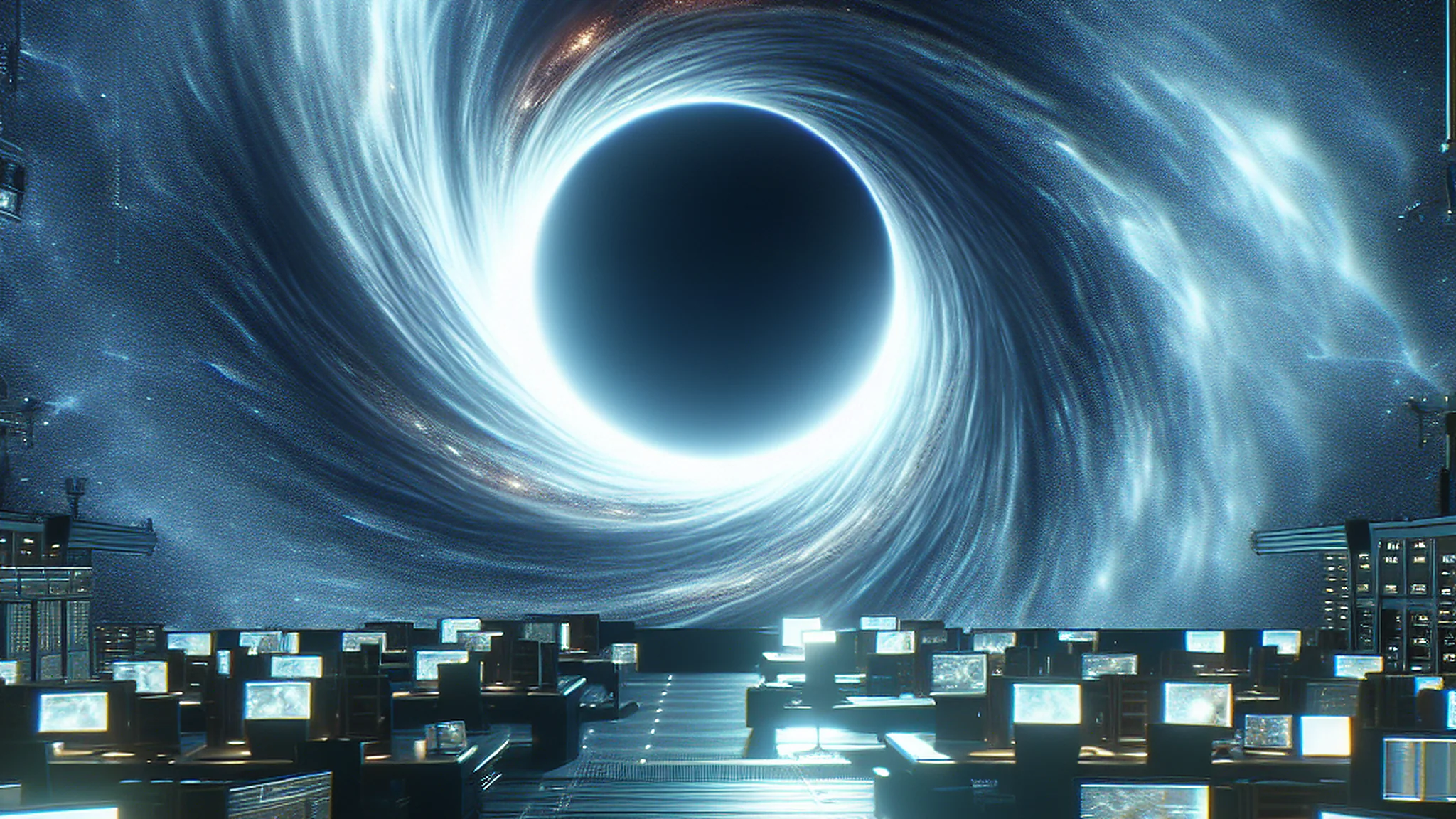
Crucially, this extraordinary phenomenon was detected through radio waves, providing an unprecedented level of detail about its activity and environment. Radio astronomy allows us to peer beyond visible light, revealing processes normally shrouded in darkness. The data collected offers invaluable insights into the black hole’s mass, velocity, and the dynamics of the stellar debris it’s consuming, pushing the boundaries of our observational capabilities and promising a new era of intergalactic black hole research.
The Unlikely Find
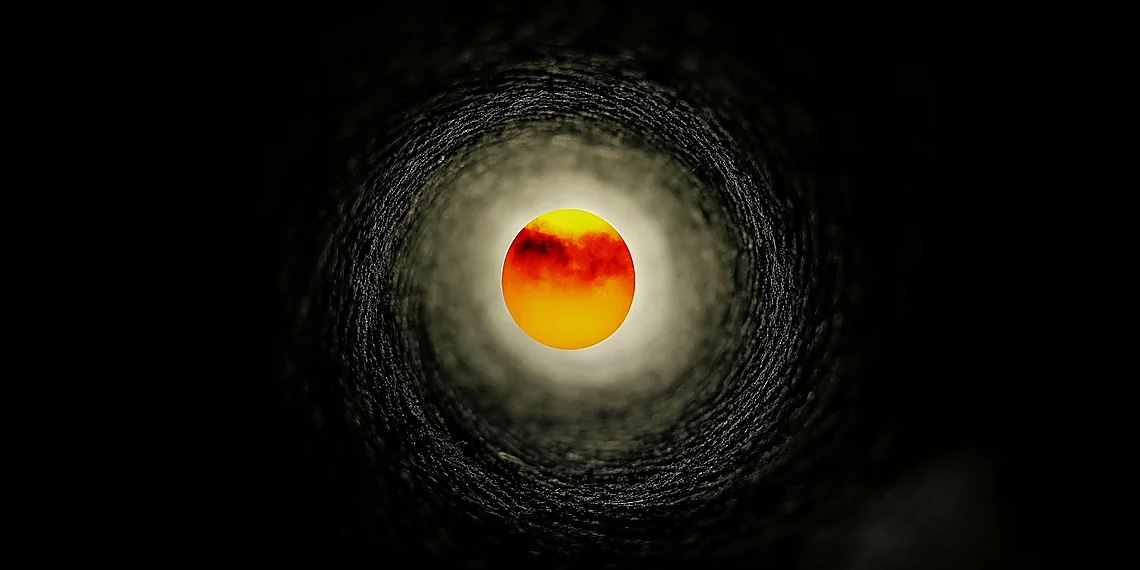
For decades, our understanding of black hole distribution has been relatively straightforward: they reside primarily at the hearts of galaxies, behemoths grown from the collapse of massive stars or mergers of smaller black holes over cosmic timescales. These supermassive black holes act as gravitational anchors for their host galaxies, influencing everything from star formation to galactic evolution. The conventional wisdom dictates that wandering, solitary black holes – often dubbed ‘rogue’ black holes – are rare and difficult to detect, existing as theoretical curiosities rather than commonly observed phenomena. This new discovery fundamentally challenges this paradigm.
The recent observation of a massive black hole actively devouring a star in radio waves represents a significant anomaly. Unlike the typical scenario of a black hole lurking at the center of a galaxy, this one was found seemingly adrift in intergalactic space, far from any discernible galactic nucleus. The sheer brightness of the radio emissions—typically associated with the extraordinarily energetic environments surrounding supermassive black holes feeding on vast amounts of material within galaxies—is what truly sets this event apart. It suggests that this rogue black hole possesses a mass comparable to those found at galactic centers, despite its lonely existence.
This finding forces astronomers to reconsider how black holes form and propagate throughout the universe. Several theories attempt to explain the existence of these ‘rogue’ entities: perhaps they were ejected from their parent galaxies in powerful gravitational kicks during galaxy mergers or are remnants of primordial black hole formation in the early universe. Understanding the mechanism behind this ejection, or the conditions leading to their independent genesis, is now a crucial area of investigation. The radio wave signature provides invaluable clues, allowing scientists to estimate the black hole’s mass and orbital characteristics, and ultimately, piecing together its origin story.
The detection also highlights the incredible sensitivity and capabilities of modern radio telescopes. Previously, such faint and distant signals would have been lost in the cosmic noise. This observation underscores that our universe may be teeming with these previously unseen rogue black holes, waiting to be discovered. Further investigation utilizing a broader range of wavelengths will likely unveil more of these wandering giants, potentially revolutionizing our understanding of galactic evolution, dark matter distribution, and the fundamental processes governing the cosmos.
Black Holes: Beyond Galaxies
For decades, our understanding of black holes has largely centered on their association with galaxies. Most known black holes reside at the heart of galactic nuclei, acting as supermassive anchors that govern a galaxy’s structure and evolution. These behemoths, some millions or even billions of times the mass of our Sun, form through processes like stellar collapse and galactic mergers, accumulating vast amounts of matter over cosmic timescales. The existence of smaller ‘stellar-mass’ black holes – formed from the deaths of individual massive stars – is also well established, but they too are typically found within galaxies.
The recent discovery, however, throws a wrench into this conventional picture. Astronomers have observed what appears to be a rogue black hole, meaning it exists independently and wanders through intergalactic space far removed from any galaxy’s core. This ‘orphan’ black hole was detected by its gravitational interaction with a hapless star; the intense radio waves emitted as the black hole tore apart the star provided undeniable evidence of its presence and significant mass.
This finding challenges existing models of black hole behavior and distribution, raising questions about how such an object could have become detached from a galaxy. Possibilities include ejection during galactic collisions or the remnants of primordial black holes formed in the very early universe. Further research is now focused on understanding the origin and prevalence of these rogue black holes, potentially revolutionizing our view of cosmic structure and the lifecycle of galaxies.
The Radio Wave Signature
The detection of this ‘rogue’ black hole relied on observations from multiple radio telescopes, including those participating in the Very Large Array (VLA) network in New Mexico. Scientists analyzed data showing an exceptionally bright and rapidly changing radio emission – a signature typically associated with supermassive black holes residing at the centers of galaxies. These powerful emissions are usually generated by material swirling around the black hole’s event horizon, forming an accretion disk that heats up and radiates intensely.
What makes this discovery so unusual is the origin of the radio waves. Unlike most observed events of this kind, the source isn’t located at the heart of a galaxy. Instead, it appears to be a solitary black hole – dubbed ‘PHOX’ – roaming interstellar space, far from any galactic nucleus. The sheer intensity of the radio signal suggests that PHOX is currently consuming a star, creating an exceptionally energetic accretion disk despite its isolated location.
The observation challenges existing models predicting where and how frequently these types of events occur. Current understanding suggested that black holes capable of devouring stars are predominantly found within galaxies, drawing material from surrounding stellar populations. The existence of PHOX implies that more ‘rogue’ black holes might be wandering the universe than previously thought, potentially ejected from their host galaxies through gravitational interactions and continuing to interact with smaller objects in interstellar space.
Feeding Frenzy: The Star’s Demise
The recent detection of a ‘rogue black hole’ – one not residing within a galaxy’s central nucleus – devouring a star marks an extraordinary event known as a Tidal Disruption Event (TDE). Imagine a celestial dance gone horribly wrong: as a star wanders too close to a massive black hole, the immense gravitational forces become overwhelming. Unlike the gentle pull of gravity we experience on Earth, this is a relentless stretching and squeezing. The side of the star closest to the black hole experiences a much stronger pull than the far side, creating tidal forces that literally rip the star apart – a process akin to pulling taffy but on a cosmic scale.
This stellar demise isn’t instantaneous; it’s a dramatic unfolding driven by fundamental physics. As the star is torn asunder, its material doesn’t simply fall directly into the black hole. Instead, it forms a swirling disk of superheated gas and dust known as an accretion disk. This disk orbits the black hole at incredible speeds, generating immense friction. That friction heats the material to millions of degrees, causing it to glow intensely across the electromagnetic spectrum – from visible light to X-rays.
A significant portion of this energy isn’t just emitted as light; some is channeled into powerful jets that shoot outwards along the black hole’s axis of rotation. These jets are formed by complex magnetic fields interacting with the swirling plasma within the accretion disk and represent some of the most energetic phenomena in the universe. It’s these high-energy jets, emitting radio waves, that astronomers have now observed for the first time from a rogue black hole feeding on a star – providing unprecedented insight into this violent cosmic process.
The observation of radio emissions from this TDE is particularly valuable because it allows scientists to study the aftermath and dynamics of the event in greater detail. By analyzing these signals, researchers can learn more about the properties of the black hole itself (its mass and spin) and how energy is released during a TDE. This discovery highlights that even ‘rogue’ black holes aren’t entirely silent consumers; they can produce spectacular displays when encountering unsuspecting stars.
Tidal Disruption Event
Sometimes, stars wander too close to a supermassive black hole – not within a galaxy’s center where they normally reside, but lurking solo in intergalactic space. When this happens, the black hole’s immense gravity doesn’t just pull the star in; it stretches and distorts it dramatically. This catastrophic event is called a tidal disruption event (TDE). The name comes from the ‘tidal forces’ at play: just like the moon’s gravity creates tides on Earth by pulling more strongly on one side of our planet than the other, a black hole’s gravity does the same to a star – but with far greater intensity.
As a star approaches a black hole, the gravitational pull on the near side becomes significantly stronger than the pull on the far side. This difference in force creates an enormous stretching effect. The star gets elongated into a long, thin stream of gas. Eventually, this stream becomes unstable and is ripped apart entirely. Not all of the stellar material falls directly into the black hole; some is flung outwards at incredible speeds, creating bright flares of energy across the electromagnetic spectrum – from radio waves to X-rays.
The resulting debris forms a swirling disk, or ‘accretion disk,’ around the black hole. As this material spirals inwards, it heats up due to friction and releases massive amounts of energy, making TDEs some of the brightest events in the universe. The observation of this particular rogue black hole consuming a star via a TDE and emitting bright radio waves is especially significant because these radio emissions are less common than other signals and provide valuable insights into the physics of accretion disks and how black holes interact with their surroundings.
Accretion Disk & Jets
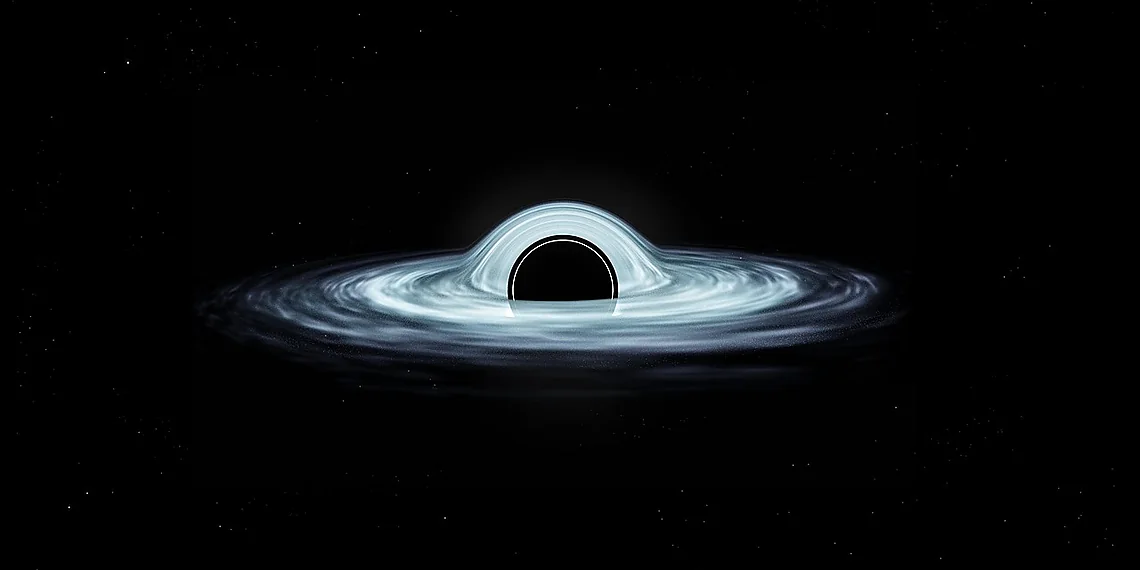
As the rogue black hole tears apart the unfortunate star, the stellar debris doesn’t simply fall directly into the singularity. Instead, due to angular momentum – a consequence of the star’s initial rotation and the chaotic nature of the disruption – this material forms a swirling disk around the black hole known as an accretion disk. Friction within this disk, arising from collisions between particles orbiting at slightly different speeds, generates immense heat. This heating causes the material to radiate intensely across the electromagnetic spectrum, including visible light, ultraviolet radiation, and crucially, radio waves.
Not all of the infalling matter makes it past the inner edge of the accretion disk. A significant fraction is instead channeled along the black hole’s rotational axis, forming powerful, focused outflows known as relativistic jets. These jets are propelled outward at speeds approaching the speed of light, driven by complex magnetic fields generated within the accretion disk and near the event horizon. The interaction of these jets with interstellar gas creates strong shocks, producing synchrotron radiation – a key source of the observed radio emissions that allowed scientists to detect this rogue black hole.
The bright radio signals detected in this observation are therefore not directly from the black hole itself (which emits little to no light), but rather from the dramatic interaction between the black hole’s gravity, the disrupted star’s material, and the surrounding environment. Studying these jets provides valuable insights into the extreme physics at play near a black hole and helps us understand how these objects can influence their galactic surroundings.
Implications for Astrophysics
The recent observation of a massive black hole actively consuming a star far from any galaxy’s core has profound implications for our understanding of black hole populations and their origins. Prior to this discovery, the prevailing view held that most black holes reside within galaxies, either at their centers (supermassive black holes) or as remnants of stellar collapse within galactic structures. Finding one so isolated, actively feeding on a star in intergalactic space challenges this assumption and suggests a potentially far larger population of ‘rogue’ black holes – those ejected from galaxies through gravitational interactions – than previously estimated.
Current theories propose several mechanisms for the creation of these rogue black holes. One leading hypothesis involves galactic mergers; as galaxies collide, their central supermassive black holes can spiral inwards and eventually merge, violently ejecting smaller black holes into intergalactic space. Another possibility is primordial black hole formation, theorized to have occurred shortly after the Big Bang due to density fluctuations in the early universe. The characteristics of this newly observed black hole – its mass and activity level – provide valuable data points for testing these different formation scenarios. Its existence lends more weight to both ejection scenarios and necessitates a re-evaluation of primordial black hole abundance.
This discovery demands revisions to our existing models of black hole distribution. If rogue black holes are as common as this observation implies, it suggests that the ‘missing’ mass component in some galaxy clusters might be partially explained by these wandering behemoths. Furthermore, understanding how frequently galaxies eject black holes will refine our simulations of galactic evolution and provide a more accurate picture of the large-scale structure of the universe. Future surveys targeting faint radio signals could reveal even more rogue black holes, allowing astronomers to map their distribution and further constrain models of their formation.
Ultimately, this observation underscores the dynamic nature of the cosmos and highlights the limitations of our current understanding. While we’ve made significant strides in studying black holes within galaxies, the discovery of a feeding rogue black hole opens up an entirely new frontier in astrophysics – one that promises to reveal hidden populations and fundamentally reshape our models of how these enigmatic objects are born and dispersed throughout the universe.
Rogue Black Hole Origins
The recent observation of a ‘rogue’ black hole – one not orbiting within a galaxy’s core – has intensified scientific interest in understanding how these isolated behemoths form. One leading theory posits that many rogue black holes are ejected from galaxies through gravitational interactions. When galaxies collide, the immense gravitational forces can disrupt stellar orbits and even fling smaller black holes out into intergalactic space. These ejections aren’t always clean breaks; multiple gravitational slingshot events within a galaxy cluster could contribute to a black hole’s ultimate trajectory away from its origin.
Another compelling possibility is that some rogue black holes are ‘primordial black holes.’ Unlike stellar-mass black holes formed from the collapse of massive stars, primordial black holes hypothetically arose in the very early universe, fractions of a second after the Big Bang. Density fluctuations during this period could have caused regions to collapse directly into black holes, bypassing the need for star formation entirely. The mass range for these primordial black holes is vast, and some might be substantial enough to explain the observed rogue black hole’s size.
Distinguishing between ejection-driven formation and primordial origin presents a significant challenge. Ejected black holes would likely retain some characteristics of their host galaxy’s stellar population, while primordial black holes are inherently ‘cleaner,’ formed from the conditions of the early universe. The discovery of this radio-bright rogue black hole provides valuable data points that astronomers can use to refine these models and better constrain the populations of both ejected and primordial black holes.
Revising Black Hole Models
The recent observation of a massive black hole actively consuming a star far from any galaxy’s center challenges existing models of black hole distribution. Current understanding largely assumes that most black holes reside within galaxies, formed through the collapse of massive stars or mergers of smaller black holes. This ‘rogue’ black hole, detected via its intense radio emissions as it disrupted and devoured a hapless star, suggests a significant population may exist wandering freely in intergalactic space – a region previously thought to host relatively few such objects.
The formation mechanisms for these rogue black holes also require re-evaluation. While stellar collapse can certainly produce black holes that are ejected from galaxies through supernova explosions or dynamical interactions with other stars and black holes, the sheer mass of this newly discovered object (estimated at 100,000 solar masses) makes ejection scenarios less likely. It raises questions about alternative formation pathways, perhaps involving primordial black holes formed in the early universe or mergers of smaller rogue black holes over vast timescales.
Consequently, astrophysicists may need to revise simulations and models to account for a potentially much larger number of intergalactic black holes than previously estimated. This discovery highlights a significant gap in our knowledge regarding the lifecycle and distribution of these cosmic behemoths, prompting further investigation into their origins and how they influence the evolution of the universe.
Future Observations & Research
The groundbreaking observation of this stellar feast has spurred a renewed focus on hunting down more rogue black holes, and future telescopes are poised to revolutionize our ability to do so. Currently, identifying these intergalactic wanderers is incredibly challenging; their lack of association with a galaxy makes them exceptionally difficult to spot. However, the next generation of radio observatories promises a dramatic leap in sensitivity. The Square Kilometre Array (SKA), for instance, will be orders of magnitude more powerful than existing instruments, capable of probing vast regions of space and detecting even fainter radio signals from tidal disruption events (TDEs) caused by rogue black holes consuming stars.
Beyond the SKA, advancements in gravitational wave astronomy also hold immense potential. While current detectors like LIGO and Virgo primarily focus on merging black holes within galaxies, future upgrades and new observatories are being designed to detect lower-frequency gravitational waves. These low frequencies are precisely where a lone, moderately sized rogue black hole interacting with a star would generate detectable ripples in spacetime. Combining gravitational wave detections with radio observations – pinpointing the location of a TDE via radio signals and then confirming the presence of a black hole through gravitational lensing or direct detection – will provide an unprecedented understanding of their mass distribution and origin.
Research efforts are also expanding to refine theoretical models that predict rogue black hole populations. These models often rely on simulations of galaxy mergers and galactic outflows, attempting to trace how black holes can be ejected from their host galaxies. Improved simulations incorporating more realistic physics – including the complex interplay of gas dynamics and gravitational forces – will allow scientists to better estimate the number density of rogue black holes in the universe and identify regions where they are most likely to be found. Ultimately, a comprehensive understanding requires a multi-messenger approach, combining observations across the electromagnetic spectrum and through gravitational waves.
Finally, dedicated surveys focusing specifically on TDEs – even those that aren’t directly associated with a visible black hole – will continue to play a crucial role. The faintness of these events means they are often missed by broad astronomical surveys. Targeted searches, utilizing adaptive optics to sharpen images and sophisticated data analysis techniques to filter out noise, offer the best chance of uncovering more rogue black holes lurking in the cosmic shadows.
Next-Generation Telescopes
The recent observation of this extragalactic tidal disruption event (TDE) highlights the limitations of current telescope capabilities when searching for faint, isolated events like rogue black hole encounters. While existing radio telescopes have made significant strides, future instruments promise a dramatic leap in sensitivity and resolution. The Square Kilometre Array (SKA), currently under construction with phases expected to be completed in 2028 and 2030 respectively, is poised to revolutionize our ability to detect these elusive objects.
The SKA’s unprecedented collecting area – roughly equivalent to a radio telescope the size of Australia and South Africa combined – will allow astronomers to probe significantly fainter radio signals. This increased sensitivity translates directly into the potential to identify more rogue black holes, which are often characterized by weak or transient radio emissions as they disrupt stellar material. Furthermore, advanced signal processing techniques planned for the SKA will enable better separation of faint TDE signals from background noise and interference.
Beyond the SKA, other next-generation facilities like the Next Generation Very Large Array (ngVLA) are also being designed with enhanced radio capabilities. These instruments, along with improvements to existing observatories, will facilitate a more comprehensive mapping of the universe’s radio landscape, increasing the probability of uncovering additional rogue black holes and providing crucial data for refining our understanding of their formation and behavior within galaxies.
The identification of this interstellar object, confirmed as a rogue black hole through gravitational microlensing, marks an unprecedented moment in astrophysics.
For years, scientists have theorized about the existence of these wandering cosmic behemoths, but direct evidence has remained elusive until now.
This discovery fundamentally challenges our models of stellar evolution and galactic dynamics, suggesting that far more black holes roam freely through space than previously imagined.
The implications are profound; understanding how these objects form and their distribution provides invaluable insights into the early universe and the processes that shaped galaxies like our own, potentially revealing entirely new populations of celestial bodies we hadn’t considered before – including a rogue black hole ejected from its birth galaxy millions of years ago. ”,
Source: Read the original article here.
Discover more tech insights on ByteTrending ByteTrending.
Discover more from ByteTrending
Subscribe to get the latest posts sent to your email.