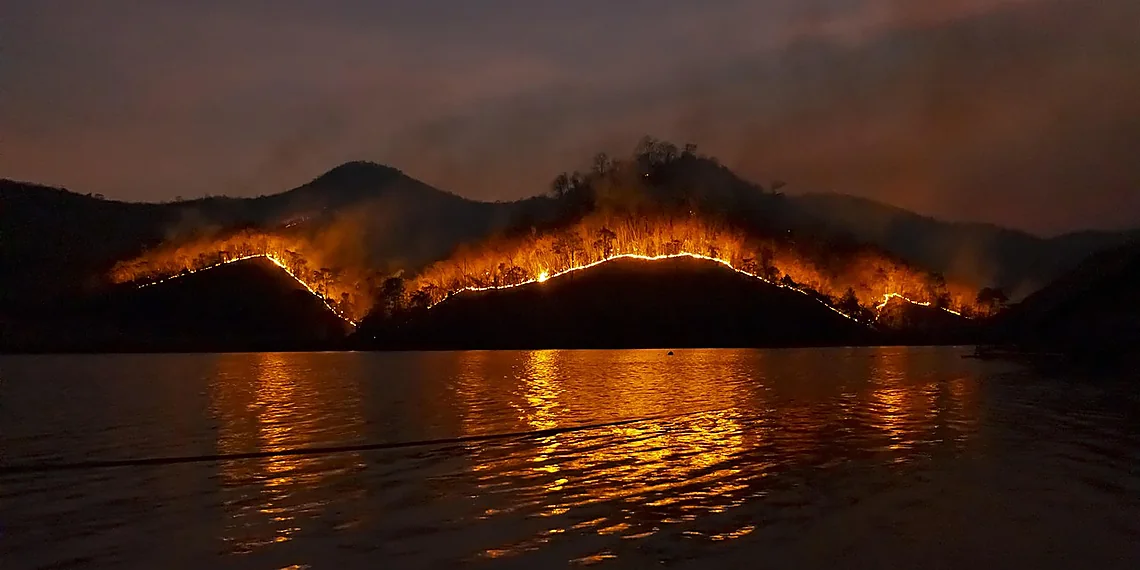

The specter of wildfires looms larger than ever, impacting communities and ecosystems across the globe with increasing frequency and intensity. Traditional methods for assessing wildfire risk often rely on historical data and relatively simple models, leaving a crucial gap in our ability to proactively mitigate potential disasters. These assessments frequently struggle to incorporate rapidly changing environmental factors like microclimates, vegetation health at a granular level, and even subtle shifts in human activity patterns that contribute significantly to ignition risk. The consequences of these limitations are tangible: delayed evacuations, overwhelmed resources, and tragically, preventable losses.
Current wildfire risk assessment tools often provide broad estimations, lacking the specificity needed for targeted preventative measures or rapid response planning. Imagine if we could move beyond generalized warnings to pinpoint areas facing imminent threat with higher accuracy – that’s the potential offered by a new generation of AI-powered solutions. A significant advancement is emerging: a hybrid framework leveraging predictive models alongside the power of Large Language Models (LLMs) to create more nuanced and actionable insights.
This innovative approach aims to revolutionize wildfire prediction, moving beyond reactive responses towards proactive prevention. By combining established meteorological and environmental data with the contextual understanding capabilities of LLMs, we can build a system that synthesizes information from diverse sources – news reports, social media updates, sensor readings – to generate more comprehensive and localized risk assessments. This represents a major step forward in our ability to understand and address the complex challenges posed by increasingly severe wildfire seasons.
The Limitations of Traditional Wildfire Risk Assessment
For years, wildfire risk assessment has largely relied on methods that, while valuable in certain contexts, fall drastically short when it comes to real-world operational effectiveness. Traditional approaches often hinge on single indicators – think vegetation dryness indices like the Keetch-Byram Drought Index (KBDI) or fuel moisture content – which provide a snapshot but fail to account for the complex interplay of factors that determine wildfire behavior and spread. These singular measures can be misleading; a dry forest doesn’t automatically guarantee a catastrophic fire, nor does ample moisture eliminate risk entirely.

The fundamental problem lies in this narrow scope. Wildfire management isn’t simply about predicting where flames will ignite; it’s about anticipating the challenges firefighters face, understanding evacuation needs, and strategically allocating resources. A truly effective assessment must encompass meteorological danger (wind speed, humidity, temperature), ignition activity (lightning strikes, human carelessness), intervention complexity (terrain, accessibility), and even resource mobilization capabilities – all of which dynamically influence a fire’s potential impact. Ignoring any one of these facets creates a dangerously incomplete picture.
The current reliance on single indicators often leads to reactive rather than proactive responses. Firefighting services find themselves constantly playing catch-up, reacting to events instead of anticipating them. This limitation stems from the fact that many existing models are designed for broad risk mapping rather than tailored predictions usable by first responders making critical decisions under immense pressure. A model solely focused on fuel dryness might flag an area as high-risk, but offer little insight into how difficult it will be to access and suppress a fire in that location.
Ultimately, the need is clear: we require a shift from these simplistic, single-indicator assessments towards a multi-target analysis. This holistic approach demands integrating diverse datasets and predictive models – weather forecasts, ignition probability maps, terrain data, resource availability projections – and synthesizing them into actionable intelligence for those on the front lines of wildfire management.
Single Indicators vs. Multi-Target Analysis

Traditional wildfire risk assessments frequently focus on a single indicator to gauge potential danger. For example, vegetation dryness (measured by indices like the Keetch-Byram Drought Index or fuel moisture content) is often used as a primary predictor. While these indicators provide valuable information, they represent only one piece of a complex puzzle. Relying solely on a single factor can lead to inaccurate predictions and inadequate preparedness because it fails to account for other critical influences that contribute to wildfire ignition and spread.
A truly effective wildfire management strategy necessitates a multi-target analysis – considering the interplay of various factors beyond just vegetation dryness. This holistic approach incorporates meteorological conditions (temperature, wind speed, precipitation), potential ignition sources (lightning strikes, human activity), intervention difficulty (terrain, accessibility), and resource availability (firefighting personnel, equipment). Ignoring any of these elements can significantly diminish the accuracy of a risk assessment and compromise response efforts.
The limitations of single-indicator approaches are particularly evident when considering rapidly changing conditions. A sudden shift in wind direction or an unexpected lightning storm can quickly invalidate a prediction based solely on fuel moisture content. By integrating multiple data streams and predictive models, multi-target analysis provides a more robust and nuanced understanding of wildfire risk, enabling proactive planning and resource allocation for improved safety and damage mitigation.
Introducing the Hybrid Framework: Predictive Models & LLMs
Traditional wildfire risk assessments frequently fall short when it comes to real-world application, often failing to provide actionable insights for first responders and firefighting teams. Recognizing this limitation, researchers are exploring a novel approach: the Hybrid Framework. This innovative system moves beyond simplistic single-indicator models by embracing a multi-faceted understanding of wildfire danger, acknowledging that risk isn’t just about weather; it encompasses factors like ignition probability, the difficulty of intervention, and the availability of resources. The core concept revolves around combining specialized predictive models – each focused on a distinct dimension of wildfire risk – with the powerful synthesis capabilities of Large Language Models (LLMs).
The Hybrid Framework’s strength lies in its modular design. For example, meteorological danger is assessed using weather forecasting models that analyze variables like temperature, humidity, wind speed, and precipitation patterns to predict fire behavior potential. Similarly, ignition activity is evaluated with models incorporating historical data on human-caused ignitions and lightning strikes, often leveraging satellite imagery and land use information. Intervention complexity considers terrain, vegetation density, accessibility – all crucial for planning safe and effective firefighting strategies. Finally, resource mobilization models forecast the availability of personnel, equipment, and aerial support based on current deployments and projected needs. Each model generates a distinct dataset reflecting its specific area of focus.
However, these individual datasets are inherently disparate. That’s where Large Language Models (LLMs) play a critical role. The LLM acts as an intelligent integrator, receiving the outputs from each predictive model – meteorological forecasts, ignition probabilities, intervention complexity scores, and resource availability projections. Instead of simply presenting raw data, it synthesizes this information into structured, narrative reports tailored for specific users. These reports could highlight areas of highest risk, suggest optimal deployment strategies, or flag potential resource bottlenecks, all presented in a clear, concise, and actionable format.
Ultimately, the Hybrid Framework aims to bridge the gap between complex scientific models and the practical needs of wildfire management professionals. By combining specialized predictive power with the interpretive capabilities of LLMs, this approach promises more accurate assessments, faster response times, and ultimately, safer communities in the face of increasingly frequent and intense wildfires. This proof-of-concept represents a significant step towards making advanced wildfire prediction truly operational.
Predictive Models for Risk Dimensions

Predictive models form a core component of the hybrid framework’s approach to wildfire prediction, addressing distinct aspects of risk. Meteorological danger is assessed using numerical weather prediction (NWP) models which simulate atmospheric conditions – temperature, humidity, wind speed and direction – based on historical data and current observations. These simulations generate gridded datasets over time that are then analyzed for fire-weather indices like the Fire Weather Index (FWI), quantifying potential fire behavior. Ignition activity models leverage historical fire occurrence records, land cover maps, human population density, and lightning strike data to predict areas with a higher probability of ignition events.
Intervention complexity is evaluated using terrain analysis and vegetation datasets. Digital elevation models (DEMs) provide information about slope and aspect, impacting accessibility for firefighters and the spread of flames upslope. Vegetation indices derived from satellite imagery or aerial surveys characterize fuel load and type. These data are processed through algorithms that estimate factors like road density, slope steepness, and vegetation flammability – all crucial for planning firefighting strategies. Resource mobilization models forecast the availability and deployment of personnel, equipment (aircraft, bulldozers), and supplies based on historical demand patterns, logistical constraints, and projected fire activity.
The data generated by these specialized predictive models are typically in various formats: gridded raster datasets for meteorological conditions; point locations or polygons for ignition probability; continuous surfaces representing intervention difficulty; and tabular data outlining resource availability. Each model operates with its own set of assumptions and limitations but contributes a critical piece to the overall wildfire risk assessment, ultimately feeding into the LLM component for synthesis and report generation.
The Role of Large Language Models in Synthesis
Traditional wildfire prediction often falls short when it comes to practical application by first responders. While advanced models can generate detailed risk assessments – encompassing meteorological factors, ignition probabilities, intervention challenges, and resource availability – the sheer volume and complexity of this data can be overwhelming. These outputs frequently arrive as a collection of numerical data points, intricate maps, and disparate reports, making it difficult for firefighters and incident commanders to quickly grasp the overall situation and make informed decisions under pressure. The research presented in arXiv:2601.11686v1 addresses this critical gap by exploring how large language models (LLMs) can bridge the divide between complex predictions and actionable insights.
The core innovation lies in leveraging LLMs as a synthesis engine for these heterogeneous data streams. Instead of presenting raw model outputs, the hybrid framework uses an LLM to process information from multiple predictive models – each focusing on a specific facet of wildfire risk. This includes translating numerical forecasts into understandable language, interpreting spatial data visualized on maps, and integrating insights from different sources like weather patterns and fuel moisture levels. The LLM effectively acts as a translator, converting technical jargon and complex visualizations into clear, concise narratives tailored for various stakeholders.
The resulting reports aren’t just summaries; they’re structured to provide actionable recommendations. For instance, an LLM might generate a report highlighting areas of high risk based on predicted wind patterns *and* potential ignition sources, suggesting prioritized evacuation zones and pre-positioning strategies for resources. Different versions of the same core information can be created – one highly technical for planning staff, another simplified for frontline firefighters. This adaptability is key to ensuring that the right information reaches the right people at the right time, enabling more effective wildfire management.
Ultimately, this LLM-powered synthesis moves beyond simply predicting *where* a fire might occur; it aims to provide a holistic understanding of the risks involved and guide proactive decision-making. By transforming complex data into readily digestible reports, this approach promises to significantly enhance the operational value of wildfire prediction models and ultimately contribute to improved safety and resource allocation in the face of increasingly frequent and severe wildfires.
From Data Streams to Actionable Insights
Traditional wildfire prediction often produces complex outputs – numerical risk scores, detailed maps of potential spread, and lengthy technical analyses. These deliverables, while scientifically robust, can be overwhelming and difficult to interpret quickly for those on the front lines, such as first responders and incident commanders. The new hybrid framework described in arXiv:2601.11686v1 addresses this challenge by integrating large language models (LLMs) into the wildfire prediction process. These LLMs act as translators, converting raw model outputs from various specialized predictive models – assessing meteorological danger, ignition probability, intervention feasibility, and resource availability – into clear and concise narratives.
The key innovation lies in how the LLM structures this information. Instead of simply presenting data, it generates reports tailored to specific stakeholder needs. For example, a report for firefighters might focus on immediate threats, evacuation zones, and available resources, presented in a step-by-step format with plain language explanations. A report for resource managers could highlight long-term risk trends and optimal allocation strategies, including potential cost savings or logistical bottlenecks. This customization ensures that the critical insights derived from complex models are directly applicable to decision-making.
Ultimately, this LLM-powered synthesis moves wildfire prediction beyond theoretical assessment and towards actionable intelligence. By transforming disparate data streams into structured narratives with clear recommendations, the framework aims to improve response times, optimize resource deployment, and enhance overall wildfire management effectiveness. The ability to quickly understand risk factors and potential impacts is crucial for minimizing damage and protecting lives.
Future Directions and Potential Impact
The emergence of this hybrid framework marks a potentially transformative shift in wildfire prediction and management. By moving beyond traditional, single-indicator risk assessments to incorporate meteorological data, ignition patterns, intervention complexities, and resource availability – all synthesized through the power of large language models – we open doors to significantly more actionable intelligence for first responders and firefighting teams. This isn’t just about predicting *if* a fire will occur; it’s about understanding *where*, *how challenging* containment will be, and what resources are realistically deployable, ultimately leading to faster response times and potentially minimizing devastation.
However, the path forward is not without its challenges. Integrating diverse data streams from varied sources – weather stations, satellite imagery, historical fire records, real-time resource tracking – requires robust data quality control and standardized formats. Furthermore, ensuring the LLM’s synthesis of this information remains accurate, unbiased, and easily interpretable by users with varying levels of technical expertise is paramount. The ‘black box’ nature of some LLMs presents a transparency hurdle that necessitates careful explainability research to build trust and facilitate effective decision-making.
Future research should focus on refining the predictive models for each risk dimension, exploring novel methods for incorporating human expert knowledge into the LLM training process (perhaps through reinforcement learning from expert feedback), and developing user interfaces tailored to specific roles within wildfire management – from dispatchers needing immediate situational awareness to long-term planners assessing regional vulnerability. Investigating techniques for quantifying uncertainty in these hybrid predictions will also be crucial, allowing responders to make informed decisions even when faced with incomplete or conflicting information.
Ultimately, the broader impact of this approach extends beyond simply improving predictive accuracy. It has the potential to reshape wildfire management strategies, fostering a more proactive and adaptive response system that prioritizes resource optimization, community resilience, and ultimately, the preservation of lives and property in the face of an increasingly volatile climate.
The landscape of wildfire management is rapidly evolving, and it’s clear that artificial intelligence offers a powerful new toolkit for addressing this critical challenge.
We’ve explored how machine learning models are moving beyond traditional risk assessments by incorporating diverse data streams – from weather patterns and vegetation health to historical fire behavior and even social media activity – creating more nuanced and accurate wildfire prediction capabilities.
It’s crucial to remember that AI isn’t a silver bullet; the most effective strategies will always involve a blended approach, integrating these advanced technologies with expert human judgment, proactive forest management practices, and robust community preparedness programs.
The potential for future advancements is genuinely exciting. Imagine real-time predictive models capable of anticipating fire spread with unprecedented precision or AI-powered drones autonomously assessing damage and deploying resources where they’re needed most – these are not distant dreams but increasingly attainable goals thanks to ongoing research and development efforts in wildfire prediction and related fields, making our ecosystems safer for everyone involved..”, “Ultimately, the combined power of data science and environmental stewardship holds immense promise for mitigating wildfire risk and protecting communities worldwide.”, “Interested in exploring how AI is revolutionizing other areas of environmental conservation? Dive deeper into the fascinating world of AI applications in environmental science – there’s a vast landscape of innovation waiting to be discovered.
Continue reading on ByteTrending:
Discover more tech insights on ByteTrending ByteTrending.
Discover more from ByteTrending
Subscribe to get the latest posts sent to your email.