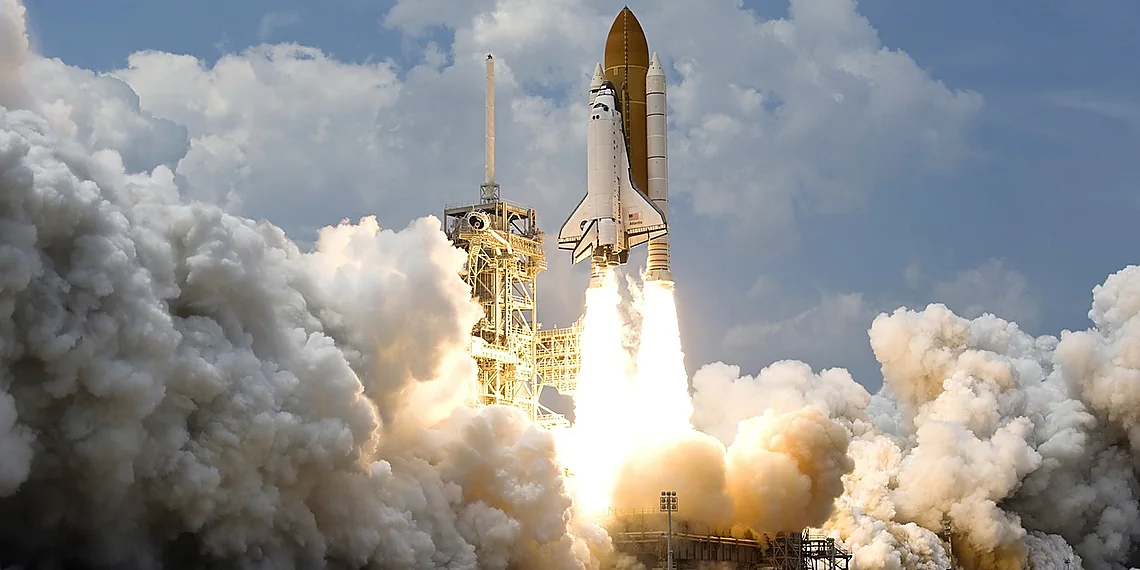

The space exploration landscape is buzzing with anticipation as a monumental moment unfolds at Kennedy Space Center – the Artemis II mission’s hardware has reached its launchpad. This isn’t just about moving some equipment; it represents a pivotal step towards humanity’s return to lunar orbit, marking a new era of deep-space exploration driven by NASA’s ambitious program. The sheer scale and complexity of this undertaking is truly breathtaking, promising to inspire generations to come.
Central to the Artemis II mission’s success is the powerful SLS Rocket, standing tall as a testament to engineering prowess and collaborative innovation. Its arrival at the launchpad signifies that critical preparations are now underway for what will be an incredibly significant flight test – carrying astronauts closer to the Moon than they’ve ventured in decades. This carefully choreographed sequence of events underscores the meticulous planning required for such a groundbreaking endeavor.
The journey from construction to launchpad is a testament to countless hours of work and dedication across numerous teams, signifying that we are nearing the point where humans will once again witness the spectacle of liftoff towards our celestial neighbor. With Artemis II’s hardware now in place, eyes are firmly fixed on the future, eagerly awaiting the next chapter in humanity’s lunar story.
The SLS: A Giant Awakens
The Space Launch System (SLS) rocket isn’t just big; it’s a monumental feat of engineering designed to propel humanity back to the Moon and beyond. As it arrived at its launchpad in preparation for Artemis II, the sheer scale of this vehicle truly becomes apparent. The SLS represents NASA’s most powerful rocket ever built, surpassing even the Saturn V that took astronauts to the Apollo missions. Its development was driven by the need for a heavy-lift launch capability capable of carrying significantly larger payloads than previous rockets, essential for complex lunar and deep space exploration goals.
At its core, the SLS is composed of several key components working in concert. The first stage utilizes two powerful RS-25 engines – upgraded versions of those used on the Space Shuttle program – generating over 7.8 million pounds of thrust at liftoff. Following first-stage separation, the second stage, powered by a single RL10 engine, continues to accelerate the Orion spacecraft and its crew towards lunar orbit. The upper stage, or Interim Cryogenic Propulsion Stage (ICPS), provides further propulsion for trajectory adjustments and ultimately releases Orion on its journey.
The architecture of the SLS is modular, allowing NASA to progressively upgrade its capabilities with future versions. Block 1, as used in Artemis I and II, stands at over 320 feet tall – taller than the Statue of Liberty! Subsequent blocks (Block 1B and Block 2) will incorporate advanced boosters and a more powerful upper stage, increasing payload capacity significantly. This adaptability ensures that the SLS remains a versatile tool for future exploration endeavors, paving the way for missions to Mars and other destinations in our solar system.
The power and design of the SLS are intrinsically linked to the ambitious goals of the Artemis program. Simply put, no existing rocket could handle the mass required to send astronauts and necessary equipment on a lunar mission with the scope of Artemis II. Its ability to deliver substantial payloads directly contributes to NASA’s broader strategy for establishing a sustainable presence on the Moon and utilizing it as a stepping stone for future deep space exploration.
Powerhouse Engineering

The Space Launch System (SLS) is NASA’s current flagship heavy-lift rocket, designed to propel astronauts and large payloads beyond Earth orbit. Its architecture comprises three primary stages: the Boost stage (Stage 0), the Core Stage (Stage 1), and the Upper Stage (Stage 2). The Boost stage utilizes five powerful Solid Rocket Boosters (SRBs) – the largest ever flown – providing initial thrust. These SRBs, derived from those used on the Space Shuttle program, burn for approximately two minutes before separating. The Core Stage houses the RS-25 engines, advanced liquid hydrogen and liquid oxygen powered engines previously utilized on the Space Shuttle Program, now upgraded for SLS performance.
The Core Stage provides the majority of the thrust during ascent, burning for roughly eight minutes until it separates. Following Core Stage separation, the Upper Stage ignites its RL10 engine to propel the Orion spacecraft (and other payloads) towards lunar orbit or beyond. The Upper Stage can be either a standard version or an extended version, offering greater velocity capability depending on mission requirements. SLS’s modular design allows for future upgrades and configuration changes, accommodating evolving mission needs.
The sheer power of the SLS is critical for missions like Artemis II. Sending a crewed Orion spacecraft to lunar orbit requires significantly more energy than previous robotic missions. The SLS’s ability to deliver this payload—including the necessary life support systems and scientific equipment—is essential for safely carrying astronauts beyond low Earth orbit, marking a pivotal step in NASA’s return to the Moon.
Artemis II: Humanity’s Lunar Return
The arrival of the SLS Rocket and Orion spacecraft at Launch Pad 39A marks a pivotal moment in NASA’s Artemis program, signifying humanity’s imminent return to lunar orbit for the first time since Apollo 17 in 1972. Artemis II isn’t just about reaching the Moon; it represents a crucial step towards establishing a sustainable presence there and eventually venturing further into deep space. This mission builds upon previous uncrewed tests, validating the capabilities of both the SLS Rocket – NASA’s most powerful ever built – and the Orion spacecraft to safely carry humans beyond Earth orbit.
Artemis II’s primary objective is a crewed flyby of the Moon, a carefully planned trajectory that will take astronauts Reid Wiseman, Victor Glover, Christina Koch, and Jeremy Hansen on a roughly 28-day mission. Unlike Apollo missions which landed on the lunar surface, Artemis II will orbit the Moon at a distance of around 64,000 miles, allowing for critical testing of Orion’s life support systems, navigation capabilities, and communication infrastructure in the harsh lunar environment. This flight serves as a vital dress rehearsal for future landing missions.
The significance of this mission extends far beyond simply circling the Moon. It’s an opportunity to demonstrate NASA’s commitment to international collaboration, with Jeremy Hansen representing the Canadian Space Agency on board. Furthermore, Artemis II paves the way for Artemis III, slated to land astronauts near the lunar south pole – a region believed to hold valuable resources like water ice. The robust performance of the SLS Rocket and Orion during this mission is absolutely critical to ensuring the success of these subsequent endeavors.
Ultimately, the Artemis program, with the SLS Rocket as its backbone, aims to establish a long-term human presence on the Moon, creating a platform for scientific discovery, technological advancement, and ultimately, preparing for crewed missions to Mars. The arrival at the launchpad is not just a logistical achievement; it’s a tangible representation of humanity’s renewed ambition to explore our solar system and push the boundaries of what’s possible.
A Crewed Milestone
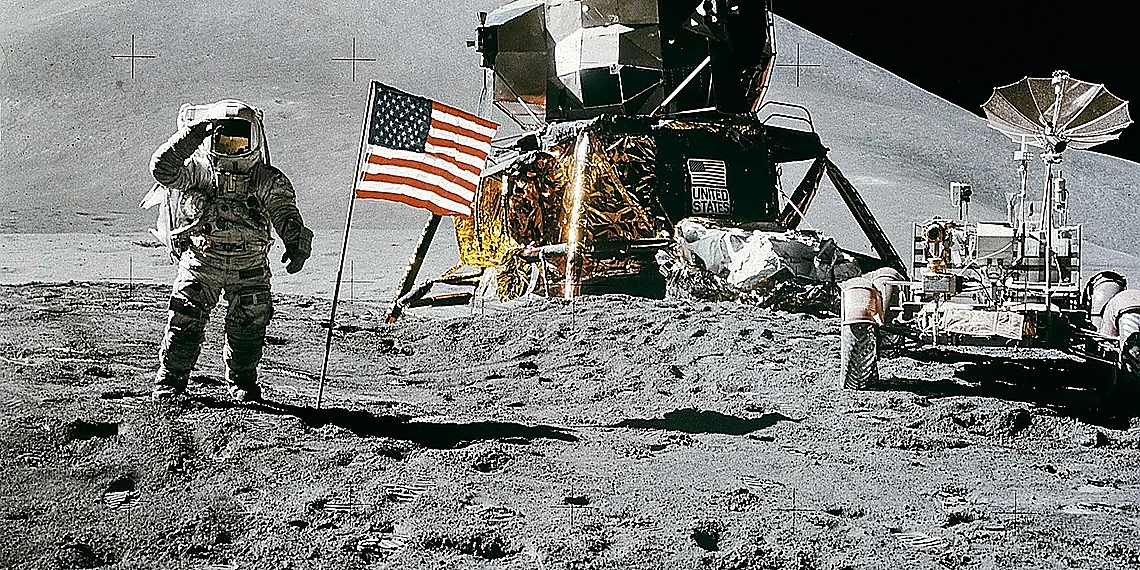
Artemis II represents a critical step in NASA’s ambitious plan to return humans to the Moon. Unlike previous uncrewed Artemis missions focused on testing systems and scouting landing sites, Artemis II will carry a crew of four astronauts – Reid Wiseman, Victor Glover, Christina Koch, and Jeremy Hansen – into lunar orbit. This mission is fundamentally a ‘dress rehearsal,’ designed to validate the life support systems, communications capabilities, and overall performance of the Orion spacecraft with humans onboard before attempting a lunar landing.
The flight profile for Artemis II involves launching atop the powerful SLS (Space Launch System) rocket, which will propel the Orion capsule towards the Moon. The crew will then spend approximately six days in lunar orbit, conducting tests and gathering data about the deep space environment. They will not land on the surface; instead, they’ll perform a complex trajectory that brings them within 64,000 miles (103,000 kilometers) of the Moon before initiating the return journey to Earth.
Upon completion of their lunar orbital operations, the Orion spacecraft will fire its engines for a trans-Earth injection burn, setting it on course back to our planet. Splashdown is anticipated in the Pacific Ocean, allowing recovery teams to retrieve the crew and spacecraft, providing invaluable data from the mission that will inform future Artemis missions aimed at establishing a sustainable human presence on the Moon.
Launchpad Logistics & Preparations
The arrival of the Space Launch System (SLS) rocket and Orion spacecraft at Kennedy Space Center’s Launch Complex 39A marked a significant milestone in the Artemis II mission – but it was just one piece of an incredibly intricate logistical puzzle. Moving this colossal structure, standing taller than the Statue of Liberty, isn’t as simple as driving a truck down the road. The SLS rocket, along with its Orion crew capsule, underwent a meticulous journey from the Vehicle Assembly Building (VAB), traversing miles on specialized crawler-transporter vehicles designed to handle immense weight and fragility. This slow, deliberate process, lasting several hours, required precise coordination and constant monitoring of environmental conditions like wind speed to ensure safety.
The sheer scale of the SLS Rocket presents unique engineering challenges. The rocket’s components are assembled in the VAB, then carefully integrated with Orion. Once complete, the entire stack weighs over 5 million pounds – a load that tests the limits of even the most advanced transportation systems. As it made its way to the launchpad, engineers performed numerous ‘soft checks,’ verifying critical systems and ensuring everything remained stable during transit. These preliminary assessments are vital in identifying any potential issues before the rocket is secured on the pad for more intensive preparations.
Once at Launch Complex 39A, the SLS Rocket was raised vertically onto the launch mount using hydraulic lifts. This process itself demands extreme precision to avoid damaging sensitive components. Following this critical step, a series of final checks and tests commenced, including fueling system validations, flight software loading, and communication link confirmations. Teams are meticulously reviewing every aspect of the rocket’s readiness, paying particular attention to engine performance and structural integrity – all crucial elements for ensuring the success of Artemis II’s historic lunar flyby.
The final days leading up to a launch are a flurry of activity as engineers conduct ‘wet dress rehearsals,’ simulating the fueling process without actually launching. These tests allow teams to identify and address any issues related to propellant handling, system performance under pressure, and overall readiness for flight. Every step is carefully documented and analyzed, reflecting NASA’s commitment to safety and precision in preparing the SLS Rocket – a testament to the immense effort required to return humans to lunar orbit.
A Delicate Dance
Transporting the Space Launch System (SLS) rocket is an undertaking of immense complexity. Standing over 394 feet tall – taller than the Statue of Liberty – the SLS necessitates a custom-built crawler-transporter, a massive tracked vehicle capable of moving payloads weighing upwards of 8 million pounds. The journey from the Vehicle Assembly Building to Launch Complex 39A at Kennedy Space Center takes approximately twelve hours and requires meticulous planning, precise control, and constant monitoring to ensure structural integrity during the slow, deliberate crawl. Route adjustments are minimal due to the crawler’s size and weight, highlighting the critical importance of pre-launch infrastructure assessments.
Once at the launchpad, the SLS undergoes a series of rigorous checks and tests. These include verifying the functionality of all rocket engines, inspecting thermal protection systems, and confirming alignment with extreme precision. The integrated spacecraft, including the Orion crew capsule, receives similar scrutiny, focusing on life support systems, communications equipment, and navigation capabilities. Cryogenic fuel loading rehearsals are also conducted to simulate launch conditions and identify any potential issues related to propellant handling.
The final phase involves a comprehensive ‘go/no-go’ assessment by NASA engineers and mission managers. This evaluation considers data gathered from all pre-launch tests, weather forecasts, and trajectory simulations. Any anomalies or deviations from expected performance trigger further investigation and corrective actions before the launch team gives the final clearance for liftoff. The process is deliberately slow and methodical, prioritizing safety and ensuring the highest probability of mission success.
Looking Ahead: The Future of Lunar Exploration
The arrival of the SLS Rocket and Orion spacecraft at Launchpad 39A marks more than just a logistical milestone; it represents a pivotal moment in humanity’s return to the Moon and signals a renewed era of lunar exploration. Artemis II, with its planned crewed flyby around the Moon, is not an end goal but rather a critical stepping stone, validating systems and procedures essential for future missions that will eventually see humans back on the lunar surface. This mission serves as a vital testbed, allowing engineers to assess performance in deep space conditions and refine operational protocols before attempting more complex landings.
Beyond Artemis II lies a carefully orchestrated series of missions designed to establish a sustainable human presence beyond Earth orbit. Artemis III is slated to return humans to the lunar surface for the first time since Apollo 17, followed by Artemis IV which will focus on expanding capabilities and infrastructure around the Moon. The long-term vision includes building a lunar base camp – potentially utilizing resources found on the Moon itself – and leveraging the lunar environment as a springboard for even deeper space exploration, such as missions to Mars.
The SLS Rocket’s power is crucial in enabling this ambitious program. Its immense lift capacity allows for larger payloads and crew sizes, expanding the possibilities for scientific discovery and resource utilization. While challenges remain regarding development costs and timelines, the Artemis program embodies a commitment to pushing the boundaries of human knowledge and technological innovation, fostering collaboration between nations and inspiring future generations of scientists and engineers.
Ultimately, the Artemis program, spearheaded by the SLS Rocket’s capabilities, aims to transform lunar exploration from sporadic visits into a continuous endeavor. Establishing a permanent presence on the Moon will not only unlock invaluable scientific insights but also serve as a vital training ground for long-duration space travel, paving the way for humanity’s future among the stars.
Beyond Artemis II
While Artemis II will carry astronauts on a crucial flyby mission around the Moon, it’s just one step in NASA’s ambitious plan to return humans to the lunar surface and beyond. Following Artemis II, Artemis III is slated to land astronauts near the lunar south pole, aiming for 2026. This mission will utilize SpaceX’s Starship as a Human Landing System (HLS) to transport astronauts from lunar orbit to the surface and back.
The long-term vision extends far beyond just landing on the Moon. NASA’s Artemis program aims to establish a sustainable human presence, including constructing a lunar base camp called ‘Artemis Base Camp’ near the south pole. This base will serve as a hub for scientific research, resource utilization (potentially extracting water ice), and testing technologies needed for future missions to Mars.
The Gateway, a planned space station in lunar orbit, will also play a pivotal role in Artemis’ success. It will provide a staging point for lunar landings, offering radiation shelter and serving as a platform for international partnerships. Ultimately, the lessons learned and infrastructure built through the Artemis program are intended to pave the way for humanity’s next giant leap: establishing a permanent Martian settlement.
The arrival of the SLS Rocket at Launchpad 39A marks a pivotal moment, not just for Artemis II, but for humanity’s renewed ambition to explore beyond Earth.
Witnessing this colossal structure settle into its launch position underscores the immense engineering feat and collaborative effort required to return humans to the Moon.
This milestone signifies that we’re steadily progressing towards launching a crewed mission around the lunar surface – a journey brimming with scientific discovery and inspiring future generations of explorers.
The meticulous preparations underway, from final system checks to fueling protocols, highlight NASA’s unwavering commitment to safety and precision as they prepare for this historic flight, showcasing the capabilities of the SLS Rocket in action once again. It’s an exciting time to be following space exploration progress, knowing that we are on the cusp of a new era of lunar missions and beyond. “ ,
Continue reading on ByteTrending:
Discover more tech insights on ByteTrending ByteTrending.
Discover more from ByteTrending
Subscribe to get the latest posts sent to your email.