The world is overflowing with data, but machines are still struggling to make sense of it all like we do.
Current AI systems often specialize – excelling at text processing or image recognition, but faltering when asked to connect the dots between them.
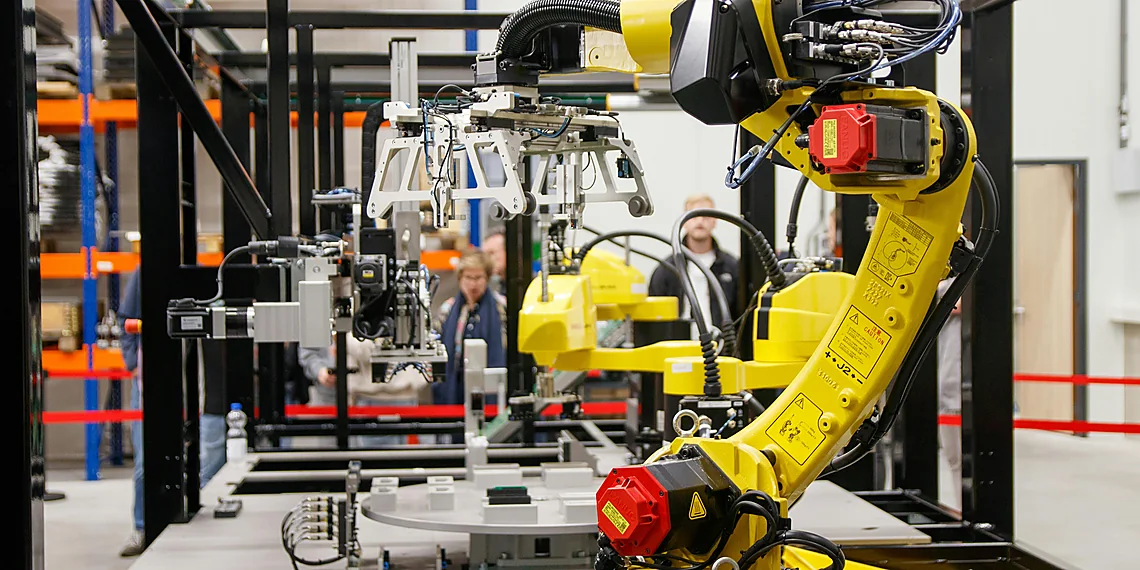
Imagine a robot that can not only ‘see’ an object but also understand its context from accompanying instructions and past experiences; this is the promise of truly intelligent machines.
Researchers are pushing the boundaries of what’s possible with multimodal reasoning, striving for models capable of integrating information from diverse sources like text, images, audio, and even sensor data to solve complex problems – a significant leap beyond current capabilities that rely on separate, specialized modules. Omni-R1 emerges as a groundbreaking solution in this space, demonstrating remarkable progress toward seamless understanding across different modalities. ,
The Challenge of Multimodal Reasoning
Current Multimodal Large Language Models (MLLMs) represent exciting advancements in AI, but many still face significant hurdles when it comes to true multimodal reasoning. Early approaches largely mirrored traditional language models, relying on text-based reasoning and struggling to effectively integrate visual information. While subsequent research has attempted to incorporate images and other modalities into the reasoning process, these improvements often fall short due to a reliance on task-specific reasoning patterns. This means that an MLLM trained to identify objects in one dataset might fail spectacularly when presented with a slightly different image or question – highlighting a critical lack of generalizability.
The core problem lies in the rigid structure imposed by many existing architectures. Imagine training a model specifically to ‘zoom in’ on a particular area within an image as part of its reasoning process, versus another trained only to ‘mark’ a specific object. These are distinct skills requiring different internal representations and processing pathways. Current MLLMs often bake these task-specific routines into their design, creating bottlenecks that prevent them from adapting to new or unseen multimodal tasks. This specialization makes it difficult for the model to transfer learned knowledge—a key requirement for robust AI.
The need for a more flexible approach is becoming increasingly clear as researchers explore the full potential of multimodal reasoning. Consider the wide range of applications, from complex robotic navigation requiring nuanced visual understanding to medical diagnosis that demands precise image analysis and contextual interpretation. Each of these tasks requires unique combinations of reasoning skills – object recognition, spatial awareness, causal inference – that are difficult to capture with a single, rigid framework.
Ultimately, overcoming this limitation is crucial for unlocking the full potential of MLLMs. A unified approach to multimodal reasoning, one that can dynamically adapt its strategies based on the specific task at hand, promises to usher in a new era of AI capable of tackling truly complex and diverse real-world challenges.
Task-Specific Bottlenecks

Current Multimodal Large Language Models (MLLMs) frequently demonstrate a reliance on task-specific reasoning patterns, significantly limiting their adaptability. While early MLLMs primarily focused on text-based reasoning, the integration of visual information has led to improvements; however, these models often lock into a single, predetermined reasoning process that is optimized for a particular application. This creates a bottleneck because real-world multimodal scenarios demand a far wider range of reasoning skills than any one task-specific pattern can provide.
For example, consider the difference between tasks like Visual Question Answering (VQA), where a model must answer questions about an image, and Referring Expression Comprehension (REC), which involves locating an object described in text within an image. A VQA-optimized MLLM might excel at identifying objects based on textual descriptions but struggle with the spatial reasoning required for REC. Similarly, tasks such as image captioning or visual entailment require distinct reasoning processes that are not easily transferable between one another.
This lack of generalizability highlights a crucial challenge in developing truly robust and adaptable MLLMs. The dependence on task-specific patterns prevents these models from effectively handling novel multimodal scenarios or combining different reasoning skills to solve complex problems, thus emphasizing the need for more flexible and unified approaches to multimodal reasoning.
The Need for Unified Reasoning

Existing Multimodal Large Language Models (MLLMs) have largely progressed from purely text-based reasoning to incorporating visual information, but these advancements often remain constrained by task-specific reasoning patterns. While the integration of image or video data enhances understanding, current architectures frequently follow predetermined sequences for processing this multimodal input. This rigid structure hinders their ability to adapt and effectively handle the wide spectrum of tasks that demand diverse reasoning skills.
The limitations of specialized reasoning pathways become evident when considering the variety of multimodal tasks encountered in real-world applications. Simple image captioning or visual question answering represent only a small fraction of the possibilities. Tasks such as precisely identifying regions of interest within an image, accurately marking specific objects, or performing complex spatial comparisons require more flexible and nuanced reasoning approaches that current MLLMs struggle to provide.
Therefore, a shift towards unified generative multimodal reasoning is necessary to unlock the full potential of these models. By generating intermediate images during the reasoning process, this approach aims to unify diverse skills and improve generalizability across various tasks, moving beyond the constraints of rigid task-specific pipelines.
Introducing Omni-R1: A Generative Paradigm
Omni-R1 represents a significant leap forward in multimodal reasoning, moving beyond the limitations of previous approaches that often relied on rigid, task-specific reasoning patterns. At its core, Omni-R1 introduces a novel generative paradigm for multimodal understanding – unified generative multimodal reasoning. This innovative approach tackles the challenge of diverse reasoning skills needed for various tasks by enabling the model to generate intermediate images during its reasoning process. Instead of being constrained to predetermined sequences or actions, Omni-R1 can dynamically adapt and explore different visual representations to arrive at a solution.
The key breakthrough lies in the ability to create these intermediary visual representations. Consider scenarios requiring nuanced understanding like zooming in on a specific area of interest within an image or precisely marking an object; traditional methods struggle with such tasks due to their inflexible nature. Omni-R1, however, generates images that represent intermediate steps in its reasoning, allowing it to progressively refine its understanding and focus on the relevant details. This dynamic visual exploration drastically enhances the model’s adaptability and opens doors to tackling a broader spectrum of multimodal challenges.
This generative capability is achieved through a two-stage framework combining Supervised Fine-Tuning (SFT) and Reinforcement Learning (RL). The SFT stage trains the model to generate these intermediate images based on textual prompts, while the RL stage optimizes the generated images for accuracy and alignment with desired outcomes. This iterative process allows Omni-R1 to learn a diverse range of reasoning skills, moving away from task-specific solutions towards a more generalized understanding of multimodal information.
Ultimately, Omni-R1’s generative approach signifies a shift in how we design multimodal models. By allowing the model to actively generate and manipulate visual representations during reasoning, we unlock a new level of flexibility and adaptability that promises to significantly advance the field of multimodal AI.
Generative Reasoning in Action
Omni-R1 utilizes a novel two-stage Supervised Fine-Tuning (SFT) + Reinforcement Learning (RL) framework to achieve generative multimodal reasoning. The initial SFT stage trains the model on a diverse dataset of multimodal tasks, including those requiring specific reasoning skills like zooming and object marking. This phase establishes a foundational understanding of how to generate images based on textual instructions. Crucially, Omni-R1 isn’t limited to directly answering questions; it learns to produce intermediate image representations that serve as stepping stones towards the final answer.
The subsequent RL stage refines the model’s generative capabilities by optimizing for reward signals related to both visual accuracy and reasoning coherence. This means the generated images are not just visually plausible but also logically connected to the input question and the eventual solution. For example, when asked to ‘zoom in on the cat’, Omni-R1 will first generate an image focused on a region containing the cat before potentially generating a final answer. Similarly, for object marking tasks, it might initially create an image highlighting the target object.
This generative approach contrasts sharply with previous MLLMs which often follow pre-defined reasoning chains or struggle to adapt to new multimodal tasks requiring different visual manipulation skills. By generating intermediate images, Omni-R1 demonstrates a more flexible and generalizable approach to multimodal reasoning, allowing it to handle a wider range of complex queries and tasks without being explicitly programmed for each scenario.
Omni-R1-Zero: Annotation-Free Multimodal Learning
Omni-R1-Zero represents a significant leap forward in multimodal reasoning by drastically reducing, and in some cases eliminating, the reliance on paired text and image annotations – a major bottleneck in developing versatile MLLMs. Traditional multimodal models require extensive datasets where each textual prompt is meticulously linked to a corresponding visual element or action. This process is costly, time-consuming, and limits the scalability of these models across diverse tasks. Omni-R1-Zero cleverly sidesteps this challenge by leveraging readily available text-only data to train its core reasoning capabilities. Instead of learning directly from paired examples, it learns to *imagine* visual representations based solely on textual descriptions.
The key innovation lies in the model’s ability to bootstrap visualizations. This process involves generating intermediate images during the reasoning process itself—essentially, the model ‘draws’ its own understanding to guide its decision-making. Think of it like a human who might sketch out a rough diagram or mental picture while solving a complex problem; Omni-R1-Zero does something similar but with pixels. This self-generated visual information allows the model to perform tasks like identifying specific regions within an image, marking objects, and even performing compositional reasoning—all without ever having seen examples of paired text and image data for those particular tasks.
The implications of this annotation-free approach are profound. It opens up possibilities for training MLLMs on a vastly larger scale, as the availability of text data far exceeds that of labeled multimodal datasets. Furthermore, it democratizes access to advanced visual reasoning capabilities, allowing researchers and developers with limited resources to build powerful applications. The ability to train models without extensive manual annotation also significantly reduces bias inherent in manually curated datasets, leading to more fair and robust systems.
Ultimately, Omni-R1-Zero’s architecture paves the way for a future where multimodal AI is less reliant on expensive and specialized data collection efforts. By focusing on text-based reasoning and bootstrapping visual representations, it demonstrates that impressive performance can be achieved with surprisingly minimal reliance on traditional multimodal annotations, promising greater flexibility and accessibility in the field of multimodal learning.
Bootstrapping Visualizations from Text
Omni-R1-Zero introduces a novel approach called bootstrapping visualizations from text, enabling it to generate intermediate visual representations during its reasoning process solely based on textual prompts. This technique allows the model to dynamically create and refine images that reflect its understanding of the task at hand, even without direct supervision from paired image-text data. Initially, the model uses a large language model (LLM) to interpret the input text and generate an initial visual representation using a diffusion model. Subsequently, iterative refinement steps use feedback from the LLM to progressively enhance the generated image, aligning it more closely with the intended meaning.
The bootstrapping process significantly reduces the reliance on expensive and time-consuming multimodal annotations. Traditional MLLMs often require vast datasets of paired images and text descriptions for training, limiting their accessibility and applicability in resource-constrained scenarios. By leveraging readily available textual data and a pre-trained diffusion model, Omni-R1-Zero circumvents this dependency, opening up opportunities to apply the technology across a broader range of applications where labeled multimodal data is scarce.
This annotation-free learning capability has profound implications for democratizing access to advanced multimodal reasoning. Researchers and developers with limited resources can now explore complex tasks without the burden of creating large annotated datasets. Furthermore, it paves the way for adapting Omni-R1-Zero to new domains and modalities where such annotations are simply unavailable or prohibitively expensive, ultimately expanding the scope of what’s possible with multimodal AI.
Looking Ahead: The Future of Multimodal AI
The emergence of models like Omni-R1 and especially its zero-shot variant, Omni-R1-Zero, signals a pivotal shift in the landscape of multimodal AI. While previous multimodal Large Language Models (MLLMs) often struggled with generalizing across diverse tasks, relying on task-specific reasoning patterns, these new approaches demonstrate a remarkable ability to adapt and reason using generated intermediate images. This unified generative multimodal reasoning framework isn’t just an incremental improvement; it represents a fundamental change in how we approach building AI systems capable of understanding and interacting with the world through multiple modalities – text, image, video, and potentially more.
Looking ahead, the implications for research are substantial. The success of Omni-R1-Zero, showcasing impressive zero-shot capabilities, suggests that future models can be trained on smaller datasets and still achieve high performance across a wide range of tasks. This reduces the reliance on massive, curated datasets which have historically been a bottleneck in AI development. Furthermore, it opens up exciting avenues for exploring more complex reasoning chains – not just generating intermediate images, but potentially also incorporating other modalities like audio or sensor data to drive even more nuanced and context-aware decision making.
The potential applications of this enhanced multimodal reasoning are vast. Imagine robots capable of truly understanding visual instructions, adapting to unforeseen circumstances with greater flexibility, or healthcare systems that can analyze medical imaging alongside patient records for more accurate diagnoses. In education, personalized learning experiences could be tailored based on a student’s individual learning style and engagement with various multimedia content. While the technology is still in its early stages, the trajectory points towards AI assistants that are not just reactive but proactively understand user needs and goals.
However, as with any powerful technology, it’s crucial to consider the societal impact of increasingly adaptable MLLMs. Addressing potential biases embedded within training data, ensuring responsible use, and mitigating the risk of misuse will be paramount. The ability for AI to reason across multiple modalities also raises questions about transparency and explainability – understanding *why* an AI system makes a particular decision becomes even more critical as reasoning processes become more complex. Continued research focused on these ethical considerations is essential alongside advancements in model capabilities.
Potential Applications & Impact
The emergence of models like Omni-R1 and particularly its zero-shot variant, Omni-R1-Zero, signals a significant leap forward in multimodal reasoning capabilities. These models demonstrate the potential to generalize across diverse tasks requiring different visual and textual understanding skills, moving beyond task-specific training approaches. Applications span numerous domains; for instance, in robotics, they could enable robots to perform complex manipulation tasks based on natural language instructions combined with real-time visual feedback, allowing for greater adaptability in unstructured environments. Similarly, in healthcare, such models could assist clinicians by analyzing medical images and patient records simultaneously to aid in diagnosis and treatment planning.
Beyond robotics and healthcare, the impact of enhanced multimodal reasoning extends into education. Imagine personalized learning experiences where AI tutors can understand a student’s struggles not just from their written responses but also from observing their facial expressions or how they interact with educational materials – enabling more targeted and effective instruction. Further applications include content creation (generating images and text based on combined prompts), accessibility tools (describing visual scenes for the visually impaired, translating spoken language into visual representations), and even creative fields like design and art.
The widespread adoption of adaptable MLLMs like Omni-R1 raises important societal considerations. While offering immense potential benefits, it’s crucial to address ethical concerns surrounding bias in training data which could lead to discriminatory outcomes across various applications. Moreover, the increased automation facilitated by these models necessitates careful consideration of workforce implications and the need for reskilling initiatives. Ultimately, responsible development and deployment will be key to ensuring that the transformative power of multimodal AI benefits society as a whole.

Omni-R1 represents a significant leap forward in how machines understand and interact with the world, moving beyond simple image recognition to incorporate rich contextual understanding from text and other sensory inputs. Its ability to reason about complex scenes and answer intricate questions opens up exciting possibilities across numerous fields, from robotics and autonomous navigation to personalized education and assistive technologies. The model’s architecture, designed for efficient learning and generalization, promises a new era of robust and adaptable AI systems capable of handling the ambiguity inherent in real-world scenarios. This advancement is particularly impactful because it pushes the boundaries of what we consider achievable within multimodal reasoning, paving the way for more intuitive and human-like interactions with technology. We believe Omni-R1’s innovations will spark a wave of further research and development, accelerating progress towards truly intelligent machines. To delve deeper into the technical details and experimental results that underpin these impressive capabilities, we invite you to explore the full research paper – your insights and perspectives are invaluable as we collectively shape the future of AI.
We encourage all readers interested in the cutting edge of artificial intelligence to take a closer look at Omni-R1 and its implications. Consider how this technology could be applied to solve challenges within your own domain or inspire new avenues of exploration; the potential for transformative impact is substantial. The research paper provides a comprehensive overview of the model’s design, training process, and performance benchmarks – we’re eager to see what innovative applications you envision.
Continue reading on ByteTrending:
Discover more tech insights on ByteTrending ByteTrending.
Discover more from ByteTrending
Subscribe to get the latest posts sent to your email.