

Optimizing the Power Grid
The electric grid, a vast and intricate network responsible for delivering power across continents, faces unprecedented challenges with the rise of renewable energy sources like solar and wind. Traditional grids were designed for predictable, centralized power generation; integrating intermittent renewables demands significantly more flexibility and resilience. This is where Artificial Intelligence (AI) steps in, offering powerful tools to optimize grid efficiency and reliability. AI isn’t just about automation – it’s fundamentally reshaping how we understand and manage the flow of electricity, enabling a smarter, cleaner energy future.
One crucial application lies in predictive maintenance and anomaly detection. Machine learning models are now analyzing vast streams of data from sensors embedded throughout the grid – transformers, power lines, substations – to identify subtle patterns indicative of impending equipment failure. Instead of reactive repairs after breakdowns, utilities can proactively schedule maintenance, preventing costly downtime and potentially avoiding widespread blackouts. For example, algorithms can detect unusual temperature fluctuations in a transformer months before it would normally be flagged, allowing for preventative action that extends its lifespan and improves overall grid stability.
Beyond maintenance, AI is revolutionizing demand response programs. These programs incentivize consumers to adjust their energy usage based on real-time grid conditions. Traditionally, these were cumbersome and relied on manual intervention. Now, AI algorithms can predict energy demand with remarkable accuracy, factoring in weather patterns, historical data, and even social media activity. This allows for automated adjustments – dimming lights in smart buildings or temporarily charging electric vehicles at off-peak times – to balance supply and demand, reducing the need for expensive ‘peaker’ power plants often fueled by fossil fuels.
Finally, AI is proving invaluable in integrating renewable energy sources into the grid. Sophisticated weather modeling combined with machine learning allows utilities to forecast solar and wind generation hours or even days in advance. This enables better planning for resource allocation, ensuring that when the sun isn’t shining or the wind isn’t blowing, alternative power sources are readily available to maintain a stable supply. The ability to accurately predict renewable energy output is critical for maximizing their contribution to the grid and accelerating the transition towards a truly sustainable energy system.
Predictive Maintenance & Anomaly Detection

Modern power grids are complex systems with thousands of components, from transformers and substations to transmission lines. Unexpected equipment failures can lead to costly downtime, significant repairs, and in severe cases, widespread blackouts. Machine learning models are increasingly being deployed to address this challenge through predictive maintenance. These models analyze vast streams of sensor data – including temperature readings, vibration levels, oil quality, and electrical signals – collected from grid infrastructure.
By identifying subtle patterns and anomalies within this data that would be difficult for humans to detect, machine learning algorithms can predict when equipment is likely to fail. This allows utilities to proactively schedule maintenance, replacing components *before* they break down rather than reacting after a failure occurs. Optimized maintenance schedules not only reduce downtime and associated costs but also extend the lifespan of critical assets.
The ability to anticipate failures and prevent outages is particularly crucial as grids integrate more variable renewable energy sources like solar and wind. Fluctuations in these power supplies create additional stress on grid components. AI-powered anomaly detection acts as an early warning system, allowing operators to take corrective actions before minor issues escalate into major disruptions and contribute to larger scale instability.
Accelerating Renewable Energy Development
The renewable energy sector is facing unprecedented challenges – fluctuating resource availability, complex grid integration, and a constant need for greater efficiency. Fortunately, artificial intelligence (AI) is emerging as a powerful catalyst, dramatically accelerating the development and deployment of clean energy technologies. From optimizing existing infrastructure to pioneering entirely new materials, AI’s ability to analyze vast datasets and identify patterns is revolutionizing how we generate, store, and distribute power. This isn’t just about incremental improvements; it’s about fundamentally reshaping our approach to a sustainable energy future.
One of the most immediate impacts of AI clean energy solutions lies in enhanced weather prediction and resource forecasting. Traditional weather models often struggle with the localized variability inherent in solar and wind resources, leading to inaccurate output predictions and grid instability. Advanced machine learning algorithms are now capable of processing significantly more data – including satellite imagery, historical weather patterns, and even real-time sensor readings – to create hyperlocal forecasts with remarkable accuracy. This allows energy providers to proactively adjust power generation schedules, anticipate fluctuations in supply, and ensure a stable electricity flow, maximizing the effectiveness of renewable resources.
Beyond optimizing existing operations, AI is dramatically accelerating materials discovery for next-generation solar cells and energy storage solutions. The process of finding new materials with ideal properties – high efficiency, durability, cost-effectiveness – has historically been slow and incredibly resource-intensive. Now, machine learning algorithms can screen millions of potential compounds virtually, predicting their performance characteristics before any physical experiments are even conducted. This drastically reduces research and development timelines, potentially shaving years off the process of bringing breakthrough technologies to market. Imagine batteries with double the energy density or solar cells that capture a significantly larger portion of sunlight – AI is paving the way for these advancements.
Ultimately, the integration of AI into the clean energy landscape represents a paradigm shift. It’s not simply about automating existing processes; it’s about unlocking entirely new possibilities and accelerating our progress towards a truly sustainable future. As AI models become more sophisticated and data availability continues to grow, we can expect even more transformative innovations in areas ranging from electric grid management to the development of advanced energy storage systems – solidifying AI’s crucial role in powering the clean energy transition.
Weather Prediction & Resource Forecasting
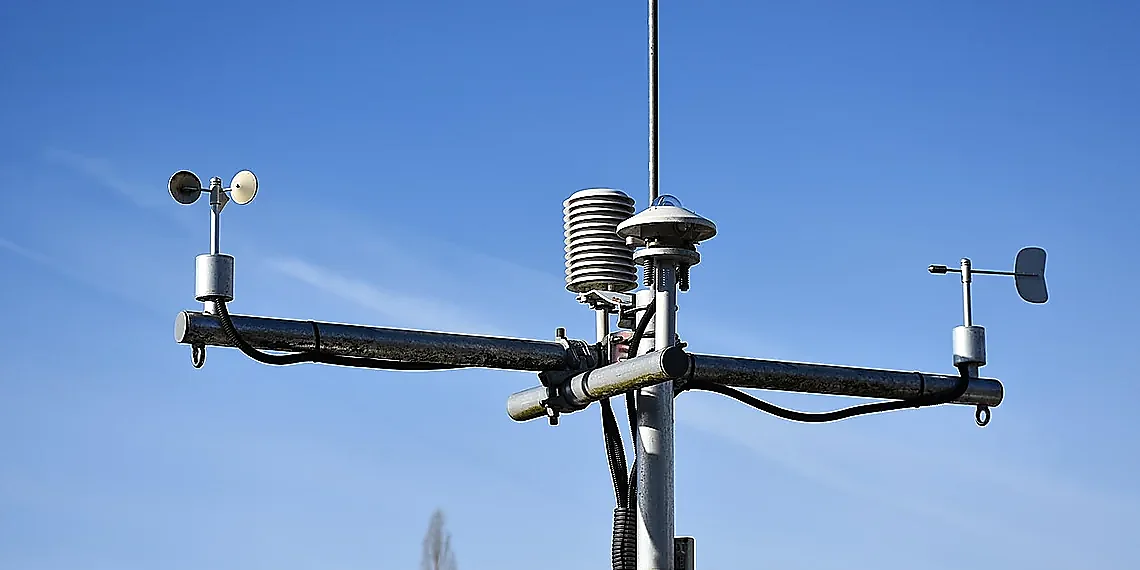
Accurate weather prediction is paramount for maximizing the efficiency of solar and wind farms, as their output is directly tied to environmental conditions. Traditional weather models have limitations, often struggling with localized forecasts critical for optimizing power generation. Advanced AI techniques, particularly machine learning algorithms trained on vast datasets including historical weather data, satellite imagery, and real-time sensor readings, are significantly improving forecast accuracy – especially at the regional level. These models can better predict cloud cover duration, wind speed fluctuations, and even microclimates impacting individual turbines or solar panels.
The impact of these improved forecasts extends beyond simply increasing energy production. Precise resource forecasting allows grid operators to anticipate variations in renewable energy supply, enabling them to proactively adjust dispatchable resources (like natural gas plants or battery storage) to maintain grid stability. This reduces the reliance on fossil fuels for backup power and minimizes potential disruptions caused by sudden shifts in wind or solar output. AI-powered systems can also optimize energy storage strategies, charging batteries when excess renewable energy is available and discharging them during periods of low generation.
Several research initiatives are pushing the boundaries further, exploring physics-informed neural networks that integrate physical laws into AI models for even more robust predictions. These hybrid approaches combine the strengths of traditional numerical weather prediction with the pattern recognition capabilities of machine learning. Ultimately, enhanced weather forecasting driven by AI is a crucial component in creating a reliable and resilient clean energy grid capable of meeting growing demand.
Materials Discovery for Solar & Storage
The development of next-generation solar cells and batteries is critically dependent on finding new materials with superior properties – higher efficiency for solar conversion, greater energy density and faster charging capabilities for storage. Traditionally, this process has been slow and expensive, relying heavily on trial-and-error experimentation in laboratories. Researchers are now leveraging artificial intelligence (AI) and machine learning algorithms to drastically accelerate the materials discovery pipeline, reducing research and development timelines from years to potentially months.
These AI systems work by analyzing massive datasets of existing material properties, chemical structures, and experimental results. Machine learning models can then predict the characteristics of entirely new compounds, identifying promising candidates for synthesis and testing. For example, generative AI is being used to design novel perovskite materials with enhanced stability and efficiency for solar cells, while other algorithms are optimizing electrolyte formulations for lithium-ion and solid-state batteries by predicting ionic conductivity and electrochemical window.
The impact of this approach extends beyond simply speeding up the discovery process. AI can also identify unexpected material combinations or properties that human researchers might overlook, potentially leading to breakthroughs in performance previously considered unattainable. Several research groups, including those at the MIT Energy Initiative, are actively developing these AI-powered tools and working with industry partners to translate these discoveries into real-world clean energy technologies.
Smart Infrastructure Planning
The shift towards a clean energy future isn’t just about deploying solar panels and wind turbines; it’s also about strategically planning the infrastructure needed to support them. This is where Artificial Intelligence (AI) is proving invaluable, moving beyond simple automation to become a core tool for intelligent infrastructure planning. AI algorithms can analyze vast datasets – from projected electricity demand and renewable energy generation forecasts to existing grid capacity and geographic constraints – far more effectively than traditional methods. This allows planners to identify optimal locations for new power plants, transmission lines, and crucially, energy storage facilities, ensuring a reliable and efficient clean energy network.
One particularly impactful application is optimizing the placement of battery storage systems. AI models can sift through historical demand data, predict future consumption patterns with remarkable accuracy (often incorporating weather modeling), and assess grid stability under various scenarios. This analysis goes beyond simply identifying areas with high energy needs; it considers factors like proximity to renewable generation sources, land availability, permitting challenges, and even the potential for integrating storage into existing infrastructure. The result is a data-driven approach that minimizes costs—reducing both upfront investment and long-term operational expenses—while simultaneously enhancing grid resilience against fluctuations in renewable energy supply.
Consider the implications for large-scale projects: AI can help determine not just *where* to build a new battery storage facility, but also its optimal size and charging/discharging strategy. This level of granularity ensures that these facilities are contributing maximally to grid stability and maximizing their return on investment. Furthermore, by accurately predicting future energy needs and resource availability, AI-powered planning tools can proactively address potential bottlenecks and prevent costly delays in the clean energy transition, accelerating the adoption of renewable resources and reducing reliance on fossil fuels.
Ultimately, ‘Smart Infrastructure Planning’ powered by AI is not just about building better grids; it’s about creating a more sustainable, resilient, and economically viable pathway towards a cleaner energy future. As data availability continues to grow and AI algorithms become increasingly sophisticated, we can expect even greater advancements in this crucial area, enabling us to build the infrastructure needed to power a world increasingly reliant on renewable sources.
Optimizing Energy Storage Placement
The increasing adoption of renewable energy sources like solar and wind introduces intermittency challenges to power grids. To address this, large-scale battery storage facilities are crucial for balancing supply and demand. However, strategically placing these facilities is complex; simply building them where land is available isn’t optimal. Artificial intelligence is now being employed to analyze vast datasets—including historical energy demand patterns, projected future needs, existing grid infrastructure constraints (like transmission line capacity), weather forecasts, and even geographic factors such as soil stability – to pinpoint the most effective locations for new battery storage.
AI algorithms, often utilizing machine learning techniques like reinforcement learning and neural networks, can evaluate numerous potential sites simultaneously, considering a multitude of variables that would be impossible for human planners to process efficiently. This allows for optimized placement based on factors such as proximity to renewable generation sources, minimizing transmission losses, and maximizing grid stability. For example, an AI might identify a location near a solar farm with limited grid connection capacity but high demand in a nearby urban area – suggesting a storage facility could alleviate bottlenecks and reduce curtailment of the solar power.
The benefits of AI-driven energy storage placement extend beyond operational efficiency. Optimized locations translate directly into cost savings through reduced infrastructure upgrades, minimized transmission losses, and potentially lower land acquisition costs. Furthermore, strategically placed battery storage enhances grid resilience by providing localized backup power during outages and improving overall system reliability – a critical factor as grids increasingly incorporate variable renewable resources. Several pilot projects are already demonstrating significant improvements in both economic performance and grid stability thanks to these AI-powered planning tools.
Challenges & Future Outlook
While the integration of AI into clean energy promises transformative advancements, significant challenges remain that must be addressed to realize its full potential. Current AI models are heavily reliant on massive datasets – think years of weather patterns, grid load data, and material science experiments – which can be expensive and time-consuming to acquire and curate. Furthermore, the accuracy and effectiveness of these models are fundamentally tied to the quality of this data; incomplete or inaccurate information leads to flawed predictions and potentially misdirected investments in infrastructure or new technologies. The ‘garbage in, garbage out’ principle applies acutely here.
A critical concern lies in mitigating bias within the datasets used to train AI for clean energy applications. Historical energy consumption patterns often reflect existing societal inequalities, potentially leading AI systems to perpetuate or even exacerbate those disparities when optimizing resource allocation or designing new solutions. For example, if an AI model is trained primarily on data from affluent areas with robust grid infrastructure, it might not effectively serve the needs of underserved communities struggling with unreliable power access. Ensuring equitable and just deployment requires proactive efforts to identify and correct biases in training data, a process that demands careful consideration of social context alongside technical performance.
Looking ahead, breakthroughs in several key areas could dramatically expand AI’s role in clean energy. Federated learning, for instance, allows models to be trained on decentralized datasets without sharing sensitive information, addressing privacy concerns and potentially unlocking access to geographically diverse data sources. Advances in explainable AI (XAI) will also be crucial; understanding *why* an AI model makes a particular decision is essential for building trust and ensuring responsible deployment, especially when dealing with complex energy systems. The development of more efficient algorithms that require less data – perhaps leveraging techniques like transfer learning or few-shot learning – represents another exciting frontier.
Ultimately, the successful application of AI clean energy hinges on a holistic approach that combines technological innovation with ethical considerations and robust governance frameworks. We need interdisciplinary collaboration between data scientists, engineers, policymakers, and community stakeholders to navigate these challenges effectively and ensure that AI truly serves as a catalyst for a sustainable and equitable energy future.
Data Availability & Bias Mitigation
The promise of AI revolutionizing clean energy hinges significantly on data availability. Training robust and accurate AI models, whether for optimizing wind turbine placement, predicting solar panel output, or managing grid stability, requires massive datasets – often encompassing years of operational data from various sources like weather patterns, equipment performance, and consumption habits. Currently, the lack of standardized formats, limited public access to proprietary energy company data, and inconsistent data quality across different regions pose considerable hurdles. Without sufficient, reliable information, AI models struggle to generalize effectively and can produce inaccurate or unreliable results.
Furthermore, inherent biases within these datasets present a critical challenge. Historical data often reflects existing infrastructure investments and societal patterns, which may disadvantage certain communities or perpetuate inequalities in access to clean energy solutions. For example, if training data predominantly features affluent neighborhoods with rooftop solar installations, an AI model might undervalue the potential for renewable energy adoption in lower-income areas. Addressing these biases requires careful data curation, incorporating diverse perspectives during model development, and actively auditing AI systems for fairness and equitable outcomes.
Mitigating bias and ensuring data quality is not merely a technical concern; it’s also an ethical imperative. Researchers are exploring techniques like synthetic data generation, transfer learning from related domains (e.g., weather forecasting), and federated learning (where models are trained on decentralized datasets without sharing raw data) to overcome these limitations. The future of AI-powered clean energy depends on a concerted effort to build inclusive, representative datasets and develop algorithms that promote equitable access to sustainable resources.
The journey towards a truly sustainable future demands bold innovation, and it’s clear that artificial intelligence is poised to be an indispensable ally.
From optimizing grid efficiency to accelerating materials discovery for next-generation solar panels, AI’s capabilities are reshaping the landscape of energy production and consumption in profound ways.
We’ve only scratched the surface of what’s possible; imagine a world where predictive maintenance minimizes downtime for wind farms or smart algorithms dynamically adjust energy distribution based on real-time demand – this is the promise of AI clean energy.
The convergence of advanced computing power and increasingly sophisticated machine learning models presents an unprecedented opportunity to tackle some of our most pressing environmental challenges, but realizing this potential requires coordinated effort and strategic investment across sectors and disciplines. Collaboration between researchers, policymakers, and industry leaders will be crucial for accelerating development and deployment of these transformative technologies. The economic benefits alone, alongside the positive impact on climate change mitigation, should incentivize widespread adoption and innovation in this space. Further exploration into areas like AI-driven energy storage solutions also holds tremendous promise for a more resilient and reliable grid. This isn’t just about technological advancement; it’s about building a future where sustainability is interwoven with every aspect of our lives. We need to move beyond the theoretical and embrace practical applications that deliver tangible results, ensuring equitable access to clean energy resources globally. The potential for positive change remains immense, and the time for action is now. Take some time to delve into specific AI-powered clean energy initiatives – organizations like DeepMind’s work on wind farm optimization or research projects focused on smart grids offer fascinating insights. Furthermore, consider supporting policies that actively encourage sustainable technology development and incentivize investment in this critical field; your voice matters in shaping a cleaner, more efficient future for all.
Continue reading on ByteTrending:
Discover more tech insights on ByteTrending ByteTrending.
Discover more from ByteTrending
Subscribe to get the latest posts sent to your email.