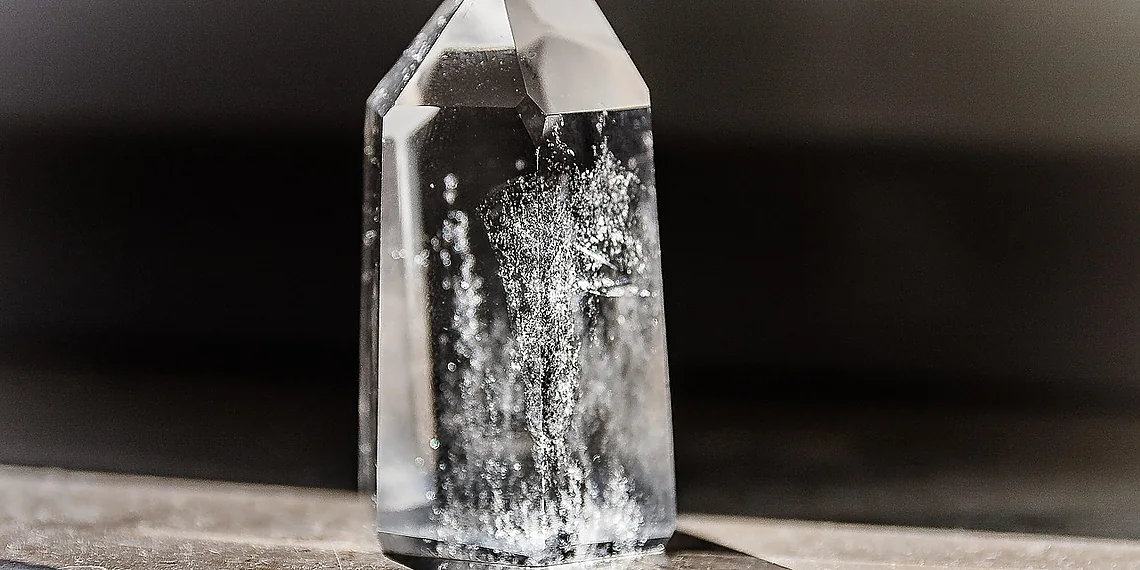


Imagine a material capable of mending its own fractures, not through complex engineering or external intervention, but intrinsically, almost miraculously. Scientists have just unveiled an astonishing phenomenon observed in organic crystals when subjected to incredibly frigid conditions – temperatures nearing absolute zero. This isn’t science fiction; it’s a groundbreaking discovery that challenges our fundamental understanding of material behavior and opens doors to previously unimaginable possibilities. We’re talking about what some researchers are already playfully referring to as ‘self-healing crystals’.
The observation, detailed in recent publications, reveals that these crystalline structures can spontaneously repair damage at the molecular level when cooled to cryogenic temperatures. Previously, self-healing capabilities were largely confined to polymers and composite materials relying on encapsulated agents or microcapsules; this is an entirely new paradigm for crystal formation itself. The implications are vast, ranging from revolutionizing data storage and quantum computing to designing incredibly durable and resilient materials for extreme environments.
While the mechanisms behind this remarkable process are still being actively investigated, preliminary findings suggest a unique interplay of molecular dynamics and energy transfer at ultra-low temperatures. This breakthrough promises to reshape our approach to material science and could lead to innovations we can scarcely conceive of today – from self-repairing infrastructure to advanced medical implants.
The Unexpected Phenomenon
Crystals, in their most basic form, are solids composed of atoms, molecules, or ions arranged in a highly ordered, repeating pattern – think snowflakes or the gemstones we cherish. This rigid structure dictates many of their properties, from hardness to refractive index. Normally, crystals maintain this order through strong chemical bonds and relatively fixed positions for their constituent parts. The degree of movement within these structures is directly tied to temperature; higher temperatures mean more vibrational energy and greater mobility. Conversely, at cryogenic temperatures – those incredibly close to absolute zero (-273.15°C or -459.67°F) – molecular motion practically grinds to a halt. This makes the observed self-healing phenomenon particularly surprising.
For decades, scientists believed that significant structural repair within crystalline materials at such low temperatures was simply impossible. Self-healing typically relies on some level of molecular movement: diffusion, bond rearrangement, or even localized melting and refreezing. The sheer lack of thermal energy at cryogenic conditions seemed to preclude any process capable of achieving this kind of restorative action. Conventional self-healing mechanisms, like those found in polymers where chains can rearrange and reconnect, depend fundamentally on a degree of molecular ‘wiggle room’ that’s absent when everything is frozen solid.
The groundbreaking research now reveals a previously unknown mechanism: ‘zipping.’ In these organic crystals, researchers observed microscopic cracks beginning to close spontaneously. This isn’t happening through brute force or thermal energy; instead, the molecules along the fracture edges appear to ‘zip’ themselves back together, guided by their inherent chemical affinity and the precise arrangement dictated by the crystal lattice. Imagine two rows of tiny velcro strips perfectly aligned – at cryogenic temperatures, even a minuscule nudge can cause them to snap into place with remarkable efficiency.
This ‘zipping’ process isn’t just about molecules randomly finding each other; it’s a precisely orchestrated event governed by the underlying crystalline structure. The lattice provides a framework that dictates the correct orientation and spacing for reconnection. While the precise molecular interactions involved are still being investigated, this discovery fundamentally challenges our understanding of material behavior at extreme temperatures and opens up exciting possibilities for developing novel materials with unparalleled resilience and self-repair capabilities.
Crystals & Cryogenics: A Cold Combination
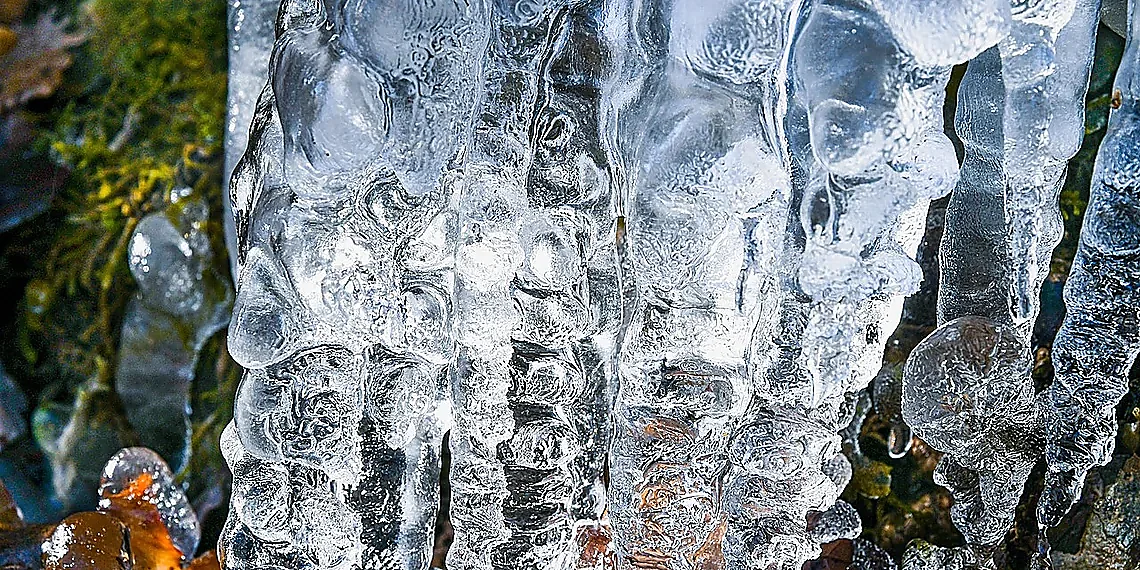
Crystals, in their most fundamental form, are solids composed of atoms, molecules, or ions arranged in a highly ordered, repeating pattern extending in three dimensions. This regular arrangement leads to characteristic shapes and properties – think of the sharp edges of quartz or the brilliant facets of diamonds. Crystal formation typically occurs when substances cool slowly from a liquid or vapor state, allowing the constituent particles time to organize themselves; rapid cooling often results in amorphous (non-crystalline) solids like glass. The strength and stability we associate with crystals largely stem from this rigid structure, making them generally quite resistant to deformation.
At cryogenic temperatures—those nearing absolute zero (-273.15°C or -459.67°F)—molecular motion drastically slows down. Most chemical reactions essentially halt, and the kinetic energy available for movement is minimal. Traditional self-healing processes in materials rely on molecular diffusion and rearrangement driven by thermal energy; think of a polymer chain relaxing and reconnecting after damage. This mechanism is fundamentally impossible at cryogenic temperatures due to the near absence of that driving force. The expectation was that crystals would remain brittle and unyielding under such extreme conditions.
The recent breakthrough involving ‘self-healing’ organic crystals challenges this long-held assumption. Researchers have observed these crystals exhibiting a unique ‘zipping’ mechanism – essentially, broken bonds spontaneously rejoining without the need for significant thermal energy. This is theorized to occur due to subtle quantum mechanical effects and exceptionally precise alignment of molecular fragments, allowing them to ‘click’ back into place with minimal motion even at near-absolute zero temperatures. The implications are profound, suggesting entirely new approaches to material design and durability.
The ‘Zipping’ Mechanism Revealed
The remarkable ability of these organic crystals to self-heal at near-absolute zero temperatures hinges on a fascinating process researchers have dubbed ‘zipping.’ It’s not merely a matter of molecules randomly bumping back into place; instead, it’s an incredibly precise and orchestrated molecular realignment. Imagine tiny, interlocking pieces – like miniature velcro patches – that are initially separated by microscopic fractures. As the crystals cool, their inherent flexibility allows these ‘patches’ to subtly shift and reorient themselves.
This ‘zipping’ action is driven by specific intermolecular forces, primarily hydrogen bonding and van der Waals interactions. These aren’t powerful bonds like covalent links, but they are numerous and directional, allowing for a delicate dance of molecular repositioning. Think of it as countless tiny magnets subtly attracting and aligning to close the gap; each interaction individually weak, but collectively strong enough to mend even significant cracks. The cryogenic temperatures dramatically reduce thermal noise, effectively ‘freezing’ other disruptive movements and enabling these subtle interactions to dominate.
To further illustrate this process, consider how velcro functions – hooks and loops interlock with incredible precision. Similarly, the molecules within these self-healing crystals possess complementary regions that ‘zip’ together as they reorient. These regions aren’t perfectly aligned initially, but the crystal’s inherent flexibility, coupled with the lack of thermal agitation at cryogenic temperatures, allows them to slowly adjust until a strong bond forms. The key difference is that unlike velcro which is mechanical, this ‘zipping’ occurs through dynamic molecular interactions.
The beauty of this self-healing mechanism lies in its efficiency and potential for scalability. While the process is currently demonstrated at extremely low temperatures, understanding the underlying principles – these precise molecular interactions and the role of flexibility – could inspire new materials design strategies. Future research may focus on mimicking this ‘zipping’ behavior at higher temperatures or incorporating it into other material systems, opening up possibilities for everything from self-repairing polymers to resilient structural components.
Molecular Velcro: How Zipping Works

The remarkable self-healing ability of these organic crystals hinges on a phenomenon researchers have dubbed ‘zipping.’ Imagine Velcro – tiny hooks and loops that interlock to create a strong bond. Similarly, at cryogenic temperatures (extremely cold), the molecules within the crystal lattice aren’t moving freely; they’re essentially frozen in place but retain a slight flexibility. When a fracture occurs, these molecules near the crack edges subtly re-orient themselves, their chemical structures acting like those microscopic hooks and loops.
This molecular reorientation isn’t random. The crystals are composed of organic molecules with specific functional groups – regions of the molecule that are chemically predisposed to form bonds. As the crystal cools and fractures, these functional groups on adjacent molecules begin to ‘zip’ together, forming new covalent (strong) or hydrogen bonds across the crack. This process isn’t instantaneous; it takes time as the molecules slowly migrate and adjust their positions to maximize bonding potential. The lower temperature dramatically slows down disruptive molecular motion, allowing this precise alignment to occur.
Crucially, the ‘zipping’ mechanism is driven by thermodynamics – the tendency of systems to minimize energy. A fractured crystal represents a higher-energy state than one that’s intact. By forming these new bonds and re-establishing the crystalline structure, the system lowers its overall energy, effectively ‘healing’ itself. The cryogenic environment acts as an essential facilitator, enabling this delicate molecular dance without the interference of heat-induced vibrations which would typically prevent such precise bonding.
Why This Matters: Potential Applications
The discovery of self-healing crystals operating at cryogenic temperatures isn’t just a scientific curiosity; it unlocks a realm of possibilities with profound implications for numerous industries. Currently, material degradation is a constant challenge – from the slow decay of infrastructure to the limited lifespan of electronic devices. This breakthrough offers a potential pathway towards creating materials that can autonomously repair microscopic damage, significantly extending their usability and reducing waste. Imagine bridges that mend hairline fractures before they become major structural issues or aircraft components that automatically recover from stress-induced cracks – this is the promise self-healing crystals hold.
Beyond simply prolonging lifespan, these self-healing crystals pave the way for entirely new sensor technologies. The mechanisms driving their repair – subtle molecular movements even at near-absolute zero – could be harnessed to create incredibly sensitive detectors. Picture sensors capable of detecting minute changes in pressure or temperature with unprecedented accuracy, opening doors in fields like medical diagnostics, environmental monitoring, and advanced robotics. Further research into the underlying principles could lead to the development of entirely new types of chemical sensors that respond to trace amounts of specific compounds.
Looking further ahead, understanding and replicating this self-healing mechanism has the potential to revolutionize materials science as we know it. Durable electronics are a constant aspiration; imagine displays or microchips capable of automatically correcting minor manufacturing defects or recovering from physical stress. Similarly, resilient spacecraft components, vital for deep space exploration, could benefit immensely from self-repairing capabilities, reducing mission risk and extending operational lifetimes. The implications stretch even to bio-inspired materials – mimicking the incredible regenerative abilities seen in nature, but now applied to synthetic structures.
Future research will undoubtedly focus on identifying the specific molecular interactions responsible for this cryogenic self-healing process and exploring how these principles can be implemented in a wider range of crystal types and material compositions. Scientists are likely to investigate methods for ‘programming’ healing responses – tailoring the crystals’ behavior to address specific damage scenarios. While significant challenges remain, the initial discovery represents a pivotal step towards a future where materials possess inherent resilience and longevity.
Beyond Self-Repair: Future Possibilities
The ability to replicate the self-healing mechanism observed in these organic crystals holds significant promise for creating exceptionally durable electronics. Imagine smartphones or laptops with screens that automatically repair cracks and scratches, drastically extending their lifespan and reducing e-waste. Similarly, components within complex machinery could exhibit enhanced resilience against wear and tear, minimizing downtime and maintenance costs. While current implementation faces challenges scaling beyond laboratory conditions, the foundational understanding of how these crystals reorganize at near-absolute zero provides a crucial blueprint for future material design.
Beyond terrestrial applications, self-healing materials are particularly attractive for space exploration. Spacecraft components endure extreme temperature fluctuations, radiation exposure, and micrometeoroid impacts – all contributing to degradation over time. Integrating self-repairing elements into spacecraft hulls or critical systems could significantly reduce mission risks and extend operational lifetimes in harsh environments. The cryogenic nature of the initial discovery also presents a unique avenue for research: materials engineered to exhibit similar properties at more manageable temperatures would unlock even broader applicability.
Future research will likely focus on identifying the precise molecular interactions responsible for this self-healing behavior, potentially allowing scientists to engineer analogous mechanisms into other material classes – including polymers and ceramics. Bio-inspired approaches, drawing parallels between crystal reorganization and biological processes like tissue regeneration, could also yield innovative solutions. Furthermore, exploring the potential of these self-healing crystals as highly sensitive sensors, leveraging their structural changes in response to external stimuli, represents a compelling avenue for future development.
Challenges & Next Steps
While the demonstration of self-healing crystals at cryogenic temperatures represents a remarkable scientific achievement, significant hurdles remain before this technology can transition from laboratory curiosity to practical application. Currently, the observed healing capabilities are limited – they work best with specific organic crystal structures and require extremely low temperatures (near absolute zero) which present immense logistical and energetic challenges for widespread use. Replicating these results consistently across different crystal types is proving difficult, suggesting a deep understanding of the underlying molecular mechanisms is still needed.
Scaling up production presents another formidable obstacle. The current methods are largely bespoke and unsuitable for mass manufacturing. Furthermore, even if we could reliably create self-healing crystals, their long-term stability after healing remains uncertain. Repeated cycles of damage and repair could potentially degrade the crystal’s structural integrity over time, negating any initial benefits. Research needs to focus on understanding the durability of these healed structures under various conditions – exposure to different wavelengths of light, varying pressures, and even subtle environmental changes.
Future research directions are numerous. Scientists are now investigating the fundamental principles driving this self-healing process at a molecular level; detailed simulations and advanced microscopy techniques will be crucial for unlocking more robust and versatile healing mechanisms. Exploring alternative crystal compositions that exhibit similar properties at higher (and more manageable) temperatures is also a high priority. Finally, as with any potentially transformative technology, ethical considerations regarding the application of self-healing crystals – particularly in areas like materials manufacturing or even biological applications – need to be proactively addressed.
Scaling Up: Hurdles Ahead
While initial demonstrations of self-healing crystals at cryogenic temperatures are incredibly promising, replicating these results across various crystal types presents a significant hurdle. The current success is largely limited to specific organic compounds exhibiting particular molecular arrangements and bonding characteristics. Attempting this process with inorganic crystals or even subtly different organic structures often yields unpredictable or entirely unsuccessful outcomes, necessitating extensive material screening and tailored experimental conditions for each new candidate. This severely limits the immediate applicability of the technique.
Scaling up production also poses considerable challenges. The cryogenic temperatures required (-196°C or lower) demand specialized equipment and energy expenditure, making large-scale manufacturing currently impractical and economically unfeasible. Furthermore, precisely controlling the environmental conditions – including humidity and pressure – during the self-healing process is crucial for consistent results, adding complexity to any potential industrial scaling efforts. Research focusing on reducing the required temperature range or developing more robust healing processes less sensitive to environmental factors will be vital.
Beyond technical limitations, ethical considerations are beginning to emerge. As with any advanced materials technology, concerns surrounding equitable access and potential misuse need addressing. If self-healing crystals become integral components in critical infrastructure or high-value products, ensuring fair distribution and preventing exploitation will require careful planning and proactive policy development. Further research into the environmental impact of large-scale crystal production and disposal is also necessary to ensure responsible innovation.
The implications of this cryogenic breakthrough extend far beyond simply repairing cracked phone screens; we’ve glimpsed a future where materials actively adapt and mend themselves, fundamentally altering how we design and build everything from infrastructure to spacecraft.
Imagine bridges that autonomously repair stress fractures or medical implants that seamlessly integrate with the body – these aren’t fantasies anymore, but increasingly plausible realities thanks to innovations like these self-healing crystals.
While still in its early stages, this research demonstrates a profound shift in our understanding of material behavior and opens avenues for developing entirely new classes of resilient and sustainable products. The elegance of harnessing cryogenic principles to achieve autonomous repair is truly captivating.
The potential impact on industries reliant on durable materials – aerospace, construction, electronics – is immense, promising longer lifespans, reduced maintenance costs, and a significant decrease in waste. It’s an exciting time to witness the convergence of cryogenics and materials science pushing boundaries we previously thought insurmountable. Further refinement could even lead to applications far beyond our current comprehension, altering the very fabric of our technological landscape. The journey has just begun, but the destination is undeniably transformative. We are only scratching the surface of what’s possible with this technology and similar advancements in the future. Don’t miss out on this revolution; stay informed about the ongoing research and development surrounding self-healing crystals and related materials science breakthroughs! Explore reputable scientific journals, follow leading researchers online, and join the conversation – the future is being built now, and you can be a part of it.
Continue reading on ByteTrending:
Discover more tech insights on ByteTrending ByteTrending.
Discover more from ByteTrending
Subscribe to get the latest posts sent to your email.