
Humanity’s return to the Moon is accelerating, and at the heart of this ambitious endeavor lies NASA’s Gateway, a revolutionary lunar station orbiting our celestial neighbor. This isn’t just about flags and footprints; it’s about establishing a sustained presence beyond Earth orbit, paving the way for future exploration deeper into the solar system. The Gateway represents a critical stepping stone in our quest to understand the Moon and unlock its potential. Recent milestones have brought this vision closer than ever before. A significant leap forward occurred recently with the successful activation of the Gateway Power System, a pivotal moment marking a crucial step towards full operational capability. This complex system will provide reliable power for all Gateway modules and future Artemis astronauts, ensuring their safety and enabling groundbreaking scientific research. The ability to generate and distribute electricity in deep space is paramount, and this achievement underscores NASA’s commitment to innovation and robust infrastructure. With the successful testing of its core functions, the Gateway Power System demonstrates a readiness level essential for supporting long-duration missions and serving as a vital platform for lunar landers and robotic probes. The Artemis program depends on this reliable power source, signifying how integral the Gateway is to our future in space.
$Gateway provides a unique vantage point for observing the Moon and Earth, while also acting as a staging area for missions to Mars and beyond.
Understanding NASA’s Gateway
NASA’s Artemis program aims to return humans to the Moon and eventually venture further into our solar system, but achieving these ambitious goals requires a robust infrastructure beyond just landing on lunar soil. Enter the Gateway: a critical component of this future space exploration effort. Think of it as a mini-space station orbiting the Moon – not *on* the Moon itself – serving as a vital hub for astronauts and robotic missions alike.
Located in a unique Near Rectilinear Halo Orbit (NRHO) around the Moon, the Gateway isn’t intended to be a permanent lunar base. Instead, it acts as a staging point. Astronauts traveling to the lunar surface will launch from Earth, dock with the Gateway, transfer equipment and supplies, and then descend to the Moon. This approach significantly reduces the amount of fuel needed for those lunar landings compared to launching directly from Earth, making missions more frequent and sustainable.

Why orbit instead of land? The NRHO provides a stable gravitational sweet spot offering excellent visibility of both the Earth and the Moon’s South Pole – a region believed to hold significant water ice deposits. This vantage point is invaluable for communications, scientific observations, and navigation support for lunar surface activities. Furthermore, Gateway’s modular design allows it to be expanded over time with additional capabilities, potentially transforming into a platform for deep-space exploration beyond the Moon.
Ultimately, the Gateway represents more than just a space station; it’s a cornerstone of NASA’s long-term vision for sustainable lunar presence and serves as a crucial stepping stone toward future human missions to Mars. The recent successful power-up of its Power System Element is a significant milestone in realizing this ambitious plan – proving that the infrastructure needed to support these ventures is steadily taking shape.
The Lunar Hub: What is Gateway?

NASA’s Gateway is essentially a small, modular space station orbiting the Moon. Think of it as a vital pit stop or staging area for astronauts and equipment heading to and from the lunar surface. Unlike a base built directly on the Moon, Gateway provides a comfortable and technologically advanced environment in lunar orbit, allowing for longer stays and more complex operations than could be supported by lunar landers alone.
The decision to place Gateway in orbit rather than on the Moon was strategic. Lunar orbit offers several advantages, including a stable gravitational sweet spot that allows for efficient communication with Earth and other spacecraft. It also provides a platform for observing the entire lunar surface, which is invaluable for scientific research and identifying potential landing sites. Furthermore, it reduces the logistical challenges associated with transporting large structures to and from the Moon’s surface.
As a cornerstone of NASA’s Artemis program, Gateway will play a crucial role in enabling sustainable lunar exploration. It’s envisioned not only as a base for future lunar missions but also as a potential springboard for even deeper space exploration, potentially serving as a testing ground for technologies and strategies needed to eventually reach Mars.
The Power Element: A Critical Component
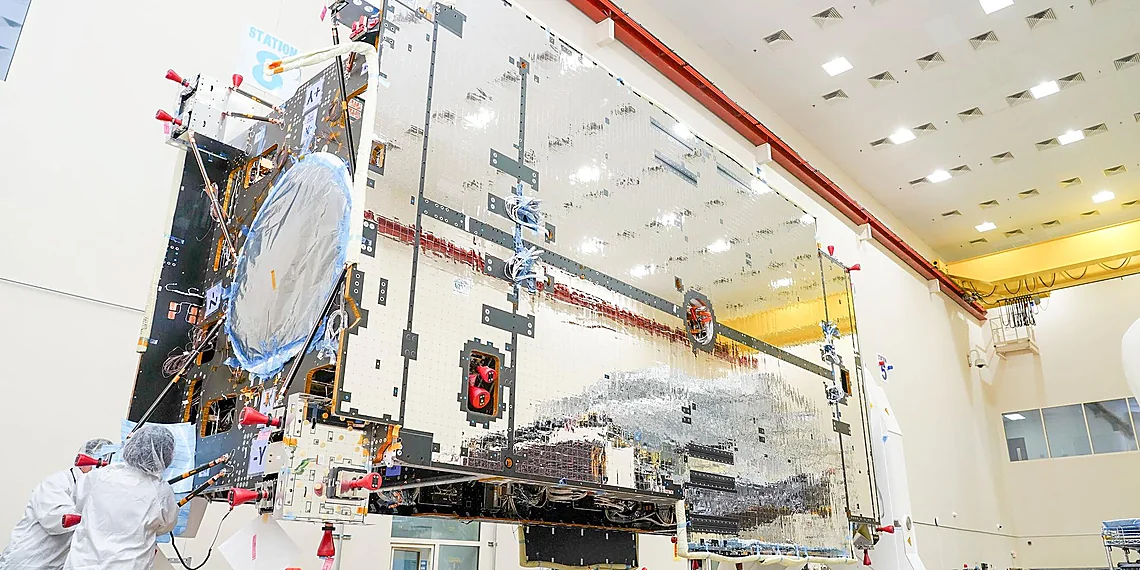
The Gateway space station’s ambitious mission hinges on a critical component: the Power and Propulsion Element (PPE). Often overlooked in discussions about habitats and lunar landers, the PPE is essentially the power plant for this orbiting outpost. It’s not just about lights and computers; it provides the energy needed to operate all of Gateway’s systems, from life support to scientific instruments, and even enables vital communication relays back to Earth. Think of it as the engine that keeps everything running smoothly in deep space.
The PPE itself is a sophisticated spacecraft equipped with large solar arrays capable of generating 60 kilowatts of power – enough electricity to supply several homes here on Earth. This substantial amount of energy isn’t just for powering Gateway; it also fuels its electric propulsion system, allowing for precise orbital adjustments and station-keeping maneuvers. The system incorporates advanced battery storage capabilities to ensure a continuous power supply even when the station is in the shadow of the Moon.
NASA’s Glenn Research Center and Johnson Space Center are leading the development effort, incorporating lessons learned from previous successful testing phases. These tests have demonstrated not only the PPE’s ability to generate power but also its resilience in the harsh environment of space – a vital factor for long-duration missions around the Moon as part of the Artemis program. A reliable and robust power source is absolutely paramount; without it, Gateway simply cannot function as intended.
The successful powering on of the PPE last year marked a significant milestone, validating its design and paving the way for integration with the rest of the Gateway architecture. This advancement underscores NASA’s commitment to establishing a sustainable human presence beyond Earth orbit and highlights the crucial role that advanced power systems play in realizing this vision.
Delivering Lunar Power: The PPE Explained

The Power and Propulsion Element (PPE) represents a crucial piece of infrastructure for NASA’s Artemis program and the planned lunar orbiting station, Gateway. Unlike traditional spacecraft that rely solely on chemical propulsion, the PPE utilizes solar electric propulsion (SEP). This system employs large, deployable solar arrays to capture sunlight and convert it into electricity which then powers ion thrusters. These thrusters provide a gentle but continuous thrust, allowing for highly efficient maneuvering and orbit adjustments – vital for maintaining Gateway’s position around the Moon over extended periods.
A key aspect of the PPE’s design is its substantial battery storage system. The SEP process isn’t constant; sunlight availability fluctuates based on orbital position. Batteries are essential to store excess power generated during sunlit periods and provide continuous operation when the spacecraft is in Earth’s shadow, which can last for several hours at a time. This combination of solar arrays, ion thrusters, and battery storage creates a complex but robust system capable of generating 60 kilowatts – enough power to support Gateway’s scientific instruments, communication systems, and life support functions.
Successful testing earlier in 2023 confirmed the PPE’s ability to generate and distribute power, demonstrating its core functionality. This milestone involved powering on the entire element and validating its critical subsystems. The ongoing development and refinement of the PPE underscores NASA’s commitment to building a sustainable presence beyond Earth orbit and highlights the sophistication required for long-duration space missions.
Milestone Achieved: Powering Up the System
A critical milestone has been achieved in the development of NASA’s Gateway lunar station: its Power System has successfully powered up for the first time, marking a significant validation of the design and engineering behind this vital infrastructure component. This initial power-up event represents a huge leap forward for the Artemis program and underscores the progress being made towards establishing a sustained human presence on and around the Moon. The Power and Propulsion Element, which will ultimately provide Gateway with 60 kilowatts of power – enough to run several homes here on Earth – has demonstrably proven its ability to generate and distribute electricity, a crucial step before it’s integrated into the full orbital platform.
The successful ignition itself was a carefully orchestrated event involving teams at Glenn Research Center and Johnson Space Center. Leading up to the activation, engineers meticulously checked systems and prepared for potential contingencies. This ‘first time’ event demanded precision and collaboration, with real-time data streams monitored closely as the Power System began generating electricity. The team’s reaction was one of palpable relief and excitement; witnessing years of hard work culminate in this successful demonstration provided invaluable confirmation that the design is sound and ready for integration.
What does this power-up mean for future Artemis missions? Simply put, it paves the way for a more robust and sustainable lunar presence. Gateway will serve as a staging point for astronauts traveling to the Moon’s surface and beyond, requiring reliable power for life support systems, scientific experiments, communications, and propulsion. This successful demonstration of the Power System’s capabilities significantly reduces risk and strengthens confidence in the Artemis program’s ability to establish long-term lunar operations, ultimately contributing to NASA’s broader goals of deep space exploration.
A Successful Ignition: What Happened?
For the first time ever, NASA successfully powered up the Gateway Power System, a critical component of the planned lunar space station. This landmark event occurred on December 12, 2023, at Glenn Research Center in Ohio, marking a significant step forward for the Artemis program and demonstrating the readiness of the Power and Propulsion Element (PPE). The PPE, which will provide power to Gateway, has been undergoing rigorous testing, with this ignition serving as a crucial validation of its design and operational capabilities.
The path to this successful power-up wasn’t without challenges. Engineers faced complexities in coordinating multiple systems and ensuring seamless integration between the solar arrays, power management distribution units, and batteries. A key hurdle involved simulating the harsh conditions of lunar orbit – extreme temperatures, vacuum environment, and radiation exposure – to accurately test the system’s performance under real-world scenarios. The team employed specialized thermal chambers and vibration tables to replicate these factors.
The atmosphere at Glenn Research Center was reportedly electric as engineers confirmed the successful ignition. This achievement not only validates years of dedicated work but also paves the way for future Artemis missions, ensuring a reliable power source for Gateway as it serves as a staging point for lunar exploration and eventual human missions to Mars. The data collected during this test will be invaluable in refining operational procedures and optimizing performance leading up to Gateway’s deployment.
Looking Ahead: The Future of Gateway
The successful demonstration of the Power and Propulsion Element’s capabilities marks a pivotal moment not just for NASA’s Gateway program, but for the future of sustained lunar presence and beyond. While powering up the 60-kilowatt system was a crucial first step, it’s truly what comes *next* that holds immense promise. We’re now looking at accelerating the timeline for module additions to the Gateway station itself – including habitation modules, science laboratories, and logistics modules – all of which will rely heavily on this robust power source to function effectively.
Gateway isn’t just a refueling stop; it’s envisioned as a dynamic platform enabling scientific discoveries previously unattainable. With consistent, reliable power, researchers can deploy advanced instruments for lunar surface observation, conduct in-situ resource utilization (ISRU) experiments to potentially extract water ice and other resources, and even serve as an orbital staging point for missions venturing further into the solar system – perhaps Mars or beyond. This expanded capability unlocks opportunities for a deeper understanding of the Moon’s geology, history, and potential for future human settlements.
Beyond scientific advancement, Gateway is also attracting significant commercial interest. NASA’s commitment to leveraging partnerships with private companies opens doors for commercial research payloads, tourism opportunities, and even in-space manufacturing capabilities. The Power and Propulsion Element provides a stable foundation upon which these businesses can build, fostering a burgeoning lunar economy. As the station grows and becomes more accessible, we expect to see an increase in collaboration between NASA and both established space corporations and emerging startups.
Ultimately, the Gateway Power System activation represents a building block towards a sustainable human presence beyond Earth orbit. The upcoming years will be filled with exciting milestones – crewed missions utilizing the station, further module integrations, and continued refinement of the power infrastructure – all contributing to a new era of lunar exploration and paving the way for even more ambitious deep-space endeavors.
Beyond Power-Up: What’s Next for Lunar Exploration?
The recent successful power-up of the Power and Propulsion Element (PPE) for NASA’s Gateway marks a crucial step forward not just for the station itself, but also for broader Artemis program goals. Generating 60 kilowatts of power, the PPE will provide electricity, communications capabilities, attitude control, and propulsion to Gateway, enabling it to function as a vital staging point in lunar orbit. This activation validates years of development work at Glenn Research Center and Johnson Space Center, paving the way for subsequent module deliveries and crewed missions.
Looking ahead, several key milestones are on the horizon for Gateway’s construction. The European Space Agency’s (ESA) ESP-Ring module is slated to launch in 2026, followed by NASA’s HALO (Habitation, Logistics, Operations) module. These additions will significantly expand Gateway’s capabilities, providing living and working space for astronauts during lunar surface missions. Crewed flybys are expected to begin as early as 2025 with Artemis V, ultimately leading to sustained human presence in lunar orbit.
Beyond simply enabling lunar exploration, Gateway’s infrastructure opens doors for ambitious deep-space endeavors and commercial opportunities. The station will serve as a testbed for technologies needed for missions to Mars and beyond. NASA is actively fostering partnerships with commercial companies like SpaceX and Blue Origin to leverage their expertise and resources in supporting Gateway’s operations and contributing to its overall functionality, ultimately lowering costs and accelerating the pace of lunar and deep-space exploration.
The recent successful testing marks not just a technical achievement, but a pivotal moment in humanity’s return to deep space exploration.
This progress underscores NASA’s commitment to pushing boundaries and solidifying our position as leaders in scientific discovery.
The development of the Gateway Power System, with its innovative solar arrays and power distribution capabilities, is a testament to the ingenuity driving this ambitious project.
It’s thrilling to witness these foundational elements come together, paving the way for sustained human presence beyond Earth orbit – a prospect that was once confined to science fiction now becoming tangible reality. The implications extend far beyond lunar missions, potentially revolutionizing our approach to future interplanetary travel and resource utilization. This is more than just building infrastructure; it’s about establishing a permanent foothold in the cosmos, fostering international collaboration, and inspiring the next generation of scientists and engineers. The potential for groundbreaking discoveries fueled by this orbital outpost is truly limitless. We stand on the precipice of an exciting new era, one where lunar bases are commonplace and Mars becomes our next giant leap. The careful planning and execution demonstrated in these recent tests give us immense confidence in the Artemis program’s overall success. It’s a privilege to witness such dedication and innovation firsthand, and we can all anticipate even more incredible developments ahead as Gateway continues its assembly and testing phase. Want to dive deeper into this remarkable endeavor? Explore NASA’s Artemis website to uncover the full scope of the mission: [link to Artemis website]. For detailed information about the Gateway station itself, including its architecture and purpose, visit the dedicated Gateway page: [link to Gateway page]. The future is bright; let’s continue following along as humanity expands its reach among the stars.
Continue reading on ByteTrending:
Discover more tech insights on ByteTrending ByteTrending.
Discover more from ByteTrending
Subscribe to get the latest posts sent to your email.