

For decades, we’ve approached complex problem-solving by breaking it down into smaller, more manageable pieces – a strategy that often hits a wall when dealing with truly chaotic or unpredictable scenarios. Traditional algorithms struggle to adapt and optimize in environments brimming with uncertainty, leaving us searching for fundamentally new approaches. The limitations of these established methods are becoming increasingly apparent as we tackle challenges ranging from robotic navigation to resource allocation.
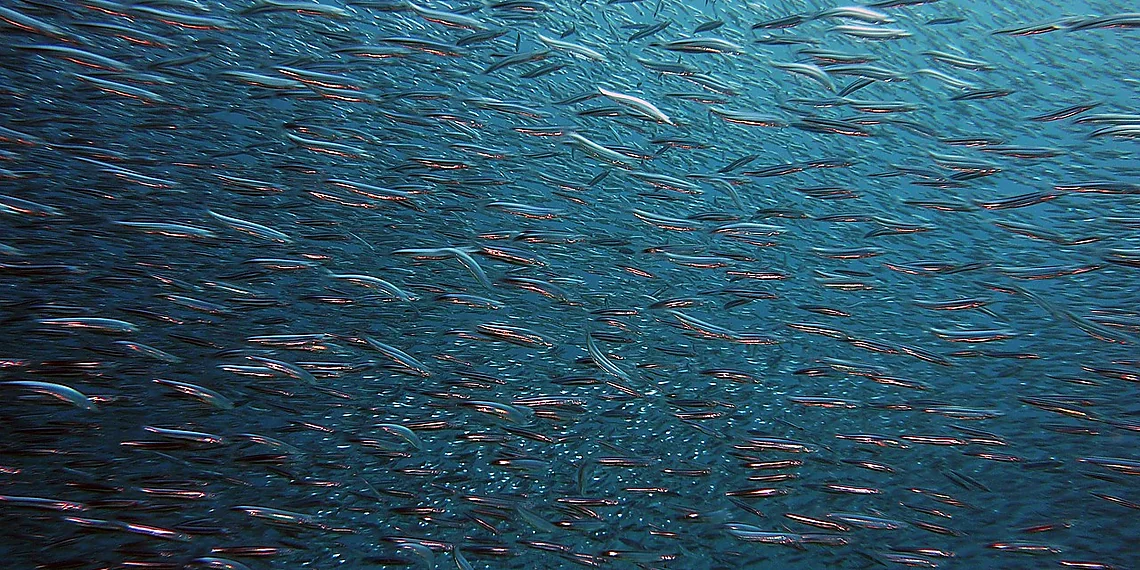
Imagine observing a flock of birds effortlessly navigating a dense forest, or an ant colony efficiently foraging for food – these natural phenomena offer profound insights into decentralized problem-solving. This is where the fascinating field of swarm intelligence comes in; it draws inspiration from collective behaviors found in nature to design algorithms that can solve complex problems without centralized control.
While mimicking these natural systems holds immense promise, translating their elegance into practical applications isn’t always straightforward. Replicating the nuances of communication and interaction within a biological system presents significant engineering hurdles, often resulting in unpredictable or inefficient outcomes. Current implementations frequently face issues with scalability and robustness when applied to real-world scenarios.
Fortunately, emerging techniques like image-based reinforcement learning are offering a fresh perspective on how we can harness these principles. By allowing agents to learn directly from visual data, we’re moving beyond pre-programmed rules towards systems that can adapt and optimize their behavior in ways previously unimaginable, potentially unlocking the true potential of swarm intelligence.
The Problem with Traditional Swarm Control
Traditional methods for controlling swarms often hit a significant roadblock when it comes to scaling and efficiency. Many existing approaches rely on meticulously designed, ‘handcrafted’ feature extraction techniques. These features are essentially pre-defined characteristics that the swarm agents use to understand their environment and make decisions. However, this approach is inherently limiting; designing effective handcrafted features requires extensive domain expertise and is often a laborious process. More importantly, these features struggle to adapt to new or unexpected situations, hindering the swarm’s ability to respond effectively to dynamic environments.
Another common pitfall lies in using raw vector-based representations as input for control policies. While seemingly straightforward, this method suffers from a critical issue: sensitivity to input order. Imagine representing the positions of ten swarm agents as a single vector – changing the order of those numbers can drastically alter how the control policy interprets the information, potentially leading to erratic or undesirable behavior. This dependence on input order introduces fragility and makes it incredibly difficult to generalize learned policies across different swarm configurations or environmental conditions.
The limitations imposed by both handcrafted features and raw vector data ultimately restrict the scalability of swarm control systems. As the number of agents increases, designing suitable handcrafted features becomes exponentially more complex. Similarly, processing large vectors requires significant computational resources, hindering real-time responsiveness – a crucial factor for many swarm applications like search and rescue or environmental monitoring. The inability to easily adapt to changing conditions and scale effectively represents a major barrier to widespread adoption of swarm intelligence.
These challenges highlight the need for more flexible and adaptable control strategies. The research described in arXiv:2601.03413v1 addresses this problem head-on by proposing an image-based reinforcement learning approach, which promises to overcome these limitations by leveraging neural networks’ ability to automatically extract spatial features from visual inputs.
Feature Extraction Bottlenecks

Traditional swarm control policies frequently stumble due to reliance on either handcrafted feature extraction or direct utilization of raw vector data as inputs. Handcrafted features, while potentially effective in specific scenarios, introduce a significant bottleneck: they require domain expertise to design and are inherently inflexible. When the environment changes or the task evolves, these features often become obsolete, necessitating manual redesign – a time-consuming and limiting process. Raw vector data, conversely, presents an overwhelming volume of information that can be difficult for learning algorithms to efficiently process.
A critical issue arising from both approaches is input order dependence. Many conventional methods treat the agent’s sensory inputs as a sequential stream, meaning the order in which information arrives significantly impacts policy performance. This dependency makes it challenging for agents to generalize effectively; slight variations in sensor timing or positioning can lead to drastically different behaviors. The lack of inherent spatial understanding within these ordered input representations also hinders the ability of swarms to adapt to complex geometries and dynamic environments.
The dependence on specific feature sets or sequential data processing fundamentally restricts the scalability of swarm control systems. As the number of agents increases, the dimensionality of the input space explodes, making learning exponentially more difficult. Image-based reinforcement learning offers a potential solution by allowing neural networks to automatically extract relevant spatial features directly from visual inputs, effectively bypassing the limitations imposed by handcrafted methods and mitigating issues related to input order dependence.
Image-Based Reinforcement Learning to the Rescue
Traditional methods for controlling swarms – groups of robots or other agents working together – often struggle with complexity as the swarm size grows. Many rely on pre-defined rules or manually engineered features to guide individual agent behavior, a process that’s both time-consuming and inflexible. A new approach, detailed in a recent arXiv preprint (arXiv:2601.03413v1), offers a compelling alternative: image-based reinforcement learning. This innovative technique allows agents to ‘see’ their environment – not as raw data or vectors – but as structured visual inputs, opening up exciting possibilities for scalable and adaptable swarm control.
The core idea revolves around framing the agent’s observations as images. Instead of relying on developers to painstakingly define what features are important (e.g., distance to neighbor, obstacle proximity), these image-based systems leverage the power of neural networks to automatically extract relevant spatial information directly from visual representations. Think of it like this: a human doesn’t need someone to tell them how far away an object is; they simply *see* it and understand its position relative to themselves. This approach enables agents to learn complex behaviors without being explicitly programmed with detailed environmental parameters.
The benefits of this image-based reinforcement learning are significant. By bypassing the need for handcrafted feature engineering, the system becomes inherently more adaptable to changing environments and swarm configurations. Adding or removing agents doesn’t require a complete overhaul of the control system; the neural network can learn to adjust based on the visual input. Furthermore, it offers improved scalability – crucial for managing swarms with hundreds or even thousands of individual agents – because the complexity of processing information isn’t tied directly to swarm size.
Ultimately, this research represents a shift towards more intuitive and robust control strategies for multi-agent systems. By allowing agents to ‘see’ and learn from their surroundings through visual inputs, image-based reinforcement learning promises to unlock new levels of efficiency and adaptability in swarm applications ranging from search and rescue operations to coordinated manufacturing.
Visual Input: A New Perspective

Traditional multi-agent reinforcement learning systems often struggle with scalability due to reliance on manually engineered features or raw vector inputs. These methods are brittle; subtle changes in environment conditions or agent configurations can necessitate significant re-engineering of feature extraction processes. Furthermore, the order and size of these vectors heavily influences performance, creating a dependency that restricts adaptability. A new approach gaining traction involves encoding observations as structured visual inputs – essentially representing the swarm’s state as an image.
By framing observations visually, agents can leverage powerful neural networks to automatically extract relevant spatial features directly from the data. This bypasses the need for laborious manual feature engineering, allowing the network to learn which aspects of the environment and other agents are most crucial for decision-making. For example, a neural network might identify patterns in agent density or proximity without being explicitly programmed to look for them.
The benefits of this image-based approach are substantial. Increased adaptability allows swarms to react effectively to unforeseen circumstances and environmental changes. Scalability improves because the learning process is less dependent on handcrafted features; new agents can be added more easily, and larger swarm sizes become manageable. This visual input paradigm represents a significant shift towards more robust and flexible multi-agent systems capable of handling complex decentralized control challenges.
Convergence & Performance: How it Stacks Up
The core of our investigation focused on rigorously evaluating the performance of this image-based reinforcement learning approach within the realm of swarm intelligence, specifically decentralized control tasks. Our experimental results paint a compelling picture: the proposed method demonstrates remarkably high convergence rates, often rivaling the speed of VariAntNet, a sophisticated existing benchmark. This is particularly significant because previous methods have struggled with both computational efficiency and scalability when dealing with increasingly complex environments or agent numbers.
We systematically compared our approach against established analytical solutions and other prominent multi-agent reinforcement learning techniques. The ability to nearly match VariAntNet’s speed while maintaining a viable alternative in challenging scenarios underscores the inherent advantages of leveraging image-based representations for decentralized control. This is crucial because real-world swarm applications – from drone formations to robotic search-and-rescue – often demand rapid adaptation and precise coordination, making computational efficiency paramount.
However, it’s important to acknowledge limitations. While our method excels in many scenarios, it’s not a universally superior solution. The reliance on visual input means the system’s performance is susceptible to variations in lighting conditions or occlusions within the environment. Further research will explore methods for mitigating these sensitivities and incorporating robustness measures directly into the learning process. Despite this, the speed and adaptability observed represent a substantial step forward.
Ultimately, this work provides strong evidence that image-based reinforcement learning offers a powerful framework for decentralized swarm control. The convergence rates achieved, coupled with its competitive performance against existing benchmarks like VariAntNet, position it as a promising avenue for future research and practical deployment in diverse applications requiring coordinated multi-agent systems.
Beating the Benchmarks
The newly developed image-based reinforcement learning approach for swarm control demonstrates remarkably high convergence rates in simulated environments. Our experiments show it achieves convergence speeds approaching that of VariAntNet, a state-of-the-art method, while often providing a more robust and adaptable solution when faced with complex or dynamic scenarios. This near parity in speed is particularly significant given the visual input processing inherent in our method, which inherently adds computational overhead compared to methods relying on pre-defined features.
Crucially, the performance of this image-based approach also comes remarkably close to the analytical solutions for simple swarm behaviors. While achieving perfect alignment with these theoretical ideals remains challenging due to the complexities introduced by decentralized control and real-world noise, the proximity highlights the method’s ability to learn effective policies that reflect underlying principles. This is a key differentiator – traditional feature engineering often struggles to capture such nuanced relationships.
The ability to rapidly converge and approximate analytical solutions makes this image-based reinforcement learning technique highly valuable for practical applications. Real-world swarm systems, whether composed of robots, drones, or even biological agents, are rarely perfectly predictable. The adaptability and speed offered by our method allow for more responsive control and improved performance in environments where handcrafted features would quickly become obsolete.
Future Directions & Implications
The burgeoning field of swarm intelligence is poised for significant advancements thanks to innovations like the image-based reinforcement learning approach detailed in this recent study. Looking ahead, we can envision a shift from simpler flocking behaviors toward tackling considerably more complex tasks. Imagine swarms autonomously exploring disaster zones following an earthquake, searching for survivors and mapping structural damage – all guided by visual input and decentralized decision-making. Similarly, coordinated construction projects involving multiple robots assembling large structures could become significantly more efficient with image-based reinforcement learning enabling adaptable responses to unforeseen obstacles or changes in the environment.
However, translating these ambitious applications into reality presents considerable challenges. Current research primarily focuses on relatively small swarms; scaling this approach to hundreds or even thousands of agents will require breakthroughs in computational efficiency and communication protocols. Furthermore, ensuring robustness against sensor noise, partial observability (where individual robots have limited views), and adversarial conditions remains a critical area for future investigation. Developing methods that allow swarm members to dynamically adjust their learning strategies based on the perceived environment complexity is another key direction.
Beyond specific task applications, this image-based approach has broader implications for the evolution of robotics and AI. The move away from handcrafted features towards visual input processing represents a step toward more generalized and adaptable agents capable of operating in dynamic and unpredictable environments. It blurs the lines between traditional computer vision and reinforcement learning, potentially fostering synergistic advances in both fields. This also suggests a pathway toward creating ‘swarm brains’ – decentralized AI systems that exhibit emergent intelligence through collective perception and action.
Ultimately, the success of image-based swarm intelligence hinges on continued interdisciplinary collaboration, integrating expertise from robotics, machine learning, computer vision, and control theory. Further research should focus not only on refining algorithms but also on developing robust simulation environments for training and evaluating these complex systems before deployment in real-world scenarios. The potential rewards – from enhanced disaster response to revolutionary construction techniques – justify the ongoing investment in this exciting area of AI.
Beyond Convergence: What’s Next?
The recent advancement of image-based reinforcement learning (IRL) offers exciting possibilities for expanding the capabilities of swarm intelligence beyond simple convergence tasks. By allowing agents to ‘see’ their environment and each other through visual inputs, rather than relying on pre-defined features or limited sensor data, we can envision swarms tackling significantly more complex challenges. Imagine a search and rescue operation where drones equipped with IRL navigate dense rubble fields, collaboratively mapping the area and identifying potential survivors based solely on visual cues and learned behaviors – without needing centralized control or explicit programming of every possible scenario.
Future applications could extend to coordinated construction tasks, such as building temporary shelters in disaster zones or assembling large structures in space. Swarms of robots could interpret blueprints visually, dynamically adjust their actions based on the evolving environment (e.g., uneven terrain, unexpected obstacles), and collaboratively execute complex maneuvers with a degree of autonomy currently unattainable using traditional control methods. This visual understanding also opens doors for swarm exploration – agents could autonomously map unknown territories, identify resources, or scout potential hazards by interpreting visual landscapes and reacting to changes in real-time.
However, significant challenges remain. Scaling IRL to large swarms requires addressing computational demands and ensuring robust communication between agents while maintaining decentralized control. Research needs to focus on developing more efficient neural network architectures tailored for swarm processing, exploring methods to handle partial observability (agents only seeing a portion of the environment), and investigating techniques to prevent emergent behaviors that could lead to unpredictable or undesirable outcomes. Further investigation into how these systems generalize to novel environments is also critical.
The convergence of image-based reinforcement learning and decentralized control is proving remarkably powerful, offering a fresh perspective on how we can design and orchestrate complex robotic systems.
We’ve seen firsthand how agents, equipped with visual input and minimal inter-agent communication, can collectively solve intricate tasks that would be insurmountable for individual robots operating in isolation; this demonstrates the potential for truly adaptive and robust solutions.
The ability to extract meaningful information directly from raw image data significantly reduces reliance on pre-programmed behaviors or detailed environmental maps, allowing swarms to react dynamically to unforeseen circumstances and adapt to changing conditions with impressive resilience.
This approach elegantly leverages principles of what we understand as swarm intelligence, mirroring the emergent problem-solving capabilities observed in natural systems like ant colonies or bee hives – but now within engineered robotic teams working in real-world environments. The visual grounding provides an intuitive connection between perception and action that simplifies learning and improves overall performance significantly compared to traditional methods involving explicit state representations. It’s a truly exciting development for the future of robotics and distributed AI systems. Ultimately, these techniques promise more efficient resource utilization and increased operational autonomy across various industries, from search and rescue to logistics and environmental monitoring. “Seeing is believing” has never been truer in this rapidly evolving field, as we witness the tangible benefits of visually-guided collective action. The implications are vast, and we’re only scratching the surface of what’s possible with these techniques. Further exploration will undoubtedly unlock even more groundbreaking applications and refine our understanding of decentralized control strategies. “”,
Continue reading on ByteTrending:
Discover more tech insights on ByteTrending ByteTrending.
Discover more from ByteTrending
Subscribe to get the latest posts sent to your email.