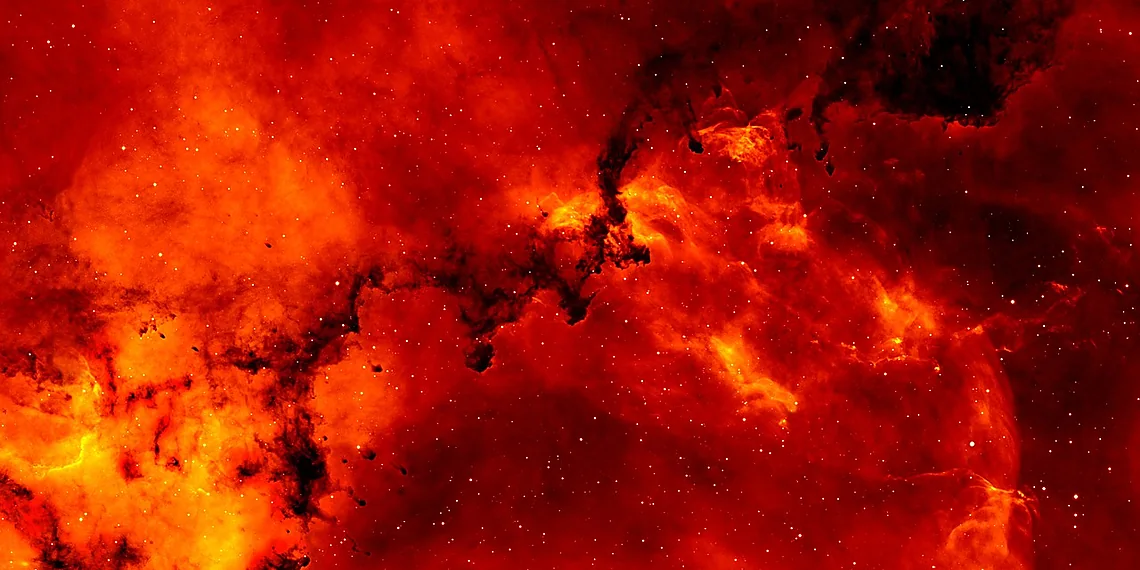

Imagine a cosmic explosion, not of a single star collapsing, but of an entire cluster bursting outwards in a spectacular display of energy. That’s precisely what astronomers are now uncovering with astonishing clarity – immense structures we’re calling stellar bubbles. These aren’t just pretty pictures; they represent a fundamental process shaping galaxies across the universe. The sheer scale of these outflows is truly breathtaking, dwarfing our solar system and stretching for thousands of light-years.
For years, astronomers have suspected such phenomena existed, but direct observation has been challenging. Thanks to the sensitive instruments aboard the Fermi Gamma-ray Space Telescope, we’re finally gaining unprecedented views into these regions. Fermi detects gamma rays – the highest-energy form of light – which are often associated with powerful particle acceleration events within these stellar bubbles.
These gigantic cavities carved out in interstellar space aren’t random occurrences; they offer vital clues about how star clusters interact with their surroundings and influence galactic evolution. Understanding the mechanisms driving these outflows, and the role they play in enriching the galaxy with heavy elements, is a key piece of the puzzle when it comes to unraveling the universe’s history.
The Discovery: Tracing the Outflow
The revelation of these ‘stellar bubbles’ wasn’t a planned observation; it exemplifies the power of serendipity in scientific discovery. NASA’s Fermi Gamma-ray Space Telescope, primarily built to study gamma rays from black holes and pulsars, unexpectedly began revealing an unusual emission pattern during routine data analysis. Initially puzzling, this excess of gamma rays didn’t seem to originate from any known source. Further investigation led astronomers to realize they were witnessing the faint glow of a vast outflow of gas emanating from Westerlund 1, an open star cluster located roughly 12,000 light-years away.

To map this expanding gas stream, researchers meticulously analyzed nearly two decades’ worth of Fermi data. The telescope detects gamma rays produced when high-energy particles interact with interstellar material – in this case, the gas being ejected from Westerlund 1. By carefully measuring the intensity and distribution of these gamma rays over time, scientists could trace the bubble’s edges and determine its expansion rate. This technique relies on a phenomenon called inverse Compton scattering, where electrons are accelerated to incredibly high energies by the shock waves within the outflow.
Observing these structures beneath the galactic disk presented significant challenges. The Milky Way’s dense interstellar medium—a swirling mix of gas and dust—obscures our view at many wavelengths. Gamma rays, however, possess a unique ability to penetrate this obscuration far better than visible light or other forms of electromagnetic radiation. This allowed Fermi to peer through the veil and reveal details otherwise hidden from direct observation. The team had to account for the complex distribution of gas and dust along the line of sight, requiring sophisticated modeling techniques to accurately reconstruct the outflow’s true shape and extent.
Ultimately, the successful mapping of this stellar bubble highlights the versatility of space-based observatories and the potential for unexpected discoveries when existing data is re-examined with new perspectives. Fermi’s contribution goes beyond its initial design goals, providing a unique window into the dynamic processes shaping our galaxy and shedding light on the powerful influence massive star clusters have on their surrounding environment.
Fermi’s Unexpected Find
The discovery of these colossal ‘stellar bubbles’ surrounding Westerlund 1 was entirely serendipitous. NASA’s Fermi Gamma-ray Space Telescope, launched in 2008, wasn’t initially designed to study such large-scale structures. Its primary mission was to observe gamma rays from pulsars and other high-energy sources across the sky. However, by analyzing nearly two decades of accumulated data – specifically, the faint glow of cosmic rays interacting with interstellar gas – astronomers detected an unexpected and expansive feature extending far beyond what they anticipated.
Fermi’s observations revealed a vast stream of energetic particles expanding beneath the Milky Way’s galactic disk. This region is heavily obscured by dust and gas, making traditional optical observations incredibly challenging. Gamma rays, unlike visible light, can penetrate this interstellar material relatively unimpeded. By meticulously mapping the distribution of gamma-ray emissions, researchers were able to trace the outflow’s path, revealing its enormous scale – over 650 light-years in diameter.
The fact that Fermi’s capabilities allowed us to ‘see’ through this obscuring galactic material was crucial. Without it, the existence and extent of these stellar bubbles would have remained hidden. This highlights the power of repurposing scientific instruments for unexpected discoveries; what began as a mission to study pulsars has unexpectedly illuminated one of the most significant outflows ever observed in our galaxy.
What Are Stellar Bubbles?
Stellar bubbles are breathtaking cosmic structures – vast cavities carved out within interstellar gas and dust by the intense energy released from massive, young stars. They appear as shimmering, translucent spheres or elongated shapes in astronomical images, often spanning dozens to hundreds of light-years across. But what physical processes actually create these impressive features? The answer lies primarily in the powerful winds and outflows generated by those very same stars.
Massive stars, significantly larger and more luminous than our Sun, live fast and die young. Throughout their relatively short lives (often just a few million years), they emit incredibly strong stellar winds – streams of charged particles ejected at tremendous speeds. These winds aren’t constant; they fluctuate in intensity and can also contain bursts of highly energetic particles. As these stars age, the wind’s speed might increase while its mass decreases, leading to even more dramatic outflows.
The formation of a true stellar bubble isn’t typically the work of a single star. It’s usually the collective effort of a cluster – a dense grouping of massive stars born together from the same molecular cloud. Each star contributes its wind and outflow, but these aren’t isolated events. They interact with each other, creating a cumulative effect that gradually pushes away the surrounding interstellar medium. Imagine multiple powerful fans all blowing air in roughly the same direction; over time, they’ll clear out a substantial volume of space.
The dynamics within star clusters are crucial to bubble formation. The spatial distribution of stars, their ages (and thus their wind strengths), and the density of the surrounding gas all influence the shape and size of the resulting stellar bubble. When a cluster is sufficiently dense and its stars energetic enough, they can create truly enormous bubbles – like the one recently observed by Fermi, stretching over 650 light-years – dramatically shaping the interstellar environment and potentially triggering further star formation in the compressed gas surrounding the bubble’s edges.
Stellar Winds & Outflows
Young, massive stars are not static beacons of light; they’re incredibly active engines constantly shedding material into space through powerful stellar winds. These winds aren’t like gentle breezes – they consist of streams of charged particles traveling at a significant fraction of the speed of light and carrying tremendous energy. The strength of these winds is directly related to a star’s mass: the more massive the star, the stronger its wind. This outflow isn’t just a continuous stream; it’s also punctuated by powerful bursts of energy released during events like flares or coronal mass ejections.
The energetic particles ejected by massive stars don’t travel alone. They interact with the surrounding interstellar medium – the gas and dust between stars – through processes like shock waves. These shocks heat the gas, causing it to glow and creating a cavity within the cloud. Furthermore, these interactions generate synchrotron radiation, which is what Fermi’s telescope detected in this instance, allowing astronomers to trace the outflow’s path.
When multiple massive stars are clustered together – as seen in Westerlund 1 – their individual stellar winds and outflows combine. The cumulative effect of all these energetic events creates a much larger-scale phenomenon: a ‘stellar bubble.’ These bubbles effectively clear out material from the surrounding interstellar medium, influencing star formation within the cluster itself and potentially impacting nearby regions of the galaxy.
The Westerlund 1 Cluster
Westerlund 1 isn’t just another star cluster; it’s a cosmic powerhouse located roughly 16,000 light-years away in the constellation Ara (the Altar). This open cluster stands out for its sheer scale – boasting over 250 stars packed into a region about 9 light-years across. What truly sets Westerlund 1 apart is its population of exceptionally massive and luminous stars, many exceeding 30 times the mass of our Sun. These behemoths burn through their fuel incredibly quickly, leading to dramatic and powerful stellar evolution – ultimately culminating in supernova explosions or collapse into black holes. Such a concentrated collection of these extraordinary stars makes Westerlund 1 an invaluable laboratory for studying the life cycle of massive stars and the processes that shape galaxies.
To put Westerlund 1’s size into perspective, it’s significantly larger than many other well-known star clusters like the Pleiades or Hyades. While those are readily visible to the naked eye, Westerlund 1 is hidden behind a thick veil of interstellar gas and dust, making observations challenging but incredibly rewarding. Its distance also means that its light has been traveling for millennia to reach us, providing a glimpse into the Milky Way’s past. The sheer number of massive stars within such a compact region suggests an unusually efficient star formation process occurred in the early stages of Westerlund 1’s existence, a phenomenon astronomers are keen to understand better.
The cluster’s stellar composition is dominated by Wolf-Rayet stars – extremely hot and luminous stars that have shed their outer layers. These stars are known for their strong winds, which carry away vast amounts of material into space. It’s the combined effect of these powerful stellar winds, along with supernova explosions from earlier generations of massive stars, that drives the incredible outflows now being observed by Fermi – creating the ‘stellar bubbles’ we’re studying. Understanding how these winds and explosions interact with the surrounding interstellar medium is key to unraveling the cluster’s evolution and its impact on the broader galactic environment.
Ultimately, Westerlund 1 serves as a crucial benchmark for astronomers seeking to refine our models of star formation and stellar feedback – the process by which stars influence their surroundings. The recent Fermi observations, tracing the expanding gas outflow, offer an unprecedented opportunity to directly witness this feedback in action, providing critical data that will help us better understand not only Westerlund 1 but also similar massive star clusters throughout the universe.
A Giant Star Nursery
Westerlund 1 is an exceptionally massive open star cluster located approximately 16,000 light-years from Earth in the constellation Ara. It’s considered one of the largest and most luminous star clusters known within our galaxy, boasting a total mass estimated to be around 3 million times that of our Sun. This immense size allows it to contain an unusually large number of stars – estimates range between 200 to 400 individual stellar objects.
The cluster’s significance stems from its population of extremely massive and luminous stars, including several Wolf-Rayet stars and at least four known O3 type stars – the hottest, most brilliant, and shortest-lived stars in the universe. These stars burn through their fuel incredibly rapidly, resulting in powerful stellar winds and eventual supernova explosions that profoundly impact their surrounding environment. The presence of so many exceptionally massive stars makes Westerlund 1 a prime location for studying stellar evolution at its extremes.
Compared to other notable star clusters like the Pleiades or Hyades, which are smaller, more distant, and contain primarily Sun-like stars, Westerlund 1 stands out as an outlier. Its sheer scale and concentration of incredibly massive stars make it a unique laboratory for understanding stellar feedback – how stars influence their surrounding interstellar medium – and the processes that shape galaxies.
Implications & Future Research
The discovery of these vast stellar bubbles emanating from Westerlund 1 has profound implications for our understanding of galactic evolution. These outflows aren’t merely beautiful cosmic structures; they are powerful engines reshaping the interstellar medium (ISM). By pushing gas outward and creating cavities, stellar bubbles trigger a complex interplay between compression and rarefaction within galaxies. The compressed regions behind these expanding shells can become sites of new star formation, while the ejected material enriches the ISM with heavier elements synthesized in the hearts of massive stars – elements crucial for the eventual formation of planets and life itself.
The sheer scale and energetic nature of Westerlund 1’s outflow underscores the significant role such bubbles play in redistributing energy and momentum within galaxies. They act as a form of galactic ‘stirring,’ preventing gas from collapsing too readily into dense clumps that might lead to runaway star formation. This regulation is vital for maintaining a balanced rate of star birth over cosmic timescales, influencing the overall luminosity and morphology of spiral galaxies like our own Milky Way. Without these stellar winds and outflows, galaxies would likely form stars much faster, potentially leading to premature exhaustion of their gas reserves.
Future research directions are numerous and exciting. A key focus will be on characterizing the composition and temperature of the expanding gas within these bubbles using multi-wavelength observations – from radio waves tracing molecular hydrogen to X-rays revealing hot plasma. Detailed simulations incorporating hydrodynamics and radiative transfer are also needed to accurately model the bubble’s expansion and its interaction with the surrounding ISM. Furthermore, searching for similar structures in other galaxies will help determine how common these powerful outflows are and whether they exhibit variations based on galactic environment.
Finally, connecting this phenomenon to other forms of feedback from massive stars – such as supernova explosions – is critical. Determining the relative contributions of stellar winds versus supernovae to bubble formation will refine our models of star cluster evolution and ultimately lead to a more complete picture of how galaxies assemble and evolve over billions of years. The Fermi telescope’s continued observations, coupled with data from future observatories like Athena and Square Kilometre Array (SKA), promise further revelations about these fascinating cosmic structures.
Shaping Galaxies
The observed stellar bubbles, like the one emanating from Westerlund 1, play a significant role in redistributing gas and energy within galaxies. The intense radiation and powerful winds generated by massive stars within these clusters push material outwards, creating vast cavities that carve through the interstellar medium (ISM). This process doesn’t simply displace the gas; it compresses surrounding regions, triggering new cycles of star formation in areas previously shielded or less dense. Consequently, stellar bubbles act as crucial regulators of galactic star formation rates – both suppressing it locally and stimulating it elsewhere.
Furthermore, these outflows are vital for enriching the ISM with heavier elements produced through nuclear fusion within massive stars. As the gas expands outwards, it carries these newly synthesized elements—like oxygen, carbon, and nitrogen—far beyond their birthplace. This process effectively ‘pollutes’ the galaxy, providing the raw materials for subsequent generations of stars and planetary systems to form. The observed gamma-ray emission traces the interaction of these energetic particles with magnetic fields within the bubble, providing a direct probe of this enrichment mechanism.
Future research will focus on mapping stellar bubbles across diverse galactic environments and employing multiwavelength observations—combining data from radio, infrared, and X-ray telescopes—to better understand their complex dynamics. Detailed simulations are also needed to accurately model the interplay between stellar winds, radiation pressure, and the ISM, allowing scientists to refine our understanding of how these cosmic outflows shape galaxies over time and influence the evolution of planetary systems within them.

The revelation of these vast, sculpted regions – what we’ve come to call stellar bubbles – fundamentally reshapes our understanding of how stars interact with their surroundings.
We’ve seen firsthand that massive stars don’t just shine; they actively sculpt the interstellar medium, blasting out powerful winds and shaping the very fabric of galaxies like our own Milky Way.
These outflows aren’t mere byproducts; they are crucial drivers of galactic evolution, influencing star formation rates and dispersing heavy elements throughout space.
The intricate details revealed within structures like these stellar bubbles highlight just how dynamic and complex our universe truly is, constantly evolving through powerful processes we’re only beginning to fully grasp. They demonstrate the profound impact even a single star can have on its cosmic neighborhood, creating cavities that dramatically alter gas density and temperature across vast distances, impacting future generations of stars and planetary systems as well..”,
Continue reading on ByteTrending:
Discover more tech insights on ByteTrending ByteTrending.
Discover more from ByteTrending
Subscribe to get the latest posts sent to your email.