

For decades, the relentless march of Moore’s Law defined the landscape of computing – transistors shrinking, performance doubling roughly every two years. That era, however, is showing clear signs of slowing, forcing us to confront a fundamental question: how do we continue to unlock exponential gains in computational power? The answer, increasingly, lies not in miniaturization alone but in harnessing the immense potential of parallel processing.
The shift represents a profound change, akin to moving from steam engines to electric motors. We’re entering an age where raw compute isn’t just about clock speed; it’s about orchestrating thousands, even millions, of cores working together simultaneously. This is driving intense focus on architectures like GPUs, which were initially designed for graphics but are now proving indispensable across a vast range of industries.
Understanding the future trajectory of GPU performance requires grasping something called ‘GPU scaling laws’. These describe how key metrics – like floating-point operations per second and memory bandwidth – change as we increase parameters such as chip size, core count, and architectural innovations. They’re not quite Moore’s Law, but they offer a framework for predicting future capabilities in this rapidly evolving domain.
NVIDIA has been at the forefront of this revolution, consistently pushing the boundaries of GPU architecture and performance. Their investments in parallel processing technology are fundamentally reshaping how we approach everything from artificial intelligence and scientific simulation to autonomous vehicles and advanced robotics.
The End of Moore’s Law & The Rise of Parallelism
For decades, Moore’s Law – the observation that the number of transistors on a microchip doubles roughly every two years – fueled exponential progress in computing power. However, we’ve reached fundamental physical limitations. Shrinking transistors further is becoming increasingly difficult and expensive; quantum effects begin to dominate at smaller sizes, causing unpredictable behavior. The energy required to pack more and more transistors onto a chip also dramatically increases, leading to escalating heat issues and diminishing returns on investment. Simply put, the traditional approach of increasing clock speeds and transistor density has largely plateaued.
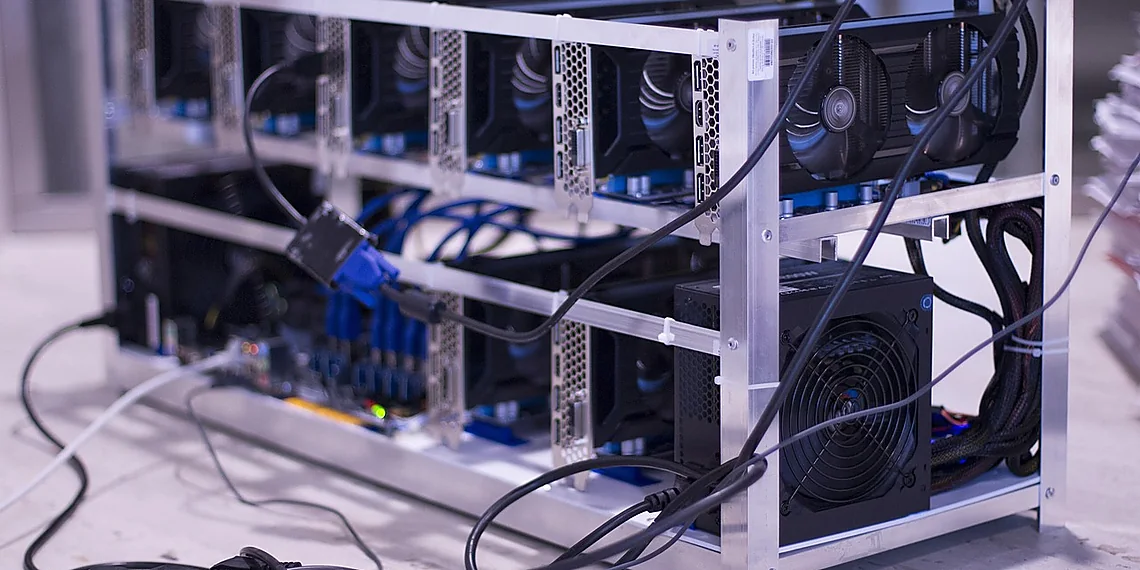
The slowdown of Moore’s Law hasn’t meant a halt in computing progress; instead, it’s spurred a dramatic shift towards parallel processing. While CPUs continue to improve, the real breakthroughs are now coming from GPUs (Graphics Processing Units). Originally designed for rendering graphics, GPUs possess massively parallel architectures – thousands of smaller cores working simultaneously. This allows them to tackle tasks that can be broken down into independent operations far more efficiently than traditional CPU designs.
This architectural difference is proving crucial for emerging fields like artificial intelligence and scientific computing. Training large AI models requires immense computational power, a task perfectly suited to the parallel processing capabilities of GPUs. Similarly, complex simulations in areas such as climate modeling, drug discovery, and materials science benefit enormously from the ability to perform calculations across thousands or even millions of GPU cores concurrently. NVIDIA’s accelerated computing platform is leading supercomputing benchmarks, demonstrating this shift away from CPU dominance.
The rise of parallel processing isn’t just a technological evolution; it represents a new ‘industrial revolution’ for computation. Just as the steam engine revolutionized manufacturing in the 18th century, GPUs are transforming how we approach complex problems across various industries. NVIDIA’s focus on scaling laws – pretraining, post-training, and inference – highlights their commitment to maximizing efficiency and performance within this parallel processing paradigm, positioning them at the forefront of this technological shift.
Moore’s Law Limitations: Why Scaling is Different Now

For decades, Moore’s Law – the observation that the number of transistors on a microchip doubles approximately every two years – fueled exponential increases in computing power. This was achieved by relentlessly shrinking transistor sizes. However, physical limitations are now making this approach increasingly difficult and expensive. As transistors approach atomic dimensions (currently around 3-5 nanometers), quantum effects like electron tunneling become significant problems, leading to unpredictable behavior and data leakage. Further miniaturization requires novel materials and manufacturing techniques that face immense technical hurdles.
The diminishing returns of shrinking transistors are compounded by rising power demands and heat dissipation challenges. Smaller transistors leak more electricity even when idle, significantly increasing energy consumption. As transistor density increases on a chip, managing the resulting heat becomes critical; excessive heat can damage chips or require complex and costly cooling solutions. These escalating costs, coupled with increasingly marginal performance gains from further shrinking, have effectively halted the pace of traditional CPU scaling.
The limitations of Moore’s Law have shifted the focus to alternative approaches for increasing computational power. Parallel processing, particularly through GPUs (Graphics Processing Units), has emerged as a crucial solution. Unlike CPUs which are optimized for sequential tasks, GPUs excel at performing many calculations simultaneously, making them ideally suited for workloads like AI training and scientific simulations where massive parallelism is beneficial. This shift allows continued performance gains even as the traditional scaling of transistors slows down.
NVIDIA’s Three Scaling Laws
For decades, Moore’s Law dictated the pace of technological advancement – the observation that transistors on integrated circuits would double roughly every two years, leading to exponential improvements in computing power. While Moore’s Law has slowed considerably, NVIDIA believes a new era of accelerated computing is upon us, driven by GPU scaling laws. These aren’t just theoretical concepts; they represent a practical framework for continued performance gains across the entire AI lifecycle – from initial model training to final deployment and inference. NVIDIA proposes three key scaling laws: pretraining scaling, post-training scaling, and inference scaling, each addressing a distinct phase of the AI development process.
Let’s start with *pretraining scaling*. This law focuses on maximizing performance during the resource-intensive initial training of large language models (LLMs) or other complex neural networks. Traditionally, increasing model size directly correlated to increased compute requirements and longer training times. NVIDIA’s pretraining scaling law demonstrates that by strategically optimizing GPU architecture, memory bandwidth, and interconnect technologies (like NVLink), they can maintain near-linear performance gains even as model sizes explode. Think of it this way: while a model might require twice the data and parameters to achieve similar accuracy, NVIDIA’s optimized hardware allows training to complete in roughly the same timeframe, significantly reducing development costs and accelerating innovation.
Next is *post-training scaling*, which addresses optimizing models after initial training for specific tasks or deployment environments. This often involves techniques like quantization (reducing the precision of model weights) and pruning (removing less important connections). NVIDIA’s post-training scaling law emphasizes that these optimization methods can dramatically reduce model size and latency without significant accuracy loss, especially when paired with specialized hardware accelerators within their GPU platforms. This is crucial for deploying AI models on edge devices or in environments where computational resources are limited.
Finally, *inference scaling* focuses on maximizing the throughput and efficiency of running trained models to generate predictions – the ‘inference’ phase. NVIDIA’s inference scaling law highlights how architectural innovations like Tensor Cores, optimized software libraries (like Triton Inference Server), and dynamic precision management can significantly increase the number of inferences per second a GPU can handle while minimizing latency. This is paramount for real-time applications such as autonomous driving, natural language understanding chatbots, and personalized recommendations – all areas where low latency and high throughput are essential.
Pretraining, Post-Training & Inference: Explained

NVIDIA has outlined three distinct ‘scaling laws’ that are driving advancements in AI and accelerated computing: pretraining, post-training, and inference. These aren’t traditional physical laws, but rather observed relationships between compute resources (primarily GPU power) and performance gains at different stages of the machine learning lifecycle. Pretraining scaling refers to how increasing the size of a model *and* the dataset used for initial training dramatically improves its capabilities. For example, models like GPT-3 were only possible because of massive datasets and powerful GPU clusters—NVIDIA’s A100 and H100 GPUs have been instrumental in enabling this scale of pretraining by offering unprecedented memory bandwidth and compute density.
Post-training scaling focuses on optimizing a *trained* model for specific downstream tasks. This typically involves techniques like quantization (reducing the precision of numbers used to represent the model’s weights) and pruning (removing less important connections within the network). NVIDIA’s TensorRT platform, alongside specialized hardware features in their GPUs like sparsity acceleration, significantly speeds up these optimization processes and allows models to be further refined without requiring a full retraining cycle. This means existing powerful AI models can be adapted and improved more efficiently.
Finally, inference scaling addresses how to deploy and run already-trained and optimized models quickly and cost-effectively in real-world applications. It’s about maximizing throughput (the number of requests handled per second) while minimizing latency (the time it takes to generate a response). NVIDIA’s Grace Hopper Superchip, combining an Arm CPU with an H100 GPU via NVLink, is designed specifically for this purpose, providing exceptional performance and energy efficiency in inference workloads like real-time language translation or image generation. These scaling laws collectively represent NVIDIA’s vision for continued AI progress beyond the limitations of Moore’s Law.
Impact Across Industries
The era of Moore’s Law slowing down has ushered in a new paradigm shift, with NVIDIA’s GPU scaling laws becoming the driving force behind transformative changes across numerous industries. While CPUs once reigned supreme in supercomputing benchmarks, NVIDIA’s accelerated computing platform is now enabling breakthroughs previously unattainable, impacting everything from scientific research to everyday business operations. These ‘scaling laws,’ specifically focused on pretraining, post-training, and inference, aren’t just theoretical concepts; they represent tangible improvements in performance and efficiency that are reshaping how we approach complex challenges.
Consider the realm of drug discovery, where traditional methods can take years and billions of dollars to yield a single viable candidate. NVIDIA’s GPU scaling laws are dramatically accelerating this process by enabling researchers to simulate molecular interactions with unprecedented accuracy and speed. For example, companies like Schrödinger leverage these capabilities to predict drug efficacy before even entering lab testing, significantly reducing costs and timelines. Similarly, in financial modeling, institutions are utilizing GPUs to analyze vast datasets and build more sophisticated risk assessment models, leading to better investment decisions and improved fraud detection – a direct result of the increased computational power afforded by NVIDIA’s advancements.
The impact extends far beyond these examples; autonomous driving is fundamentally reliant on GPU-powered AI for real-time image processing and decision-making. Tesla’s Full Self-Driving (FSD) system, while still under development, showcases the potential of this technology, utilizing massive datasets and complex neural networks that simply wouldn’t be feasible without scalable GPU solutions. Even seemingly less technical fields are experiencing disruption – manufacturing is leveraging GPUs for predictive maintenance, optimizing production lines, and improving quality control through advanced image analysis. The ability to process and interpret data at scale is becoming a core competitive advantage, and NVIDIA’s scaling laws are empowering businesses to seize that opportunity.
Ultimately, the implications of these GPU scaling laws go far beyond simply faster processing speeds; they represent an industrial revolution driven by parallel computing power. As these technologies continue to mature and become more accessible, we can expect even wider adoption across industries, unlocking new possibilities for innovation and fundamentally changing how we solve some of the world’s most pressing problems. The shift from CPU-centric computing to a GPU-accelerated future is well underway, and NVIDIA sits at its forefront.
Beyond Gaming: AI, Science & Business Transformation
The observed scaling laws for GPUs – specifically the benefits seen with increased model size, larger datasets, and more compute – are fundamentally reshaping drug discovery. Traditionally a lengthy and expensive process requiring years of lab work and clinical trials, AI-powered drug design is accelerating this timeline significantly. For example, companies like Insilico Medicine utilize massive GPU clusters to predict novel molecular structures with desired therapeutic properties. Their Generative Chemistry platform leverages these scaling laws to generate hundreds of potential drug candidates in a fraction of the time compared to conventional methods, drastically reducing R&D costs and potentially leading to breakthroughs for previously untreatable diseases.
Financial modeling is undergoing a similar transformation thanks to GPU acceleration and associated scaling laws. Complex simulations involving vast datasets – including market trends, economic indicators, and customer behavior – are now possible in near real-time. Hedge funds and investment banks employ these enhanced capabilities for algorithmic trading strategies, risk management assessments, and fraud detection. A concrete example is the use of large language models (LLMs) trained on years of financial data to predict stock price movements or identify potential credit risks with greater accuracy than traditional statistical methods – a feat simply unattainable without the parallel processing power afforded by GPU scaling.
Autonomous driving represents another field experiencing profound change driven by GPU scaling laws. Training self-driving car algorithms requires analyzing immense amounts of sensor data (camera images, LiDAR scans, radar signals) to accurately perceive and navigate complex environments. NVIDIA’s DRIVE platform leverages these scaling laws to enable the training of sophisticated perception models capable of identifying objects, predicting pedestrian behavior, and planning safe routes. For instance, Waymo utilizes massive GPU clusters to process petabytes of driving data, allowing their autonomous vehicles to continuously learn and improve performance in diverse conditions – a crucial step towards achieving full autonomy.
The Future of Accelerated Computing
The era of Moore’s Law, where transistor density doubled roughly every two years, is firmly behind us. Its demise has spurred a fundamental shift in how we approach computation, with parallel processing and specialized hardware like GPUs taking center stage. NVIDIA’s accelerated computing platform exemplifies this transition, consistently surpassing traditional CPU-dominated supercomputing benchmarks and fueling breakthroughs across AI research, scientific discovery, business analytics, and overall computational efficiency. This isn’t merely about faster graphics; it’s a foundational change in how we tackle increasingly complex problems.
The current trajectory is being shaped by what NVIDIA calls ‘GPU scaling laws,’ representing predictable improvements in performance through architectural innovations and software optimizations like CUDA. These laws dictate that as GPU hardware evolves—increasing core counts, memory bandwidth, and specialized tensor cores—performance gains are not linear but exhibit accelerating returns. This effect extends beyond initial training; post-training optimization and even inference workloads benefit from these continuous advancements, creating a virtuous cycle of improved efficiency and capability. The ability to consistently deliver on these scaling laws is what positions NVIDIA so uniquely in the accelerated computing landscape.
Looking ahead, the evolution doesn’t stop with current GPU architectures. NVIDIA’s ongoing investment in CUDA – its parallel programming platform – continues to be crucial. Future iterations of CUDA (CUDA-X and beyond) will likely focus on even more granular control over hardware resources, enabling developers to extract maximum performance from emerging technologies like multi-GPU systems and specialized AI accelerators. We can anticipate increased emphasis on heterogeneous computing models, intelligently distributing workloads across CPUs, GPUs, and other accelerators for optimal efficiency. The potential impact is significant: drastically reduced training times for complex AI models, real-time simulations in scientific research, and transformative capabilities for industries ranging from autonomous vehicles to drug discovery.
Ultimately, the continued adherence to these GPU scaling laws represents a modern industrial revolution – one driven by accelerated computing. The ongoing advancements in both hardware and software are not just incremental improvements; they’re paving the way for entirely new classes of applications and fundamentally reshaping how we solve some of humanity’s most challenging problems. This trajectory suggests that NVIDIA, and the broader ecosystem it fosters, will remain at the forefront of this transformative era for years to come.
Looking Ahead: CUDA & Beyond
NVIDIA’s CUDA platform remains central to accelerated computing, but its evolution extends far beyond the original programming interface. The company’s ‘CUDA-X’ initiative represents a significant shift towards a more holistic development approach, encompassing libraries like cuBLAS, cuDNN, and Triton, all optimized for specific workloads. Future iterations will likely focus on even tighter integration between hardware and software, enabling developers to leverage increasingly specialized GPU features with greater ease and efficiency – reducing the performance gap between theoretical peak compute and real-world application speed.
NVIDIA’s roadmap hints at continued innovation in areas like sparsity acceleration (optimizing computations where many values are zero) and advanced memory architectures. Hopper architecture’s Transformer Engine, for example, demonstrates a commitment to accelerating specific AI workloads. Future GPU generations will likely introduce even more specialized hardware units targeting emerging fields such as generative AI, large language models, and scientific simulations requiring extremely high throughput and low latency. The company is also actively exploring new interconnect technologies like NVLink to facilitate multi-GPU scaling for demanding applications.
The implications of these advancements are profound. As GPU scaling laws continue to be unlocked – particularly in the areas of pretraining and inference – we can anticipate exponential improvements in AI capabilities, enabling breakthroughs in fields ranging from drug discovery to autonomous driving. Furthermore, broader access to accelerated computing will empower a wider range of industries and researchers, potentially triggering an ‘industrial revolution’ driven by optimized algorithms running on ever-more-powerful GPU platforms.
The convergence of accelerated computing and artificial intelligence is undeniably reshaping industries, mirroring the transformative power of past industrial revolutions. We’ve seen how NVIDIA’s relentless focus on pushing performance boundaries has not just improved graphics but fundamentally altered what’s computationally possible, from autonomous vehicles to drug discovery. Understanding the underlying principles – particularly GPU scaling laws – allows us to appreciate the magnitude of this shift and anticipate future breakthroughs. These predictable improvements in performance with increased transistors have fueled exponential growth across numerous fields, enabling innovations previously confined to theoretical realms. The ability to harness massive parallel processing power is no longer a luxury; it’s becoming a core requirement for progress in almost every sector imaginable. NVIDIA’s commitment to both hardware and software innovation has positioned them as a pivotal force in this new era of accelerated computing, consistently delivering the tools needed to unlock unprecedented potential. As we look ahead, continued advancements in architecture and algorithms will only amplify these effects, driving further waves of disruption and opportunity. To delve deeper into the specifics of NVIDIA’s technologies and explore the ongoing research shaping the future of AI and high-performance computing, we encourage you to visit their comprehensive resource hub online.
Explore the full spectrum of NVIDIA’s contributions – from groundbreaking hardware designs to cutting-edge software frameworks – by visiting their website today.
Continue reading on ByteTrending:
Discover more tech insights on ByteTrending ByteTrending.
Discover more from ByteTrending
Subscribe to get the latest posts sent to your email.