
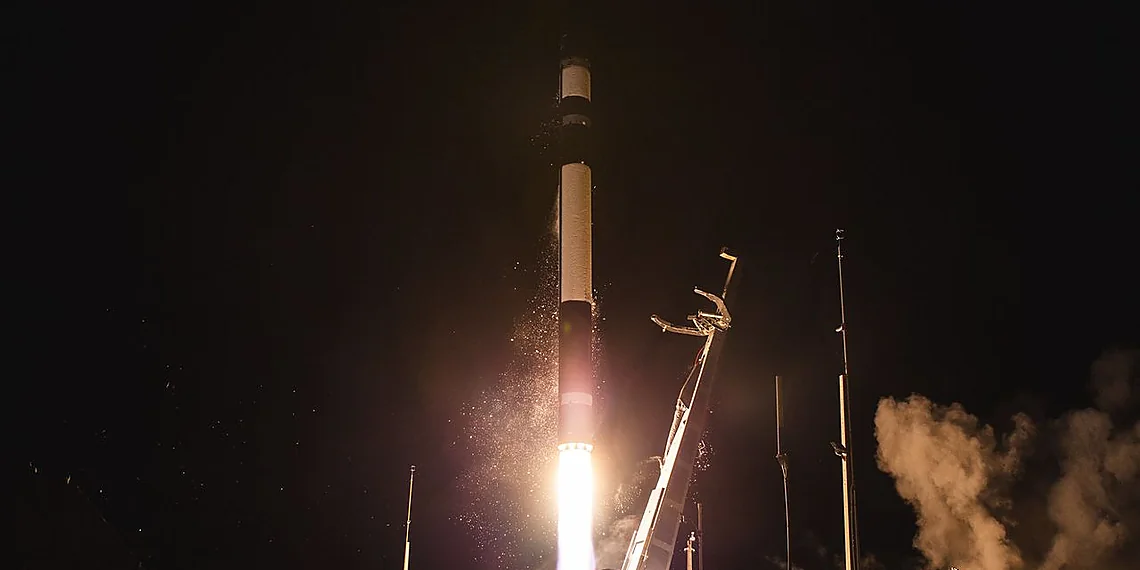

The cosmos just got a little closer for Brazil, thanks to an electrifying advancement emerging from the University of Brasília (UnB). A team of researchers has achieved a pivotal milestone: the successful development and testing of Brazil’s first fully functional hybrid rocket engine. This breakthrough signals a significant leap forward for the nation’s ambitions in space exploration and promises exciting possibilities for future missions.
So, what exactly is a hybrid rocket engine? Unlike traditional solid or liquid rockets, these engines combine aspects of both, typically utilizing a solid fuel grain and a liquid oxidizer. This configuration offers increased safety, simpler design compared to liquid systems, and the potential for throttling – crucial capabilities for precise orbital maneuvers and controlled burns. The UnB’s achievement represents years of dedicated research and engineering ingenuity.
This isn’t just a local victory; it carries substantial implications for Brazil’s burgeoning space program. By developing this core technology domestically, Brazil reduces reliance on foreign expertise and strengthens its position as an emerging player in the global aerospace arena. The successful demonstration of this Hybrid Rocket Engine opens doors to new launch vehicle designs, potential satellite deployment opportunities, and even future crewed missions – a truly remarkable moment for Brazilian science and engineering.
Understanding Hybrid Rocket Engines
Hybrid rocket engines represent an exciting middle ground in rocketry, offering potential advantages over both traditional solid-fueled rockets and more complex liquid-fueled systems. Unlike solid rockets which use a pre-mixed fuel and oxidizer that burns all at once (think fireworks), or liquid rockets which require intricate pumping and mixing of separate fuels and oxidizers, hybrid engines utilize a combination of a solid fuel grain and a liquid or gaseous oxidizer. This separation provides greater control over the burn rate and allows for easier shutdown and restart capabilities – features largely absent in solid rocket motors.
At their core, hybrid rocket engines operate on a relatively simple principle: The solid fuel grain, typically made from materials like hydroxyl-terminated polybutadiene (HTPB), is slowly eroded by the liquid oxidizer, usually nitrous oxide or liquid oxygen. As the surface of the solid fuel is exposed, it reacts with the oxidizer in a controlled combustion process. Imagine it like a slow-burning candle – the wax (solid fuel) melts and burns gradually as air (oxidizer) reaches it. This gradual erosion and combustion allows for precise thrust control, a significant benefit that’s difficult to achieve with solid rockets.
The beauty of hybrid engines lies in their inherent safety and simplicity compared to liquid systems. The separation of the oxidizer eliminates the risk of fuel-oxidizer mixing before ignition, which is a crucial safety concern in liquid rocket development. Furthermore, while still requiring engineering expertise, the overall design and construction are generally less complex than those of liquid rockets, potentially leading to lower development costs and increased reliability. This makes them attractive for a wide range of applications, from suborbital space tourism to sounding rockets.
The Brazilian university’s recent breakthrough in developing their first hybrid rocket engine highlights the growing interest in this technology globally. While still in its early stages compared to solid or liquid propulsion, hybrid engines offer a compelling combination of performance, safety, and cost-effectiveness – making them a promising area for future innovation within the space industry.
How They Work: A Simplified Explanation

Hybrid rocket engines represent a fascinating middle ground between solid-propellant and liquid-propellant rockets, combining aspects of both while aiming to mitigate some of their drawbacks. Unlike solid rockets which use a pre-mixed fuel and oxidizer in a single solid block, hybrid engines separate these components. Typically, they utilize a solid fuel grain – often materials like hydroxyl-terminated polybutadiene (HTPB) or paraffin wax – along with a liquid oxidizer such as liquid oxygen (LOX). Think of it like a controlled campfire: the solid fuel acts as the ‘log’ and the liquid oxidizer is akin to slowly adding air to keep the fire burning steadily.
The operational principle is relatively straightforward. The liquid oxidizer is injected into a combustion chamber containing the solid fuel grain. As the oxidizer flows over the fuel, it vaporizes the surface layer of the solid fuel. This vapor then mixes with the oxidizer and ignites, producing hot gases that are expelled through a nozzle to generate thrust. Crucially, the rate of combustion – and therefore the amount of thrust produced – is controlled by regulating the flow of liquid oxidizer. This allows for throttling (adjusting thrust) and even engine shutdown capabilities, features largely absent in solid rocket motors.
Compared to liquid-fueled rockets, hybrids offer a simpler design as they avoid complex pumps and turbines needed to deliver both fuel and oxidizer under high pressure. They also tend to be safer than solid rockets because the fuel and oxidizer are stored separately, reducing the risk of accidental ignition during handling. While hybrid rocket engines haven’t seen widespread use historically, recent advancements – like the one from the University of Brasília – are driving renewed interest in their potential for future space exploration and propulsion systems.
The UnB Innovation: A Brazilian First
The University of Brasília (UnB) has achieved a significant milestone for Brazilian space technology: the creation of the nation’s first hybrid rocket engine. This groundbreaking achievement, spearheaded by the Laboratório de Propulsão Química (LPQ) at the Faculty of Chemical Engineering and Technological Processes, marks a pivotal moment in Brazil’s pursuit of independent access to space. The project represents years of dedicated research and development, culminating in a functional prototype that promises to unlock new possibilities for future rocket propulsion systems within the country.
The UnB team’s hybrid rocket engine distinguishes itself through its innovative design and resourcefulness. Unlike traditional solid or liquid-fueled rockets, hybrid engines utilize a combination of solid fuel and liquid oxidizer – offering advantages in terms of safety, controllability, and potential for higher performance. Specifically, this Brazilian prototype employs a polymeric composite as the fuel and nitrous oxide (N₂O) as the oxidizer. Initial tests indicate a thrust capability suitable for suborbital research flights and potentially contributing to larger launch vehicle stages. The team meticulously optimized the combustion chamber geometry and injector design to maximize efficiency while maintaining operational stability.
Development wasn’t without its challenges. According to UnBTV’s video documentation, initial iterations faced issues with fuel regression rates – the speed at which the solid fuel burns during operation. The LPQ researchers addressed this by experimenting with different polymer formulations and nozzle designs, ultimately achieving a stable and controllable burn process. Collaboration with the Instituto SENAI de Inovação em Sistemas de Manufatura e Processamento a Laser in Joinville-SC was also instrumental, providing access to advanced manufacturing techniques crucial for fabricating complex engine components with the required precision and material properties.
This UnB innovation signals more than just a technological advancement; it fosters greater independence for Brazil’s space program. By developing its own hybrid rocket engine technology, the nation reduces reliance on foreign suppliers and cultivates local expertise in propulsion systems – vital for future missions and exploration endeavors. The success of this project serves as an inspiration for other Brazilian institutions to pursue similar ambitious research initiatives, solidifying Brazil’s position within the global space community.
Development Details & Challenges Overcome

The hybrid rocket engine developed by the University of Brasília’s (UnB) Chemical Propulsion Laboratory (LPQ/FCTE/UnB) represents a significant milestone for Brazilian space technology. The engine boasts a compact size, measuring 1.3 meters in length and 20 centimeters in diameter. Its design utilizes a solid polymer fuel – specifically, high-density polyethylene (HDPE) – combined with liquid oxygen as the oxidizer. This specific combination distinguishes it from other hybrid rocket designs often employing different fuels.
During testing, the engine successfully produced a thrust of 18 kilonewtons (approximately 4093 pounds), demonstrating its potential for use in various launch applications. A key challenge encountered during development was achieving stable and consistent combustion throughout the burn duration. The research team overcame this by implementing sophisticated injection techniques and carefully calibrating the flow rate of the liquid oxygen to ensure optimal mixing with the solid fuel, preventing premature burnout or unstable operation.
The UnB team also addressed challenges related to the mechanical integrity of the engine’s components under high pressure and temperature conditions. They leveraged expertise from the SENAI Innovation Institute in Manufacturing Systems and Laser Processing (based in Joinville-SC) for advanced manufacturing processes, ensuring robust construction capable of withstanding the rigors of rocket engine operation. This collaboration highlights a broader trend towards industry-academic partnerships driving innovation in Brazil’s aerospace sector.
Implications for Brazil’s Space Program
The successful development of Brazil’s first hybrid rocket engine marks a significant turning point for the nation’s space program. For years, Brazil has relied heavily on foreign partners for launch capabilities and propulsion systems, limiting its autonomy in accessing space. This breakthrough, spearheaded by the University of Brasília (UnB), directly addresses this dependency by providing a domestically produced alternative. The hybrid rocket engine technology itself offers several advantages – including increased safety due to its simpler design and potentially lower cost compared to traditional solid or liquid-fueled engines – making it an attractive option for a wider range of space missions.
The implications extend far beyond simply launching satellites. A key benefit lies in the potential for greater flexibility and control over mission parameters. Hybrid rocket engines allow for throttling capabilities, meaning the thrust can be adjusted during flight, providing more precise orbital insertion and maneuvering options. This opens doors to more complex scientific research missions, lunar exploration initiatives, and even lays a foundation for future ambitions involving human spaceflight – though that remains a long-term goal. The development also fosters crucial expertise within Brazil’s engineering sector, cultivating a skilled workforce ready to innovate further in the aerospace field.
Looking ahead, this achievement is likely to catalyze collaborations between UnB, other Brazilian research institutions like the SENAI Innovation Institute, and private sector companies. We can anticipate increased investment in propulsion technology development, potentially leading to specialized manufacturing capabilities within Brazil. The engine’s design also provides a platform for experimentation with different fuel combinations and materials, which could yield further performance enhancements. Ultimately, this hybrid rocket engine represents more than just a technological accomplishment; it’s a symbol of Brazil’s growing ambition and commitment to becoming a significant player in the global aerospace arena.
While challenges remain – including scaling production and achieving full operational readiness – the successful demonstration of this hybrid rocket engine signifies a new era for Brazilian space exploration. It empowers the nation to pursue more ambitious projects with greater independence, strengthens its position within the international community, and paves the way for future advancements that could redefine Brazil’s role in reaching for the stars.
Boosting Brazilian Capabilities & Future Applications
The successful development of Brazil’s first hybrid rocket engine by the University of Brasília (UnB) represents a significant leap forward for the nation’s space program. Hybrid engines, utilizing both solid fuel and liquid oxidizer, offer advantages like improved safety due to their throttleability and potential for higher performance compared to traditional solid rocket motors. This breakthrough directly addresses a critical need within Brazil’s aerospace capabilities: greater control and flexibility in launch vehicle design and operation.
This new engine technology opens doors for various future applications. Initially, it can be incorporated into smaller satellite launch vehicles, reducing reliance on foreign providers and lowering the cost of accessing space. Beyond commercial launches, hybrid engines are well-suited for research missions requiring precise trajectory control or atmospheric studies. While ambitious, the potential exists to contribute to future human spaceflight endeavors, particularly in developing upper stages or propulsion systems where safety and performance are paramount.
Looking ahead, collaboration will be key to maximizing the impact of this development. The UnB’s LPQ is already partnering with institutions like the SENAI Institute for Innovation in Manufacturing Systems and Laser Processing, located in Joinville-SC, demonstrating a commitment to integrating academic research with industrial application. Further partnerships with Brazilian aerospace companies and potentially international organizations could accelerate engine refinement, scaling up production, and exploring novel mission concepts.
Looking Ahead: Hybrid Rocket Technology & the Future
The development of Brazil’s first hybrid rocket engine by the University of Brasília marks a significant step, but it’s crucial to contextualize this achievement within the broader landscape of space propulsion technology. Hybrid rocket engines represent a compelling middle ground between the established solid and liquid systems, offering unique advantages that are driving renewed interest globally. While not a complete replacement for either existing method, they present a viable alternative for specific applications and offer a pathway toward safer and more flexible launch capabilities.
One of the primary appeals of hybrid rocket engines lies in their inherent safety profile. Unlike solid rockets which burn continuously once ignited, or liquid rockets with complex cryogenic fuel systems, hybrids utilize a solid fuel grain and a liquid oxidizer. This separation allows for simpler engine design, easier shutdown procedures (a critical safety feature), and generally less hazardous handling practices – a significant benefit for both ground operations and potential future in-space propulsion needs. The ease of handling also lowers logistical hurdles and reduces the risk associated with transporting and storing propellants.
However, hybrid rocket technology isn’t without its challenges. A key disadvantage historically has been their lower specific impulse compared to liquid engines – a measure of fuel efficiency directly related to payload capacity. While significant advancements are being made in fuel grain design, oxidizer selection, and combustion chamber optimization to address this limitation, they still generally lag behind the performance of liquid propulsion systems. Ongoing research focuses on using advanced materials like metal-infused polymers for higher density fuels, improving regression rates (the speed at which the solid fuel burns), and exploring novel oxidizers to boost overall efficiency.
Looking ahead, hybrid rocket engines are poised to play an increasingly important role in various space applications. These include sounding rockets for scientific research, suborbital tourism flights, potential upper stages for orbital launches, and even as propulsion systems for small satellites. The Brazilian development serves as a catalyst, demonstrating the viability of this technology and potentially inspiring further innovation within the country’s burgeoning space sector while contributing to a more diverse and resilient global approach to accessing space.
Advantages & Disadvantages of Hybrid Propulsion
Hybrid rocket engines offer several compelling advantages over both solid-propellant and liquid-fueled rockets. A primary benefit is enhanced safety; the fuel (typically a solid polymer) and oxidizer (usually a liquid or gas) are stored separately, significantly reducing the risk of accidental ignition compared to solid rockets where all propellants are combined. This separation also simplifies handling and logistics, making hybrid systems potentially more cost-effective for certain applications. Furthermore, thrust can be throttled and even restarted in some designs – capabilities absent in traditional solid rocket motors.
However, hybrid engines aren’t without their drawbacks. A key limitation is the generally lower specific impulse (a measure of engine efficiency) compared to liquid propulsion systems. This means that for a given amount of propellant, a hybrid engine will typically produce less total thrust over its burn time. Achieving efficient combustion in hybrid rockets can also be challenging, requiring careful design of the fuel grain geometry and oxidizer injection strategy. The relatively low regression rate (the speed at which the solid fuel burns) has historically presented another hurdle.
Ongoing research focuses on addressing these limitations. Scientists are exploring new fuel materials with higher energy densities and improved combustion characteristics, as well as innovative techniques to enhance fuel regression rates, such as using advanced oxidizers or incorporating catalysts within the fuel grain. Developments in additive manufacturing (3D printing) also promise to enable more complex and optimized hybrid rocket engine designs, potentially unlocking greater performance and versatility for future space missions.
The successful test firing at UnB represents far more than just a technical milestone; it’s a powerful signal of Brazil’s growing capabilities in rocketry and space technology, marking a pivotal moment for national innovation. This breakthrough demonstrates a commitment to developing sustainable and cost-effective propulsion systems, potentially revolutionizing access to orbit for Brazilian researchers and businesses alike. The ingenuity behind the development of this Hybrid Rocket Engine underscores the talent pool within Brazil’s universities and research institutions, hinting at even greater advancements on the horizon. Looking ahead, we anticipate further refinements and applications of this technology, solidifying Brazil’s position as a rising force in the global space landscape. This achievement is a testament to what can be accomplished through dedication, collaboration, and a relentless pursuit of scientific excellence, promising an exciting future for Brazilian space exploration. We urge you to delve deeper into the fascinating world of Brazilian aerospace endeavors – there’s a rich history and a vibrant present waiting to be explored. Stay tuned to ByteTrending as we continue to bring you the latest news and insights on groundbreaking technological advancements shaping our future.
$20 million in funding, the project is set for continued expansion
Source: Read the original article here.
com” target=”_blank” rel=”noopener”>ByteTrending.
Discover more from ByteTrending
Subscribe to get the latest posts sent to your email.