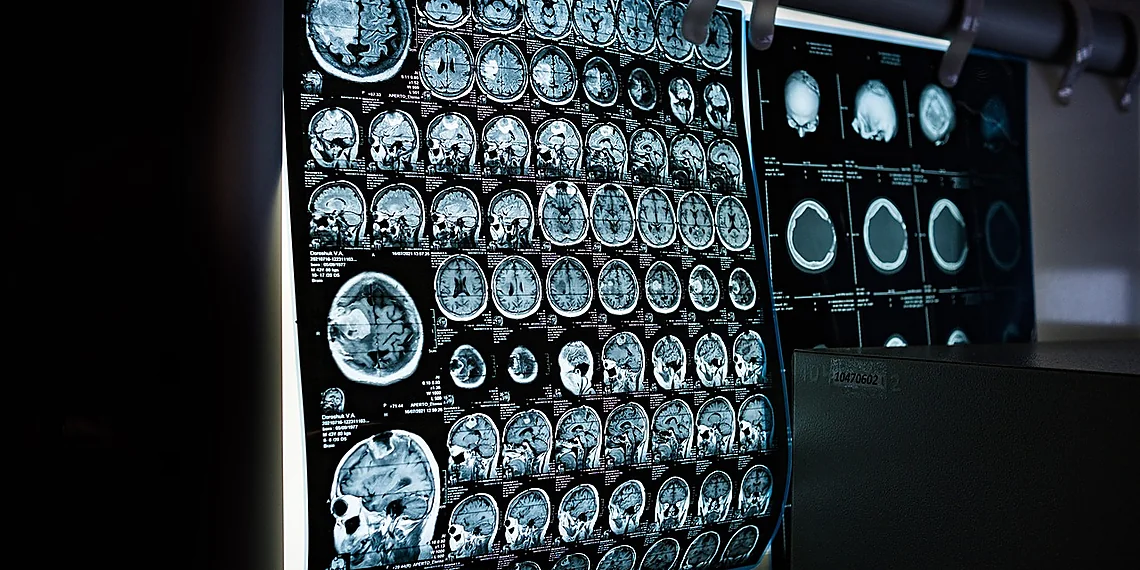

The world of biological research is undergoing a profound transformation, largely fueled by advances in microscopy and imaging techniques that are generating unprecedented volumes of data.
We’re now able to visualize tissue architecture at incredible resolution, revealing intricate cellular relationships and molecular distributions previously hidden from view – this field is broadly known as spatial biology.
However, extracting meaningful insights from these complex datasets presents a significant challenge; traditional computational analysis methods are struggling to keep pace with the sheer scale and complexity of the information.
Researchers often find themselves bogged down in manual annotation, tedious feature engineering, and computationally expensive simulations, hindering progress and limiting discovery potential. The bottleneck is clear: we need smarter tools to unlock the full power of spatial biology data. This is where artificial intelligence offers a compelling solution, particularly with the emergence of sophisticated agents capable of navigating these complex landscapes. Imagine leveraging spatial biology agents to automate analysis workflows and accelerate scientific breakthroughs – that’s precisely what we’re exploring today. The development and validation of such agents requires robust benchmarks, which brings us to SpatialBench. It represents a critical step towards standardizing evaluation and fostering innovation in this rapidly evolving area.


The Challenge: Spatial Biology Data Analysis
Spatial biology, particularly through techniques like spatial transcriptomics, is revolutionizing our understanding of tissues and organs. Imagine being able to not only see *which* genes are active in a cell but also precisely *where* those cells reside within a complex structure like the brain or a tumor. Spatial transcriptomics allows us to do just that, generating incredibly detailed maps of gene expression across tissue sections. However, this exciting advancement comes with a significant challenge: these datasets are exploding in size and complexity. Early spatial transcriptomics experiments generated relatively small datasets; now, we’re routinely dealing with millions of data points per sample – a veritable mountain of information to process.
The traditional computational methods used to analyze these data are struggling to keep pace. Existing tools often rely on simplified models or require extensive manual curation and parameter tuning by expert bioinformaticians. This is because spatial transcriptomics data isn’t clean; it’s noisy, with variations in staining intensity, tissue morphology differences between samples, and technical artifacts that can obscure the underlying biological signals. Analyzing these datasets effectively requires sophisticated algorithms capable of accounting for these complexities – something current methods often fall short on, creating a major bottleneck in translating experimental results into meaningful biological discoveries.
This is where the potential of AI agents comes into play. Recent advancements in artificial intelligence have demonstrated remarkable capabilities in software engineering and general data analysis. The question now becomes: can these powerful AI tools be leveraged to overcome the limitations of current spatial biology data analysis workflows? Can they automatically identify patterns, correct for technical biases, and ultimately extract biological insight from messy, real-world datasets without requiring constant human intervention?
To address this critical question, researchers have developed SpatialBench – a new benchmark designed specifically to evaluate the performance of AI agents on realistic spatial biology tasks. By providing standardized problems with verifiable solutions, SpatialBench offers a crucial platform for assessing whether and how AI can truly unlock the full potential of spatial transcriptomics data and accelerate biological discovery.
Spatial Transcriptomics: A Growing Mountain of Data

Spatial transcriptomics is a powerful set of techniques that allows scientists to measure gene activity – essentially, which genes are ‘turned on’ or ‘off’ – while also knowing exactly *where* those measurements were taken within a tissue sample. Imagine being able to see not just what genes are active in a tumor, but precisely where each active gene is located within the tumor’s structure. This provides much richer information than traditional methods that only look at pooled samples and lose this crucial spatial context.
As these technologies advance, they’re generating enormous datasets. Early spatial transcriptomics experiments might have analyzed just a few hundred spots on a tissue sample. Now, researchers are routinely working with tens of thousands – or even hundreds of thousands – of individual data points, each representing the gene expression profile of a tiny area within the tissue. This massive increase in scale creates significant challenges for analyzing this information and extracting meaningful biological insights.
The complexity isn’t just about volume; spatial transcriptomics data is also inherently ‘messy’. Factors like variations in tissue preparation, differences in staining quality, and even subtle shifts in the way instruments operate can introduce noise and biases. Current computational tools often struggle to handle this complexity effectively, creating a bottleneck that limits our ability to leverage the full potential of these powerful technologies.
Introducing SpatialBench: A New Standard
SpatialBench represents a significant leap forward in evaluating the capabilities of AI agents within the burgeoning field of spatial biology. Its primary purpose is to provide a standardized benchmark for assessing how well these agents can extract meaningful biological insights from complex spatial transcriptomics data – data that’s increasingly voluminous and challenging to analyze. Unlike many existing benchmarks focused on synthetic or simplified datasets, SpatialBench is grounded in real-world workflows used by biologists. This means the problems presented aren’t abstract exercises but rather reflect the specific challenges researchers encounter when analyzing spatial data.
The construction of SpatialBench involved a meticulous methodology: 146 verifiable problems were derived directly from common spatial analysis steps across five distinct spatial technologies (e.g., Visium, Slide-seq, MERFISH) and seven task categories (ranging from cell type identification to trajectory inference). Crucially, each problem is presented as a snapshot of the data *before* an analysis step, along with a deterministic grader that automatically evaluates whether the AI agent correctly recovers the expected biological result. This eliminates subjective evaluation and ensures consistent, reproducible scoring.
What truly sets SpatialBench apart from existing benchmarks is its emphasis on practical applicability. Previous efforts often focus on idealized scenarios or specific tasks within spatial biology. SpatialBench, however, aims to capture the breadth of challenges encountered in a typical research pipeline – dealing with noisy data, integrating multiple datasets, and ultimately generating biologically relevant conclusions. This holistic approach provides a more realistic assessment of an AI agent’s ability to contribute to biological discovery.
Ultimately, SpatialBench serves as a crucial tool for guiding the development of AI agents capable of tackling the complexities of spatial biology research. By providing a rigorous testing ground based on real-world problems and deterministic evaluation metrics, it fosters progress towards more powerful and reliable computational tools that can accelerate our understanding of biological systems.
Building a Realistic Benchmark for AI Agents

SpatialBench addresses a critical gap in evaluating AI agents’ capabilities within spatial biology. Existing benchmarks often rely on synthetic data or simplified tasks that don’t accurately reflect the complexity and messiness of real-world experimental workflows. SpatialBench, however, is constructed from 146 verifiable problems directly derived from common analytical steps used by biologists working with spatial transcriptomics data. This ensures a focus on practical application – assessing how well agents can handle the challenges encountered in actual research settings.
The benchmark’s design incorporates several key features to ensure rigor and reproducibility. Each problem represents a specific stage within an analysis pipeline, providing a ‘snapshot’ of the data before a critical step is performed. Crucially, SpatialBench includes deterministic graders for each problem; these automated evaluation tools provide objective assessments of agent performance based on recovery of expected biological results, removing subjectivity from the scoring process. The problems cover five distinct spatial technologies (e.g., Visium, Slide-seq, MERFISH) and seven task categories (e.g., cell type identification, trajectory inference, signal quantification), promoting broad evaluation.
Unlike benchmarks that prioritize theoretical performance or focus on a single aspect of spatial data analysis, SpatialBench aims to provide a holistic assessment. By combining real-world workflows, deterministic grading, and diverse technological/task coverage, it offers a more realistic and actionable measure of an AI agent’s ability to extract biological insights from complex spatial datasets.
Early Results & Key Findings
Initial evaluations using SpatialBench reveal a sobering reality: current AI agents struggle to consistently extract meaningful biological insights from spatial transcriptomics data. Across the benchmark’s 146 verifiable problems, accuracy rates hover between 20% and 38%, indicating significant room for improvement before these agents can reliably augment or automate workflows in this field. This isn’t simply about overall performance; it highlights a crucial challenge of applying AI to complex biological datasets – the need to understand how specific model architectures interact with different types of spatial data and tasks.
The observed ‘model-task and model-platform interactions’ are particularly informative. For example, certain transformer-based agents excel at identifying cell clusters within one type of spatial technology (e.g., Visium) but falter when faced with a different platform like Slide-seq. Similarly, an agent adept at predicting gene expression changes in response to treatment might prove ineffective at reconstructing cellular neighborhoods from raw data. These discrepancies underscore the lack of generalizability currently present in many AI agents – they’re often optimized for specific scenarios and don’t readily transfer their capabilities.
A key factor influencing performance emerged as ‘harness design’. The harness, essentially the way a problem is presented to the agent (input format, instructions, etc.), dramatically impacts results. A poorly designed harness can obscure critical information or introduce biases that hinder an agent’s ability to arrive at the correct biological conclusion. This emphasizes that developing effective spatial biology agents isn’t solely about model architecture; it requires careful consideration of how these models interface with complex experimental data and analysis pipelines.
Looking ahead, SpatialBench provides a valuable resource for researchers aiming to develop more robust and reliable AI tools for spatial biology. By explicitly defining verifiable problems and providing deterministic graders, the benchmark facilitates targeted improvements in agent design and harness engineering – ultimately paving the way for AI agents that can truly accelerate biological discovery from increasingly complex spatial datasets.
AI Agent Performance: Room for Improvement
Initial results from SpatialBench reveal surprisingly low accuracy across a range of current AI agent models, with scores typically falling between 20% and 38%. This indicates that while significant progress has been made in AI for software engineering and general data analysis, applying these capabilities to the unique challenges of spatial biology presents a substantial hurdle. The benchmark’s design specifically focuses on realistic, messy datasets derived from actual experimental workflows, which likely contributes to this lower-than-expected performance.
A key observation is the pronounced impact of ‘model-task and model-platform interactions.’ For example, some AI models demonstrate relatively higher accuracy when tasked with identifying cell types using one spatial technology (e.g., Visium) but perform significantly worse when analyzing data from another (e.g., MERFISH). This suggests that different AI architectures may be more or less suited to handling the specific artifacts and noise profiles inherent in various spatial technologies, or excel at certain analysis categories like segmentation versus differential expression.
Practically speaking, ‘model-platform interactions’ mean researchers need to carefully consider which AI models are appropriate for their chosen spatial biology platform. A model trained on Visium data might not generalize well to Slide-seq, requiring either fine-tuning on the new platform’s data or selection of a different AI architecture altogether. Similarly, an agent highly effective at identifying broad tissue regions may struggle with tasks demanding precise cell boundary delineation.
The Future of Spatial Biology & AI
The emergence of SpatialBench marks a pivotal moment for the intersection of artificial intelligence and spatial biology. While AI agents demonstrate remarkable capabilities in software engineering and broader data analysis, their ability to glean meaningful biological insights from complex spatial transcriptomics datasets – often characterized by noise, variability, and intricate experimental designs – has remained largely unexamined. This benchmark directly addresses that gap, providing a standardized suite of 146 verifiable problems derived from real-world workflows across diverse spatial technologies. It’s not merely about assessing AI performance; it’s about defining the challenges inherent in spatial biology analysis and establishing a clear path for future AI agent development.
A crucial takeaway from SpatialBench’s initial results highlights the critical role of ‘harness design.’ Performance isn’t solely determined by the underlying AI model itself, but heavily influenced by tools utilized (e.g., specific data processing libraries), prompt engineering strategies, control flow mechanisms, and even the execution environment. This underscores a fundamental shift in how we approach AI development for spatial biology: these elements – prompts, tools, workflows—should be treated as ‘first-class objects,’ receiving equal attention to model architecture and training data. Ignoring harness design is akin to building a powerful engine but neglecting the chassis and steering; it simply won’t deliver optimal results.
Looking ahead, SpatialBench’s impact extends beyond simple performance evaluation. It actively pushes for increased transparency and reproducibility in spatial biology workflows powered by AI agents. The deterministic graders included with each problem ensure that evaluations are objective and repeatable, allowing researchers to understand precisely where an agent succeeds or fails. This focus on reproducibility is vital for fostering trust and accelerating the adoption of AI-driven solutions within the biological community; it enables iterative improvements based on verifiable results rather than opaque ‘black box’ predictions.
Ultimately, SpatialBench offers a roadmap for building more effective and reliable spatial biology agents. By systematically quantifying performance across diverse tasks and emphasizing the importance of harness design alongside model development, we can move beyond simply showcasing AI capabilities to actively shaping them for impactful biological discovery. The benchmark is not just an assessment tool; it’s a catalyst for innovation – prompting researchers to rethink how they build, deploy, and validate AI-powered tools in spatial biology.
Harnessing Design: The Next Frontier
The emergence of SpatialBench highlights a critical challenge: the performance of even advanced AI agents in spatial biology is profoundly influenced by the tools they utilize, the prompts provided, the control flow implemented, and the execution environment employed. Simply unleashing a large language model (LLM) on complex spatial transcriptomics data doesn’t guarantee meaningful biological insights. For example, variations in image processing pipelines, choice of dimensionality reduction techniques, or even subtle differences in how annotation masks are handled can drastically alter results, often masking genuine underlying biology.
SpatialBench’s design emphasizes this point by providing a controlled environment with deterministic graders. This allows researchers to isolate the impact of different AI agent configurations – not just the model itself but also the entire ‘stack’ surrounding it. The benchmark reveals that seemingly minor adjustments in prompt engineering or the selection of specific software libraries can lead to significant differences in performance, demonstrating that workflow design is as important as the AI model’s architecture. These elements are currently often treated as secondary considerations.
Looking forward, SpatialBench argues for a paradigm shift in how we develop AI agents for spatial biology. Tools, prompts, control flow logic, and execution environments should be elevated to ‘first-class objects’ – actively designed, versioned, and optimized alongside the core AI models themselves. This move towards explicitly engineered workflows will foster greater transparency, reproducibility, and ultimately, accelerate biological discovery by ensuring that AI agents are not just powerful but also reliably interpretable within the context of complex spatial datasets.
The convergence of spatial biology and artificial intelligence is rapidly reshaping our understanding of complex biological systems, and SpatialBench represents a pivotal step forward in this exciting journey. We’ve demonstrated how a standardized benchmark can accelerate progress by providing a common ground for evaluating and comparing different AI approaches to spatial data analysis. The challenges inherent in interpreting tissue architecture, cellular relationships, and molecular distributions are significant, but the development of robust tools like SpatialBench directly addresses these hurdles. It’s clear that the future of biological discovery will increasingly rely on sophisticated algorithms capable of extracting meaningful insights from spatially resolved data. As AI models become more prevalent, ensuring their reliability and accuracy within this domain is paramount, particularly as we consider applications ranging from drug discovery to personalized medicine. The need for evaluation frameworks focusing on nuanced spatial reasoning capabilities highlights the growing importance of specialized tools like SpatialBench. We’re already seeing promising initial results, but significant opportunities remain to refine existing methods and develop entirely new approaches leveraging spatial biology agents. Ultimately, SpatialBench isn’t just a benchmark; it’s a catalyst for innovation. To truly unlock the full potential of AI in spatial biology, we need collaborative efforts focused on pushing boundaries and establishing best practices. We strongly encourage researchers across disciplines – from computational biologists to machine learning engineers – to explore SpatialBench, test their models, and share their findings. Your contributions are vital to improving the performance of these crucial AI agents and accelerating breakthroughs in our understanding of life itself. Join us in shaping the future of spatial biology research by engaging with SpatialBench today.
Visit the SpatialBench platform and contribute to its ongoing development; your expertise will help us collectively elevate the standard for AI-powered spatial biology analysis.
Continue reading on ByteTrending:
Discover more tech insights on ByteTrending ByteTrending.
Discover more from ByteTrending
Subscribe to get the latest posts sent to your email.