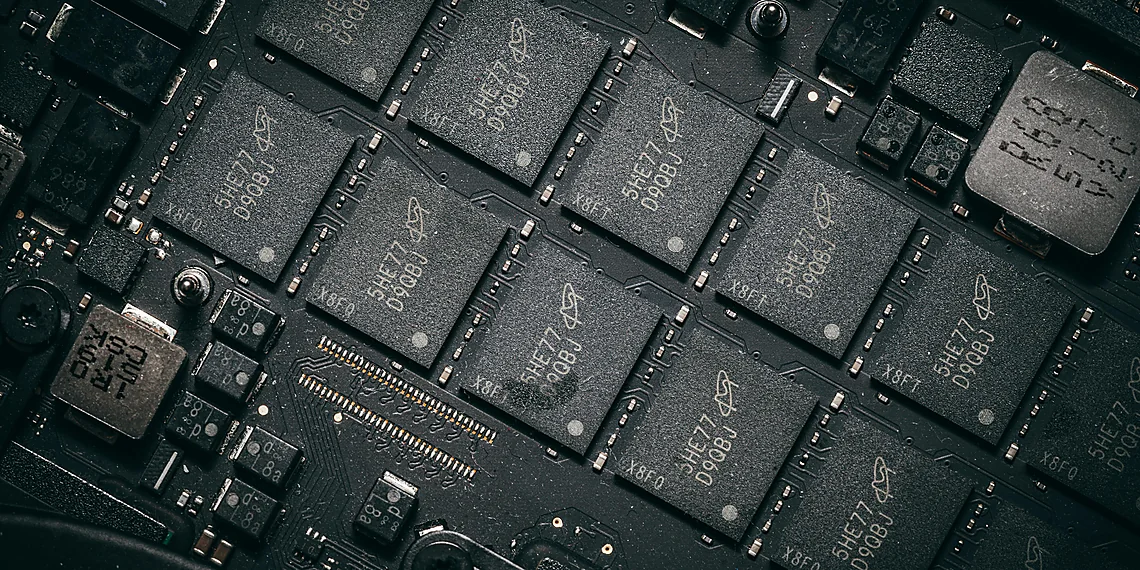
For decades, we’ve relied on traditional digital computers to power our world, but their fundamental architecture is hitting a wall – energy consumption and processing speed are increasingly straining what’s possible. The relentless demand for more complex AI models and real-time data analysis is pushing these systems to their limits, creating a critical need for innovative solutions. We’re reaching a point where simply shrinking transistors isn’t enough to sustain progress.
Nature offers a compelling alternative: the human brain. It’s incredibly energy efficient while performing feats of computation that dwarf even the most powerful supercomputers. A key element in this biological marvel lies within neurons, specifically their branching extensions called dendrites, which integrate vast amounts of information before triggering an action potential. This nuanced processing is what inspires a burgeoning field focused on mimicking these complex structures.
Researchers are now exploring a radical new approach to computation that draws direct inspiration from this biological design – it’s known as dendrite computing. This paradigm shifts away from the binary ‘on’ or ‘off’ of traditional chips and embraces analog, distributed processing, potentially unlocking unprecedented levels of efficiency and adaptability in neuromorphic systems. Recent breakthroughs demonstrating initial functional prototypes are particularly exciting, hinting at a future where hardware more closely resembles its biological counterpart.
The potential impact is enormous, spanning everything from edge computing devices to advanced robotics and AI applications. While still in its early stages, dendrite computing represents a significant departure from conventional architectures and could usher in a new era of computational power.


The Biological Inspiration: Dendrites Reimagined
For decades, our understanding of biological neurons largely focused on their cell body (soma) and axon as the primary processing units, with dendrites relegated to a more passive role – essentially acting as simple ‘information poolers’ that summed incoming signals. However, groundbreaking research over the last decade has shattered this simplistic view, revealing that dendrites themselves are incredibly sophisticated computational engines. They aren’t just gathering information; they’re actively *processing* it in ways we’re only beginning to fully understand.
This burgeoning field is uncovering a remarkable range of functions within individual neuron’s dendrites. Scientists have observed them performing complex temporal dynamics, essentially acting as tiny memory elements that respond differently depending on the timing of signals. Even more surprisingly, they exhibit Boolean-like logic – capable of AND, OR, and NOT operations – alongside arithmetic calculations and even edge detection, a fundamental capability for image and sound recognition. This level of computational density within dendrites is far beyond what was previously imagined.
The implications of these discoveries are profound, particularly for the field of neuromorphic computing. Neuromorphic systems aim to move away from traditional digital architectures, which have hit efficiency bottlenecks, by emulating biological brains. Mimicking the complex processing capabilities of dendrites offers a potentially revolutionary primitive – a fundamental building block – that could lead to drastically more energy-efficient and powerful computers. Instead of relying on billions of transistors performing simple operations, we might be able to create systems where individual ‘artificial dendrites’ perform sophisticated computations.
The recent work detailed in arXiv:2512.23736v1 takes this concept a significant step forward by demonstrating a single component capable of self-sustained dynamics and universal Boolean logic using electrically driven Ovonic threshold switching. This suggests a pathway toward creating artificial dendrites that can replicate the extraordinary computational power found within biological neurons, potentially ushering in a new era of efficient computing.
Beyond Pooling: The Unexpected Complexity of Neurons

For decades, neuroscientists largely considered neuronal dendrites primarily responsible for gathering synaptic inputs and pooling them to determine whether a neuron should fire an action potential. This view portrayed dendrites as relatively passive components, simply summing incoming signals. However, recent research has dramatically altered this understanding, revealing that dendrites possess surprisingly sophisticated computational capabilities far beyond simple summation.
These newly discovered functions include the ability to perform Boolean logic operations (AND, OR, NOT), execute basic arithmetic computations, discriminate between different signal patterns, and even detect edges in images and sounds. These processes aren’t just theoretical; they’ve been observed through experimental manipulation of dendritic structures and electrical activity within real neurons. This complexity arises from intricate interplay of ion channels, nonlinear membrane properties, and the spatial arrangement of synapses across the dendritic tree.
Mimicking these complex dendritic functions holds immense potential for neuromorphic computing. Traditional digital computers are facing limitations in energy efficiency and processing speed. By replicating the dense, parallel, and adaptable computation performed by biological dendrites – even at a rudimentary level – we could create new hardware architectures that are significantly more efficient and capable of handling tasks like real-time image recognition and complex pattern analysis with far less power consumption than current systems.
Ovonic Switches: The Hardware Foundation
At the heart of this exciting new approach to neuromorphic computing lies a crucial piece of hardware: the Ovonic switch. These aren’t your typical transistors; they operate using a phenomenon called Ovonic threshold switching, named after Stanford professor Leon Chua who pioneered their study. Imagine a material that normally resists electrical current, but suddenly ‘switches’ on at a specific voltage – like a tiny, electrically controlled gate. This is essentially what an Ovonic switch does, and it’s remarkably efficient because it doesn’t require constant power to maintain its state.
The switches being utilized in this research are based on a compound of germanium selenide (GeSe) doped with antimony (Sb) and tellurium (Te). Let’s break that down: Germanium and selenium are elements often used in semiconductors, while the addition of antimony and tellurium fine-tunes their properties to achieve the desired switching behavior. Think of it like adding spices to a recipe – small changes in ingredients can dramatically alter the final taste (or, in this case, electrical characteristics). This specific combination allows for the creation of stable, repeatable switching actions crucial for mimicking biological neural function.
The beauty of these Sb-Te-doped GeSe Ovonic switches is their ability to emulate the complex behavior of dendrites. Unlike traditional digital circuits which operate on discrete 0s and 1s, these switches exhibit ‘self-sustained dynamics’ – meaning they can maintain states and react to inputs without constant external control. This allows them to perform operations like universal Boolean logic (AND, OR, NOT) and even more complex functions such as XOR (exclusive OR), mirroring the intricate processing performed by biological dendrites. The research shows that a single Ovonic switch can effectively act as a miniature computational unit.
This technology represents a significant step towards creating neuromorphic systems capable of far greater efficiency than current digital architectures. By mimicking the way real neurons process information, researchers hope to build computers that are not only faster but also more energy-efficient and adaptable – potentially revolutionizing fields ranging from artificial intelligence to robotics.
How Ovonic Switches Work & Their Advantages

Ovonic threshold switching, at its core, is a phenomenon observed in chalcogenide glasses – specialized materials exhibiting abrupt changes in electrical resistance based on voltage applied. Imagine a material that normally resists electricity flow; however, once a certain ‘threshold’ voltage is reached, it suddenly switches to a low-resistance state, allowing current to pass with minimal effort. This switching isn’t permanent; removing the voltage allows the material to return to its high-resistance state. The specific materials exhibiting this behavior are often doped with elements like antimony (Sb) and tellurium (Te) within a germanium selenide (GeSe) matrix – essentially modifying the glass’s composition to fine-tune its switching characteristics.
The beauty of Ovonic switches lies in their ability to mimic biological dendrites. Dendrites, the branching extensions of neurons, perform complex computations beyond simple signal pooling. They exhibit dynamic behavior and even implement logical operations. Similarly, these Ovonic switches can be arranged into networks that display self-sustained oscillations (dynamics) without external clocks – a key feature of biological systems. Furthermore, by carefully designing the network architecture, researchers have demonstrated their ability to perform universal Boolean logic, meaning they can execute any logical function, mirroring the computational versatility seen in dendrites.
Crucially, Ovonic switches offer several advantages for neuromorphic computing. Their self-sustained dynamics reduce power consumption compared to traditional clocked digital circuits. The capability of performing complex Boolean operations within a single device increases integration density and reduces hardware complexity. This combination positions Ovonic threshold switching as a promising building block for creating more efficient and biologically inspired computational systems, potentially revolutionizing areas like artificial intelligence and edge computing.
Demonstrating Computational Capabilities
The potential of dendrite computing hinges on its ability to move beyond simple information pooling and actually *compute*. Recent research, building upon the fascinating discoveries about biological neuron function, is demonstrating exactly that. A particularly compelling demonstration comes from a team utilizing electrically driven Ovonic threshold switching in Sb-Te-doped GeSe – a material exhibiting unique electrical properties. Their work goes far beyond basic logic gate construction; they’ve shown a single two-terminal component capable of self-sustained dynamics and, crucially, universal Boolean logic.
Specifically, the researchers have successfully implemented XOR (exclusive OR) operations using this Ovonic switch network. XOR is a fundamental logical operation used extensively in digital circuits – its ability to produce true or false based on differing inputs makes it a cornerstone of more complex computations. Demonstrating XOR functionality within a single component significantly reduces complexity and energy consumption compared to traditional CMOS implementations, which require multiple transistors. This exemplifies the core promise of dendrite computing: achieving computational density previously unattainable.
Beyond logic gates, the Ovonic network’s capabilities extend even further. The team also showcased its ability to perform basic edge detection—a crucial process for image recognition. By carefully tuning the electrical signals applied to the network, they could extract edges from simulated images. This ability mirrors how biological dendrites contribute to visual processing, highlighting the potential of this approach to mimic aspects of biological intelligence and create more efficient image analysis systems.
The implications for neuromorphic computing are substantial. If these demonstrations can be scaled – creating larger, interconnected networks of these Ovonic components – we could see a radical shift in how computers process information. Instead of relying on the traditional Von Neumann architecture, which separates processing and memory, dendrite computing offers a pathway to integrating computation directly within the ‘memory’ element, promising significant gains in both speed and energy efficiency.
From Logic Gates to Edge Detection
Recent research has revealed that dendrites within biological neurons possess a surprising degree of computational complexity, going beyond simple information pooling to include logic functions like Boolean algebra, arithmetic operations, and even edge detection for image recognition. Inspired by this natural efficiency, researchers are exploring neuromorphic computing architectures that mimic these dense, localized processing capabilities. A key area of focus is replicating the functionality of dendrites using artificial components – specifically, electrically driven Ovonic threshold switching devices.
A significant breakthrough demonstrated in a recent study utilizes a single two-terminal Ovonic component based on Sb-Te-doped GeSe to achieve complex computations. This device isn’t just capable of simple switching; it exhibits self-sustained dynamics that allow it to perform universal Boolean logic, including the XOR (exclusive OR) operation. The ability for a *single* component to execute such a function represents a dramatic departure from traditional digital circuits which require numerous transistors to achieve similar results.
Beyond logic operations, these Ovonic switches also show promise in image processing tasks. Researchers have successfully used them to perform edge detection—a fundamental step in identifying objects within an image. This ability, combined with the XOR functionality and other demonstrated computations (like basic arithmetic), positions this technology as a potentially transformative primitive for neuromorphic computing systems aiming to achieve significantly higher efficiency and lower power consumption compared to conventional digital architectures.
Efficiency & The Future of Neuromorphic Computing
Dendrite computing represents a potentially revolutionary shift in how we approach computation, particularly within the burgeoning field of neuromorphic engineering. Traditional digital computers operate on a binary system – ones and zeros – requiring significant energy to process even relatively simple tasks. The research highlighted in arXiv:2512.23736v1 focuses on mimicking the intricate behavior of biological neurons’ dendrites, structures previously understood primarily for their role in signal pooling. Recent discoveries reveal these dendrites exhibit astonishing computational capabilities, including complex temporal dynamics and even Boolean logic – functions typically handled by entire digital circuits. This bio-inspired approach promises a radical departure from conventional architectures, potentially unlocking orders of magnitude improvements in energy efficiency.
The core appeal of dendrite computing lies in its potential to drastically reduce power consumption. While precise figures are still emerging as the technology matures, early demonstrations using electrically driven Ovonic threshold switching show extremely promising results. The ability to perform Boolean logic and XOR operations within a single, compact device – essentially replicating complex neuronal functions at a microscale – suggests a pathway towards significantly lower energy requirements compared to traditional digital circuits performing the same tasks. This efficiency gain is crucial for expanding AI applications into resource-constrained environments like edge devices, wearables, and even implantable medical technology, where battery life and heat dissipation are paramount concerns.
Looking ahead, the future of dendrite computing hinges on scaling these individual components into larger, interconnected networks. Current research focuses on developing methods to reliably fabricate and integrate these ‘dendrites’ into functional neuromorphic chips. Beyond simply replicating biological structure, researchers are exploring novel materials and device architectures to further optimize performance and functionality. We can anticipate a future where dendrite computing complements rather than replaces traditional digital processing – acting as specialized accelerators for AI workloads requiring extreme energy efficiency or real-time responsiveness.
Ultimately, the success of dendrite computing will depend on overcoming significant engineering challenges related to fabrication complexity, interconnectivity, and programming paradigms. However, the potential rewards—a new era of ultra-efficient, bio-inspired computation—are substantial enough to warrant continued investment and exploration. As this field progresses, we can expect to see increasingly sophisticated neuromorphic hardware capable of tackling complex problems with unprecedented energy efficiency and opening up exciting possibilities for artificial intelligence.
Orders of Magnitude More Efficient?
Recent research stemming from a preprint on arXiv (2512.23736v1) suggests that mimicking the functionality of biological dendrites could lead to dramatic improvements in energy efficiency for AI computations. Traditional digital computing relies on discrete ‘on’ and ‘off’ states, consuming power regardless of whether calculations are actively being performed. Dendrite computing, conversely, leverages analog dynamics – continuously varying electrical signals – to perform complex operations within a single device. The demonstrated prototype utilizes electrically driven Ovonic threshold switching, showcasing Boolean logic and XOR operations with inherent energy efficiency due to the absence of discrete switching events.
The claimed efficiency gains are substantial. While precise figures are still emerging from this relatively new area of research, preliminary results indicate potential for orders-of-magnitude reduction in power consumption compared to conventional digital architectures performing equivalent tasks. The ability to perform multiple logical operations within a single dendrite-inspired device drastically reduces the need for complex circuitry and associated energy expenditure. This contrasts sharply with von Neumann architecture’s separation between processing and memory, which inherently incurs significant energy overhead due to data movement.
The implications of this technology extend beyond simply reducing power consumption. Efficient dendrite computing could unlock new possibilities for low-power AI applications, such as edge computing devices (e.g., autonomous sensors, wearable health monitors) and battery-powered robotics. Further research will focus on scaling up these dendritic systems to create larger, more complex networks and exploring different materials and device architectures to optimize performance and robustness, paving the way for a new generation of neuromorphic hardware.

The convergence of neuroscience and materials science has yielded a fascinating prospect: dendrite computing, offering a potential paradigm shift for how we design computational systems.
Our exploration of Ovonic switches as building blocks reveals their remarkable ability to mimic the complex integration capabilities found within biological neurons’ branching structures – specifically, the way dendrites process multiple signals simultaneously.
The promise lies not just in replicating brain function, but in achieving unprecedented energy efficiency and parallel processing power, addressing limitations inherent in traditional von Neumann architectures.
While challenges remain in scaling these systems and fully realizing their potential, early results demonstrate a clear path towards creating neuromorphic hardware capable of tackling complex AI tasks with significantly reduced power consumption compared to current methods; the implications for edge computing are particularly exciting here as we move closer to integrating intelligent processing into everyday devices at a fraction of the energy cost. Further development focused on improving switch reliability and interconnection density is crucial to unlock widespread adoption, but the foundational principles hold immense weight in shaping future computational landscapes. The ability to harness dendrite computing through innovations like Ovonic switches could fundamentally alter how we approach machine learning and artificial intelligence applications, potentially leading to breakthroughs across diverse fields from robotics to medical diagnostics. It’s a truly transformative area of research deserving of serious attention and investment as we strive for more sustainable and intelligent technologies. The journey is just beginning, but the initial findings are undeniably compelling. We hope this overview has sparked your interest in the potential that lies within biomimetic computation and its ability to revolutionize our technological future. Dive deeper – there’s a wealth of research waiting to be explored.
Continue reading on ByteTrending:
Discover more tech insights on ByteTrending ByteTrending.
Discover more from ByteTrending
Subscribe to get the latest posts sent to your email.