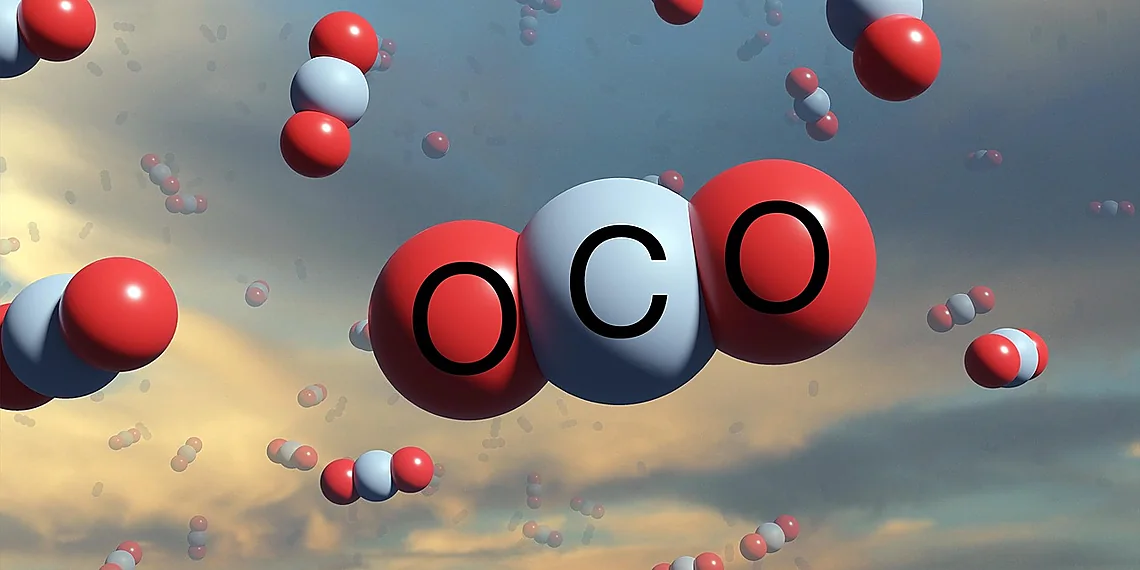



The relentless rise in atmospheric carbon dioxide is no longer a distant threat; it’s an undeniable reality shaping our climate and demanding urgent action.
Current strategies to mitigate this crisis, while valuable, often face significant hurdles – high costs, energy-intensive processes, and limited scalability frequently hinder widespread adoption.
Many existing carbon capture technologies rely on materials that degrade quickly or require complex regeneration cycles, making them economically unsustainable for long-term deployment.
But what if we could bypass these limitations with a truly reusable solution? Researchers at the University of Helsinki have just unveiled an exciting breakthrough poised to redefine the landscape of CO2 removal – a novel Carbon Capture Compound demonstrating remarkable stability and efficiency in initial trials. This innovation promises a potentially transformative shift towards more accessible and sustainable carbon capture, offering a glimmer of hope in our fight against climate change. It’s a development ByteTrending is incredibly excited to share with you.
The Carbon Capture Challenge
The race to mitigate climate change hinges significantly on our ability to effectively remove carbon dioxide from the atmosphere. While reducing emissions remains paramount, capturing existing CO2 is increasingly recognized as vital. However, current methods for achieving this – often referred to as ‘carbon capture’ – face significant hurdles that limit their widespread adoption. Think of it like trying to clean up a massive spill with a tiny sponge; existing technologies simply aren’t efficient enough or cost-effective enough to handle the scale of the problem.
One of the most common approaches, amine scrubbing, involves using chemicals (amines) to absorb CO2 from industrial exhaust streams. While effective, this process is incredibly energy-intensive – requiring substantial power to release the captured carbon dioxide for storage or utilization. Direct Air Capture (DAC), which pulls CO2 directly from the atmosphere, fares even worse in terms of energy consumption and cost. Imagine sucking up water with a straw; that’s essentially what DAC does, but on an industrial scale, making it both slow and expensive. Furthermore, many current methods generate chemical waste or require rare earth materials, introducing new environmental concerns.
The high costs associated with these technologies – often running into the hundreds of dollars per ton of CO2 captured – are a major deterrent for widespread implementation. If carbon capture is to truly contribute meaningfully to climate goals, we need innovative solutions that drastically reduce energy consumption, minimize chemical waste, and lower overall costs. The pressure is on to find more sustainable and economically viable ways to tackle this global challenge.
Ultimately, the limitations of current carbon capture techniques underscore the urgent need for breakthroughs in materials science and engineering. Finding a ‘carbon capture compound’ – a substance that can efficiently and cheaply absorb CO2 with minimal environmental impact – represents a holy grail for climate tech. The recent development from the University of Helsinki’s chemistry department offers a potentially exciting step forward, promising to address some of these critical shortcomings.
Current Methods: Limitations and Costs

Existing carbon capture technologies face significant hurdles in terms of efficiency and cost. A common method, amine scrubbing, involves passing exhaust gases through a solution containing amines – chemicals that bind to CO2. Think of it like a sticky trap for carbon dioxide; the amines grab onto the gas molecules. However, this process requires substantial energy to heat and cool the solutions, regenerate the amines (releasing the captured CO2), and handle the chemical waste generated. This ‘regeneration’ step alone can consume as much energy as the initial capture, significantly reducing overall effectiveness.
Direct Air Capture (DAC) is another approach gaining traction. DAC essentially uses specialized filters or solvents to pull CO2 directly from the atmosphere. Imagine trying to filter tiny grains of sand from a massive beach – that’s the challenge with atmospheric CO2 concentrations, which are far lower than in industrial exhaust. While DAC avoids dealing with flue gas, it demands even greater energy input because it’s working against natural atmospheric conditions and requires vast amounts of chemicals for capture. The current cost per ton of captured CO2 using DAC is prohibitively high, often exceeding $600 – making widespread deployment economically unfeasible.
Beyond the energy penalty, many existing carbon capture methods produce chemical waste streams requiring careful disposal or further processing. Amine scrubbing, for example, can lead to emissions of volatile organic compounds if not managed properly. The lifecycle assessment of these technologies needs constant improvement; simply removing CO2 isn’t enough – we must ensure the entire process is environmentally sound and doesn’t create new problems along the way. This underscores the need for more sustainable and efficient carbon capture solutions.
Helsinki’s Breakthrough Compound
Researchers at the University of Helsinki have unveiled a potentially game-changing development in carbon capture technology: a novel reusable carbon capture compound. This isn’t just another incremental improvement; it represents a fundamentally different approach to removing carbon dioxide from the atmosphere, addressing a key challenge in existing technologies – waste generation and high costs associated with disposal or regeneration.
At its core, the new compound is an amine-based material modified with specific organic molecules designed to enhance both CO2 absorption and subsequent release. Imagine it as tiny sponges specifically engineered for carbon dioxide. The chemical structure incorporates flexible linkages that allow the compound to readily bind to CO2 molecules, forming a stable complex. Crucially, these linkages also facilitate the reverse reaction – releasing the captured CO2 when exposed to mild heat or pressure without degrading the material itself. This avoids the need for harsh chemicals or extreme conditions often required in traditional carbon capture processes.
The ‘reusable’ aspect stems from this reversible binding process. Unlike many current methods which create a waste product requiring disposal, our compound can be repeatedly used to absorb and release CO2. Chemically, this looks something like: Compound + CO2 ⇌ Compound-CO2 (with heat/pressure shifting the equilibrium). The beauty lies in the fact that after releasing the captured carbon dioxide, the compound returns to its original state, ready to capture more. This drastically reduces operational costs and minimizes environmental impact compared to single-use systems.
Beyond just absorption efficiency, the researchers focused on creating a material with long-term stability. The specific organic molecules incorporated act as ‘anchors,’ preventing degradation during repeated cycles of CO2 capture and release. This durability is critical for large-scale deployment, ensuring the carbon capture compound maintains its effectiveness over extended periods and reduces the frequency of replacement – another significant cost saving.
The Science Behind Reusability

The newly developed carbon capture compound from the University of Helsinki hinges on a unique molecular architecture featuring amine-functionalized metal-organic frameworks (MOFs). MOFs are crystalline materials with exceptionally high surface areas, essentially acting like microscopic sponges. The incorporated amines chemically bind to CO2 molecules, effectively trapping them within the porous structure. Crucially, these aren’t just any amines; they’re specifically engineered for a reversible reaction – meaning the captured CO2 can be released later without destroying the compound itself.
The ‘reusable’ nature of this carbon capture compound directly addresses a major limitation of existing technologies. Many current CO2 absorption methods utilize liquid solvents that become contaminated and generate substantial waste during regeneration or disposal. This new MOF-based compound avoids this issue because it’s solid, minimizing contamination risks. The captured CO2 is released by applying mild heat or reducing the pressure – a relatively low-energy process compared to breaking down solvent-based systems – and the compound returns to its original state, ready for another capture cycle.
Simplified Chemical Reaction:
MOF-NH2 + CO2 ⇌ MOF-NH3+ + Reacted Compound (Capture)
MOF-NH3+ + Heat/Pressure Reduction ⇌ MOF-NH2 + CO2 (Release)
This reversible reaction is the key to its efficiency and sustainability. The ‘MOF’ represents the metal-organic framework structure, ‘NH2’ signifies an amine group, and ‘MOF-NH3+’ denotes the amine group after it has reacted with carbon dioxide.
Potential Applications & Impact
The implications of this novel carbon capture compound extend far beyond the confines of the laboratory, offering a range of potential applications across diverse industries. While direct air capture (DAC) is frequently discussed as a key climate mitigation strategy, this new compound’s versatility allows for integration into existing industrial processes, presenting a potentially more efficient and scalable solution. Imagine power plants, cement factories – major contributors to global CO2 emissions – equipped with systems utilizing this material to directly scrub pollutants from exhaust streams. This ‘source capture’ approach could significantly reduce the carbon footprint of these industries before it even enters the atmosphere.
Beyond simply reducing emissions, the captured carbon dioxide isn’t necessarily waste. The compound’s properties suggest possibilities for subsequent utilization – perhaps converting the captured CO2 into valuable products like fuels or building materials. This ‘carbon recycling’ aspect moves beyond simple sequestration and contributes to a circular economy model, further enhancing the environmental benefits. While challenges remain in establishing robust infrastructure for such conversions at scale, the potential economic incentives provide a powerful driver for adoption.
Scalability and cost-effectiveness are, of course, critical factors determining real-world impact. The University of Helsinki team’s research will need to focus on optimizing production methods to ensure widespread availability and affordability. Currently, DAC technologies often face high costs that hinder their broader implementation. This new carbon capture compound’s potential advantage lies in its simpler synthesis and potentially lower operational expenses compared to existing approaches, but further investigation and pilot projects are essential to validate these assumptions and pave the way for industrial adoption.
Ultimately, the successful deployment of this carbon capture compound hinges on collaborative efforts between researchers, industry partners, and policymakers. Demonstrating its effectiveness through real-world trials, addressing any unforeseen challenges, and establishing supportive regulatory frameworks will be crucial steps in translating this scientific breakthrough into a tangible contribution to global climate goals. The potential is significant; now the focus shifts toward responsible and impactful implementation.
Beyond Direct Air Capture: Industrial Integration
While direct air capture (DAC) garners significant attention for removing legacy CO2 from the atmosphere, integrating carbon capture compounds like this one directly into industrial processes presents a compelling alternative with potentially higher efficiency and scalability. Consider power plants or cement factories – major point sources of concentrated CO2 emissions. Embedding the compound within flue gas scrubbing systems could offer a more targeted and cost-effective approach compared to DAC, which must process vast volumes of air with lower concentrations of CO2. The Helsinki team’s compound’s properties, such as its selectivity for CO2 and potential recyclability, are particularly attractive in this context.
The feasibility of industrial integration hinges on several factors beyond the capture efficiency itself. Scalability is paramount; the compound must be produced at sufficient quantities to meet the demands of large-scale industrial applications. Cost-effectiveness will dictate adoption – competing against existing carbon capture technologies (like amine scrubbing) requires a significant performance or cost advantage. Furthermore, the long-term stability and durability of the compound within harsh industrial environments (high temperatures, corrosive gases) need thorough evaluation. Pilot projects testing these aspects in real-world settings are crucial next steps.
Looking ahead, potential integration could involve incorporating the compound into existing carbon capture infrastructure, potentially retrofitting older facilities with this new technology. The modular nature of some carbon capture systems may facilitate easier implementation. Successful industrial deployment would not only reduce emissions from specific industries but also contribute to a broader reduction in atmospheric CO2 levels and foster the development of more sustainable industrial practices.
Looking Ahead: Challenges and Future Research
While this new carbon capture compound represents a truly exciting first step in addressing atmospheric CO2 levels, significant hurdles remain before widespread adoption becomes a reality. Scaling up production from laboratory quantities to industrial scales poses a considerable challenge. The synthesis process needs optimization for efficiency and cost-effectiveness; currently, the materials involved can be relatively expensive, impacting the overall economic viability of large-scale deployment. Further research will focus on streamlining manufacturing techniques and exploring alternative, more readily available starting materials without compromising performance.
Beyond production volume, long-term stability is paramount. The compound’s effectiveness needs to be rigorously tested under various environmental conditions – fluctuating temperatures, humidity levels, and exposure to pollutants – over extended periods. Degradation or loss of efficiency would severely limit its practicality. This requires dedicated testing protocols and potentially identifying stabilizing additives or modifications to the core molecular structure itself. Future research will also investigate how this carbon capture compound performs in real-world environments, such as direct air capture facilities or integrated into industrial processes.
A crucial consideration moving forward is a thorough environmental impact assessment. While designed for carbon capture, it’s vital to understand any potential unintended consequences of its lifecycle – from raw material sourcing and manufacturing emissions to the ultimate fate of the captured CO2 and the compound itself. This includes assessing any possible toxicity or ecological effects if the compound were to be released into the environment accidentally. Responsible development necessitates a holistic view that minimizes negative impacts across all stages.
Ultimately, the University of Helsinki’s breakthrough provides a valuable foundation for future innovation in carbon capture technology. It demonstrates the potential of novel materials to directly address climate change. The challenges ahead are substantial but not insurmountable; focused research efforts targeting scalability, stability, and environmental impact will be critical to translating this promising discovery into a tangible solution contributing to a more sustainable future.
Scaling Up & Long-Term Viability
While the initial laboratory results for this carbon capture compound are exceptionally encouraging, significant challenges remain in translating them into real-world application at scale. Mass production of the compound necessitates developing cost-effective and sustainable synthesis routes. Current methods likely involve specialized chemicals and processes that would be prohibitively expensive to implement industrially. Researchers must focus on streamlining the manufacturing process, potentially exploring alternative precursor materials or refining existing techniques to reduce both costs and environmental footprint.
Beyond production hurdles, ensuring long-term viability is crucial. The compound’s effectiveness needs thorough testing under various environmental conditions – fluctuating temperatures, humidity levels, and exposure to other atmospheric pollutants. Degradation over time could diminish its CO2 absorption capacity, requiring frequent replacement or regeneration, which would introduce additional costs and logistical complexities. Long-duration field tests are essential to assess performance and identify potential failure modes.
Future research will likely concentrate on optimizing the compound’s properties for different scenarios. This includes tailoring it to work effectively in environments with varying CO2 concentrations, such as industrial flue gases versus ambient air. Exploring entirely new materials—perhaps bio-based alternatives or combinations of existing compounds—could also lead to improved performance and reduced environmental impact. These advancements will be vital in moving this promising carbon capture compound closer to widespread deployment.
The development of this reusable Carbon Capture Compound marks a genuinely exciting step forward in our fight against climate change, offering a potentially scalable solution for reducing atmospheric CO2 levels. While challenges remain in optimizing its efficiency and deploying it at industrial scales, the demonstrated reusability significantly lowers operational costs and environmental impact compared to previous methods. This innovation underscores the power of ongoing research and development within materials science, proving that transformative solutions are still being discovered. The implications extend beyond direct carbon removal; a more accessible and cost-effective capture process could incentivize wider adoption across various industries. Further refinement will undoubtedly focus on enhancing its selectivity for CO2 and minimizing any potential byproduct formation during operation. We stand at a pivotal moment where scientific breakthroughs like these, coupled with policy changes, can truly shift the trajectory of our planet’s future. It’s crucial to remember that this is just one piece of a larger puzzle requiring multifaceted approaches to achieve global sustainability goals. Dive deeper into the world of carbon capture technologies; explore how they work, their limitations, and the ongoing research pushing boundaries. Your informed understanding empowers you to make conscious choices and advocate for policies that champion environmental responsibility. Support organizations dedicated to sustainable practices and contribute to initiatives driving a greener tomorrow – every action counts in building a more resilient future for generations to come.
Ultimately, the promise of technologies like this reusable Carbon Capture Compound is dependent on continued investment and collaboration. The journey from lab discovery to widespread implementation requires significant effort from researchers, engineers, policymakers, and consumers alike. Let’s not view this as a silver bullet but rather as a vital tool in our arsenal against climate change, one that demands further exploration and responsible application. We encourage you to become an active participant in the conversation surrounding sustainable solutions – research carbon capture technologies, understand their potential impact, and support initiatives working towards a healthier planet.
Continue reading on ByteTrending:
Discover more tech insights on ByteTrending ByteTrending.
Discover more from ByteTrending
Subscribe to get the latest posts sent to your email.