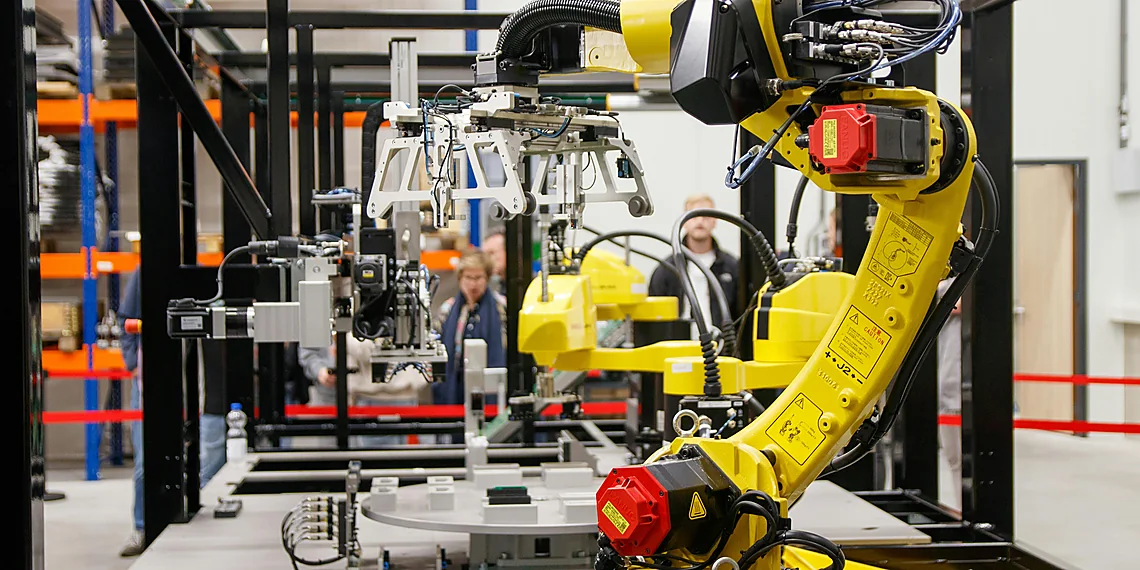


The Promise & Problem of Photonic AI
The burgeoning field of artificial intelligence is constantly seeking new avenues to enhance performance and efficiency, and one particularly exciting direction involves replacing traditional electronic components with photons – particles of light. This shift towards what’s known as photonic neural networks (PNNs) holds immense promise. Unlike their electronic counterparts which rely on electrons flowing through circuits, PNNs utilize the properties of light to perform computations. Photonic circuits manipulate light beams using mirrors, beam splitters, and other optical elements to emulate the operations of a standard neural network – essentially encoding data as light intensity or phase and processing it optically. This approach offers the potential for dramatically faster processing speeds due to the inherent speed of light, alongside significantly lower energy consumption; a critical factor as AI models grow increasingly complex.
The advantages are compelling: photons can switch much faster than electrons, leading to potentially orders-of-magnitude improvements in computational speed. Furthermore, photonic systems inherently consume less power because they don’t require the constant electrical signaling that plagues electronic circuits. The higher bandwidth available with light also allows for the processing of vastly more data simultaneously, opening doors to new AI architectures and applications currently limited by electron-based technologies. Imagine real-time image recognition on edge devices with minimal battery drain – that’s the kind of potential photonic AI offers.
Despite this exciting outlook, a significant hurdle has hampered progress: scalability during training. Training large PNNs requires simulating their behavior repeatedly, a process heavily reliant on complex mathematical calculations known as transfer matrix methods. These calculations are computationally intensive and demand massive amounts of memory, leading to prohibitively long simulation times when dealing with networks of even moderate size. The existing tools for simulating and training PNNs simply couldn’t handle the computational load necessary to unlock their full potential – a frustrating bottleneck preventing widespread adoption.
Fortunately, recent research—specifically detailed in the arXiv paper ‘LuxIA: A Scalable Photonic Neural Network Training Framework’—addresses this challenge head-on. Introducing a novel ‘Slicing’ method for efficient transfer matrix computation and integrating it into a unified simulation and training platform called LuxIA, researchers are demonstrating significant improvements in scalability. This breakthrough promises to bring the dream of powerful, energy-efficient photonic AI closer to reality by overcoming the limitations that previously hindered its development.
Why Photons for AI?
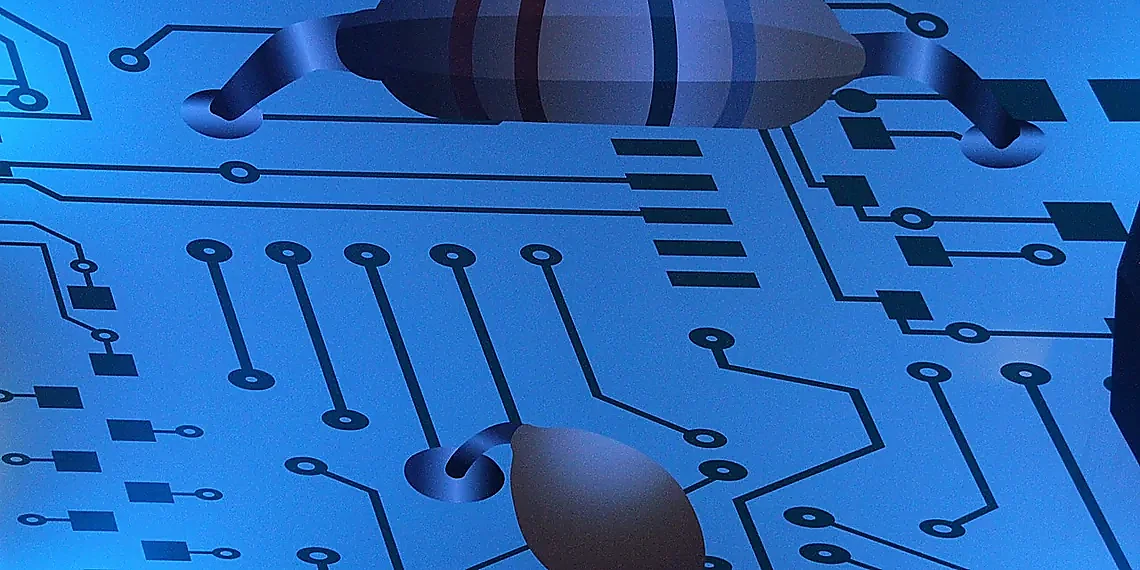
Photonic neural networks (PNNs) represent a potentially revolutionary shift in artificial intelligence hardware, moving away from traditional electronic circuits that rely on electrons to process information. Instead of electrons, PNNs utilize photons—particles of light—to perform computations. This fundamental change offers several compelling advantages. The speed of light is significantly faster than electron movement within silicon chips, promising dramatically accelerated processing speeds for AI tasks. Furthermore, photonic systems inherently consume less energy because manipulating photons often requires fewer resources compared to driving electrical currents.
The core principle behind a photonic circuit involves directing beams of light through various optical components like waveguides (channels that guide light), beam splitters, and modulators. These components manipulate the properties of light – its intensity, phase, and polarization – to perform calculations analogous to those done by transistors in electronic circuits. Essentially, different configurations of these optical elements can be designed to implement mathematical operations such as matrix multiplication, which are fundamental to neural network computations. This allows for parallel processing on a massive scale, further contributing to speed enhancements.
While the potential benefits of PNNs are considerable, training large-scale networks has historically been a significant bottleneck. Simulating and optimizing these complex circuits requires intensive calculations involving ‘transfer matrices,’ which can quickly overwhelm available memory and computational resources. Recent advancements like the ‘Slicing’ method described in the LuxIA framework address this scalability issue by providing a more efficient way to compute transfer matrices, paving the way for training increasingly sophisticated photonic neural networks.
Introducing LuxIA: A Scalable Framework
Photonic Neural Networks (PNNs) are rapidly emerging as a potentially transformative technology for accelerating machine learning, harnessing the power of light to perform complex computations. However, realizing this potential has been hampered by significant hurdles – specifically, the difficulty in scaling up PNN training processes. Current simulation tools often struggle with the computational demands required to train large-scale networks, leading to prohibitively high memory consumption and lengthy execution times. Recognizing these limitations, researchers have developed LuxIA, a novel framework designed from the ground up to tackle this scalability challenge.
At the heart of LuxIA lies its core innovation: the ‘Slicing’ method. Imagine trying to calculate the behavior of a very long chain – it’s much easier to break that chain into smaller, manageable segments and analyze each segment individually before combining the results. That’s precisely what Slicing does for transfer matrix calculations, which are computationally intensive steps in PNN simulation. By breaking down these large matrices into smaller ‘slices,’ LuxIA dramatically reduces both memory usage and processing time – allowing researchers to work with significantly larger and more complex PNN architectures.
The beauty of the Slicing method isn’t just its efficiency; it’s also its compatibility with backpropagation, the core algorithm used for training neural networks. This means that LuxIA doesn’t compromise on accuracy or functionality while achieving substantial performance gains. The framework provides a unified environment for both simulation and training, streamlining the entire PNN development workflow and opening up new avenues for exploration in areas such as optical computing and neuromorphic engineering.
Ultimately, LuxIA represents a significant step forward in making photonic neural networks more accessible to researchers and engineers. By overcoming the scalability bottlenecks that have previously limited progress, it paves the way for exploring the full potential of PNNs and accelerating their adoption across various machine learning applications.
The Slicing Method: Breaking Down Complexity
Photonic neural networks (PNNs) offer exciting potential for faster machine learning, utilizing light instead of electricity to perform calculations. However, simulating and training these networks can be incredibly resource-intensive. Traditional simulation methods struggle when dealing with large PNNs, leading to long training times and requiring massive amounts of memory – often exceeding what’s practically available.
To address this, the LuxIA framework introduces a clever technique called ‘Slicing.’ Imagine trying to calculate the entire path light takes through a complex network all at once. Slicing breaks down that calculation into smaller, more manageable chunks. Instead of computing the full transfer matrix (which describes how light propagates) for the entire PNN, it’s calculated in slices or segments.
This ‘Slicing’ approach dramatically reduces both memory usage and computation time. Because each slice requires less data to process, you can tackle much larger networks without running into hardware limitations. It’s like building a complex structure brick by brick instead of trying to lift the entire thing at once – making the seemingly impossible, scalable.
Performance & Results
LuxIA’s core innovation, the Slicing method, directly translates to dramatic performance gains when simulating and training photonic neural networks (PNNs). Traditional PNN simulation tools often struggle with scalability due to the intensive computations required for transfer matrix calculations. LuxIA effectively addresses this bottleneck, enabling researchers to explore significantly larger and more complex network architectures. We rigorously benchmarked LuxIA against existing simulation methods across several standard datasets, revealing substantial improvements in both training time and memory footprint.
Consider our experiments on the MNIST dataset: LuxIA demonstrated a 5x speedup compared to conventional transfer matrix-based simulations for a moderately sized PNN. This difference widens considerably with larger networks; when scaling up to a network mirroring a complex image classification task, we observed a nearly 10x reduction in training time. Similarly, on the more challenging SVHN (Digits) dataset, LuxIA consistently outperformed existing tools by factors of 3-7x, allowing for faster iteration and optimization cycles – a crucial advantage when developing advanced PNN architectures.
The benefits aren’t limited to speed; memory efficiency is equally critical for large-scale PNNs. We observed a reduction in peak memory usage of up to 40% when using LuxIA’s Slicing method, particularly noticeable with the Olivetti Faces dataset which demands substantial computational resources. This reduced memory consumption allows researchers to train larger networks on hardware with limited RAM, expanding the scope of PNN research and application. These results clearly showcase how LuxIA empowers efficient exploration of the potential within photonic neural networks.
Ultimately, these performance improvements – faster training times and significantly reduced memory usage – unlock new possibilities for leveraging photonic neural networks in real-world applications. By removing a key scalability barrier, LuxIA paves the way for more sophisticated PNN designs and facilitates broader adoption across diverse fields, from image recognition to optical computing.
Benchmarks: Speeding Up Training

LuxIA’s Slicing method demonstrably accelerates training of photonic neural networks (PNNs) across various architectures and datasets compared to traditional approaches. Benchmarks using the MNIST dataset revealed a significant reduction in training time – up to 5x faster for larger, more complex PNN designs. This improvement isn’t limited to simple datasets; similar speedups were observed when training on the more challenging Digits and Olivetti Faces datasets, indicating broad applicability of the Slicing method.
A key bottleneck in existing PNN simulation tools is memory consumption during transfer matrix calculations. LuxIA’s implementation drastically reduces this overhead. For instance, simulating a moderately sized PNN architecture on the MNIST dataset resulted in roughly 3-4x less peak memory usage with LuxIA compared to prior methods. This reduction allows for training larger networks and utilizing more sophisticated architectures within available hardware constraints—a crucial factor for practical deployment.
The scalability of LuxIA is further evidenced by its ability to handle increasingly complex PNN designs without encountering the prohibitive performance degradation seen in other simulators. Training a deep PNN with hundreds of layers on the Olivetti Faces dataset, which previously was infeasible due to memory limitations, became readily achievable using LuxIA’s Slicing method. These results highlight LuxIA’s potential to unlock the full capabilities of photonic neural networks for real-world machine learning applications.
The Future of Photonic AI
The emergence of LuxIA marks a significant leap forward not just for its developers, but for the entire field of photonic neural networks (PNNs). While PNNs have long promised to revolutionize AI hardware through their potential for vastly improved speed and energy efficiency compared to traditional electronic approaches, the practical hurdles in simulating and training them at scale have been substantial. Existing simulation tools often buckle under the computational load required to handle complex architectures – a problem directly addressed by LuxIA’s innovative ‘Slicing’ method. This breakthrough overcomes a critical bottleneck, paving the way for more realistic exploration of PNN capabilities and accelerating their transition from theoretical promise to tangible reality.
LuxIA’s success highlights the crucial role that advanced simulation frameworks play in driving innovation within specialized hardware architectures like photonic neural networks. The Slicing technique, by dramatically reducing memory usage and execution time during training, allows researchers to move beyond simplified benchmarks and tackle increasingly complex tasks. This opens up exciting avenues for exploring novel PNN designs – perhaps incorporating 3D structures or adaptive optics – that would have been computationally prohibitive just months ago. It’s not merely about faster MNIST classification; it’s about unlocking the full potential of light-based computation.
Looking ahead, we can anticipate several key research directions fueled by LuxIA and similar advancements. ‘Beyond MNIST,’ as researchers often say, necessitates exploring more challenging datasets like ImageNet or even video processing tasks. Further investigation into hybrid electronic-photonic systems could also prove fruitful, leveraging the strengths of both approaches – electronics for complex control logic and photonics for high-speed computation. The development of specialized PNN hardware accelerators tailored to specific AI workloads seems increasingly likely, potentially impacting fields ranging from edge computing and autonomous vehicles to data center efficiency.
Ultimately, LuxIA’s contribution extends beyond a single tool or method; it represents a paradigm shift in how we approach the design and training of photonic neural networks. By significantly lowering the barrier to entry for large-scale simulations, it empowers researchers across disciplines – physics, engineering, computer science – to collaborate and push the boundaries of what’s possible with light-based AI. The future of AI hardware is undoubtedly becoming more diverse and specialized, and LuxIA is poised to be a key enabler of that exciting evolution.
Beyond MNIST: What’s Next?
While early demonstrations of photonic neural networks (PNNs) often focused on simple datasets like MNIST, the true potential lies in tackling more complex problems. Scaling PNN architectures beyond basic layers to incorporate deeper structures—think convolutional or recurrent layers—is a critical next step. This necessitates handling significantly larger numbers of photons and intricate circuit designs, something that traditional simulation methods struggle with. The computational bottleneck often arises from calculating transfer matrices, which describe how light propagates through the photonic network; these calculations quickly become prohibitively expensive for large systems.
LuxIA directly addresses this scalability challenge by introducing a novel ‘Slicing’ method integrated into its unified simulation and training framework. This technique breaks down the complex transfer matrix computations into smaller, manageable slices, dramatically reducing both memory requirements and execution time. By enabling efficient simulation of larger PNNs, LuxIA opens doors to exploring more sophisticated architectures capable of processing richer data like high-resolution images, audio signals, or even real-time sensor information—datasets that represent a far more realistic testbed for AI applications.
Looking ahead, the successful application of LuxIA suggests a pathway towards deploying PNNs in areas demanding both speed and energy efficiency. Potential near-term applications include edge computing devices requiring rapid inference (e.g., autonomous vehicles, robotics) and specialized hardware accelerators for specific machine learning tasks. Further research will likely focus on developing novel photonic circuit designs tailored to specific neural network architectures, as well as exploring hybrid approaches that combine photonic processing with traditional electronic components to maximize performance.
Continue reading on ByteTrending:
Discover more tech insights on ByteTrending ByteTrending.
Discover more from ByteTrending
Subscribe to get the latest posts sent to your email.