Imagine a liquid that flows without any resistance, defying everything we instinctively understand about friction and viscosity – it sounds like science fiction, but it’s reality.
This bizarre behavior is exhibited by superfluids, substances cooled to near absolute zero where they enter an extraordinary quantum state.
Within this realm, the very concept of ‘sticking’ vanishes as atoms move in perfect synchronicity, creating a truly frictionless experience.
A crucial piece of understanding how these seemingly impossible flows work lies within something called superfluid vortices – tiny, quantized whirlpools that form when superfluids rotate or are disturbed, acting like miniature gateways to this otherworldly physics. Their existence and behavior offer profound insights into the fundamental laws governing matter at incredibly low temperatures, revealing a universe far stranger than we typically perceive it. Studying these superfluid vortices promises not only deeper theoretical breakthroughs but also potentially revolutionary applications in areas such as quantum computing and ultra-sensitive sensors, paving the way for technologies previously confined to the realm of speculation.
What are Superfluids?
Imagine a liquid so extraordinary that it can flow endlessly without slowing down – no friction, no resistance. That’s essentially what a superfluid is. Unlike everyday liquids like water or honey, which experience viscosity (that ‘stickiness’ that resists flow), superfluids exhibit zero viscosity under certain conditions, typically very low temperatures close to absolute zero (-273.15°C). This seemingly impossible behavior arises from the bizarre world of quantum mechanics and fundamentally challenges our intuitive understanding of how fluids should behave.
The key to superfluidity lies in the collective behavior of atoms within the liquid. At extremely cold temperatures, these atoms begin to act as one unified entity, described by a macroscopic wave function. This means they lose their individual identities and move in perfect coordination. Instead of bouncing off each other like molecules in a regular fluid, they flow seamlessly, creating a frictionless environment where motion continues indefinitely – think of it as an endless, self-sustaining current.
One remarkable consequence of this frictionless flow is the ‘fountain effect.’ If you were to gently heat a superfluid, it would climb up the sides of a container and overflow, seemingly defying gravity. This happens because even though there’s no friction internally, temperature gradients still drive fluid motion, creating an upward force that overcomes gravity’s pull. This behavior, along with other unique properties like being able to creep through tiny capillaries and supporting persistent currents, showcases just how different superfluids are from the liquids we encounter in our daily lives.
Beyond Viscosity: The Frictionless Flow
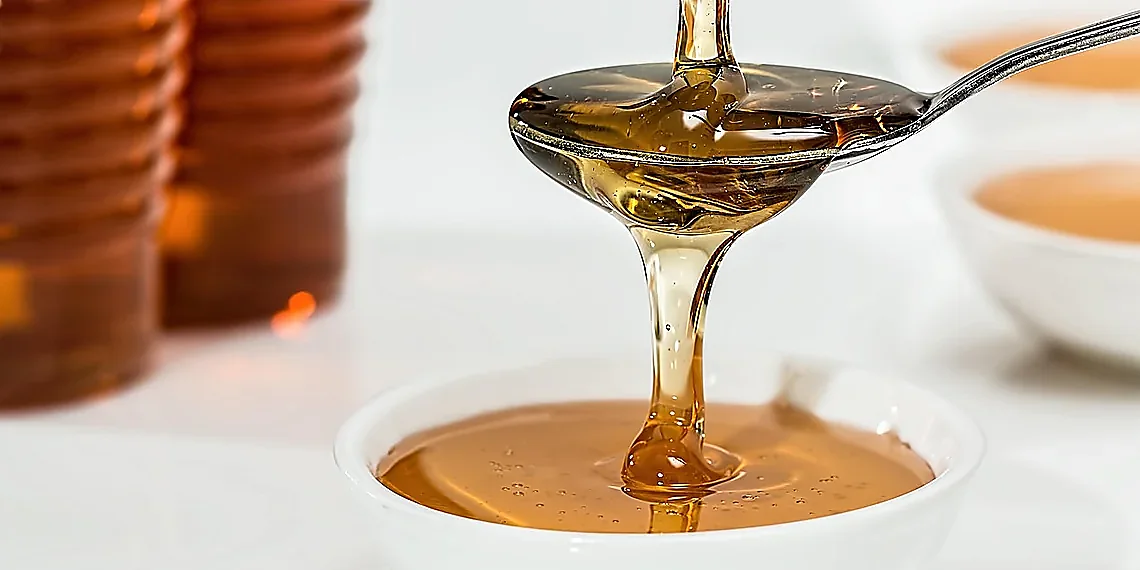
Most everyday liquids, like water or honey, exhibit viscosity – a measure of their resistance to flow. Think about how syrup clings to a spoon or how quickly coffee pours; these are all consequences of internal friction within the liquid. Superfluids, however, represent a radical departure from this behavior. At extremely low temperatures (near absolute zero), certain substances like helium-4 undergo a phase transition and enter a superfluid state where viscosity effectively vanishes. This means they can flow without any frictional resistance – a truly remarkable phenomenon.
The absence of viscosity allows superfluids to perform seemingly impossible feats. They can creep up the walls of containers, flow through incredibly tiny capillaries that would be impassable for ordinary liquids, and even support persistent currents that circulate indefinitely. Imagine a liquid continuously spinning forever without slowing down; that’s a glimpse into the world of superfluidity.
While the fluid itself has no viscosity, motion within a superfluid often organizes itself into quantized vortices – miniature whirlpools whose circulation is fixed in discrete amounts. These vortices aren’t random disruptions but rather fundamental components of how superfluids move and interact, providing a fascinating window into the quantum nature underlying their behavior.
Quantized Vortices: The Building Blocks
Superfluidity is a bizarre state of matter where liquids exhibit zero viscosity – meaning they flow without any resistance whatsoever. Imagine honey defying gravity, effortlessly climbing the walls of a container or flowing uphill! This counterintuitive behavior arises from quantum mechanics and opens up a fascinating world to explore. While the frictionless flow itself is remarkable, it’s often organized into even more intriguing structures: quantized vortices.
These aren’t your everyday whirlpools you might see in a bathtub. Quantized superfluid vortices are fundamentally different; they arise because of the underlying quantum nature of superfluids. In ordinary fluids, when something spins, the size of the vortex can be pretty much anything. But in superfluids, due to the principles of quantum mechanics, only specific, discrete amounts of rotation are allowed – hence ‘quantized.’ Think of it like a staircase where you can only stand on certain steps; you can’t float between them.
The formation occurs when superfluid flow encounters an obstacle or disturbance. The fluid tries to continue its motion, but the obstacle forces it to rotate around that point. Because the rotation must be quantized, these vortices are incredibly stable and long-lived – unlike regular whirlpools which quickly dissipate due to friction. Each vortex carries a single quantum of circulation, defining its strength and influencing how they interact with each other.
These tiny, swirling structures aren’t just curiosities; they’re the fundamental building blocks of superfluid flow. Understanding their behavior – how they form, move, and tangle – is key to unlocking the full potential of superfluids. The intricate patterns created by these quantized vortices can even be visualized under specific conditions, offering a mesmerizing glimpse into the quantum realm.
Whirlpools of Quantum Mechanics

Imagine stirring a regular liquid like water – you’ll create swirls, or whirlpools. Now picture that same swirling motion happening in a superfluid, but with a crucial difference: these aren’t your everyday whirlpools. In superfluids, which are at temperatures close to absolute zero (-273°C), the atoms move together as one macroscopic quantum state – meaning they act like a single entity instead of individual particles. This collective behavior leads to something far more peculiar than simple fluid dynamics.
These peculiar swirls in superfluids are called quantized vortices. They form when angular momentum, or rotational energy, is introduced into the superfluid. Think of it like this: if you spin a superfluid quickly enough, these ‘whirlpools’ spontaneously appear. However, unlike ordinary whirlpools where the swirling can have any size and speed, quantum mechanics imposes strict rules – the vorticity (the strength of the swirl) must be quantized. This means only specific, discrete values are allowed.
Quantization is a core principle in quantum mechanics that dictates certain properties, like energy or angular momentum, can only exist in specific amounts. In the case of superfluid vortices, this means each vortex carries exactly one quantum unit of circulation – imagine it as having a fixed number of ‘twirls’ per unit area. If you were to visualize these vortices, they’d appear as tiny tubes extending through the superfluid, and their density (how many there are) directly controls the overall rotation of the fluid.
Mutual Friction: The Unexpected Dissipation
The seemingly frictionless flow that defines superfluids isn’t entirely perfect. While they famously exhibit zero viscosity under ideal conditions, real-world superfluids experience a subtle form of dissipation known as ‘mutual friction.’ This phenomenon arises from the coexistence of two distinct states within the superfluid: the superflowing component and tiny pockets of ‘normal’ fluid – regions where quantum mechanics doesn’t fully dominate and familiar viscous behavior reasserts itself. It was initially quite surprising to scientists; the very essence of superfluidity seems to promise a completely frictionless environment, so how could dissipation arise?
The mechanism behind mutual friction is intricate but fundamentally involves the interaction between these normal fluid regions and the quantized vortices that populate the superfluid. Imagine countless microscopic whirlpools, each possessing a tiny amount of circulation – these are the vortices. The normal fluid components aren’t uniformly distributed; they tend to cluster around vortex cores or form thin sheets within the superfluid. These normal fluid fragments ‘feel’ the motion of the vortices and exert a drag force on them, causing them to move through the superfluid.
This movement isn’t free; it dissipates energy in the form of heat. The normal fluid regions effectively act as tiny brakes on the vortices, slowing their rotation and transferring momentum. Crucially, this interaction is *mutual* – the vortices also influence the motion of the normal fluid. This reciprocal relationship creates a complex dance where the normal fluid and quantized vortices constantly exchange energy, leading to a gradual loss of kinetic energy from the superfluid flow. The magnitude of mutual friction depends on factors like temperature and vortex density; higher temperatures typically increase the proportion of normal fluid and thus enhance dissipation.
The discovery of mutual friction initially challenged early theoretical models of superfluidity, requiring refinements to fully explain observed behavior. While it prevents superfluids from achieving truly lossless flow, understanding mutual friction is crucial for harnessing their unique properties in practical applications. It’s a fascinating example of how even in the quantum realm, seemingly paradoxical effects can arise from the interplay of different physical phenomena.
The Dance of Normal Fluid and Vortices
Superfluids, despite their frictionless nature, aren’t entirely immune to energy loss. While the bulk of the superfluid experiences zero viscosity, tiny regions within it can exist as ‘normal’ fluid—areas where quantum mechanical effects are suppressed and ordinary viscous behavior reasserts itself. These normal fluid components arise due to thermal excitations or impurities that disrupt the perfect order characteristic of a superfluid state. The presence of these normal fluid pockets introduces a surprising complication: they interact with the quantized vortices, the microscopic whirlpools that define much of the superfluid’s motion.
This interaction is known as ‘mutual friction.’ Imagine tiny rafts (the normal fluid) floating on a swirling river (the superfluid vortex). As the vortex rotates, it drags these rafts along. However, the rafts possess inertia and resist this movement, leading to a relative velocity between the raft and the surrounding superfluid. This relative motion generates a frictional force – the raft slows down the vortex slightly as it’s pulled along. The total effect is that energy from the bulk superfluid flow is transferred into kinetic energy of these normal fluid regions (which then dissipate heat) and ultimately, into thermal energy.
The density of these normal fluid components and their size profoundly influence the magnitude of mutual friction. Higher temperatures or increased impurity concentrations create more and larger normal fluid pockets, strengthening the frictional forces and increasing dissipation. Understanding and controlling mutual friction is therefore crucial for harnessing superfluidity’s unique properties in applications ranging from advanced sensors to quantum computing where minimizing energy loss is paramount.
Future Implications & Research
The remarkable properties of superfluid vortices aren’t just captivating from a purely scientific perspective; they hold immense promise for revolutionizing several technological domains. Understanding how these quantized whirlpools behave, particularly the complex interplay of mutual friction and collective motion, could pave the way for entirely new approaches to computing. Imagine quantum computers where information processing relies on precisely controlled vortex interactions – potentially offering exponentially faster calculations than current systems. While still largely theoretical, this represents a compelling long-term goal driving much of the current research.
Beyond computation, manipulating superfluid vortices offers exciting possibilities in materials science. By mimicking and harnessing the self-organizing principles seen in superfluids, researchers hope to create novel materials with unique properties – perhaps even achieving frictionless surfaces or developing advanced lubricants far surpassing anything currently available. The ability to engineer complex structures at the nanoscale, inspired by vortex formations, could lead to breakthroughs in areas like energy storage and high-efficiency sensors.
While more speculative, some scientists are even exploring potential applications of superfluid vortex dynamics in propulsion systems. The frictionless nature of superfluid flow suggests possibilities for highly efficient and potentially novel forms of movement. Although significant engineering hurdles remain – particularly the need to maintain incredibly low temperatures – theoretical work continues to investigate whether harnessing these principles could lead to advancements in areas like space travel or underwater vehicles. Further research into controlling vortex motion with external fields is a key area of exploration.
Looking ahead, future research will likely focus on developing more sophisticated techniques for visualizing and manipulating superfluid vortices. This includes exploring the use of advanced microscopy methods and novel experimental setups that allow scientists to probe their behavior in unprecedented detail. Simultaneously, theoretical models are needed to better understand the complex interactions within these systems – bridging the gap between fundamental physics and potential technological applications.
Beyond the Lab: Potential Applications
While currently confined to extremely low-temperature laboratory settings, a more complete understanding of superfluid vortex dynamics – particularly the phenomenon known as mutual friction where these vortices interact with impurities or boundaries – could unlock significant technological advancements. Precise control over these quantized vortices promises improvements in quantum computing architectures. Superfluid circuits offer potential for creating qubits with exceptionally long coherence times, essential for complex calculations, by minimizing decoherence caused by environmental noise and viscous damping.
Beyond computation, manipulating superfluid vortices holds promise within materials science. Researchers are exploring the possibility of using them to design novel metamaterials with unusual optical or mechanical properties. Imagine a material whose stiffness or refractive index could be dynamically controlled through external manipulation of its internal vortex structure – this level of control is currently speculative but theoretically grounded in our understanding of superfluid behavior.
Further out on the horizon, although facing immense engineering challenges, harnessing the frictionless flow characteristic of superfluids for propulsion systems represents an intriguing possibility. While creating and maintaining a superfluid environment within a practical engine presents formidable hurdles, even partial utilization of these principles could lead to highly efficient and uniquely capable vehicles or actuators. Future research will likely focus on understanding how to effectively manage mutual friction to both control and extract energy from superfluid flows.
The journey into the world of superfluids reveals a realm where conventional understanding of fluid dynamics simply dissolves, replaced by astonishing behaviors like frictionless flow. We’ve seen how these phenomena arise from quantum mechanics and are beautifully manifested in the formation of superfluid vortices – swirling patterns that offer a glimpse into the bizarre elegance of subatomic interactions. Understanding their behavior is far more than an academic exercise; it represents a crucial step towards harnessing the power of quantum effects for technological advancement.
The implications of continued research extend beyond fundamental physics, potentially revolutionizing fields from energy storage and transportation to advanced computing and sensing technologies. Imagine frictionless bearings enabling ultra-efficient machines or novel materials exhibiting entirely new properties based on manipulated superfluid states. While challenges remain in scaling these discoveries into practical applications, the potential rewards are simply too significant to ignore.
This exploration of superfluid vortices just scratches the surface of a vast and fascinating landscape. The principles governing quantum mechanics underpin so much of our modern world, yet there’s still an incredible amount left to discover. We encourage you to delve deeper – explore introductory resources on quantum physics online, engage with science communicators, or even consider pursuing further education in this captivating field. The future is undoubtedly shaped by these discoveries, and your curiosity can be a powerful catalyst for progress.
Continue reading on ByteTrending:
Discover more tech insights on ByteTrending ByteTrending.
Discover more from ByteTrending
Subscribe to get the latest posts sent to your email.