
Think about traveling abroad and seamlessly switching between your home carrier and a local one – that’s essentially what we want to achieve for astronauts exploring beyond Earth.
Currently, communication in deep space relies on complex relay systems, often creating frustrating delays and limiting real-time collaboration. NASA is actively tackling this challenge with the PathFinder Experiment Technology (PExT) demonstration, a pivotal step towards vastly improved capabilities.
PExT aims to prove how multiple orbiting satellites can hand off data streams without interruption, ensuring consistent communication even as spacecraft move in and out of range – a core element of what we’re calling Space Connectivity.
This capability isn’t just about faster emails from Mars; it’s foundational for future missions involving lunar bases, asteroid mining operations, and deep-space exploration where reliable and instantaneous data transfer is paramount to mission success and astronaut safety.


The Problem With Current Space Communication
Current space missions face a significant hurdle when it comes to reliable communication: reliance on limited and often inflexible networks. NASA traditionally depends heavily on government-owned infrastructure like the Deep Space Network (DSN), a globally distributed system of massive antennas designed for communicating with spacecraft. While crucial, the DSN has inherent limitations. Its capacity is finite, meaning there’s a strict queue for access, potentially delaying critical data transmissions. Furthermore, its fixed locations restrict coverage and can be vulnerable to natural disasters or geopolitical events – any disruption impacting these facilities directly impacts mission operations.
Bandwidth also presents a major bottleneck. The DSN, while powerful, offers restricted bandwidth compared to the rapidly expanding commercial satellite constellations now orbiting Earth. This limited bandwidth constrains the volume and frequency of data that can be transmitted back from missions, hindering scientific discovery and slowing down response times for critical situations. Imagine trying to download a high-resolution video on a dial-up connection – that’s akin to the challenges faced by many current deep space probes.
The lack of redundancy is another key concern. If a mission experiences an issue or requires urgent data transfer, being locked into a single network can be catastrophic. A failure in one part of the DSN chain could bring communications to a standstill, jeopardizing years of work and potentially risking the safety of astronauts or valuable scientific instruments. This vulnerability underscores the need for more flexible and resilient communication solutions as we venture further into space and undertake increasingly complex missions.
Ultimately, these limitations represent a significant bottleneck hindering the future of space exploration. As ambitions grow to explore deeper regions of our solar system and beyond, and as robotic and human presence expands, the demand for robust, adaptable, and readily available space connectivity will only intensify. The ability to seamlessly switch between networks – essentially ‘roaming’ in space – is no longer a luxury but a necessity.
Traditional Networks: A Limited Landscape
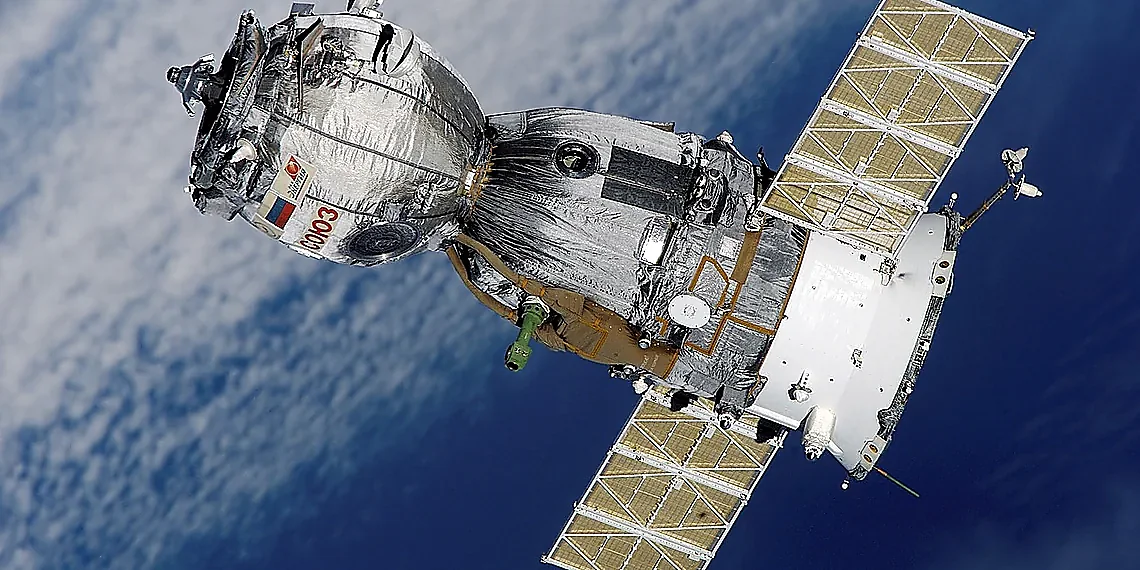
Currently, NASA’s deep-space missions heavily rely on a network known as the Deep Space Network (DSN). The DSN consists of large radio antennas strategically located around the globe – in California, Spain, and Australia – to ensure continuous communication with spacecraft. While incredibly reliable, this infrastructure is largely dedicated government property and represents a significant investment. Access to the DSN is prioritized for NASA missions but limits flexibility and introduces constraints on bandwidth allocation.
The dependence on the DSN presents several limitations. Its fixed locations restrict coverage areas, potentially hindering operations in regions with poor visibility or creating delays in data transmission. Furthermore, the DSN’s capacity is finite; as more missions are launched, competition for resources intensifies. Any disruption to the DSN – whether due to maintenance, natural disasters impacting antenna sites, or geopolitical factors – can create significant service disruptions and jeopardize mission success.
Beyond bandwidth and location constraints, reliance on a single, centralized network introduces vulnerabilities. A cyberattack targeting the DSN could potentially impact multiple missions simultaneously. This lack of redundancy underscores the need for alternative communication pathways that offer greater resilience and adaptability, paving the way for technologies like NASA’s PExT to revolutionize space connectivity.
Introducing PExT: The Space Roaming Solution
NASA’s ambitious goal of continuous connectivity in deep space is taking a giant leap forward with the Polylingual Experimental Terminal, or PExT. Think of it as a cellular device for spacecraft – just like your phone seamlessly roams between cell towers to maintain service, PExT allows missions to switch between different communication networks without interruption. This represents a fundamental shift from traditional space communications, which often rely on fixed and limited resources.
At the heart of PExT lies its ‘polylingual’ capability – a crucial feature enabling it to understand and utilize multiple communication protocols. Unlike existing systems locked into specific network types (like NASA’s Deep Space Network or older government-owned systems), PExT can dynamically switch between these, as well as leverage emerging commercial options such as Starlink and other satellite constellations. This flexibility drastically expands available bandwidth and resilience against outages caused by equipment failure or solar events.
The technical magic of PExT involves a sophisticated system that constantly monitors the health and availability of various networks. It assesses factors like signal strength, latency, and data rates to determine the optimal connection at any given time. When conditions change – perhaps NASA’s DSN is overloaded while Starlink has excellent coverage – PExT automatically reconfigures itself to switch over, all without a break in communication. This switching process happens rapidly and autonomously, minimizing disruption for mission personnel and ensuring continuous data flow back to Earth.
Imagine a rover exploring Mars, consistently transmitting vital scientific data regardless of the position of orbiting satellites or ground-based infrastructure. PExT makes this vision a reality. By embracing commercial networks alongside traditional government resources, NASA is paving the way for more robust, efficient, and ultimately, groundbreaking space exploration endeavors in the years to come.
How PExT Enables Seamless Switching

NASA’s Polylingual Experimental Terminal, or PExT, achieves seamless space roaming through a sophisticated process of dynamic network selection and switching. Unlike traditional systems that are locked to a single communication provider (like NASA’s Deep Space Network – DSN), PExT acts as an intelligent gateway capable of communicating with multiple networks simultaneously. These include established government resources like the DSN, but also emerging commercial options such as Starlink and other satellite constellations. This ‘polylingual’ capability isn’t just about connecting to different physical networks; it means supporting a variety of communication protocols – essentially, understanding and speaking different ‘languages’ in space.
The core functionality relies on constant monitoring of available network links. PExT continuously assesses factors like signal strength, data rates, latency (delay), and even cost associated with each potential connection. A proprietary algorithm then evaluates these metrics against pre-defined mission priorities and constraints. When a link degrades or a better option becomes available – perhaps Starlink offers higher bandwidth at a lower price point – PExT autonomously initiates a switch. This entire process happens in near real-time, minimizing disruption to ongoing data transmission.
To illustrate the switching process, consider this simplified flow: 1) PExT monitors DSN & Starlink signal strength and cost. 2) Algorithm evaluates metrics against mission priorities. 3) If Starlink offers better performance/cost ratio, a handover is initiated. 4) Data transmission seamlessly switches to Starlink. 5) System continuously re-evaluates networks – returning to the DSN if conditions change. This adaptive approach significantly increases resilience and optimizes data throughput for future deep space missions.
Benefits & Implications for Future Missions
The advent of NASA’s Polylingual Experimental Terminal (PExT) technology is poised to fundamentally reshape the landscape of future space missions, offering a paradigm shift in how we approach connectivity beyond Earth. Currently, many missions rely on dedicated government communication networks, which can be inflexible and limit operational possibilities. PExT changes this by enabling seamless roaming between various satellite constellations – both government-owned and commercial – much like your smartphone switches between cellular towers. This capability unlocks unprecedented flexibility for mission planners, allowing them to dynamically optimize bandwidth usage and ensure continuous connection regardless of location or network availability.
One of the most significant benefits stems from increased bandwidth availability. With PExT, missions aren’t restricted to a single provider; they can leverage the combined capacity of multiple networks, significantly boosting data rates for scientific instruments and facilitating richer communication with astronauts. Imagine high-resolution imagery beamed back from Mars in near real-time or complex robotic operations guided remotely with minimal latency – these become more achievable realities thanks to enhanced space connectivity. This also translates into reduced costs as missions can leverage commercially available bandwidth when it’s most advantageous.
Beyond the immediate advantages of increased bandwidth and flexibility, PExT dramatically improves mission resilience. Traditional reliance on a single communication network creates a single point of failure; if that network experiences an outage or congestion, mission operations could be severely impacted. By enabling automatic switching between networks, PExT provides a critical backup system, ensuring continuous connectivity even in the event of localized failures. This inherent redundancy is particularly crucial for long-duration missions to destinations like the Moon and Mars where communication delays are already significant.
Looking ahead, the implications of this ‘space roaming’ capability extend far beyond near-Earth orbit. Missions destined for the Moon, Mars, and deeper into our solar system will benefit immensely from PExT’s ability to adapt to diverse communication environments. It paves the way for more ambitious scientific endeavors requiring substantial data transmission – think sophisticated geological surveys on Mars or long-term habitat deployments on lunar surfaces – and fundamentally improves astronaut safety through reliable, always-on communication links.
Beyond Earth Orbit: Expanding Mission Possibilities
NASA’s PExT technology significantly broadens the scope of future missions venturing beyond Earth orbit. Traditionally, deep-space probes have relied on dedicated government communication networks, limiting flexibility in mission design and potentially restricting access to bandwidth. With PExT, spacecraft can seamlessly switch between NASA’s Deep Space Network (DSN) and commercial satellite constellations like Starlink or OneWeb, offering a more adaptable and robust connectivity solution for lunar, Martian, and even interstellar explorations.
The increased data rates enabled by this ‘space roaming’ capability are crucial for supporting advanced scientific instruments. Higher bandwidth allows for the transmission of larger datasets from rovers analyzing Martian soil samples, detailed imagery from lunar orbiters mapping potential landing sites, and high-resolution spectra from probes studying distant celestial bodies. This enhanced data flow accelerates scientific discovery and provides researchers with more comprehensive information.
Beyond data throughput, PExT promises a significant improvement in communication reliability for astronauts. Real-time or near real-time communication is vital for crew safety and mission success on long-duration missions to the Moon and Mars. The ability to switch between multiple networks mitigates risks associated with outages or congestion within any single network, ensuring continuous contact and enabling quicker responses to unforeseen circumstances.
The Future of Space Connectivity
NASA’s recent demonstration of its Polylingual Experimental Terminal (PExT) marks a significant leap forward, suggesting a future where spacecraft can dynamically hop between different communication networks – much like our cellphones roam between cellular towers. This ‘space roaming’ capability, utilizing both government and commercial satellites for connectivity, promises to dramatically reshape how we conduct missions beyond Earth. Currently, space agencies are largely reliant on dedicated, often expensive, government-owned infrastructure. PExT’s success demonstrates a pathway towards greater flexibility and resilience in space communications, mitigating the risks associated with relying solely on single points of failure.
The broader implications extend far beyond simply improving mission reliability. This technology lays the groundwork for a more decentralized and accessible space communication infrastructure. Imagine a future where smaller companies and research institutions can launch missions without needing to secure exclusive access to costly government channels. PExT’s demonstration encourages this shift, potentially leading to a proliferation of new applications and discoveries – from lunar resource mapping to deep-space scientific probes – that were previously economically or logistically prohibitive.
The commercial opportunities stemming from improved space connectivity are substantial. With increased accessibility comes the potential for a more competitive market, driving innovation and lowering costs across the entire space industry. Commercial satellite operators will likely see increased demand for their services as missions increasingly adopt this roaming technology. This could spur investment in new constellations and advanced communication protocols, further accelerating the pace of technological advancement and ultimately democratizing access to space.
Looking ahead, we can expect to see wider adoption of similar technologies by commercial space companies eager to capitalize on this shift. The PExT demonstration serves as a powerful proof-of-concept, validating the feasibility and benefits of dynamic network switching in space. This will likely fuel further research and development in related areas, creating a virtuous cycle of innovation that transforms our ability to explore and utilize the vast resources beyond our planet.
Commercialization & The Democratization of Space Access
NASA’s recent successful demonstration of its Polylingual Experimental Terminal (PExT) represents a pivotal moment in space connectivity. PExT’s ability to seamlessly switch between NASA’s Deep Space Network and commercially available satellite constellations, like those operated by SpaceX and OneWeb, fundamentally alters the traditional reliance on government-owned infrastructure for deep space missions. This ‘space roaming’ capability, analogous to how cell phones hop between cellular towers, drastically increases mission flexibility and resilience, allowing spacecraft to maintain contact even when direct access to NASA’s resources is unavailable.
The success of PExT is likely to spur increased investment and adoption of similar technologies by commercial space companies. Currently, accessing space communication services can be a significant barrier for smaller organizations or those undertaking less conventional missions. With the prospect of utilizing diverse communication pathways – leveraging both government and private networks – costs could decrease and access broaden substantially. This shift promises to foster innovation across various sectors, including lunar exploration, asteroid mining, and even orbital manufacturing.
Ultimately, PExT’s demonstration points towards a more democratized space communication market. The reduced reliance on single providers creates increased competition, potentially leading to lower prices and improved service offerings. While NASA will continue to maintain its vital deep-space infrastructure, the integration of commercial alternatives facilitated by technologies like PExT signals a transition toward a more decentralized and accessible space ecosystem – one where smaller players can participate and contribute meaningfully to humanity’s exploration beyond Earth.
The recent PExT demonstration unequivocally signals a pivotal moment for how we interact with and explore our solar system, showcasing a resilience and adaptability previously unseen in deep-space communication.
NASA’s innovative approach to optical crosslinks is not just about faster data transfer; it’s fundamentally reshaping the architecture of future missions, paving the way for more complex collaborative operations between spacecraft.
This advancement directly addresses the growing need for reliable and high-bandwidth links as we push further into deep space, a critical component in enabling increasingly sophisticated scientific discoveries and resource utilization – truly revolutionizing Space Connectivity.
The potential ripple effects are vast, promising streamlined mission control, enhanced robotic autonomy, and even more immersive experiences for scientists analyzing data from distant worlds. The demonstrated flexibility hints at countless future applications we can only begin to imagine now, solidifying NASA’s position as a leader in space technology innovation. We’re on the cusp of an era where limitations imposed by traditional communication methods become relics of the past, opening up exciting new avenues for exploration and discovery. It’s clear that this is just the beginning of a transformative period for deep-space communications and beyond, with many more breakthroughs surely on the horizon. The future looks bright, connected, and ready to explore the cosmos in unprecedented ways.”,
Continue reading on ByteTrending:
Discover more tech insights on ByteTrending ByteTrending.
Discover more from ByteTrending
Subscribe to get the latest posts sent to your email.