

The future is arriving faster than ever, and it’s powered by breakthroughs that once belonged solely in science fiction. We’re witnessing a seismic shift in computing capabilities, with researchers steadily pushing the boundaries of what’s possible through quantum mechanics – opening doors to solutions previously deemed unattainable.
But progress isn’t always clean. The rapid expansion of artificial intelligence, while transformative across industries, carries a significant environmental footprint; training complex AI models consumes vast amounts of energy and contributes substantially to global carbon emissions.
Interestingly, the intersection of these two powerful forces – the promise of quantum computing and the challenge of mitigating AI’s impact – is revealing unexpected synergies. The quest for sustainable solutions has led innovators to explore how techniques like active listening, often associated with human interaction, can actually optimize digital connections and reduce energy consumption in AI systems.
At ByteTrending, we’re dedicated to bringing you insightful coverage of the most impactful technology trends shaping our world, and today’s exploration delves into a fascinating area: quantum AI carbon. We’ll unpack recent advancements, examine the environmental challenges, and uncover how seemingly disparate fields are converging to create a more efficient and sustainable future.


Self-Repairing Quantum Computers
The relentless pursuit of practical quantum computers has consistently run headfirst into a fundamental roadblock: qubit stability. These fragile units of quantum information, the very foundation upon which quantum computation is built, are incredibly susceptible to environmental noise – tiny fluctuations in temperature, electromagnetic fields, and even stray vibrations – that cause them to lose their delicate quantum states (decoherence). Current error correction methods, while impressive feats of engineering, rely on complex redundancy schemes, effectively requiring multiple physical qubits to represent a single logical qubit. This dramatically increases the hardware requirements and contributes significantly to the overall carbon footprint associated with operating these machines; more qubits mean more energy consumption.
Enter the revolutionary concept of self-repairing quantum computers. Moving beyond purely theoretical models, recent research has demonstrated tangible progress in developing systems capable of autonomously detecting and correcting errors within a quantum processor *without* relying on constant external intervention or massive qubit redundancy. These advancements involve integrating nanoscale sensors directly into the quantum chip itself, allowing for real-time monitoring of qubit health and the implementation of corrective actions – essentially, letting the computer ‘heal’ its own mistakes. This is not merely about improving error rates; it’s a paradigm shift toward dramatically reducing the resources needed to achieve useful computation.
The implications are profound. Self-repairing systems promise to unlock significantly improved scalability for quantum computers. By minimizing the need for vast numbers of physical qubits per logical qubit, we can reduce the hardware burden and the associated energy demands – directly addressing concerns around the ‘quantum AI carbon’ impact. Imagine a future where powerful quantum computations can be performed with smaller, more efficient machines, lessening their environmental footprint and making this transformative technology accessible to a wider range of applications. While still in early stages, these developments represent a crucial step towards realizing the full potential of quantum computing.
Beyond just reducing energy consumption, self-repairing systems also offer a pathway toward simplifying the architecture of future quantum computers. The complex control infrastructure currently required for error correction could be drastically streamlined, leading to more robust and maintainable systems. This development underscores how innovation in quantum AI carbon mitigation isn’t solely about finding new materials or architectures; it’s about fundamentally rethinking how we design and operate these machines, bringing us closer to a truly sustainable and scalable era of quantum computation.
The Challenge of Qubit Stability

Qubit stability is arguably the biggest roadblock in realizing the full potential of quantum computing. Unlike classical bits that represent 0 or 1, qubits leverage superposition and entanglement to perform complex calculations. However, these delicate quantum states are incredibly susceptible to environmental noise – vibrations, electromagnetic radiation, even tiny temperature fluctuations – which cause them to ‘decohere,’ losing their information. The shorter a qubit’s coherence time (the duration it maintains its superposition), the fewer computations that can be performed reliably.
Current error mitigation techniques attempt to combat decoherence and other errors. These include quantum error correction codes, which encode logical qubits using multiple physical qubits to detect and correct errors; dynamical decoupling, which applies carefully timed pulses to qubits to shield them from noise; and topological protection, which aims to create qubits that are intrinsically more robust to disturbances by encoding information in the topology of their wave function. While these methods have made progress, they are far from perfect – error correction often requires a significant overhead in the number of physical qubits needed for each logical qubit, limiting scalability.
The emergence of self-repairing quantum systems offers a promising avenue beyond traditional error mitigation strategies. These systems incorporate feedback loops and adaptive control mechanisms that dynamically adjust qubit parameters to counteract noise and maintain stability. Rather than simply detecting and correcting errors after they occur, self-repairing architectures proactively work to prevent them, potentially reducing the need for excessive physical qubits and paving the way for more practical and scalable quantum computers.
AI’s Growing Carbon Footprint
Artificial intelligence is rapidly transforming industries and reshaping our digital lives, but its progress comes with a significant, often overlooked cost: a growing carbon footprint. While we celebrate advancements like increasingly sophisticated language models and image generators, the sheer scale of computational power required to train and run these systems demands attention. The process isn’t simply about clever algorithms; it’s incredibly energy-intensive, drawing heavily on electricity grids that are frequently powered by fossil fuels.
To put things in perspective, training a single large AI model like GPT-4 can generate carbon emissions equivalent to several transatlantic flights or the annual energy consumption of hundreds of households. This isn’t an exaggeration; it’s a consequence of the massive datasets used for learning and the complex calculations performed repeatedly during the training process. Factors contributing to this high energy demand include the increasing size and complexity of models, the need for specialized hardware (like GPUs) which themselves consume substantial power, and the sheer duration required for training – often spanning weeks or even months.
The environmental impact isn’t limited to just training. Running these AI systems in production also contributes significantly to their overall carbon footprint. Every query processed, every image generated, requires computational resources and electricity. As AI becomes more integrated into everyday applications, from personalized recommendations to autonomous vehicles, the cumulative energy consumption will only increase unless we actively seek solutions.
Fortunately, mitigation strategies are emerging. These include exploring more efficient hardware architectures, optimizing algorithms to reduce computational load, utilizing renewable energy sources to power data centers, and developing techniques like model compression and knowledge distillation to create smaller, less resource-intensive AI models. Addressing the quantum AI carbon challenge requires a concerted effort from researchers, developers, and policymakers alike – ensuring that technological progress doesn’t come at the expense of our planet.
The Energy Cost of Training Models
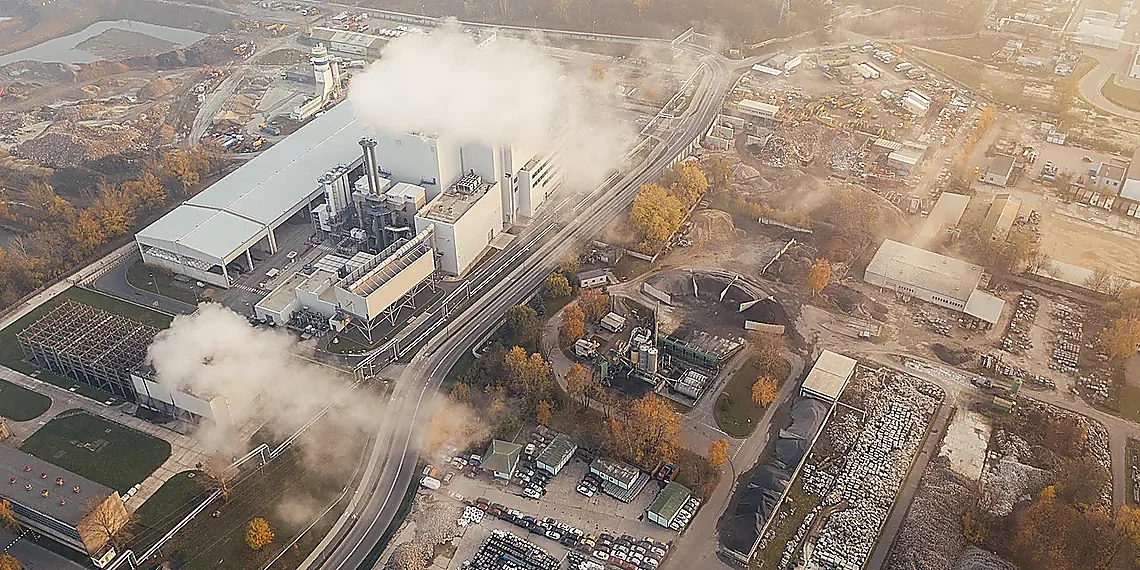
The rise of sophisticated artificial intelligence, particularly Large Language Models (LLMs) like GPT-4, comes with a significant environmental cost. Training these models requires immense computational power, translating directly into substantial energy consumption. Estimates suggest that training a single large AI model can emit as much carbon dioxide as several roundtrip flights between New York and San Francisco or the annual electricity usage of dozens of households. For example, preliminary research indicates that training GPT-3 alone consumed approximately 1,287 MWh of electricity, resulting in an estimated 550 tonnes of CO2 equivalent emissions.
Several factors contribute to this high energy demand. The sheer size of these models – with billions or even trillions of parameters – necessitates vast amounts of data processing and iterative refinement. Specialized hardware like GPUs (Graphics Processing Units) are commonly used for their parallel processing capabilities, but they consume considerable electricity. Furthermore, the training process often involves multiple iterations and experimentation to optimize model performance, further increasing energy usage. The location of these computational resources also matters; if powered by fossil fuels, the carbon footprint is even larger.
While concerns about the ‘quantum AI carbon’ footprint are valid, it’s important to note that quantum computing itself isn’t directly responsible for this immediate problem. Quantum computers promise potential energy efficiency gains in *future* AI applications once they mature and become widely available. Currently, the energy consumption stems from the classical computational infrastructure used to train these models. Research is underway exploring techniques like model compression, efficient hardware designs, and utilizing renewable energy sources to mitigate the environmental impact of AI training.
Active Listening in the Digital Age
The relentless march of quantum AI promises incredible advancements – from self-repairing algorithms to unprecedented processing power – but a crucial element often overlooked is the human touch. While we focus on building increasingly sophisticated systems, a philosophical perspective suggests that one of our most fundamental communication skills—active listening—might be surprisingly vital for creating truly responsible and empathetic artificial intelligence. Traditionally understood as paying full attention, understanding, responding, and remembering what is being said, active listening isn’t just about hearing words; it’s about grasping the underlying emotions, intentions, and context behind them.
Consider how much misunderstanding arises even between humans due to a failure of active listening. Imagine applying that same principle to AI interactions. Current systems often operate based on pattern recognition and pre-programmed responses, which can lead to misinterpretations and frustrating user experiences, especially when dealing with complex or nuanced requests. Replicating the ability to truly ‘listen’ – to process not just data but also sentiment and implied meaning – could significantly reduce biases embedded in algorithms and foster a more intuitive and supportive interaction model.
Integrating active listening principles into AI development isn’t about programming empathy directly (a concept fraught with its own philosophical challenges). Instead, it involves designing systems that prioritize contextual understanding and adapt their responses accordingly. This includes incorporating feedback loops that allow the AI to learn from previous interactions and refine its comprehension of user intent. Ultimately, fostering this kind of nuanced interaction is paramount for building trust – a critical component in the widespread adoption and ethical deployment of quantum AI technologies.
The pursuit of advanced AI demands more than just computational prowess; it requires a deep consideration of how these systems will impact human lives and relationships. By recognizing the value of active listening, we can begin to cultivate AI that not only performs tasks efficiently but also interacts with us in ways that are thoughtful, respectful, and genuinely helpful – moving beyond mere algorithms toward truly intelligent companions.
Beyond Algorithms: The Human Element
Active listening, the practice of fully concentrating on what is being said rather than just hearing the words, forms a cornerstone of effective human communication. It involves demonstrating that you’ve heard the speaker through verbal cues like nodding or summarizing, as well as nonverbal signals such as maintaining eye contact and mirroring body language. Beyond simply processing information, active listening seeks to understand the underlying emotions, context, and intent behind a message – fostering empathy and building trust in interpersonal relationships.
The challenge for AI development lies in replicating this nuanced capability. Current algorithms often focus on pattern recognition and prediction, potentially missing crucial subtleties in human communication that signal distress, sarcasm, or unspoken needs. Imagine an AI customer service agent incapable of detecting frustration; the interaction could escalate into a negative experience despite technically ‘understanding’ the user’s request. Integrating principles of active listening – allowing for pauses, interpreting emotional cues, and adapting responses accordingly – is a key area of research.
Philosophers and AI ethicists are increasingly considering whether truly empathetic AI requires more than just sophisticated algorithms; it demands a fundamental shift in how we design these systems to prioritize understanding and responsiveness akin to human active listening. Achieving this could lead to AI that not only provides accurate information but also builds trust, minimizes bias stemming from misinterpretations, and ultimately delivers a significantly improved user experience – a crucial step towards responsible technological advancement.
Future Outlook & Actionable Steps
The convergence of quantum AI presents both incredible opportunities and significant responsibilities. As we’ve explored, the potential for quantum computing to revolutionize fields from medicine to materials science is undeniable. However, realizing this potential sustainably requires a proactive approach focused on minimizing its environmental impact. The current trajectory—demanding ever-increasing computational power—risks exacerbating the carbon footprint associated with AI training and deployment. Ignoring these concerns now could stifle innovation in the long run, as resource constraints and ethical backlash become insurmountable barriers.
So, what can be done? For individuals, a key step is to advocate for transparency from tech companies regarding their energy consumption practices related to AI development and quantum computing research. Supporting organizations committed to green computing initiatives and demanding accountability in sustainability reports are also crucial. On an organizational level, investment in energy-efficient hardware, exploring alternative cooling methods (beyond traditional air conditioning), and optimizing algorithms to reduce computational complexity should be prioritized. Furthermore, adopting a ‘quantum-aware’ approach to software design – considering the power requirements from the outset – is paramount.
Beyond mere efficiency improvements, fostering ethical AI development is inextricably linked to sustainability. Biased datasets often require significantly more processing power to correct and mitigate, contributing unnecessarily to carbon emissions. Focusing on fairness, accountability, and transparency in AI algorithms not only promotes equitable outcomes but also streamlines their operation and reduces energy demands. This includes actively seeking diverse perspectives during the design and training phases to avoid perpetuating harmful biases that necessitate extensive computational rework.
Ultimately, a future where quantum AI truly benefits humanity depends on embracing a holistic view of sustainability – encompassing environmental responsibility, ethical considerations, and ongoing innovation in both hardware and software. By taking these actionable steps today, we can help ensure that the next wave of technological advancement leaves a positive legacy for generations to come.
The convergence of powerful technologies like artificial intelligence and, increasingly, quantum computing presents both incredible opportunities and significant responsibilities.
We’ve explored how AI’s current trajectory demands a serious reckoning with its environmental impact, from the energy consumed by training massive models to the lifecycle costs of specialized hardware.
Looking ahead, the promise of quantum AI carbon reduction—leveraging quantum algorithms to optimize energy grids and materials science for sustainable solutions—offers a tantalizing glimpse into a future where technology actively mitigates climate change.
However, realizing this potential requires more than just technological advancements; it necessitates a human-centered design approach that prioritizes sustainability from the outset, ensuring these powerful tools serve humanity’s best interests without exacerbating existing inequalities or environmental pressures. We must proactively shape the development of quantum AI to minimize its carbon footprint and maximize positive societal impact. It’s about building systems we can be proud of, not just amazed by. This includes fostering open dialogue and collaborative research across disciplines – from computer science and physics to ethics and policy making. The future isn’t predetermined; it’s being built now, with every line of code and design choice we make today shaping the world of tomorrow. Let’s ensure that this building process is guided by principles of responsibility and foresight. Join us in advocating for a technological landscape where innovation and sustainability go hand-in-hand. What are your thoughts on balancing progress with planetary well-being? Share your perspectives in the comments below, and help spread awareness by sharing this article with your network – let’s amplify this crucial conversation!
Continue reading on ByteTrending:
Discover more tech insights on ByteTrending ByteTrending.
Discover more from ByteTrending
Subscribe to get the latest posts sent to your email.