

Imagine a future where your health data streams directly to your doctor, not just during appointments, but continuously and unobtrusively – a world of truly personalized medicine.
Forget cumbersome wearables or invasive procedures; what if tiny, intelligent devices could monitor vital signs from within your body, relaying crucial information without ever needing a recharge?
Scientists are rapidly moving towards that reality with groundbreaking advancements in implantable technology, specifically focusing on harnessing the power of biology itself to revolutionize healthcare.
At the forefront of this innovation lies a remarkable development: miniature bio-sensors powered by engineered bacteria, offering a completely new paradigm for medical monitoring and diagnostics. These tiny devices promise unprecedented levels of data collection and insight into our internal health landscapes without the limitations of traditional power sources or wires – they operate wirelessly and entirely battery-free thanks to their microbial energy source. This leap forward could fundamentally change how we prevent and treat disease.
The Problem with Current Medical Monitoring
Existing medical monitoring technologies, while invaluable in modern healthcare, often come with significant limitations that hinder patient comfort, safety, and data quality. Traditional implantable devices, like pacemakers or glucose monitors, frequently rely on batteries requiring periodic replacement – a potentially invasive procedure for the patient. Furthermore, these devices can be bulky, increasing the risk of infection and discomfort at the implantation site. External monitoring systems, such as ECG machines or pulse oximeters, while non-invasive, restrict patient mobility and can suffer from inaccuracies due to signal interference or improper placement; imagine trying to accurately monitor a child’s vital signs during active play with cumbersome wires attached.
The challenges extend beyond mere inconvenience. Current sensors often lack the ability to provide real-time molecular data, crucial for early detection of disease progression or personalized treatment adjustments. For example, detecting subtle changes in biomarkers that signal inflammation or cancerous activity requires a level of sensitivity and responsiveness currently unavailable with standard monitoring techniques. This absence of granular, continuous molecular insights means clinicians are frequently reacting *to* symptoms rather than proactively preventing them.
Another persistent hurdle is the issue of signal interference. External devices are susceptible to electromagnetic noise from everyday objects and even the patient’s own body movements, creating inaccurate readings that can lead to misdiagnosis or inappropriate interventions. Implantable sensors also face challenges; electrical signals can be distorted by tissue impedance and physiological processes, further compromising data reliability. The need for constant calibration and signal processing adds complexity and cost to existing systems.
Ultimately, the current landscape of medical monitoring presents a significant burden on both patients and healthcare providers. The combination of invasiveness, battery dependence, potential inaccuracies, and limited molecular insight underscores the urgent need for innovative solutions – paving the way for technologies like the newly developed bacterial biosensor discussed in this article.
Current Limitations: A Heavy Burden

Current implantable medical devices, while offering continuous physiological data, face significant challenges related to power source and size. Traditional pacemakers, for example, require replacement every 5-10 years due to battery depletion, necessitating invasive surgeries with inherent risks. Similarly, neurostimulators used to manage chronic pain or Parkinson’s disease also rely on batteries, limiting their lifespan and increasing patient discomfort during replacements. Furthermore, the miniaturization of these devices is crucial for patient comfort and reduced tissue damage, but shrinking them while maintaining functionality presents a constant engineering hurdle.
External monitoring systems, such as wearable electrocardiogram (ECG) monitors or blood glucose sensors, also have limitations. While less invasive than implants, they often restrict patient mobility and can be prone to signal interference from environmental factors or movement artifacts. For instance, an athlete using a heart rate monitor might experience inaccurate readings due to the jostling of the device during exercise. Moreover, many external systems only provide macroscopic data (e.g., heart rate, blood glucose level), lacking the ability to capture real-time molecular changes that could indicate early signs of disease or predict adverse events.
The reliance on batteries in implantable devices also introduces a risk of leakage and potential tissue damage if the battery fails. Infection is another major concern with any implanted device; even with stringent sterilization protocols, the introduction of foreign material into the body creates an opportunity for bacterial colonization. External sensors, while avoiding this direct implantation risk, can still be affected by skin irritation or allergic reactions to adhesives used to secure them in place, further impacting patient comfort and compliance.
Engineering Life: The Bacteria-Powered Sensor
The future of medical monitoring may be surprisingly small – and alive. Researchers in Turkey have pioneered a groundbreaking implantable biosensor powered by genetically engineered *E. coli* bacteria, marking a significant leap towards continuous, molecular-level tracking within the human body. This isn’t your typical sensor; it eliminates the need for bulky batteries or external power sources entirely, operating instead on the natural metabolic processes of the modified bacteria. Imagine a device that can continuously monitor glucose levels, inflammation markers, or even early signs of disease progression – all without requiring replacement or recharging.
At the heart of this innovation lies a carefully crafted biological system. The *E. coli* are genetically engineered to act as miniature molecular detectors. Specific genes are introduced that allow them to bind to target molecules – for example, lactate or inflammatory cytokines. When these target molecules are present, they trigger a specific biochemical reaction within the bacteria. This reaction generates an electrical signal – essentially, the bacteria ‘report’ their findings through a tiny current.
This generated current is then harnessed and converted into a wireless signal that can be read externally by a receiver device. Think of it as the bacteria acting as both the sensor *and* the power source. The engineering team cleverly exploits the natural bioluminescence capabilities often found in modified bacterial strains, amplifying the electrical signal for more reliable transmission without the need for complex circuitry or chemical reactions. This self-powered aspect is what truly sets these bio-sensors apart – allowing for long-term implantation and continuous data collection where traditional powered sensors would quickly become impractical.
The potential applications are vast. Beyond glucose monitoring, this technology could be adapted to track a wide range of biomarkers relevant to various diseases, from cancer to autoimmune disorders. The ability to continuously monitor these molecules in real-time offers the prospect of earlier diagnosis, personalized treatment plans, and ultimately, improved patient outcomes. While still in its early stages, this bacteria-powered biosensor represents an exciting convergence of biotechnology, genetic engineering, and wireless communication.
How It Works: A Microbial Marvel
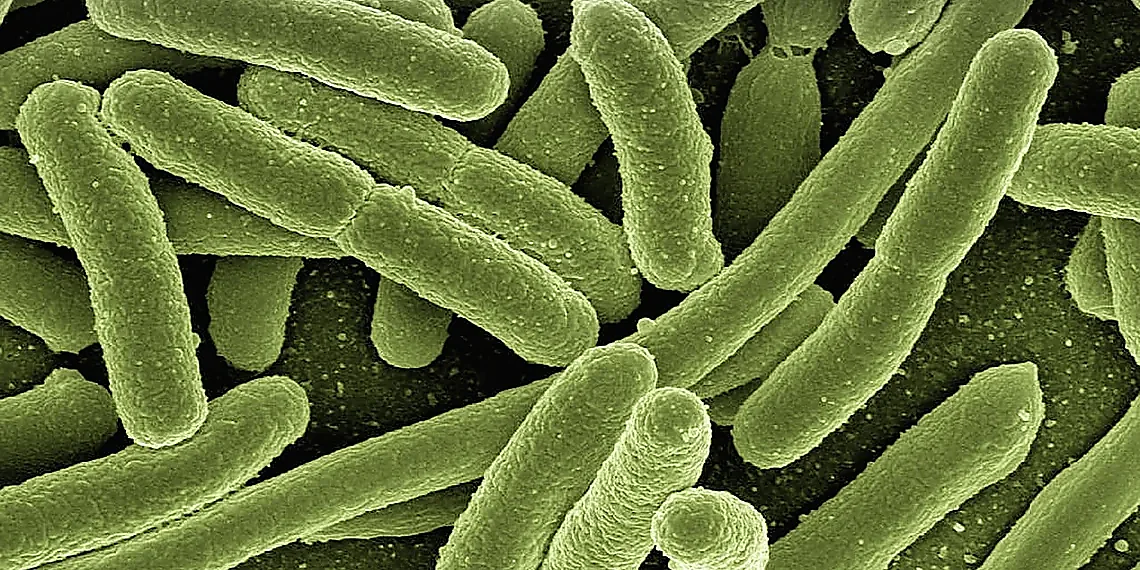
The core of this innovative bio-sensor lies in harnessing the natural processes of *Escherichia coli*, commonly known as *E. coli*. Scientists genetically engineer these bacteria to act as incredibly sensitive detectors for specific target molecules, like glucose or inflammatory markers. Imagine giving each bacterium a ‘detector’ gene – when that molecule is present, the gene activates, triggering a biological reaction. This isn’t about complex electronics; it’s about leveraging biology itself to sense and respond.
The critical breakthrough comes from how this detection translates into a signal. The engineered *E. coli* produce bioluminescence – light – in response to the target molecule’s presence. This light emission is incredibly faint, but scientists have developed nanoscale particles called ‘quantum dots’ that are integrated with the bacteria. These quantum dots absorb the bacterial light and re-emit it at a higher energy level – essentially amplifying the signal. This amplified light signal can then be detected wirelessly by an external reader, providing real-time data about the concentration of the target molecule within the body.
Remarkably, this entire system operates without batteries. The *E. coli* are self-powered; they obtain energy from nutrients naturally present in the body. This eliminates the need for bulky, potentially harmful power sources and allows for long-term, minimally invasive monitoring. Furthermore, because the bacteria are living organisms, their metabolic processes also contribute to signal stability and potential for adaptation – a significant advantage over traditional electronic sensors.
Potential Applications & Future Impact
The potential applications of these bacterial bio-sensors extend far beyond personalized medicine. While the initial focus is on revolutionizing internal patient monitoring – providing continuous, real-time data on biomarkers for conditions like diabetes or heart disease without invasive procedures or battery replacements – the underlying technology holds immense promise across diverse sectors. Imagine a future where targeted drug delivery is precisely controlled based on minute shifts in cellular activity detected by these bio-sensors, maximizing therapeutic efficacy while minimizing side effects. This level of granular control represents a significant leap forward from current monitoring and treatment paradigms.
Beyond human health, the adaptability of this bio-sensor technology opens exciting possibilities for environmental monitoring. Genetically engineered bacteria could be deployed to detect specific pollutants in water sources or air quality assessments with unprecedented sensitivity. Similarly, industrial processes could benefit from real-time quality assessment; imagine sensors embedded within manufacturing equipment providing immediate feedback on product consistency and identifying potential issues before they escalate – drastically reducing waste and improving overall efficiency. The ability to tailor the bacteria’s response to a specific target molecule makes this technology incredibly versatile.
Looking ahead, advancements in bio-sensor design are likely to focus on increasing sensitivity and expanding the range of detectable molecules. Researchers could engineer bacteria to respond to even more subtle changes in biological or environmental conditions, offering an increasingly detailed picture of complex systems. Miniaturization will also be crucial; further reducing the size of these implantable sensors would minimize any potential discomfort or complications for patients. Integration with advanced AI and machine learning algorithms promises to unlock new levels of data analysis, enabling proactive interventions based on predictive models derived from continuous bio-sensor readings.
Ultimately, the future impact of bacterial bio-sensors lies in their ability to seamlessly integrate into our lives, providing a constant stream of information that empowers both individuals and industries. While challenges remain regarding long-term biocompatibility and scalability, the initial success demonstrated by the Turkish research team marks a pivotal moment – paving the way for a new era of proactive and personalized monitoring across medicine, environmental science, and beyond.
Beyond Medicine: Expanding Horizons
While the initial focus of these bacterial bio-sensors is on revolutionizing medical diagnostics and treatment – offering unprecedented insights into bodily processes for personalized medicine – their capabilities extend far beyond human health applications. The core principle of utilizing biological organisms to detect specific substances or conditions can be adapted for environmental monitoring. Imagine deploying swarms of engineered bacteria in polluted waterways to continuously measure levels of heavy metals, pesticides, or other contaminants, providing real-time data that surpasses the limitations and cost of traditional lab testing.
The inherent sensitivity and specificity of these bio-sensors also make them valuable tools for industrial process control. For example, in food production or chemical manufacturing, bacterial sensors could be integrated into quality assurance systems to provide instantaneous feedback on product composition or identify deviations from optimal parameters. This real-time assessment can lead to improved efficiency, reduced waste, and enhanced product consistency – all without the need for complex and expensive laboratory equipment.
Looking ahead, researchers are exploring ways to further refine these bacterial bio-sensors, potentially incorporating machine learning algorithms to analyze sensor data in situ and trigger automated responses. This could involve developing ‘smart’ environmental remediation systems that release neutralizing agents when specific pollutants reach critical levels or dynamically adjusting industrial processes based on continuous quality assessments. The modularity of the bacterial engineering approach also allows for relatively easy adaptation to detect a wide range of targets, suggesting a future where these bio-sensors become ubiquitous across various sectors.
Challenges & Ethical Considerations
The promise of self-powered, implantable biosensors using genetically engineered bacteria is undeniably exciting, but realizing this vision presents significant challenges beyond the initial scientific breakthrough. Scaling up production while maintaining consistent performance and ensuring long-term biocompatibility are key hurdles. The E. coli used in these sensors need to remain stable within the body’s complex environment for extended periods without triggering adverse immune responses or degrading, a challenge demanding advanced materials science and further genetic engineering refinements. Signal reliability also requires meticulous attention – ensuring that the biosensor’s output remains accurate and consistent over time despite physiological fluctuations poses a considerable technical obstacle.
Regulatory approval pathways will be another critical factor in widespread adoption. Given the use of genetically modified organisms (GMOs), stringent safety assessments and rigorous clinical trials will be essential, potentially lengthening the timeline for commercialization. Public perception surrounding GMOs also plays a vital role; addressing public concerns about the potential risks associated with introducing engineered bacteria into the body will require transparent communication and robust scientific validation. Overcoming these perceptions is crucial to fostering acceptance and trust in this innovative technology.
Beyond the technical and regulatory landscape, ethical considerations demand careful scrutiny. While the benefits of continuous, molecular-level monitoring are substantial, questions around data privacy and potential misuse arise. The biosensors will generate vast amounts of highly personal health information; safeguarding this data from unauthorized access or exploitation is paramount. Establishing clear protocols for data ownership, usage rights, and security measures – potentially incorporating blockchain technology for enhanced protection – will be essential to ensure responsible development and deployment.
Finally, the potential for unintended consequences stemming from genetic engineering warrants ongoing evaluation. While safeguards are built into the engineered bacteria to prevent uncontrolled replication or horizontal gene transfer, continuous monitoring and risk assessment protocols must remain in place throughout the biosensor’s lifecycle. A proactive and ethically informed approach is crucial to harness the immense potential of this technology while mitigating any unforeseen risks.
Navigating the Road Ahead
While the prospect of self-powered, implantable biosensors represents a significant leap forward in medical monitoring, considerable hurdles remain before widespread adoption. Long-term biocompatibility is paramount; ensuring the genetically engineered bacteria don’t trigger adverse immune responses or cause tissue damage over extended periods requires extensive testing and refinement. Signal reliability also presents a challenge – maintaining consistent and accurate data transmission from within the body’s complex environment is crucial for meaningful diagnostic insights.
Regulatory pathways for such novel devices are currently undefined, meaning navigating approval processes will be complex and potentially lengthy. Agencies like the FDA will need to establish clear guidelines specifically addressing biosensors incorporating genetically modified organisms (GMOs). Public perception surrounding GMOs also poses a significant barrier; concerns about safety, ethical implications of modifying living organisms, and potential for unintended consequences must be addressed proactively through transparent communication and robust risk assessment.
Beyond biological and regulatory considerations, data security is another critical area. Implantable biosensors generate sensitive personal health information that requires stringent protection against unauthorized access or breaches. Secure wireless transmission protocols, encryption methods, and adherence to privacy regulations (like HIPAA) are essential to maintain patient trust and prevent misuse of the collected data.
The convergence of bacterial power and advanced microelectronics represents a truly transformative moment for medical technology, offering a glimpse into a future where diagnostics are seamless and proactive rather than reactive. This innovative approach to building bio-sensors promises not just incremental improvements but a fundamental shift in how we monitor health, potentially impacting everything from chronic disease management to early detection of infection. Imagine a world with minimally invasive, continuously updated data streams providing personalized insights – that’s the promise these bacterial power sources unlock for future medical devices. The implications extend far beyond current diagnostic tools; we can foresee applications in environmental monitoring and even industrial process control leveraging similar principles. Further refinement will undoubtedly lead to increased sensitivity, longevity, and integration capabilities within existing healthcare infrastructure. As research progresses, expect to see a wider range of bacteria harnessed for their unique metabolic properties, leading to increasingly sophisticated bio-sensors tailored to specific diagnostic needs. The potential is immense, and the journey has only just begun. To stay ahead of this rapidly evolving landscape, we strongly encourage you to follow developments in biotechnology and personalized medicine – subscribe to industry publications, attend relevant conferences, and engage with researchers pushing the boundaries of what’s possible.
The work highlighted showcases a powerful example of how interdisciplinary collaboration can yield truly groundbreaking results. While challenges remain in scaling production and ensuring long-term stability, the foundational proof-of-concept is undeniably compelling. This breakthrough significantly lowers the barrier to entry for creating complex medical monitoring systems and paves the way for more accessible healthcare solutions globally. We are entering an era where personalized medicine becomes a tangible reality thanks to advancements like these, with bio-sensors playing a crucial role in providing the necessary data. Keep your eye on this space; it’s destined for continued innovation and impactful change.
Continue reading on ByteTrending:
Discover more tech insights on ByteTrending ByteTrending.
Discover more from ByteTrending
Subscribe to get the latest posts sent to your email.