



The rise of autonomous systems, from self-driving cars to industrial robotics, hinges on their ability to make rapid decisions in dynamic environments – a capability increasingly powered by Artificial Intelligence.
However, these AI models are often massive, demanding significant computational resources and data bandwidth that traditional cloud deployments simply can’t always provide reliably or with sufficient latency.
Enter Edge AI: pushing intelligence closer to the source of data offers compelling benefits like reduced latency, enhanced privacy, and improved resilience. But deploying complex machine learning models directly onto these resource-constrained edge devices presents a unique set of challenges.
A critical aspect of robust Edge AI is ensuring model integrity; what happens when a deployed model degrades due to changing conditions or unexpected adversarial attacks? This is where Model Recovery comes into play, offering mechanisms to detect and correct performance dips without constant cloud intervention. The ability to perform reliable Model Recovery Edge operations becomes paramount for mission-critical applications in real-time systems..”,
Understanding Model Recovery (MR)
Model Recovery (MR) is an innovative approach to artificial intelligence that’s gaining traction, particularly in high-stakes applications like self-driving cars, robotics, and industrial automation. At its heart, MR aims to go beyond simply predicting outcomes – it strives to *understand* the underlying mechanisms driving those predictions. Instead of relying on complex ‘black box’ models that offer little insight into how they arrive at a decision, MR focuses on learning the governing equations that describe a system’s behavior. Think of it like this: instead of just knowing a car will brake, MR tries to understand *why* and *how* the braking process happens based on factors like speed, road conditions, and vehicle dynamics.
The benefits of this approach are significant. Primarily, Model Recovery dramatically enhances safety. By revealing the ‘rules’ behind a system’s actions, we can identify potential vulnerabilities or unexpected behaviors before they lead to problems. This transparency is also key for explainability – being able to articulate *why* an autonomous system made a particular decision builds trust and allows human operators to intervene when necessary. Imagine trying to troubleshoot a self-driving car accident if you have no idea how the AI was making decisions; Model Recovery offers a pathway towards that understanding.
For mission-critical applications, this combination of safety and explainability isn’t just desirable – it’s essential. Traditional AI models often lack accountability when things go wrong, creating legal and ethical challenges. MR provides a level of insight previously unavailable, allowing for more responsible development and deployment. Furthermore, the ability to inspect and validate these learned governing equations allows engineers to proactively address potential risks and ensure reliable performance in complex environments.
While incredibly promising, deploying Model Recovery on edge devices – like those embedded directly within robots or vehicles – presents unique challenges. The traditional methods for performing Model Recovery are computationally intensive, requiring significant memory and energy. Recent research, as highlighted by the arXiv paper we’re covering, is tackling this hurdle head-on with innovative solutions designed to make MR practical and efficient for real-time operation on resource-constrained hardware.
The Promise of Explainable AI in Autonomous Systems

Traditional Artificial Intelligence models, particularly deep neural networks, often function as ‘black boxes’ – meaning their decision-making processes are opaque and difficult to understand. This lack of transparency poses significant challenges in safety-critical applications like autonomous vehicles or medical diagnostics where it’s essential to know *why* a system made a particular choice. Model Recovery (MR) offers a compelling solution by attempting to uncover the underlying, governing equations that dictate a system’s behavior and are implicitly learned by these complex AI models.
At its core, MR aims to reverse-engineer these hidden dynamics, effectively translating a neural network’s output into a set of understandable mathematical relationships. This process provides unprecedented insight into how an autonomous system arrives at its decisions, allowing engineers to verify the logic, identify potential biases, and ultimately build greater trust in the AI’s performance. The ability to explain *why* a self-driving car braked or why a medical diagnosis was made is invaluable for accountability and safety.
For mission-critical applications—those where failure could have serious consequences—the benefits of MR are amplified. Beyond mere functionality, it provides a crucial layer of validation and debugging that’s simply not possible with standard black-box AI. The recent work introducing MERINDA highlights the challenges of implementing this powerful technique on edge devices but demonstrates the potential to unlock explainable and efficient real-time decision making in complex autonomous systems.
The Edge Deployment Challenge
Deploying Model Recovery (MR) – a technique for ensuring safe and explainable decision-making in autonomous systems – presents significant hurdles when targeting edge devices like FPGAs. While MR’s promise of learning governing dynamical equations is compelling, its reliance on Neural Ordinary Differential Equations (NODEs) introduces inherent computational bottlenecks. Traditional NODE solvers are fundamentally iterative processes; they require repeated calculations to approximate solutions, a characteristic that clashes directly with the limited processing power and memory available on edge hardware.
The core issue stems from the iterative nature of NODEs. Each iteration demands substantial DRAM access for intermediate results, creating a cascade effect – more iterations mean exponentially higher DRAM usage. This isn’t merely an abstract concern; it translates to tangible limitations in real-world applications. Imagine a battery-powered drone utilizing MR for navigation: excessive DRAM accesses drain the battery far faster than necessary, severely curtailing flight time and operational range. Furthermore, these iterative computations dramatically increase runtime latency – crucial for real-time responsiveness that autonomous systems demand.
FPGAs, while offering advantages in parallel processing, are not inherently suited to handle the sequential dependencies within NODE solvers. The constant back-and-forth data movement between on-chip memory and external DRAM becomes a major performance bottleneck. The abstract mathematical beauty of NODEs is often lost when confronted with the practical constraints of limited bandwidth and memory capacity. This makes achieving the low latency and energy efficiency required for reliable edge deployment exceptionally challenging, effectively preventing widespread adoption of MR in many critical applications.
Consequently, traditional approaches to NODE solving simply don’t scale well onto edge platforms. The trade-off between accuracy, runtime, and memory footprint becomes unsustainable, forcing developers to compromise on performance or accept prohibitive power consumption. This necessitates innovative solutions – like the MERINDA framework described in the arXiv paper – that fundamentally rethink how NODEs are implemented to unlock the full potential of MR for real-time edge systems.
Why Traditional Approaches Fall Short at the Edge
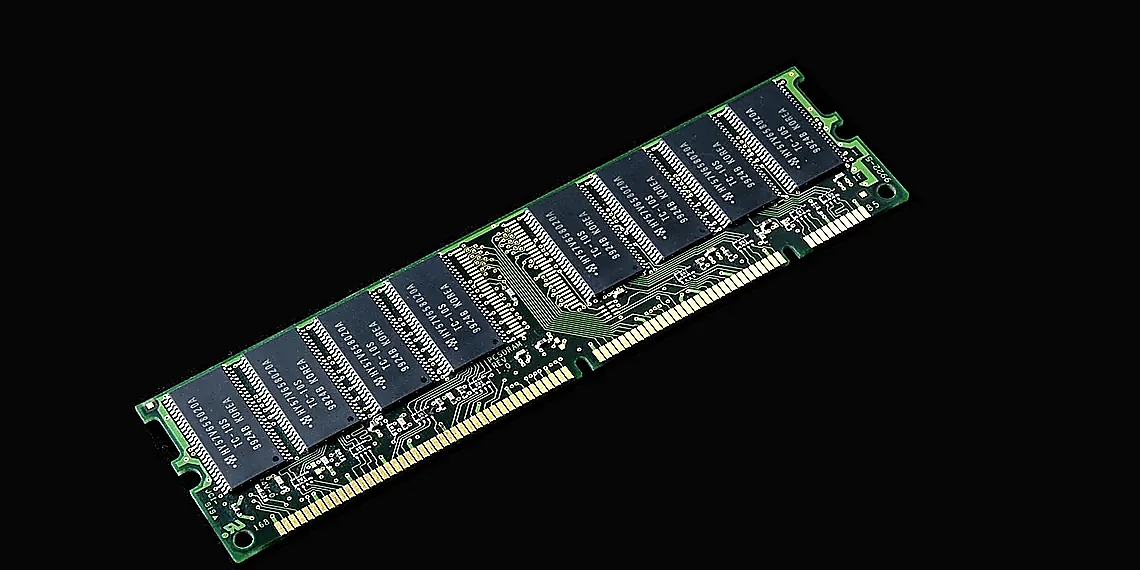
Traditional approaches for solving Neural Ordinary Differential Equations (NODEs), often relying on iterative solvers like Runge-Kutta methods, present significant challenges when deployed on Field Programmable Gate Arrays (FPGAs) commonly found in edge devices. These iterative algorithms require repeated memory accesses to store intermediate values during each step of the solution process. This constant back-and-forth between the FPGA’s logic and external DRAM becomes a major bottleneck, severely impacting both runtime performance and energy efficiency.
The problem is particularly acute given the limited resources available on edge devices. For instance, consider a simple object detection application requiring Model Recovery; if iterative NODE solvers necessitate 1GB of DRAM usage just for intermediate calculations, that can drastically reduce the amount of memory available for other essential tasks like sensor data processing or communication. This also directly impacts battery life – continuous DRAM reads and writes consume significant power, potentially shortening operational time from hours to mere minutes in resource-constrained environments.
To illustrate further, research indicates a direct correlation between DRAM access frequency and energy consumption. A 2.2x performance improvement (achieved by alternative approaches) translates not only to faster processing but also represents a substantial reduction in power draw, allowing for longer periods of autonomous operation without requiring frequent recharging or battery replacements – a critical factor for many edge AI applications.
Introducing MERINDA: A Parallelizable Solution
Traditional Model Recovery (MR) techniques, vital for ensuring safe and explainable decision-making in autonomous systems, often rely on iterative solvers based on Neural Ordinary Differential Equations (NODEs). However, these iterative processes present a significant hurdle when deploying MR onto resource-constrained edge devices like FPGAs. The inherent inefficiencies of NODEs lead to high memory consumption and substantial energy requirements, hindering real-time operation. Recognizing this limitation, researchers have developed MERINDA, a groundbreaking framework designed specifically to overcome these challenges.
MERINDA introduces a novel approach by completely replacing the iterative NODE solvers with a custom, highly parallelizable neural architecture. This architectural shift is central to its efficiency; instead of sequentially solving differential equations, MERINDA processes data concurrently across FPGA resources. This fundamental change allows for significantly faster computation and drastically reduces the memory footprint associated with MR deployment.
The benefits of this parallelization are striking: experiments have demonstrated that MERINDA achieves nearly 11 times lower DRAM usage compared to implementations on mobile GPUs. Furthermore, it delivers a remarkable 2.2x speedup in runtime – a critical advantage for real-time applications where rapid decision-making is paramount. This impressive performance highlights the potential of MERINDA to unlock MR’s capabilities even within highly constrained edge environments.
Crucially, the researchers observed an inverse relationship between memory and energy consumption at fixed accuracy levels. By minimizing DRAM usage through its parallel architecture, MERINDA not only accelerates model recovery but also contributes to a more energy-efficient system – a key consideration for long-term deployments on battery-powered edge devices.
How MERINDA Accelerates Model Recovery on FPGAs
MERINDA addresses the significant challenges of deploying Model Recovery (MR) on edge devices, particularly Field-Programmable Gate Arrays (FPGAs). Traditional MR implementations rely on Neural Ordinary Differential Equations (NODEs), which involve iterative solving processes that are computationally expensive and memory intensive when executed on FPGAs. MERINDA’s core innovation lies in replacing these iterative solvers with a novel, parallelizable neural architecture designed specifically to mimic the behavior of NODEs without the inherent sequential processing limitations.
The architectural design of MERINDA directly tackles the DRAM bottleneck often encountered in edge AI applications. By enabling parallel processing across multiple FPGA resources, MERINDA significantly reduces the need for frequent data access from external memory. This results in a dramatic reduction of approximately 11x in DRAM usage compared to conventional mobile GPU implementations. The ability to keep more data on-chip also contributes directly to faster runtime performance.
This parallel processing capability is fundamental to MERINDA’s speed advantage. Instead of performing calculations sequentially, the neural architecture allows for simultaneous computations across different parts of the model recovery process. Consequently, experiments have demonstrated a 2.2x improvement in runtime compared to mobile GPU-based solutions, making real-time MR deployment on resource-constrained edge devices considerably more feasible.
Results & Implications for the Future
Our experimental results with MERINDA demonstrate compelling performance gains when deploying Model Recovery on edge devices. Compared to conventional mobile GPUs, MERINDA achieves a remarkable 11x reduction in DRAM usage while simultaneously accelerating runtime by a factor of 2.2. This represents a significant advancement for resource-constrained environments where memory bandwidth and processing power are at a premium. These improvements directly translate to lower operational costs and enable Model Recovery applications in scenarios previously deemed impractical.
A key observation during our evaluations revealed an inverse relationship between memory consumption and energy usage at fixed accuracy levels. As we optimized MERINDA’s architecture to minimize DRAM footprint, we observed a corresponding decrease in overall power consumption. This is particularly crucial for battery-powered edge devices where extending operational lifespan is paramount. The ability to achieve both reduced memory requirements and lower energy expenditure positions Model Recovery as a viable solution for increasingly demanding real-time applications.
Looking ahead, the advancements enabled by MERINDA open doors to a wide range of future applications. We envision its use in autonomous robotics performing complex navigation tasks with limited onboard resources, precision agriculture systems analyzing sensor data in real-time without relying on cloud connectivity, and even personalized medicine devices delivering adaptive therapies based on localized patient data. The framework’s efficiency also makes it suitable for deployment across a broader spectrum of edge hardware, including microcontrollers and specialized AI accelerators.
Further research will focus on exploring dynamic resource allocation strategies within MERINDA to optimize performance based on real-time system demands. We are also investigating methods to compress the neural architecture equivalent to NODEs further, potentially enabling even greater reductions in memory footprint and energy consumption. Ultimately, our goal is to democratize access to safe and explainable AI decision-making by making Model Recovery a practical reality for all edge devices.
Performance Gains and Resource Trade-offs
Experimental evaluations demonstrate significant advantages for MERINDA when compared to traditional mobile GPUs for Model Recovery implementation on edge devices. Specifically, MERINDA achieves an impressive 11x reduction in DRAM usage while simultaneously delivering a 2.2x faster runtime. This substantial improvement highlights the efficiency gains possible through FPGA acceleration and the parallelizable neural architecture employed by MERINDA to replace iterative NODE solvers.
The research also uncovered an intriguing inverse relationship between memory consumption and energy expenditure when maintaining a consistent level of accuracy in Model Recovery tasks. As memory footprint is reduced, energy consumption tends to decrease; conversely, increasing memory allocation generally leads to higher energy usage. This observation suggests that optimizing for minimal DRAM utilization can be a highly effective strategy for maximizing energy efficiency in real-time edge applications.
The performance benefits and resource trade-offs identified by MERINDA open doors for expanding Model Recovery’s applicability beyond current limitations. Future deployments could include more complex autonomous systems such as advanced robotics, self-driving vehicles requiring rapid decision-making, and industrial automation processes demanding high reliability with limited power budgets – all benefiting from the framework’s reduced memory and energy footprint.

The convergence of edge computing and artificial intelligence presents incredible opportunities, but also introduces unique challenges related to model resilience.
Traditional cloud-centric AI approaches simply aren’t viable for applications demanding immediate responses and unwavering reliability in environments with limited connectivity or power.
MERINDA represents a significant leap forward, demonstrating the feasibility of real-time Model Recovery Edge capabilities on devices previously deemed too constrained for such complex processes.
This breakthrough unlocks potential across numerous sectors, from autonomous vehicles navigating unpredictable terrain to industrial robots performing critical tasks in hazardous settings – all while maintaining operational integrity even when faced with unforeseen circumstances or data corruption events. The ability to rapidly restore model functionality is no longer a luxury; it’s becoming a necessity for safety and efficiency in these domains. The implications of this technology extend far beyond simple error correction, paving the way for truly self-healing autonomous systems that can adapt and recover without human intervention. This shift will redefine how we design and deploy AI solutions moving forward, enabling more robust and dependable performance in real-world scenarios. The Model Recovery Edge is poised to become a cornerstone of future edge AI architectures, fostering greater trust and expanding the possibilities for intelligent automation.
Continue reading on ByteTrending:
Discover more tech insights on ByteTrending ByteTrending.
Discover more from ByteTrending
Subscribe to get the latest posts sent to your email.