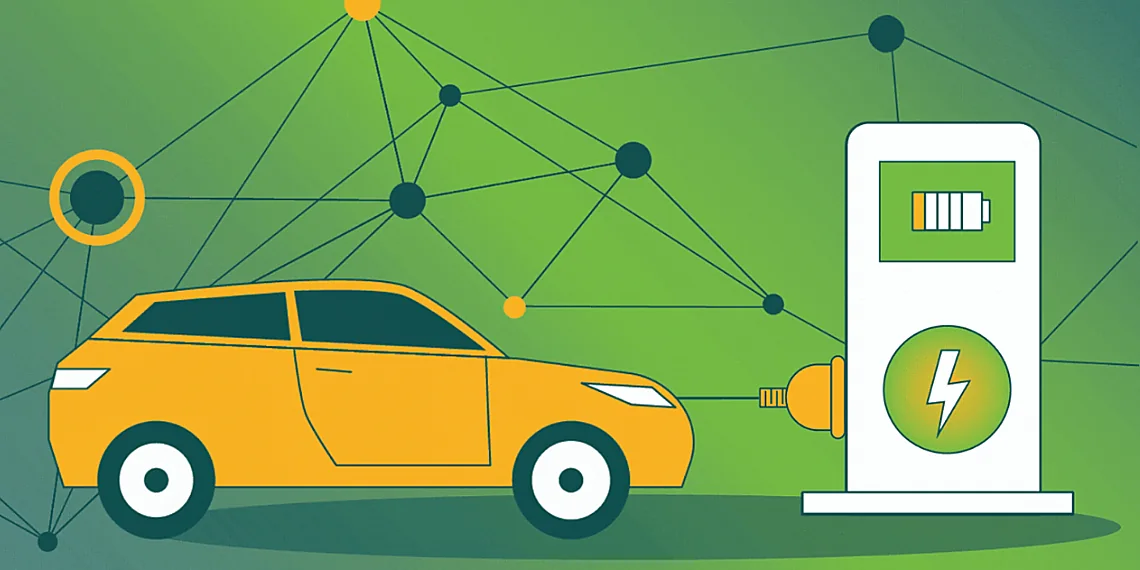

The electric vehicle revolution is undeniably underway, promising a cleaner, quieter future for transportation. Yet, despite incredible advancements in battery technology and charging infrastructure, a significant hurdle remains for many potential buyers: that nagging feeling of uncertainty about how far their EV can truly go. This hesitation, often referred to as EV range anxiety, has been a persistent barrier slowing down wider adoption. Imagine planning a road trip only to constantly second-guess your route based on the availability of charging stations – it’s a reality for many current EV owners and a major concern for those considering making the switch. Fortunately, groundbreaking developments are emerging that could finally alleviate this worry. Google is leveraging its expertise in artificial intelligence to develop a novel solution aimed directly at tackling this challenge, offering drivers unprecedented accuracy and peace of mind. This article dives deep into how their AI-powered approach works, explores its potential impact on the EV landscape, and examines what it means for the future of electric mobility.
$EV range anxiety is a very real concern for many people.
We’ll explore Google’s innovative solution and how it could change everything.
The Root of EV Range Anxiety
The pervasive feeling of ‘range anxiety’ – the fear that an electric vehicle won’t have enough battery power to reach its destination or a convenient charging point – is arguably one of the biggest hurdles slowing down widespread EV adoption. It’s not simply about miles per charge; it’s a complex interplay of psychological and practical factors, often amplified by real-world limitations. Imagine planning a long road trip in a gasoline car – you know roughly where gas stations are located. With EVs, that certainty is diminished, triggering anxieties rooted in the potential for being stranded or significantly inconvenienced.
Practically speaking, range anxiety stems from several key challenges. The limited availability of charging infrastructure compared to gas stations is a major contributor; drivers worry about finding a charger when needed, and whether it will be operational and available. Unpredictable energy consumption further complicates matters – factors like weather conditions (extreme heat or cold significantly impact battery performance), driving style (aggressive acceleration drains power faster), terrain (uphill climbs consume more energy), and even cargo weight all affect actual range. A recent study showed that nearly 60% of potential EV buyers cited range anxiety as a primary concern, highlighting its significant influence on purchasing decisions.
Beyond the tangible logistical concerns, psychological factors play a crucial role in perpetuating this fear. The ‘availability heuristic’ – our tendency to overestimate the likelihood of events that are easily recalled – comes into play. News reports or anecdotal stories of EV drivers encountering charging difficulties can disproportionately shape perceptions and fuel anxieties. This is compounded by a general unfamiliarity with electric vehicle behavior; drivers accustomed to gasoline cars have established mental models about refueling, which EVs disrupt. Overcoming these psychological barriers requires not only improving infrastructure but also educating consumers about realistic range expectations and showcasing the reliability of modern EV technology.
Ultimately, addressing EV range anxiety isn’t just about increasing battery capacity – although that’s important. It demands a holistic solution encompassing improved charging infrastructure planning, more accurate energy consumption prediction tools (which is where AI can play a pivotal role), and targeted consumer education to dispel misconceptions and build confidence in electric vehicles. The psychological element is often overlooked but has a profound effect on adoption rates, underscoring the need for clear communication and proactive measures to alleviate driver concerns.
Understanding Driver Concerns

For many considering an electric vehicle (EV), the fear of running out of charge – often referred to as ‘range anxiety’ – is a significant hurdle. It’s more than just a calculation of miles; it’s rooted in a deep-seated concern about being stranded, especially when traveling unfamiliar routes or during emergencies. Imagine planning a weekend road trip and constantly worrying if you’ll find a charging station before your battery depletes – that feeling of uncertainty can be incredibly stressful and discouraging.
The practical limitations exacerbate these psychological concerns. While EV ranges are steadily increasing, the availability of reliable and conveniently located charging infrastructure still lags behind traditional gas stations in many areas. A recent study by J.D. Power found that 34% of EV owners expressed concern about range anxiety, highlighting its persistent impact on consumer confidence. This isn’t just a problem for long-distance drivers; even daily commutes can trigger worry if access to charging at home or work is limited.
Furthermore, predicting energy consumption in an EV isn’t always straightforward. Factors like weather conditions (extreme heat or cold significantly reduce battery performance), driving style (aggressive acceleration drains power faster), and terrain (uphill climbs consume more energy) all play a role. This unpredictability makes it difficult for drivers to accurately estimate their remaining range, fueling the anxiety and potentially impacting their willingness to switch to electric vehicles.
Google’s AI-Powered Solution
Google is taking a novel approach to combatting EV range anxiety with an AI-powered solution focused directly on predicting charger availability. Rather than focusing solely on optimizing routes or battery consumption (though those are important too), Google’s model aims to alleviate driver stress by providing accurate forecasts of when and where chargers will be free. This simple yet powerful concept addresses a core psychological barrier for many potential EV buyers – the fear of being stranded without access to charging.
The brilliance of Google’s system lies in its simplicity. It doesn’t rely on complex neural networks or massive datasets. Instead, it leverages historical charger usage patterns—when chargers are typically used and for how long—to predict future availability. Think of it as a weather forecast for charging stations: by analyzing past trends (peak hours, day-of-week variations), the model can estimate whether a specific charger will be available when a driver arrives. This predictive capability is surprisingly effective, allowing drivers to plan their journeys with greater confidence.
Crucially, the model’s efficiency means it can operate effectively even with relatively small amounts of data. It doesn’t require real-time information from every single charger; instead, aggregated historical usage provides a robust foundation for predictions. This scalability is key – it allows Google to deploy this solution widely without needing an enormous infrastructure or constant streams of live data. The focus on simplicity also makes the model easier to maintain and adapt as charging habits evolve.
Ultimately, Google’s AI-powered charger availability prediction system exemplifies how targeted interventions—even those based on relatively straightforward algorithms—can significantly impact user experience and accelerate adoption of electric vehicles. By directly addressing EV range anxiety with a practical and accessible solution, Google is contributing to a future where EVs are not just environmentally friendly, but also convenient and worry-free.
How the Model Works: A Simple Prediction
Google’s AI model for addressing EV range anxiety focuses on predicting the availability of charging stations, rather than attempting complex simulations of battery depletion or driving conditions. At its core, it’s a statistical forecasting tool that leverages historical data about charger usage. Specifically, the model analyzes past patterns – when chargers are typically in use, how long they remain occupied, and peak demand times – to anticipate future availability at specific locations.
Remarkably, the system doesn’t require massive datasets or intricate deep learning architectures. Google’s approach emphasizes efficiency; it achieves surprisingly accurate predictions using a relatively small dataset of charger usage patterns (typically just weeks or months of data) combined with straightforward statistical algorithms like time series analysis and regression models. This simplicity allows for faster deployment and adaptation to new charging locations.
The model’s effectiveness stems from the predictable nature of human behavior around charging stations. While individual user habits can vary, aggregated historical usage reveals consistent trends that the AI can reliably learn. By identifying these patterns and projecting them forward, Google aims to provide EV drivers with a more realistic assessment of charger availability, significantly easing range anxiety and promoting wider adoption of electric vehicles.
Impact & Future Implications
The development of AI models targeting EV range anxiety holds significant promise not only for current electric vehicle drivers but also for accelerating wider adoption. By accurately predicting charger availability and optimizing routes based on real-time conditions, these tools can drastically reduce the stress associated with planning longer journeys. Imagine a navigation system that proactively suggests charging stops *before* your battery gets critically low, factoring in traffic, charger occupancy rates, and even potential downtime – this level of predictive capability transforms EV ownership from a source of worry into a genuinely convenient experience.
Beyond simply alleviating driver anxiety, readily available and reliable charger predictions foster a more confident user base. This increased confidence directly translates to drivers being more willing to undertake longer trips, explore new areas, and ultimately embrace electric vehicles as a viable option for all their transportation needs. The potential integration with existing navigation apps and other mobility services—like ride-sharing platforms or energy management systems—amplifies this impact, seamlessly weaving charger prediction into the daily routines of EV users.
Looking ahead, the scalability and adaptability of this AI approach are particularly exciting. While current models represent a substantial step forward, incorporating real-time data streams (such as weather patterns impacting charging speeds or unexpected charger outages) will further enhance their accuracy and utility. Furthermore, the underlying algorithmic principles can likely be adapted to address other transportation challenges – optimizing logistics for autonomous vehicles, predicting public transit delays, or even managing energy consumption across entire smart city grids.
Ultimately, AI’s ability to tackle EV range anxiety isn’t just about solving a current problem; it’s about building the infrastructure and confidence needed to unlock the full potential of electric transportation. By removing one of the most significant barriers to entry for many consumers, these advancements pave the way for a cleaner, more sustainable future powered by electric vehicles.
Beyond Range Anxiety: A Smoother Driving Experience
The persistent worry about running out of charge, or ‘EV range anxiety,’ significantly hinders wider electric vehicle adoption. However, advancements in artificial intelligence are offering a tangible solution: predictive charging infrastructure availability. These AI models analyze vast datasets including historical charger usage patterns, real-time traffic conditions, weather forecasts, and even upcoming events to forecast the likelihood of finding an available charger at desired locations along a planned route. This goes beyond simple mapping; it anticipates demand and provides drivers with probabilistic estimates – ‘85% chance of availability’ instead of just ‘charger present.’
The impact on driver experience is substantial. Knowing, with reasonable certainty, that charging options exist reduces stress and encourages longer trips, expanding the practical usability of EVs. Imagine planning a cross-country road trip without constantly obsessing over remaining range; this is what predictive charger availability enables. Furthermore, this technology fosters confidence in electric vehicles – a key psychological barrier for many potential buyers. Increased driver comfort translates directly into increased adoption rates and a more robust EV ecosystem.
Looking ahead, seamless integration with existing navigation apps like Google Maps or Waze seems inevitable. Imagine your route automatically adjusting to prioritize locations with higher charger availability probabilities, or receiving proactive notifications about potential charging delays. Beyond navigation, these predictions could also inform energy grid management, optimizing charging loads and preventing strain on the power infrastructure as EV adoption continues its rapid ascent. The combination of improved driver experience and optimized resource utilization makes predictive charging a crucial component in the future of electric mobility.
Scaling Up and Expanding Capabilities
While current AI models demonstrating improved range prediction offer significant promise, future iterations could be substantially enhanced by incorporating real-time data streams. Integrating live traffic conditions, weather forecasts (temperature, precipitation impacting battery efficiency), and even elevation changes along a planned route would allow for dynamically adjusted range estimates. This moves beyond static historical averages to provide drivers with far more accurate information tailored to their specific journey, directly alleviating concerns about unexpected depletion.
Beyond the immediate benefits for EV drivers, the underlying AI framework has potential applications extending well beyond range prediction. Similar machine learning approaches could be adapted to optimize charging infrastructure placement based on predicted demand patterns, personalize vehicle energy consumption recommendations (e.g., suggesting optimal driving speeds), or even proactively manage battery health and longevity through data-driven insights. These broader implications contribute to a more holistic and efficient electric transportation ecosystem.
Furthermore, the principles behind these AI models – leveraging vast datasets to predict future outcomes – are applicable to other pressing transportation challenges. Imagine using similar techniques to optimize logistics routes for autonomous delivery vehicles, predicting maintenance needs for public transit systems based on usage patterns, or even managing air traffic flow with greater precision and efficiency. The core technology is adaptable and represents a valuable tool in addressing complex logistical problems across various modes of transport.
Conclusion: A Step Towards Widespread EV Adoption

The development of this AI model represents a crucial step in alleviating EV range anxiety, a persistent barrier to wider electric vehicle adoption. By accurately predicting remaining range based on real-time driving conditions, historical data, and even anticipated weather patterns, the system offers drivers significantly improved confidence and reduces the ‘what if’ scenarios that often deter potential buyers. This goes beyond simple battery level indicators; it provides actionable insights into how driving style, terrain, and climate affect performance.
The core innovation lies in its ability to learn from vast datasets of driving behavior and environmental factors, constantly refining its predictions for greater accuracy. This adaptive learning capability addresses the inherent variability in EV range – something that traditional estimates often fail to capture adequately. The model’s potential extends beyond individual driver assistance; it could be integrated into navigation systems, charging infrastructure planning, and even vehicle design itself to optimize energy efficiency.
Ultimately, overcoming range anxiety is fundamental to achieving widespread electric vehicle adoption. This AI-powered solution isn’t a complete eradication of the concern, but it’s a powerful tool that significantly mitigates its impact on driver confidence and purchasing decisions. The technology showcases how algorithmic advancements are directly addressing real-world challenges in transportation, paving the way for a more sustainable and accessible future.
Looking ahead, further refinements to this model—incorporating factors like battery degradation over time or personalized driving preferences—promise even greater accuracy and utility. This demonstrates that ongoing innovation in AI is not only enhancing existing technologies but also actively shaping the future of electric mobility, making the transition to EVs more appealing and practical for a broader audience.
The integration of AI into route planning, battery management, and predictive maintenance represents a significant leap forward for electric vehicles, promising a future where concerns about longevity and performance are largely mitigated. We’ve seen how sophisticated algorithms can optimize driving behavior, anticipate charging needs, and even dynamically adjust power consumption to maximize efficiency. This isn’t just about incremental improvements; it’s about fundamentally reshaping the EV ownership experience and making it accessible to a broader audience. Addressing that persistent feeling of uncertainty – what we often call ‘EV range anxiety’ – is critical for widespread adoption, and these AI-powered solutions are proving remarkably effective in easing those worries. The potential extends far beyond simply showing drivers where the next charging station is; it’s about providing confidence and peace of mind on every journey. As battery technology continues to evolve alongside increasingly intelligent software, we can expect even more personalized and proactive support for EV users. The future looks bright, with AI paving the way towards a truly seamless and sustainable transportation ecosystem. Now, we want to hear from you: have you experienced the benefits of these advancements firsthand? What are your thoughts on AI’s role in shaping the electric vehicle landscape? Share your experiences – both positive and challenging – regarding EVs and charging infrastructure in the comments below; your insights will help build a more comprehensive understanding for everyone considering making the switch.
$paragraphs_end$
Continue reading on ByteTrending:
Discover more tech insights on ByteTrending ByteTrending.
Discover more from ByteTrending
Subscribe to get the latest posts sent to your email.