
Related Post
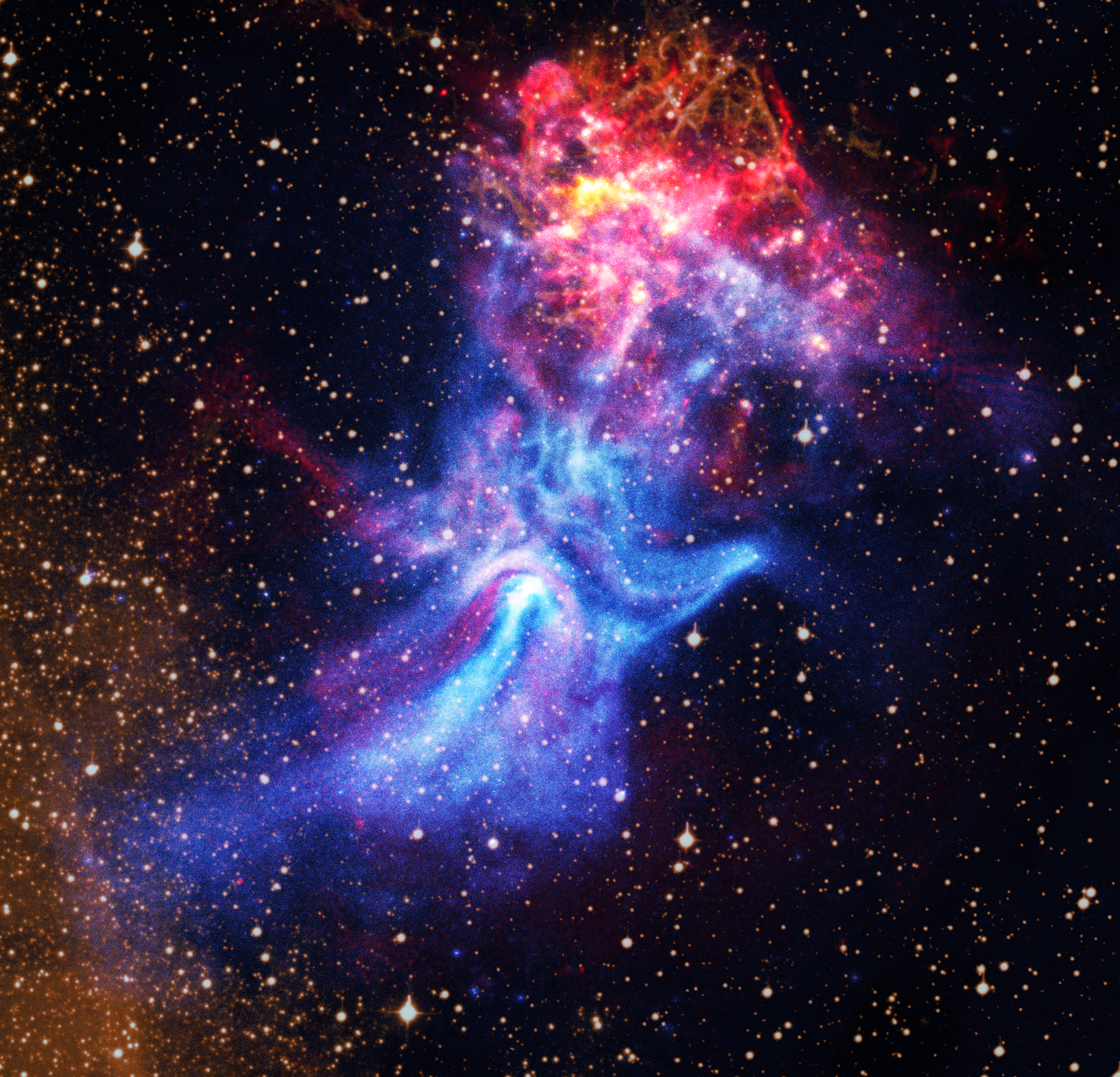
Imagine a cosmic jewel, shimmering across billions of light-years, defying expectations and captivating astronomers worldwide – that’s precisely what we’ve found lurking within the vastness of space.
Forget the familiar images of planetary nebulae, those gently expanding bubbles often depicted as colorful spheres; this is something entirely different, an extraordinary structure resembling a brilliant diamond ring.
The Diamond Ring Nebula, formally known as WR 2017-578, presents us with an unprecedented view of stellar death, its shape unlike anything previously observed in such detail.
Discovered relatively recently through observations from the Hubble Space Telescope and further analyzed using data from ground-based observatories, this nebula challenges our current understanding of how massive stars shed their outer layers at the end of their lives. Researchers are now working to unravel the complex interplay of stellar winds and magnetic fields that sculpted this remarkable form, hoping to gain new insights into the processes shaping these celestial wonders.
What Makes This Nebula So Special?
Most stars, particularly massive ones, don’t quietly fade away at the end of their lives. Instead, they often blast out powerful stellar winds – streams of charged particles – and unleash intense radiation pressure. This outward force carves a cavity into the surrounding interstellar medium, creating what astronomers call a ‘star-blown bubble.’ Imagine blowing bubbles with soapy water; the air pushes outwards in all directions equally, resulting in a spherical shape. Similarly, these bubbles expand symmetrically as the star’s energy interacts with the gas and dust around it, typically forming large, rounded structures that can span dozens of light-years.
The Diamond Ring Nebula, however, defies this expectation. While also formed by a massive star’s stellar winds and radiation pressure, it presents an incredibly unusual characteristic: a remarkably flat, ring-like shape instead of the usual spherical bubble. This isn’t just a cosmetic difference; its flattened geometry challenges our understanding of how these structures form. The image itself is stunning – a bright, glowing ring reminiscent of a diamond – but it’s the unexpected flatness that has astronomers so intrigued.
So, what’s causing this deviation? Researchers believe the nebula’s flat shape is likely due to an interaction with a dense cloud of gas and dust along our line of sight. This cloud effectively acted as a ‘wall,’ halting the expansion in one direction while allowing it to proceed freely in others, leading to the flattened ring we observe. This scenario suggests that the environment surrounding stars plays a far more significant role in shaping these bubbles than previously thought, highlighting the complexity of star formation regions.
The discovery concerning the Diamond Ring Nebula underscores how much remains to be learned about stellar evolution and the interstellar medium. By studying such anomalies, astronomers can refine their models and gain a deeper appreciation for the intricate interplay between stars and their cosmic surroundings—revealing unexpected influences that shape these magnificent structures.
Star Bubbles 101: The Usual Suspects

Most stars, especially massive ones, don’t just sit quietly in space. As they age, they release tremendous amounts of energy and material into their surroundings. This outward push primarily comes from two sources: powerful stellar winds – streams of charged particles ejected from the star’s surface – and intense radiation pressure, which is essentially light pushing outwards. Imagine blowing bubbles with a straw underwater; your breath creates a bubble that expands outwards against the water’s resistance. Similarly, these stellar winds and radiation push on the surrounding gas and dust, carving out vast cavities in space.
Because the energy from a star radiates equally in all directions, the resulting ‘bubble’ is typically spherical. Think of it like an explosion; the force goes outward uniformly, creating a rounded shape. These bubbles can be incredibly large, stretching for dozens or even hundreds of light-years across! The material that’s pushed aside doesn’t just disappear; it often forms a shell of gas and dust around the bubble’s edge, which glows brightly as it’s heated by the star’s energy – this is what astronomers observe as a star-blown nebula.
The Diamond Ring Nebula stands out because it’s not spherical. Instead, it’s a flattened ring shape. This deviation from the usual spherical bubble suggests that something unusual happened during its formation – perhaps an interaction with a pre-existing cloud of gas or dust, or a peculiar alignment of the star’s outflow. Understanding what caused this flattening provides valuable clues about the complex processes shaping nebulae and potentially reveals details about the star’s life cycle and environment.
The Science Behind the Shape
The Diamond Ring Nebula’s unusual flatness is what truly sets it apart from other star-blown bubbles we observe in our galaxy. While most such nebulae are spherical, expanding outwards equally in all directions, this particular structure presents a strikingly thin, ring-like appearance. Understanding this deviation required researchers to dig deep into the conditions present when the central massive star began clearing its surroundings. The conventional picture of a star simply pushing gas outward doesn’t fully explain what we see; something else was at play.
A crucial piece of the puzzle lies in the interplay between magnetic fields and pre-existing gas clouds within the Cygnus X region. It’s theorized that powerful magnetic fields, inherent to the interstellar medium, acted as channels, guiding the star’s stellar wind – a stream of charged particles constantly ejected from its surface – into a flattened disk. Think of it like water flowing through a riverbed; the magnetic field provided the ‘riverbed,’ directing the flow and preventing it from expanding spherically.
Furthermore, existing clumps and structures of gas weren’t uniformly distributed throughout the region. These pre-existing clouds likely acted as obstacles to the stellar wind’s expansion, shaping the resulting nebula. Some regions might have been denser, causing the wind to pile up and create the ring’s outer edge, while others offered less resistance, allowing for a more gradual fade-out. The interaction between these gas structures and the magnetically channeled wind is what sculpted this unique diamond shape.
Essentially, the Diamond Ring Nebula isn’t just about a star blowing bubbles; it’s a testament to the complex choreography of magnetic fields and pre-existing material in interstellar space. This research highlights how seemingly subtle factors can have profound effects on the large-scale structures we observe throughout the universe, demonstrating that stellar evolution is rarely a simple process.
Magnetic Fields & Gas Clouds: The Key Ingredients

The unusual, flattened shape of the Diamond Ring Nebula isn’t just about the star’s wind pushing outwards; it’s a story involving invisible forces too. Scientists believe that strong magnetic fields played a crucial role in shaping this nebula. As the massive central star released its powerful stellar wind – a stream of charged particles – these magnetic fields likely acted like channels, guiding and concentrating the wind into a disk-like structure. Think of it as water flowing through pipes; the magnetic fields directed the wind’s energy along specific paths.
However, the magnetic fields didn’t work alone. The region around the star was already filled with pre-existing clouds of gas and dust, remnants from earlier stages of star formation. These clouds weren’t evenly distributed; they had their own structures and densities. When the stellar wind interacted with these existing gas clouds, it sculpted the nebula further. Some areas were pushed more strongly than others, creating the distinct ring we observe today – a combination of magnetic channeling and interaction with surrounding material.
Essentially, the Diamond Ring Nebula is a beautiful example of how complex processes combine to create stunning cosmic structures. The star’s wind provided the initial push, but the pre-existing gas clouds acted as a canvas, and the magnetic fields served as an artist’s brush, shaping the final form into this unique, flattened ring.
Beyond Aesthetics: What Does This Discovery Mean?
The discovery of the Diamond Ring Nebula, while visually stunning, offers a significant opportunity to refine our understanding of how massive stars shape their surroundings. Most star-blown bubbles are spherical, expanding outwards in all directions; this flattened ring structure challenges those established models. Its unusual geometry suggests a unique set of circumstances during its formation – potentially involving a specific orientation of the star’s initial outflow or interactions with pre-existing density variations within the interstellar medium. This deviation from typical bubble morphology forces us to re-examine the factors that govern stellar wind dynamics and radiation pressure, ultimately improving our ability to predict the evolution of similar regions throughout the galaxy.
Crucially, this nebula provides a natural laboratory for studying the complex interplay between stars and the interstellar medium (ISM). The Diamond Ring’s slow expansion rate hints at a lower-than-expected density environment or an unusual interaction with surrounding gas. Examining its composition – through spectroscopic analysis of the emitted light – will allow us to determine if material was swept up during its formation, providing clues about the ISM’s properties before it was cleared by the star. Furthermore, understanding how this ring formed could shed light on the role magnetic fields play in shaping nebulae; these fields can channel stellar winds and influence gas dynamics, potentially explaining the flattened structure we observe.
Future research avenues are plentiful. Detailed mapping of the nebula’s velocity field – tracing the movement of gas within the ring – will paint a clearer picture of its expansion mechanism. High-resolution observations using instruments like ALMA could reveal intricate filamentary structures and density gradients within the ring itself, providing further insight into the star’s influence on the surrounding ISM. Finally, comparative studies with other unusual nebulae—those exhibiting similar atypical shapes or behaviors—will be vital for establishing a broader understanding of the diversity of star-ISM interactions and refining our theoretical models.
Ultimately, objects like the Diamond Ring Nebula serve as crucial touchstones for validating and improving our astrophysical models. While aesthetically captivating, their unique characteristics provide invaluable data points that push the boundaries of our knowledge about star formation, stellar evolution, and the dynamic processes shaping the interstellar medium – reminding us that even seemingly familiar phenomena can harbor profound surprises when viewed through a scientific lens.
Unlocking Secrets of Star Formation
The unusual, flat structure of the Diamond Ring Nebula provides valuable data points against existing models of stellar evolution and the interaction between massive stars and their surrounding interstellar environment. Most star-blown bubbles are spherical; this flattened shape suggests a unique set of conditions during its formation – potentially an encounter with pre-existing gas clouds or a specific alignment of magnetic fields that constrained the bubble’s expansion. By analyzing these deviations from typical behavior, astronomers can refine our understanding of how massive stars influence their surroundings and contribute to the ongoing cycle of star birth and death.
A key factor in star formation, often difficult to observe directly, is the role of magnetic fields. These fields help regulate the collapse of gas clouds into stars and shape the outflows generated by young stars. The Diamond Ring Nebula’s structure may be revealing how magnetic fields interacted with the stellar wind during its creation; a flattened morphology could indicate that strong, aligned magnetic field lines prevented expansion in certain directions while allowing it in others. Studying such nebulae offers an indirect way to map and understand these often-hidden magnetic landscapes within star-forming regions.
Future research will likely focus on detailed mapping of the gas velocities and densities within the Diamond Ring Nebula, as well as searching for similar, but even more extreme examples of flattened bubbles in other star-forming regions. Combining observations across different wavelengths – from radio to X-ray – can further illuminate the physical processes at play. Ultimately, these studies promise to improve our models of stellar feedback—the impact massive stars have on their galactic environments—and refine our understanding of how stars are born and evolve within those environments.
Future Exploration & Related Nebulae
The Diamond Ring Nebula’s unique flatness presents a compelling target for future astronomical observation and exploration. Next-generation telescopes like the Extremely Large Telescope (ELT), currently under construction in Chile, will offer unprecedented resolution and sensitivity to study the nebula’s intricate structure and dynamics in far greater detail. The ELT’s ability to observe at infrared wavelengths will be particularly valuable, allowing astronomers to penetrate dust clouds and map the distribution of gas and young stars within the ring. Furthermore, future space-based missions equipped with advanced spectrographic instruments could provide detailed chemical analyses of the nebula’s composition, revealing clues about its origin and evolution.
Beyond ground-based observations, dedicated probes or orbital platforms strategically positioned to observe the Cygnus X region would offer continuous data streams and potentially allow for real-time monitoring of any subtle changes in the Diamond Ring Nebula’s shape or brightness. Such a mission could also characterize the central star’s activity more precisely, pinpointing how its stellar winds interact with the surrounding material to sculpt the ring. Analyzing this interaction is key to understanding why this nebula deviates from the typical spherical bubble morphology seen in other similar structures.
The Diamond Ring Nebula isn’t alone in presenting unusual morphologies. Other nebulae like the Helix Nebula (a classic planetary nebula) and the Hourglass Nebula showcase fascinating shapes sculpted by stellar winds, though they differ significantly. The Bat Nebula, with its distinctive wing-like appearance, also offers a glimpse into the complex interplay between stars and their surrounding environments. Studying these diverse structures collectively – including the Diamond Ring – will help refine our understanding of how massive stars influence their surroundings throughout their life cycles.
Ultimately, continued investigation of nebulae like the Diamond Ring Nebula contributes to a broader understanding of star formation, stellar evolution, and the recycling of matter within galaxies. By combining observations from existing facilities with data from upcoming missions and advanced telescopes, we can hope to unravel more secrets behind these cosmic wonders and gain deeper insights into the processes that shape our universe.
The discovery of the Diamond Ring Nebula has undeniably reshaped our understanding of planetary nebula formation, revealing a complexity previously underestimated by existing models.
Its unique structure, exhibiting both intricate dust lanes and unexpectedly high gas velocities, presents astronomers with an exciting puzzle to solve, prompting reevaluation of stellar evolution processes.
The vibrant imagery and spectral data collected offer compelling evidence that interactions between the dying star and its surrounding environment are far more dynamic than we initially believed – a testament to the universe’s constant surprise.
While scientists continue to analyze this celestial marvel, the Diamond Ring Nebula stands as an extraordinary example of nature’s artistry on a cosmic scale, demonstrating the beauty hidden within complex astrophysical processes. It truly highlights how much is still left to uncover about our universe and its inhabitants, from dying stars to potentially habitable exoplanets.”,
Continue reading on ByteTrending:
Discover more tech insights on ByteTrending ByteTrending.
Discover more from ByteTrending
Subscribe to get the latest posts sent to your email.