
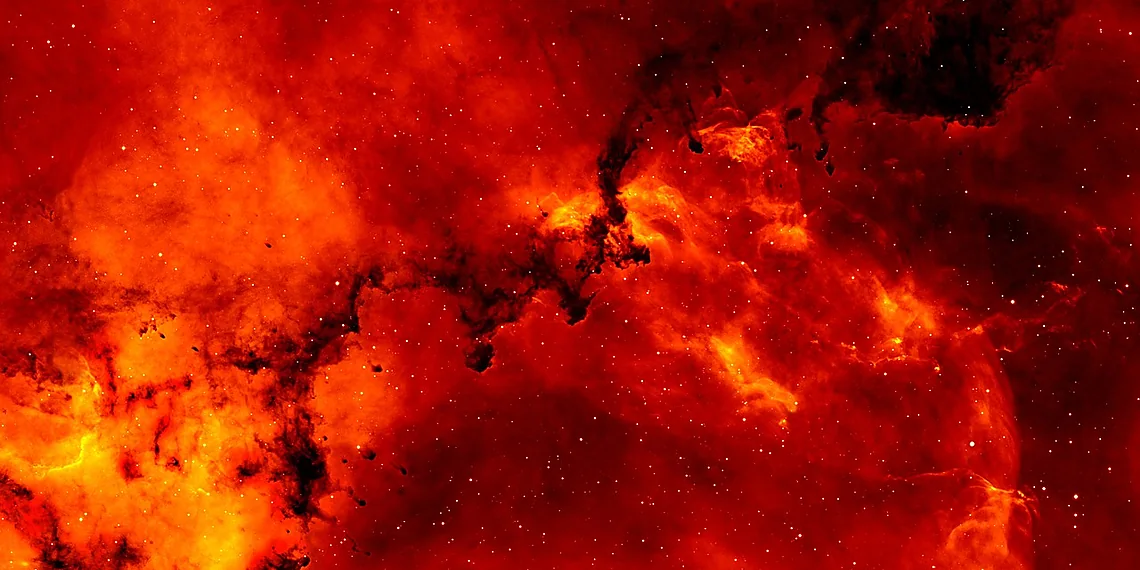


For decades, astronomers have puzzled over peculiar anomalies appearing in distant galaxies – faint, reddish points of light dubbed ‘Little Red Dots.’ These enigmatic features initially seemed like mere quirks in astronomical data, easily dismissed as noise or instrumental errors. However, their persistence and prevalence across vast cosmic distances have steadily fueled a growing intrigue within the scientific community; they represent something genuinely unusual happening far beyond our own solar system.
The mystery surrounding these ‘Little Red Dots’ deepened with each subsequent observation. Their colors suggested extremely hot objects, yet their faintness hinted at surprisingly low luminosity – a contradiction that defied straightforward explanations based on known astrophysical phenomena like supernovae or active galactic nuclei. Theories ranged from rapidly cooling stellar remnants to entirely new classes of compact objects, but concrete answers remained elusive.
Now, the James Webb Space Telescope (JWST) is poised to revolutionize our understanding of these cosmic enigmas. With its unprecedented infrared sensitivity and unparalleled resolution, JWST can peer through dust clouds and analyze the composition of distant objects with remarkable precision, finally offering a chance to decode the secrets behind these ‘Little Red Dots’ and potentially rewrite our textbooks on stellar evolution and galaxy formation.
What Are Little Red Dots?
Little Red Dots (LRDs) are a recently discovered class of extremely distant galaxies that have become a significant focus for astronomers utilizing the James Webb Space Telescope (JWST). The name itself is quite descriptive – these objects appear as tiny, remarkably red points of light when observed through JWST’s powerful instruments. Their initial identification was surprisingly perplexing; existing models of galaxy formation struggled to account for their existence and characteristics, leading to considerable excitement and a flurry of research aimed at understanding what they truly are.
What makes LRDs so unusual begins with their visual appearance. They’re exceptionally small, often appearing just a few hundred light-years across – dwarfed by the Milky Way’s vastness. Crucially, these galaxies reside at incredibly large distances from Earth, meaning we’re observing them as they existed only a few hundred million years after the Big Bang. The ‘red’ in their name isn’t merely an aesthetic quirk; it signifies that the light emitted by these ancient stars has been significantly redshifted due to the expansion of the universe – a fundamental consequence of traveling such immense distances through time and space.
The unexpected prevalence of LRDs is another key factor contributing to the puzzle. Early JWST observations have revealed far more of them than anticipated, challenging established theories about how galaxies formed in the early Universe. Previously, astronomers expected that galaxies at these extreme redshifts would be larger and more evolved, having already undergone significant mergers and star formation events. The discovery of numerous small, red, and surprisingly compact LRDs has forced a reevaluation of our understanding of the processes driving galaxy evolution shortly after the cosmos began.
The distinct characteristics – their tiny size, immense distance, and striking redness – combined with their unexpectedly high numbers, have made LRDs a top priority for JWST investigations. Scientists are diligently analyzing data from these observations to determine their stellar populations, chemical compositions, and overall evolutionary histories. Unraveling the mystery of the Little Red Dots promises to provide invaluable insights into the formative years of our universe and refine our models of galaxy formation.
The Unexpected Appearance

Little Red Dots (LRDs) are a newly discovered class of galaxies appearing in early Universe observations from the James Webb Space Telescope (JWST). Their name derives directly from their visual appearance: they appear as remarkably small, faint points of light, distinguished by an unusual and striking red color. These objects are incredibly distant, meaning we are observing them as they existed just a few hundred million years after the Big Bang – a period when the Universe was in its infancy.
The diminutive size of LRDs is surprising; astronomers initially anticipated that galaxies at such early epochs would be larger and more diffuse structures. Their extreme distance also presents challenges, requiring exceptionally sensitive instruments like JWST to detect them. The distinct red color isn’t a simple consequence of redshift (the stretching of light due to the expansion of the Universe). Instead, it suggests a unique composition or star formation process within these galaxies – often indicating older stellar populations.
The prevalence of LRDs has further complicated our understanding of early galaxy formation. Existing models struggled to account for such small, intensely red objects appearing in significant numbers so soon after the Big Bang. Their existence forces astrophysicists to re-evaluate theories about how galaxies initially formed and evolved, prompting new research into their underlying physical properties and potential roles in shaping the Universe we see today.
JWST’s Breakthrough: Black Holes at Dawn
The James Webb Space Telescope (JWST) continues to reshape our understanding of the early universe, and its latest revelation concerning the ‘Little Red Dots’ (LRDs) is particularly groundbreaking. Recent observations have confirmed the existence of an actively growing supermassive black hole residing within CANUCS-LRD-z8.6, a galaxy observed just 570 million years after the Big Bang. This discovery challenges existing models of galactic and black hole formation in the early cosmos, providing unprecedented insight into how these behemoths emerged so rapidly.
Detecting this actively feeding black hole wasn’t straightforward. Researchers leveraged JWST’s powerful spectroscopic capabilities to analyze light emitted from CANUCS-LRD-z8.6. Spectroscopy allows scientists to dissect light into its constituent wavelengths, revealing the chemical composition and motion of the emitting material. Alongside this, infrared imaging provided crucial spatial information. The telltale sign was a dramatic increase in emission lines, specifically those associated with rapidly moving gas being heated by intense gravitational forces as it spirals into the black hole – a clear indication of accretion at an astonishing rate.
The implications of finding such a mature black hole so early in cosmic history are significant. Current theories suggest that supermassive black holes take considerable time to grow, requiring consistent fuel supply over billions of years. CANUCS-LRD-z8.6’s black hole suggests either extremely rapid initial growth, or perhaps entirely new mechanisms for black hole seeding and accretion were at play in the early universe. Further investigation into LRDs and their associated black holes will be crucial to refine our cosmological models.
This discovery underscores JWST’s transformative power and its ability to peer back to the dawn of galaxies. The presence of a rapidly accreting black hole within CANUCS-LRD-z8.6, one of these enigmatic Little Red Dots, is just the beginning of what promises to be a revolution in our understanding of galaxy evolution and the role supermassive black holes played in shaping the universe we see today.
Finding the Engine Within

The James Webb Space Telescope (JWST) has made a groundbreaking discovery, revealing the presence of a rapidly accreting supermassive black hole residing within the galaxy CANUCS-LRD-z8.6, one of the elusive ‘Little Red Dots’ (LRDs). These LRDs are small, incredibly distant galaxies observed in the early universe, and understanding their nature has been a key focus for astronomers. This finding marks the earliest detection of such an actively growing black hole, pushing back our knowledge of how these cosmic engines formed and evolved just 570 million years after the Big Bang.
The detection relied on two primary JWST techniques: infrared imaging and spectroscopy. Initial observations using JWST’s Near-Infrared Camera (NIRCam) revealed unusually bright emission from the galaxy’s core. Subsequent spectroscopic analysis, utilizing NIRSpec, allowed scientists to dissect the light emitted by this central region. The spectrum showed a characteristic ‘big blue bump’ feature, indicative of an accretion disk – a swirling mass of gas and dust feeding into a black hole – along with broad hydrogen emission lines significantly broadened by the intense gravitational effects near the event horizon.
The evidence strongly suggests that CANUCS-LRD-z8.6’s black hole is actively consuming material at a prodigious rate, far exceeding what was previously thought possible for galaxies of this size and age in the early universe. This discovery challenges existing models of galaxy formation and black hole seeding, implying that supermassive black holes may have formed much faster than initially predicted or were seeded by more massive objects earlier in cosmic history. Further investigation is planned to characterize the black hole’s mass and accretion rate with greater precision.
Rewriting Galaxy Formation Theories
The James Webb Space Telescope’s (JWST) observations of ‘Little Red Dots’ (LRDs), these surprisingly bright and distant galaxies appearing strikingly red in Webb’s images, are forcing astrophysicists to fundamentally rethink our understanding of galaxy formation. Initially, models predicted that the early universe was a relatively calm period, with smaller galaxies gradually merging over billions of years to form the massive structures we see today. The discovery of LRDs, and particularly their association with unexpectedly large black holes so soon after the Big Bang (just 570 million years in some cases), throws this timeline into disarray. These aren’t just minor adjustments; they represent a potential paradigm shift in how we conceptualize the universe’s infancy.
The core of the challenge lies in the rapid growth required for these supermassive black holes to reach such significant sizes so early on. Current models struggle to explain how enough matter could have coalesced and fallen into a nascent black hole within that incredibly short timeframe. This necessitates revisiting both the mechanisms driving black hole seed formation – whether they originated from collapsing stars, dense star clusters, or something entirely different – and the rate at which galaxies can accrete gas and dust. The sheer abundance of LRDs observed by JWST suggests this rapid growth wasn’t an isolated phenomenon but a more common occurrence in the early universe.
Consequently, scientists are now exploring revised models that propose significantly faster galaxy formation rates and potentially different pathways for black hole seeding and accretion. Perhaps dark matter halos grew larger more quickly than previously thought, allowing galaxies to form earlier and accumulate mass at accelerated speeds. Alternatively, the efficiency of star formation in these early galaxies might have been much higher, providing a constant stream of material to feed both stars and central black holes. The ‘Little Red Dots’ are acting as crucial signposts, demanding that we refine our theoretical frameworks to better account for their existence.
Ultimately, unraveling the mystery of the Little Red Dots promises not just to clarify how galaxies and black holes formed in the early universe but also to illuminate fundamental aspects of cosmic evolution. The JWST’s continued observations will undoubtedly provide more data points, allowing researchers to test these new theories and paint a more complete picture of this pivotal era – an era previously shrouded in darkness that is now being brought into sharp focus by Webb’s powerful gaze.
Challenging the Timeline
The James Webb Space Telescope’s (JWST) observations of ‘Little Red Dots’ – extremely distant, compact galaxies – are revealing unexpected supermassive black holes forming remarkably early in the Universe’s history. Specifically, these black holes appear to have formed within just a few hundred million years after the Big Bang, significantly earlier than predicted by current cosmological models. The existence of such massive black holes so soon after the universe’s birth presents a fundamental challenge because it implies they grew incredibly quickly.
Current galaxy formation theories generally posit that galaxies gradually assemble over time through mergers and accretion of smaller structures. Black holes within these galaxies were thought to grow proportionally, starting small and steadily increasing in mass as their host galaxies evolved. Finding supermassive black holes already established at such an early epoch suggests a much faster timeline for both galaxy and black hole growth – potentially requiring initial black seeds to be significantly larger than previously estimated or that accretion rates were far higher.
This discovery is prompting astrophysicists to re-evaluate the mechanisms driving black hole formation and galaxy evolution. Scientists are now exploring various possibilities, including the potential role of primordial black holes (formed directly from density fluctuations in the early universe) as seeds, or revised models for gas dynamics and accretion processes that allow for more rapid black hole growth. The ‘Little Red Dots’ and their supermassive companions offer a unique window into the Universe’s infancy, forcing us to refine our understanding of how structures formed during this crucial period.
Future Directions & Unanswered Questions
The initial observations by the James Webb Space Telescope have opened a fascinating window into the nature of Little Red Dots (LRDs), but they’ve also highlighted just how much we still don’t know. Future JWST observing time is already being planned to target a wider range of LRDs, and at different wavelengths. Specifically, scientists are eager to use Webb’s Mid-Infrared Instrument (MIRI) to probe the dust content within these galaxies – crucial for understanding star formation rates and how effectively they’re converting gas into stars. Further spectroscopic analysis will also be vital; by dissecting the light from LRDs, we can pinpoint the elements present and gain insights into their chemical composition and the processes shaping them.
One of the most exciting possibilities is that LRDs represent a previously unrecognized stage in galaxy evolution – perhaps a more prevalent phase during the early Universe. Current models struggle to fully explain how galaxies could assemble so quickly and intensely at such high redshifts. Could these ‘redness’ properties be indicative of particularly rapid starburst activity, or are we observing something fundamentally different from what we see in modern galaxies? Determining whether LRDs evolve into the larger, more familiar galaxies we observe today remains a key question that requires longitudinal studies – essentially, catching them at various stages of their development.
Beyond simply understanding *what* they are, scientists also want to understand *why* we’re seeing so many. The sheer abundance of LRDs in early Webb surveys suggests our current models for galaxy formation may be incomplete or missing a critical ingredient. Are these galaxies particularly efficient at forming stars? Do they exist within denser environments than previously thought? And crucially, how do their properties relate to the larger cosmic web and the distribution of dark matter in the early Universe? Addressing these questions will require combining JWST data with observations from other telescopes across the electromagnetic spectrum.
Ultimately, unraveling the mysteries surrounding Little Red Dots demands a multifaceted approach. Continued JWST observations, combined with theoretical modeling and potentially future ground-based telescope surveys, are essential to refine our understanding of galaxy evolution in the early Universe. The LRDs aren’t just pretty pictures; they represent vital clues to unlocking the secrets of how galaxies – and perhaps even life – arose within the cosmos.
The Quest Continues
The discovery of Little Red Dots (LRDs) has presented a significant puzzle for astrophysicists, prompting ongoing and planned follow-up observations with the James Webb Space Telescope (JWST). Future observing campaigns are focused on obtaining spectroscopic data from a larger sample of LRDs. Spectroscopy will allow scientists to precisely measure their redshifts, confirming distances and enabling detailed analysis of their chemical composition – particularly looking for elements like oxygen and nitrogen which can reveal star formation history and metallicity. This refined understanding is crucial to distinguish between various theoretical models attempting to explain their nature.
One compelling hypothesis suggests that LRDs might represent a previously unrecognized or more common phase in early galaxy evolution, perhaps bridging the gap between the very first galaxies and those we see at later epochs. They could be compact star-forming regions rapidly assembling into larger structures, potentially fueled by efficient gas accretion. However, alternative explanations include unusually metal-poor dwarf galaxies, actively undergoing bursts of star formation, or even misidentified objects due to gravitational lensing effects. Resolving these possibilities requires detailed characterization of their stellar populations and internal kinematics.
Despite the initial JWST findings, key questions remain unanswered regarding LRDs. What is the origin of their distinctive red color – is it solely due to dust extinction, or are there intrinsic properties of their stellar populations at play? How do they fit into the broader context of galaxy evolution and the cosmic web? And crucially, how common were these objects in the early universe, and did their prevalence change over time? Continued JWST observations, combined with theoretical modeling and potentially future ground-based facilities, are essential to unraveling these mysteries and refining our understanding of the dawn of galaxies.
The James Webb Space Telescope has fundamentally reshaped our understanding of cosmic history, delivering breathtaking images and invaluable data that were once unimaginable. From peering through obscuring dust clouds to analyzing the atmospheric composition of distant exoplanets, JWST’s capabilities continue to astound scientists and ignite public imagination alike. We’ve seen galaxies forming at a pace previously thought impossible, and witnessed molecular complexities in nebulae that offer crucial insights into star birth. The subtle shifts in light – those faint ‘Little Red Dots’ representing the earliest galaxies – have provided unprecedented clues about the universe’s infancy, challenging existing models and opening entirely new avenues of research. These observations aren’t just beautiful pictures; they are vital pieces in a vast cosmic puzzle, allowing us to refine our understanding of how everything we see around us came to be. JWST’s meticulous analysis provides a robust foundation for future astronomical endeavors, promising even more groundbreaking discoveries as its mission continues. The telescope’s impact extends far beyond the scientific community, fostering a sense of wonder and inspiring the next generation of explorers and innovators. To stay abreast of these incredible advancements and witness firsthand the unfolding story of our universe, we invite you to follow JWST’s future observations – there’s never been a more exciting time to be an astronomy enthusiast.
Keep your eyes on the skies; the journey has just begun. The data pouring in from JWST is constantly being analyzed and reinterpreted, leading to new questions and, inevitably, new answers. We’ll continue to update ByteTrending with the latest findings as they emerge, bringing you accessible explanations of complex scientific concepts. Don’t miss out on what promises to be a golden age of astronomical discovery – follow us here at ByteTrending for ongoing coverage of JWST’s incredible journey through space and time.
Continue reading on ByteTrending:
Discover more tech insights on ByteTrending ByteTrending.
Discover more from ByteTrending
Subscribe to get the latest posts sent to your email.







