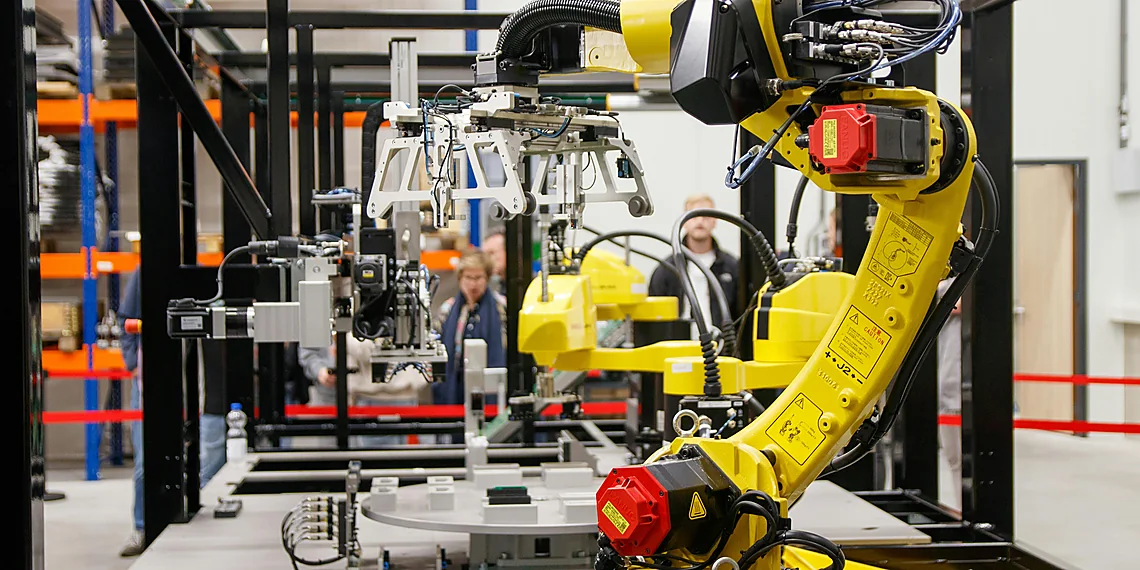
Imagine a world where robots don’t just follow instructions; they learn, adapt, and solve problems autonomously, much like humans do. That future isn’t science fiction anymore – it’s rapidly approaching thanks to an exciting new field reshaping the landscape of robotics. We’re on the cusp of a revolution that moves beyond rigid programming and embraces true intelligence in machines capable of interacting with and understanding our physical world.
For years, robots have been impressive tools, but often limited by their pre-defined capabilities. Now, researchers are pushing boundaries to create systems that can react intelligently to unforeseen circumstances, improve performance through experience, and even collaborate more effectively with humans. This transformative shift is being driven by what’s increasingly referred to as Physical AI.
A recent article on TechXplore sheds light on the breakthroughs fueling this evolution, detailing how advancements in areas like machine learning and sensor technology are converging to unlock unprecedented levels of adaptability for robotic systems. The implications span industries from manufacturing and logistics to healthcare and exploration – essentially anywhere physical tasks require intelligence and flexibility.
What is Physical AI?
Physical AI represents a significant shift from traditional robotics, moving beyond pre-programmed sequences towards robots capable of genuine adaptation and learning within their environment. At its core, Physical AI is the fusion of advanced artificial intelligence algorithms—particularly those involving machine learning—with robotic hardware. It’s not simply about controlling motors; it’s about imbuing robots with the ability to perceive their surroundings, understand tasks, and adjust their actions in real-time based on feedback, much like a human would.
Traditional robotics relies heavily on meticulously crafted code that dictates every movement and action of the machine. While effective for repetitive tasks in controlled settings (think factory assembly lines), these systems struggle with unpredictable scenarios or novel situations. Physical AI sidesteps this limitation by allowing robots to learn directly from experience, using data collected through sensors and actuators. This enables them to handle variations in their environment and perform tasks that would be impossible to pre-program.
A key aspect of Physical AI is its reliance on learning paradigms like reinforcement learning and imitation learning. Reinforcement learning allows a robot to refine its actions by receiving rewards or penalties for specific behaviors – essentially, learning through trial and error. Imagine a robotic arm trying to grasp an object; it adjusts its grip based on whether the object remains in its hand. Imitation learning, conversely, enables robots to learn by observing human demonstrations, mimicking movements and strategies to master complex tasks far more quickly than traditional programming would allow.
This capability unlocks exciting possibilities across numerous fields, from advanced manufacturing and logistics to healthcare and even personal assistance. By moving beyond rigid instructions and embracing a continuous learning loop, Physical AI promises to create robots that are not just tools, but adaptable partners capable of navigating the complexities of the real world.
Beyond Programming: Learning Through Interaction

Traditional robotics largely relies on pre-programmed instructions, where engineers meticulously define every movement a robot should make. This approach is effective for repetitive tasks but struggles with unpredictable or dynamic environments. Physical AI, however, represents a significant departure. It integrates artificial intelligence algorithms directly into robotic hardware, allowing robots to learn and adapt through interaction with their surroundings – much like humans do. Instead of being explicitly told what to do in every situation, these robots can experiment, observe the results, and refine their actions accordingly.
A key component of this learning process is reinforcement learning, where a robot receives rewards or penalties based on its performance. Through countless iterations, it gradually learns which actions lead to desired outcomes. Another vital technique is imitation learning, also known as ‘learning from demonstration.’ Here, the robot observes and attempts to replicate human movements or behaviors – like the robotic arms mirroring the VR user in the example provided. This allows robots to quickly acquire complex skills without requiring extensive pre-programming.
The shift towards Physical AI promises a new era of robotics capable of handling tasks that are currently too complex or unpredictable for traditional programmed systems. From assisting surgeons with intricate procedures to navigating disaster zones and performing delicate assembly line work, the ability of robots to learn through trial and error opens up exciting possibilities across various industries and significantly broadens their utility beyond what was previously achievable.
The Hardware Foundation
The rise of Physical AI isn’t just about clever algorithms; it’s deeply rooted in the advancements – and limitations – of hardware. Unlike traditional AI often confined to data centers, Physical AI demands robots that can operate dynamically in the real world. This requires a significant leap beyond standard industrial robotics, necessitating specialized components engineered for speed, precision, and responsiveness. The very foundation of effective Physical AI rests on the ability to accurately perceive and manipulate physical environments, which translates directly into demanding requirements for sensors, actuators, and the compute power needed to process everything in real-time.
At the heart of this hardware revolution are advanced sensors capable of capturing detailed information about their surroundings. High-resolution cameras aren’t just about image quality; they’re crucial for precise object recognition and pose estimation. Force/torque sensors, often integrated directly into robotic joints, provide vital feedback on interaction forces – allowing robots to gently grasp fragile objects or adapt to unexpected resistance. These sensors generate a constant stream of data, far exceeding the capabilities of older systems, and require sophisticated processing techniques to filter noise and extract meaningful insights.
Complementing these sensory inputs are equally advanced actuators. Traditional motors simply don’t cut it when dealing with complex movements requiring nuanced control and rapid adjustments. We’re seeing increased adoption of technologies like electric motors with high bandwidth encoders for precise position tracking, as well as pneumatic or hydraulic actuators offering greater power density for heavier tasks. The ability to precisely control the force and velocity of these actuators is paramount for safe and effective interaction – whether it’s assembling intricate electronics or performing delicate surgical procedures.
Finally, all this sensory data and actuator control requires substantial computational horsepower. Real-time processing isn’t a luxury; it’s a necessity. Edge computing solutions, where computation happens directly on the robot itself rather than relying on cloud connectivity, are becoming increasingly vital to minimize latency and ensure responsiveness. Specialized AI accelerators, often tailored for specific tasks like visual processing or reinforcement learning, are also being integrated into robotic platforms to handle the intense computational load of Physical AI applications.
Sensors & Actuators: The Body of Intelligence

The burgeoning field of Physical AI hinges critically on advancements in robotics hardware, specifically high-resolution sensing and precise actuation. Unlike traditional robots often relying on pre-programmed paths, Physical AI systems need to dynamically adapt to unpredictable environments. This necessitates a shift towards more sophisticated sensors like advanced camera arrays capable of capturing detailed visual information – not just identifying objects but understanding their texture, material properties, and subtle nuances in lighting. Complementing vision are force/torque sensors embedded within joints and end effectors, providing crucial feedback about the interaction forces between the robot and its surroundings.
Force/torque sensing is paramount for safe and effective physical interaction. These sensors allow robots to ‘feel’ what they’re touching, preventing damage to themselves or their environment while enabling delicate manipulation tasks like assembling intricate electronics or performing surgical procedures. For example, a robot grasping a fragile object can adjust its grip pressure based on force feedback, avoiding crushing it. Similarly, advanced actuators – motors and drive systems capable of incredibly precise movements and rapid responses – are crucial for translating perceived information into actions. These aren’t your standard industrial motors; they often incorporate features like harmonic drives for high gear ratios and minimal backlash.
The combination of these sensors and actuators demands significant computational power to process the real-time data streams and execute complex control algorithms. High-resolution cameras generate vast amounts of visual information, while force/torque sensors provide constant feedback loops. Specialized embedded systems or edge computing solutions are increasingly employed to handle this workload locally, minimizing latency and enabling faster reaction times – a vital characteristic for Physical AI applications requiring dexterity and adaptability in dynamic environments.
Applications & Potential Impact
The emergence of Physical AI is poised to revolutionize industries far beyond traditional robotics applications. Imagine a manufacturing floor where robots don’t just perform repetitive tasks but adapt in real-time to unexpected changes, collaborating seamlessly with human workers – all driven by sophisticated perception and dexterity algorithms. Similarly, logistics could see massive improvements through adaptable warehouse systems capable of handling diverse package sizes and optimizing routes dynamically based on demand fluctuations. The core promise lies in moving beyond pre-programmed sequences towards robots that can understand their environment, learn from experience, and perform complex manipulations with human-like adaptability.
Healthcare stands to gain significantly from Physical AI’s advancements. Surgical robots could move beyond assisting surgeons to performing increasingly intricate procedures autonomously under supervision, leading to greater precision and reduced recovery times. Personalized medicine could benefit from robotic systems capable of handling individualized drug formulations or administering therapies with extreme accuracy. Furthermore, the ability for robots to operate in hazardous environments – whether it’s decommissioning nuclear reactors or conducting disaster relief operations – offers immense potential for protecting human lives while tackling critical challenges.
Beyond these core sectors, Physical AI is unlocking opportunities in areas previously considered impossible. Automated agriculture could see robotic systems tending to crops with unparalleled precision and efficiency, optimizing resource usage and minimizing environmental impact. Deep-sea exploration, mining, and even space exploration are all becoming more feasible as robots equipped with advanced physical intelligence navigate complex terrains and perform intricate tasks without direct human intervention. The ability for these systems to learn and adapt in unstructured environments is key to unlocking this vast potential.
Ultimately, the widespread adoption of Physical AI will require overcoming significant hurdles – including improvements in sensor technology, algorithmic robustness, and safety protocols. However, the transformative impact across industries – from boosting productivity and improving worker safety to enabling entirely new forms of exploration and healthcare – makes it a critical area for continued investment and development.
Transforming Industries: From Factories to Healthcare
Physical AI is poised to revolutionize industrial processes by integrating advanced robotics with real-time data analysis and adaptive learning capabilities. In manufacturing, for example, robots equipped with physical AI can perform complex assembly tasks with greater precision and speed than traditional automation. Companies are deploying these ‘dexterous’ robots not just for repetitive actions but also for handling variable parts and adapting to changing production lines – significantly boosting efficiency and reducing downtime. Logistics is another area seeing transformation; warehouse robots utilizing Physical AI can autonomously navigate dynamic environments, optimize picking routes, and even collaborate safely with human workers.
The healthcare sector stands to benefit immensely from the advancements in Physical AI. Surgical robots already exist, but future iterations promise enhanced precision and minimally invasive procedures guided by AI-powered vision systems. Beyond surgery, physical AI robots are being developed for tasks like medication dispensing, patient transport, and even assisting with rehabilitation exercises – freeing up medical professionals to focus on more complex patient care. Furthermore, the potential exists for personalized medicine where robotic platforms can adapt treatment protocols based on individual patient data and responses.
Beyond established industries, Physical AI is opening doors to applications in challenging environments. Automated agriculture systems utilizing robots capable of identifying and responding to crop needs – from weeding to targeted fertilization – are gaining traction, promising increased yields and reduced resource consumption. Similarly, physical AI-powered robots are being designed for hazardous environment exploration, such as deep sea mapping or inspecting damaged nuclear facilities, minimizing risk to human personnel while collecting crucial data.
Challenges & Future Directions
While Physical AI represents a monumental leap forward, significant hurdles remain before these robotic systems can truly integrate seamlessly into our daily lives. Current iterations often struggle with the ‘reality gap’ – the disconnect between simulated training environments and unpredictable real-world scenarios. This necessitates constant recalibration and adaptation, limiting their autonomy and efficiency. Furthermore, the complexity of building robust hardware capable of handling varied tasks and unexpected events contributes to high development costs, making widespread adoption impractical for many applications.
Safety is paramount as Physical AI systems become more sophisticated. Ensuring these robots operate predictably and avoid causing harm requires rigorous testing and failsafe mechanisms. Researchers are actively exploring methods like reinforcement learning with safety constraints and incorporating human oversight into robotic workflows. Beyond physical safety, concerns about job displacement due to increased automation necessitate proactive discussions and potential retraining initiatives. Addressing algorithmic bias in robot decision-making is also crucial to prevent unfair or discriminatory outcomes.
Cost reduction is another critical area of focus. The advanced sensors, actuators, and computing power required for Physical AI currently contribute to prohibitively high price tags. Efforts are underway to develop more energy-efficient hardware, explore modular robotic designs that allow for customization and reuse of components, and leverage advancements in materials science to create lighter and stronger robotic bodies. Open-source platforms and collaborative research initiatives also hold promise for democratizing access to Physical AI technology.
Looking ahead, the convergence of several disciplines – including advanced sensing, machine learning, computer vision, and human-robot interaction – will be key to unlocking Physical AI’s full potential. Research into explainable AI (XAI) specifically tailored for robotics is gaining traction, aiming to provide insights into a robot’s decision-making process, fostering trust and enabling more effective debugging. The future of Physical AI isn’t just about building smarter robots; it’s about ensuring they are safe, affordable, ethical, and ultimately beneficial to society.
Navigating the Road Ahead: Safety and Ethics
As physical AI systems – robots capable of complex manipulation and interaction with the real world – become more autonomous, ensuring their safe operation is paramount. Current robotic systems often rely on pre-programmed routines or limited sensor data, which can lead to unpredictable behavior when faced with unexpected situations. Potential risks range from minor collisions to serious injuries involving humans or damage to property. Developing robust safety protocols, including fail-safe mechanisms and comprehensive testing procedures, is crucial for widespread adoption and public trust.
Beyond physical safety, ethical considerations surrounding advanced robotics are gaining increasing attention. Concerns about job displacement due to automation are valid and require proactive solutions like workforce retraining programs and exploring new economic models. Furthermore, algorithmic bias embedded within robotic control systems can perpetuate existing societal inequalities; ensuring fairness and equity in robot behavior demands careful data curation and algorithm design. These challenges necessitate interdisciplinary collaboration between engineers, ethicists, policymakers, and the public.
Researchers are actively pursuing solutions to enhance the transparency and reliability of physical AI. Explainable AI (XAI) for robotics aims to make robotic decision-making processes more understandable to humans, allowing for easier debugging, verification, and identification of potential biases. Techniques like visualizing robot planning steps or providing justifications for actions are showing promise in building trust and enabling safer, more ethical deployment of increasingly capable physical AI systems.

The convergence of advanced machine learning, sophisticated sensor technologies, and increasingly capable robotic platforms is undeniably ushering in a new era for automation.
We’ve seen how these advancements are moving beyond pre-programmed routines to enable robots that can adapt, learn from their environment, and even collaborate more effectively with humans – hallmarks of what we’re calling Physical AI.
From warehouse logistics to surgical procedures, the potential applications are vast, promising increased efficiency, improved safety, and entirely new possibilities across numerous sectors.
However, realizing this transformative vision isn’t without its hurdles; challenges remain in areas like robust perception in dynamic environments, energy efficiency for sustained operation, and ensuring ethical considerations guide development and deployment. These complexities demand continued research and collaborative innovation to fully unlock the potential of these systems. The need for more nuanced understanding of human-robot interaction also remains paramount to fostering trust and seamless integration into our lives and workplaces. Addressing these issues is critical for widespread adoption and positive societal impact, guaranteeing that advancements truly benefit everyone involved. It’s a journey requiring not just technical prowess but also careful consideration of the broader implications of increasingly autonomous machines entering our world. The future promises exciting possibilities as Physical AI continues to evolve at an accelerated pace, reshaping industries we can scarcely imagine today.
Continue reading on ByteTrending:
Discover more tech insights on ByteTrending ByteTrending.
Discover more from ByteTrending
Subscribe to get the latest posts sent to your email.