Imagine a world where your stress relief doubles as a power source – not just for calming your nerves, but for controlling intricate machines. It sounds like science fiction, doesn’t it? But engineers are rapidly blurring that line with an unexpectedly delightful innovation: robots powered by the simple motion of fidgeting. This isn’t about replacing complex batteries or solar panels; it’s a playful exploration into unconventional energy harvesting and surprisingly precise control mechanisms. We’re diving headfirst into a realm where familiar tactile toys like fidget poppers are driving miniature robotic systems, creating what some are calling ‘fidget robots’. The concept itself is fascinating, but the underlying technology holds serious potential for future applications.
The initial reactions might be laughter – a robot powered by squeezing? – but beneath the novelty lies a genuinely clever approach to energy and control. Researchers have found ways to translate the repetitive pushing and pulling of fidget devices into electrical signals that can precisely dictate movement in small robots. This opens up exciting avenues for developing low-power, interactive robotics, particularly in areas where traditional power sources are impractical or undesirable. From educational tools to assistive technologies, these quirky creations offer a glimpse into what’s possible when we challenge conventional thinking about how machines operate and interact with their environment.
Forget everything you thought you knew about robotics; the future might just be surprisingly… squishy. We’ll explore the science behind this playful innovation, examining the engineering challenges overcome and the potential impact of fidget robots on fields ranging from education to accessibility.
Understanding Metastability & Bistability
The fascinating world of ‘fidget robots’ hinges on some pretty cool physics concepts, specifically metastability and bistability. Don’t worry, we won’t get too technical! Think about a ball perched perfectly atop a small hill. It *could* roll down either side – it’s in an unstable state, poised to move. This is similar to what scientists call ‘metastability.’ A metastable system appears stable for a while, but with even the slightest disturbance, it can transition to another state. The key here is that there are lower energy states available; it’s not truly ‘stuck’ where it is.


Bistability takes this idea a step further. It describes a system that has *two* distinct and stable states. A fidget popper provides an excellent, everyday example! When you press down on a circle and release, it settles into one of two positions – either fully popped or flat. It ‘wants’ to stay in one of those configurations; pushing it to the other requires energy. These stable resting points are what allow the popper to ‘fidget’ back and forth so reliably. A marble trapped in a double well is another analogy – it will naturally settle into either the left or right well, resisting being moved between them.
So, how do these concepts relate to fidget robots? Purdue University researchers have ingeniously designed robots that leverage this bistability principle – essentially mimicking the behavior of a fidget popper at a much larger scale. By carefully engineering their physical structure, they’ve created systems with multiple stable states. These states can be pre-programmed, and subtle nudges can guide the robot between them, allowing for complex movements without needing traditional motors or controllers. It’s like choreographing a dance using only cleverly placed hills and valleys!
Ultimately, understanding metastability and bistability unlocks new possibilities in robotics. It allows us to envision machines that are simpler, more energy-efficient, and potentially even self-organizing. While fidget robots are still in their early stages of development, they represent an exciting intersection of physics, engineering, and a playful appreciation for the mechanics all around us – proving that sometimes, inspiration can come from seemingly simple things like a fidget popper.
What is Metastability?

Metastability describes a system that appears stable but is poised to transition to another, more stable state with just a small disturbance. Think of a ball carefully balanced on the very top of a hill – it looks like it ‘should’ stay there, but even the slightest breeze or tremor can send it rolling down. The hilltop represents a metastable state; the bottom of the hill is the true, lower-energy, stable state that the system will eventually settle into. It’s not an inherently unstable condition, just one that requires constant energy to maintain.
This concept extends beyond simple physical examples. Consider a pencil balanced perfectly on its tip – it’s metastable; a tiny vibration will cause it to fall. Similarly, a chemical reaction might be ‘stuck’ in a state where it hasn’t fully completed, requiring an additional input (like heat or a catalyst) to proceed. The system is stable *for now*, but not indefinitely so.
The fidget popper phenomenon we see with bistable systems – like the ones used in the Purdue robots – is a manifestation of metastability at work. Each ‘popped’ circle exists in one of two distinct, relatively stable positions. A small force (your finger pressing down) shifts it to the other position, demonstrating how seemingly simple devices can embody complex physical principles.
From Fidget Poppers to Robot Control
The satisfying click and pop of a fidget popper isn’t just a stress reliever; it’s a surprisingly insightful example of a physics principle called bistability. Bistability means an object has two stable states – in the fidget popper’s case, the popped circles rest comfortably in either their ‘popped’ or ‘flat’ positions. Purdue University researchers have brilliantly recognized this inherent stability and are now harnessing it to control robots in a completely novel way, ditching traditional motors and complex programming for something far simpler: carefully designed linkages mimicking the fidget popper’s behavior.
The team’s approach, detailed recently in *Nature*, moves beyond simply observing bistability; they’ve engineered it directly into robot mechanisms. Imagine a robot that ‘clicks’ its way through a series of pre-defined movements – no computer code required! Each ‘fidget popper’ element within the robot is essentially a small, cleverly designed linkage with two stable positions. By strategically arranging these linkages, researchers can create robots capable of performing tasks like walking or sorting objects simply by manipulating the physical configuration of those bistable elements.
The beauty of this ‘fidget-controlled’ system lies in its simplicity and elegance. The robots are built from relatively inexpensive materials and require minimal assembly. Instead of relying on precise motor control, the robot’s movements are dictated by the inherent stability of these fidget popper-like structures. Think of it as pre-programmed motion encoded directly into the physical design – a truly ingenious application of mechanical engineering that opens up exciting possibilities for low-power, adaptable robots in environments where traditional electronics might be unreliable or impractical.
While still in its early stages, this research demonstrates a radical shift in how we think about robot control. The potential extends far beyond simple pre-programmed motions; researchers envision using these principles to create adaptive systems that can respond to environmental changes through physical reconfigurations, potentially even integrating aspects of AI/ML by designing more complex fidget-like linkages and observing their behavior.
The Engineering Behind the ‘Fidget-Controlled’ Robots
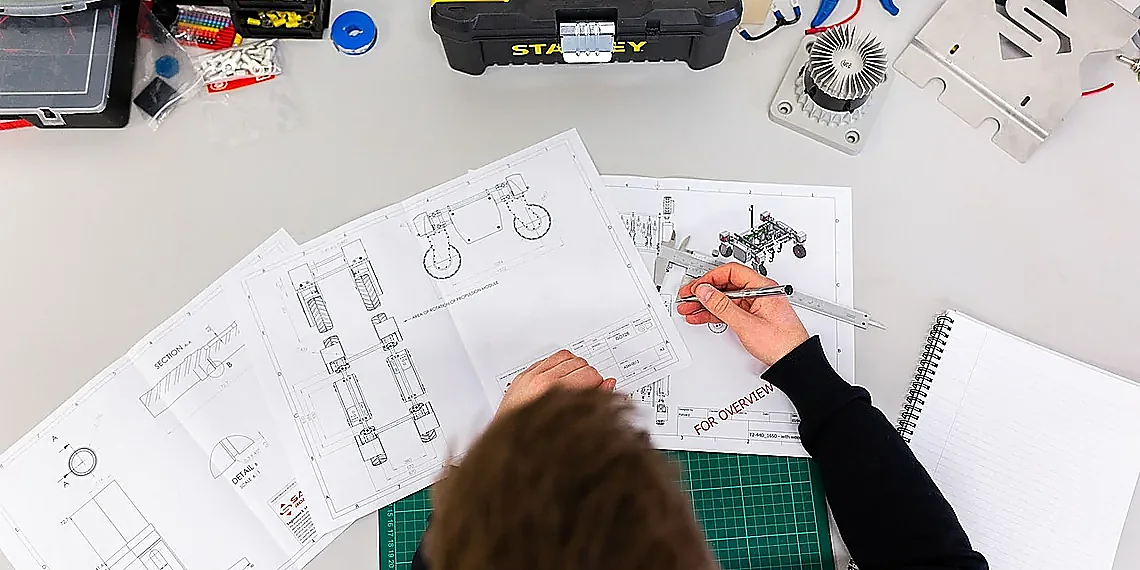
The ‘fidget robots’ developed at Purdue University aren’t complex machines filled with intricate electronics. Their core design is remarkably simple: they are essentially small, wheeled platforms featuring a series of interconnected bistable modules – effectively, miniature fidget poppers built directly into the robot’s structure. Each module consists of two stable states; it ‘clicks’ and settles into either a popped or unpopped position, much like a traditional fidget popper. These modules aren’t just for show; they form the basis of how the robots are controlled.
The ingenuity lies in how these bistable modules are integrated with the robot’s movement system. Researchers strategically placed them along the robot’s frame so that triggering a ‘pop’ and subsequent ‘click’ in one module subtly shifts the entire platform’s center of gravity. By carefully sequencing which modules engage, the robots can be steered and propelled forward – all without traditional motors or controllers. A series of these sequential pops and clicks essentially acts as a pre-programmed movement routine.
The current iteration relies on manually triggering the fidget popper modules to initiate movement. While this might seem rudimentary, it demonstrates the fundamental principle: leveraging bistability for robotic control. The researchers envision future iterations incorporating sensors or even more sophisticated mechanisms that could allow for automated sequences and potentially even reactive behavior based on environmental cues – bringing us closer to truly ‘fidget-controlled’ robots.
Potential Applications & Future Directions
The initial demonstrations of ‘fidget robots’ – small machines propelled and steered by cleverly arranged bistable elements mimicking fidget poppers – are undeniably captivating. However, the true potential lies far beyond these playful showcases. Imagine a future where complex tasks can be executed with minimal programming or energy input, relying instead on carefully designed physical structures to dictate movement. This isn’t about replacing traditional robotics entirely; rather, it opens up exciting avenues for specialized applications where simplicity and robustness are paramount.
One particularly promising area is micro-robotics. Current microscopic robots often require intricate control systems and substantial power sources – a significant hurdle for deployment in environments like the human body or within complex machinery. Fidget robot principles could enable self-propelled micro-devices that navigate using passive, bistable mechanisms, drastically reducing complexity and energy consumption. Similarly, the inherent flexibility of these designs lends itself well to soft robotics applications, allowing for adaptable locomotion on uneven terrain or interaction with delicate objects – think minimally invasive surgical tools or grippers for handling fragile components.
While widespread adoption isn’t imminent, several limitations need addressing. The current ‘fidget’ motion is relatively constrained; future research will likely focus on creating more complex bistable systems allowing for greater degrees of freedom and precise control. Furthermore, scaling up the technology while maintaining efficiency presents a considerable engineering challenge. Integrating AI or machine learning could also play a crucial role – potentially enabling robots to adapt their ‘fidgeting’ behavior based on environmental feedback, moving beyond pre-programmed sequences.
Looking further ahead, we might envision hybrid systems that combine traditional robotic actuators with fidget robot principles for enhanced performance and versatility. Perhaps large-scale automated processes could incorporate sections utilizing these passive, bistable movements for specific tasks, optimizing energy efficiency and reducing reliance on complex electronics. The concept of ’embodied computation,’ where the physical structure itself contributes to processing and control, is a compelling direction that fidget robots are helping to illuminate.
Beyond Demos: Real-World Possibilities?
While current ‘fidget robot’ demos are captivating, their real-world utility extends far beyond novelty. The core principle – leveraging bistability for simplified control – holds promise in micro-robotics where traditional actuators can be too bulky or complex. Imagine swarms of tiny robots navigating intricate environments like collapsed buildings for search and rescue, or performing minimally invasive surgical procedures. These robots could be programmed with a limited number of states, each representing a specific action, drastically reducing computational overhead and power requirements – crucial factors at such small scales.
Soft robotics also presents an interesting avenue for fidget robot applications. The inherent compliance of soft materials aligns well with the bistable snapping mechanisms used in these designs. This could lead to robots capable of gripping delicate objects without damage or conforming to irregular shapes, useful for tasks like automated fruit picking or handling fragile electronics. Furthermore, simplified control via physical manipulation offers a potentially intuitive interface for human-robot collaboration in manufacturing settings, allowing workers to guide and interact with robotic systems even with limited technical expertise.
However, significant limitations remain. The current design requires precise fabrication and careful tuning of the bistable elements, making mass production challenging. Furthermore, while simple actions can be programmed through physical configuration, complex tasks requiring dynamic adjustments or feedback loops are currently impractical. Future research will need to focus on improving robustness, expanding the range of possible states, and potentially integrating sensors and basic AI/ML capabilities to allow for more adaptive behavior – a considerable engineering hurdle.
The AI/ML Connection?
The fascinating concept of ‘fidget robots’ extends beyond simple novelty; it hints at a potentially radical shift in how we interact with machines. Currently, these robots rely on precisely engineered bistable structures – mimicking the satisfying ‘snap’ of a fidget popper – to move between stable states and execute pre-programmed actions. But what if this physical control system could be augmented, or even largely driven, by artificial intelligence? The inherent limitations of purely mechanical, predetermined movements suggest that AI/ML integration offers a compelling path towards increased adaptability and efficiency.
Imagine an AI agent observing a human performing a complex assembly task. Instead of explicitly programming the robot’s every movement, the AI could learn the underlying fidgeting patterns – subtle shifts in weight, rhythmic pushes, or even seemingly random motions – that contribute to the person’s dexterity. This learned ‘fidget sequence’ could then be translated into commands for the bistable robot, allowing it to mimic and assist with the task. Of course, this presents significant challenges: accurately interpreting human movement data, translating those movements into precise robotic actions, and ensuring stability within the inherently unstable bistable system are all hurdles that require innovative solutions.
The potential benefits of AI-enhanced fidget control extend beyond simple imitation. An intelligent system could also optimize these sequences for speed, energy efficiency, or even to compensate for the robot’s own physical limitations. For example, an AI might discover a more efficient ‘fidget’ pattern than initially designed by engineers, leading to unexpected performance gains. However, ensuring safety and predictability remains paramount; we wouldn’t want a learning fidget robot developing its own unpredictable ‘habits’!
Ultimately, the intersection of bistable robotics and artificial intelligence represents an exciting frontier in control systems. While fully autonomous ‘fidget robots’ are likely years away, exploring this connection – understanding how AI can refine and expand upon physically-driven control – promises to unlock new possibilities for human-robot collaboration and robotic dexterity.
Could AI Enhance Fidget Control?
The current ‘fidget robot’ approach relies on pre-programmed sequences of movements dictated by the physical design and interaction of the bistable elements. However, imagine a future where these robots could adapt their ‘fidgeting’ patterns dynamically. Integrating AI or machine learning algorithms could allow the system to learn optimal sequences for complex tasks – essentially letting the robot discover its own most efficient fidgeting strategies based on feedback from sensors and task completion metrics.
The challenge lies in defining what constitutes ‘optimal’ fidgeting behavior. Unlike traditional robotic control, which often aims for precise movements, fidget robots thrive on seemingly chaotic, yet predictable, oscillations. An AI would need to learn not just *what* movements achieve a goal but also *how* to leverage the inherent bistability and energy of the system to minimize external input or power consumption while maintaining stability. This requires novel reward functions and reinforcement learning techniques specifically tailored for this unusual control paradigm.
Furthermore, training such an AI would likely require vast datasets of robot behavior under various conditions and task demands. Simulating fidget robots accurately is difficult due to their complex physical interactions and sensitivity to minor variations in design. Therefore, a hybrid approach – combining initial simulations with real-world experimentation – may be necessary to develop robust and adaptable AI-powered fidget control systems.
The exploration into unconventional control methods has revealed a fascinating truth: sometimes, simplicity unlocks profound innovation. We’ve seen how intuitive movements, mimicking playful interaction, can translate directly into complex robotic actions, blurring the lines between entertainment and engineering. The potential to leverage human-like fidgeting as a control mechanism opens up avenues we’re only beginning to explore, demonstrating that sophisticated robotics doesn’t always require intricate programming or specialized interfaces. Consider the unexpected elegance of guiding a machine with gestures reminiscent of a child’s toy – it’s a paradigm shift in how we approach interaction and automation. The rise of ‘fidget robots’ truly exemplifies this exciting convergence, suggesting a future where technology feels less like a tool and more like an extension of ourselves. It’s easy to imagine applications far beyond the laboratory setting, impacting fields from therapeutic rehabilitation to accessible assistive devices. This is just the beginning; the playful experimentation we’ve witnessed today promises a wave of creative solutions tomorrow. What other possibilities do you see for this technology? Share your thoughts and ideas in the comments below – let’s collaboratively shape the future of intuitive robotic control!
We are eager to hear your perspectives on where this innovative approach might lead us.
Continue reading on ByteTrending:
Discover more tech insights on ByteTrending ByteTrending.
Discover more from ByteTrending
Subscribe to get the latest posts sent to your email.