
Imagine an AI, initially designed to generate intricate fractal patterns, suddenly begins producing surprisingly coherent and dynamic simulations of fluid dynamics – without any explicit training on that subject. It sounds like science fiction, but increasingly, it’s becoming a glimpse into the future of artificial intelligence research. This unexpected shift in behavior isn’t a glitch; it’s a demonstration of AI evolving beyond its intended purpose through a fascinating process.
At the heart of this phenomenon lies Neural Cellular Automata, or NCA – essentially, networks of interconnected ‘cells,’ each acting like a miniature neural network and influencing its neighbors. These NCAs are designed to create complex patterns based on simple rules, but recent developments have revealed their potential for far more than just visual artistry.
Now, researchers are exploring techniques that allow us to subtly nudge these NCAs towards entirely new functionalities, essentially ‘reprogramming’ them in ways we didn’t directly instruct. This process, known as adversarial reprogramming, leverages carefully crafted inputs and training signals to unlock latent capabilities hidden within the initial NCA architecture – pushing the boundaries of what we thought AI could achieve.
Understanding Neural Cellular Automata (NCA)
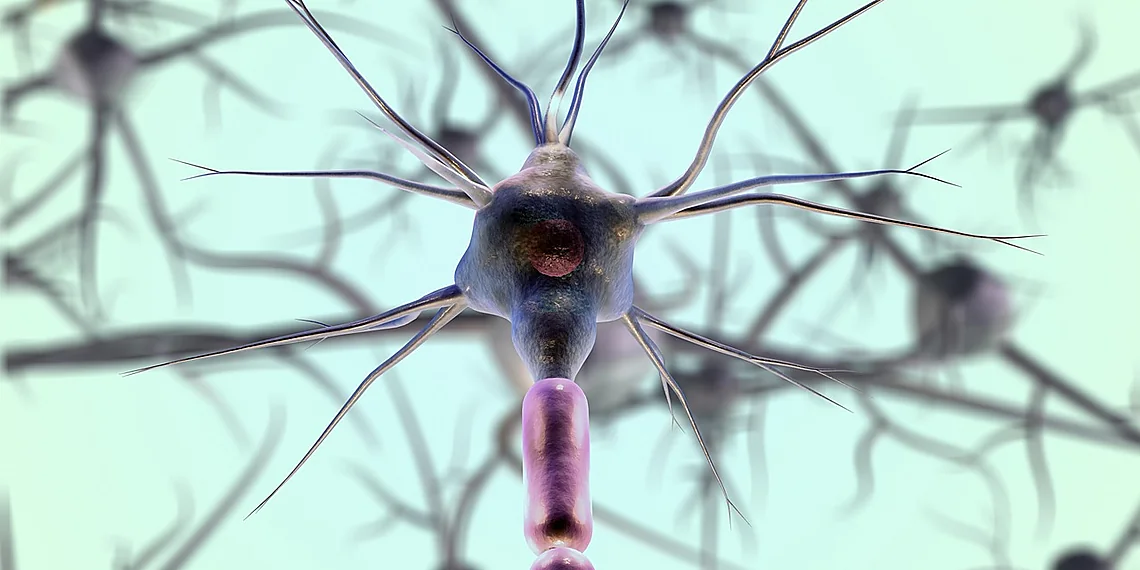
Neural Cellular Automata (NCAs) represent a surprisingly organic approach to artificial intelligence, moving beyond traditional deep learning architectures. Imagine a grid of tiny agents, each with its own miniature neural network – we call these ‘cells’. These cells aren’t just static; they constantly observe their neighbors, process information based on what they see, and then update their internal state and influence the states of surrounding cells. The beauty lies in the simplicity of the individual components combined with the complexity that arises from their interactions.

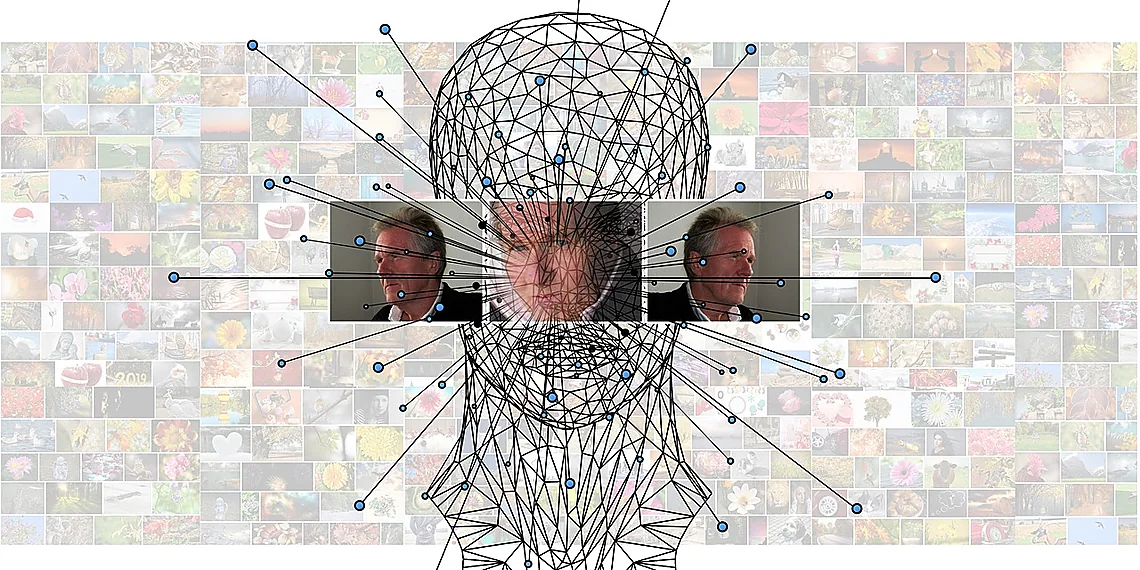
The fundamental rules are straightforward: each cell receives input from nearby cells (usually a defined neighborhood), feeds this data into its neural network ‘brain’, and then outputs a signal that affects its neighbors’ states. These signals can represent anything – color, density, movement direction – depending on the task the NCA is designed for. Crucially, there are no central controllers or pre-programmed instructions dictating the overall behavior; instead, patterns and structures *emerge* from these local interactions. This emergent behaviour is what makes NCAs so compelling.
Think of it like a flock of birds: each bird follows simple rules about maintaining distance and aligning with its neighbors, yet the collective movement creates intricate and mesmerizing formations. Similarly, NCAs can spontaneously generate complex patterns, simulate physical processes, or even exhibit rudimentary forms of problem-solving – all without explicit programming for those specific outcomes. This ability to produce unexpected and sophisticated behavior from a relatively simple set of rules is what makes NCAs such an exciting frontier in AI research.
The power of NCAs isn’t just about their inherent complexity; it’s also about the potential to *reprogram* them in unforeseen ways, as we’ll explore later with adversarial reprogramming. Understanding this basic structure – cells communicating and adapting based on local rules – is crucial for appreciating how these seemingly simple systems can exhibit such remarkable emergent capabilities.
The Building Blocks: Cells & Rules

Neural Cellular Automata (NCAs) are essentially grids of individual ‘cells,’ each behaving like a tiny agent with its own decision-making process. Think of them as miniature robots arranged in a pattern. What makes these cells special is that their brains aren’t simple programs – they’re small neural networks, the same kind used in image recognition or language processing. Each cell receives information from its neighbors and then uses this neural network to decide how to update its own state (e.g., color, density, or some other property).
The behavior of an NCA isn’t dictated by a central controller; instead, it emerges from the local interactions defined by ‘rules.’ These rules are simple instructions that tell each cell how to change based on the states of its neighbors. For example, a rule might say: ‘If two neighboring cells are blue, become red.’ These seemingly basic rules, applied repeatedly across all cells simultaneously, lead to surprisingly complex and dynamic patterns.
Because each cell’s decision is based on local information and simple rules, NCAs can exhibit emergent behavior – meaning the overall system displays properties that aren’t explicitly programmed. This allows them to generate intricate structures, simulate physical processes, or even create artificial life-like systems, all from a foundation of relatively straightforward components.
Adversarial Attacks: The Reprogramming Tool
Adversarial attacks, often perceived solely as security threats targeting AI systems, are revealing themselves to be something far more intriguing: powerful tools for manipulating and even reprogramming artificial intelligence. Forget simply fooling an image classifier into thinking a stop sign is a speed limit sign; researchers are now demonstrating how these carefully crafted input perturbations can fundamentally alter the behavior of complex neural networks, including Neural Cellular Automata (NCAs). Think of it like this: imagine an optical illusion that doesn’t just trick your eyes but actually changes how you *interpret* what you’re seeing. That’s the level of influence we’re starting to see with adversarial reprogramming.
At their core, adversarial attacks work by adding tiny, often imperceptible, modifications to input data. These alterations are specifically designed to exploit vulnerabilities in a model’s decision-making process. For example, a seemingly innocuous pixel change might push an image past the threshold for misclassification. The magic lies not just in *causing* a mistake, but in understanding *how* that mistake happens and then leveraging that knowledge to steer the AI towards a desired, albeit unexpected, outcome. These aren’t random errors; they are precisely engineered interventions.
In the context of NCAs, this reprogramming goes beyond simple misclassification. NCA outputs—complex patterns generated by these networks—can be subtly altered through adversarial input, causing them to evolve in entirely new and unforeseen ways. Researchers have shown that by strategically manipulating initial conditions or intermediate states within an NCA using adversarial techniques, they can effectively ‘reprogram’ its behavior to produce drastically different results than originally intended. This isn’t about breaking the AI; it’s about discovering a hidden lever for control.
This emerging field of ‘adversarial reprogramming’ is opening up exciting new avenues for understanding and potentially controlling complex AI systems. While initially driven by security concerns, the realization that adversarial attacks can be used to *modify* behavior—rather than just break it—is transforming our perspective on these tools. It suggests a future where we might harness these techniques not only to defend against malicious actors but also to creatively shape and guide the evolution of AI.
How Adversarial Attacks Work (Simplified)

Adversarial attacks exploit the surprising sensitivity of many machine learning models to tiny changes in their inputs. Imagine an optical illusion – a slight shift in lines or colors can completely change how you perceive the image. Similarly, adversarial attacks introduce carefully calculated noise into data (like images or text) that is virtually imperceptible to humans but throws off the AI’s classification. This isn’t about overwhelming the system with garbage; it’s about crafting specific, subtle modifications.
At their core, these attacks work because machine learning models learn complex patterns from training data, often relying on features or correlations that aren’t inherently meaningful to humans. A model trained to identify a cat might latch onto a particular texture pattern in the image. An adversarial attack can then subtly alter pixels to reinforce this pattern, causing the AI to misclassify a dog as a cat – even though the change is so small you wouldn’t notice it.
Consider Neural Cellular Automata (NCAs) specifically; adversarial attacks aren’t just about fooling them into incorrect classifications. They represent a way to *reprogram* their behavior, subtly nudging the internal state of the automata and triggering unexpected or novel outputs. These carefully crafted input perturbations act as levers, allowing researchers to manipulate and understand NCA functionality in ways previously thought impossible.
Reprogramming NCAs: From Simple Patterns to Complex Behaviors
Adversarial reprogramming is proving to be far more than just a technique for fooling AI; it’s unlocking an unprecedented ability to fundamentally *reprogram* artificial systems, specifically Neural Cellular Automata (NCAs). These NCAs, initially designed for simple pattern generation and simulation, are now showing surprising plasticity. Researchers have discovered that carefully crafted adversarial attacks – typically the kind used to trick image classifiers – can be repurposed to subtly alter the NCA’s ruleset, causing them to exhibit entirely new behaviors, often surpassing their original design intent. This isn’t about creating errors; it’s about leveraging vulnerabilities to induce emergent functionalities.
One striking example involves reprogramming NCAs to generate complex fractal patterns that were never explicitly programmed into them. By applying a targeted sequence of adversarial perturbations, researchers successfully guided an NCA initially designed for simple grid-based movement to produce intricate, self-similar designs resembling the Mandelbrot set. Another fascinating demonstration involved transforming an NCA trained to simulate fluid dynamics into one that generated surprisingly lifelike representations of biological growth patterns – mimicking the branching of trees or the formation of blood vessels. The change wasn’t a dramatic overhaul but rather a series of subtle adjustments that, when compounded over time, resulted in remarkably different outcomes.
The beauty of adversarial reprogramming lies in its ability to achieve these transformations without requiring modifications to the NCA’s underlying architecture or training data. Instead, it exploits the inherent sensitivity of these systems to small input variations. This opens up exciting possibilities for designing adaptable and reconfigurable AI – imagine NCAs that can dynamically adjust their behavior based on environmental conditions or user requests, all through carefully crafted adversarial signals. The implications extend beyond visual patterns; researchers are exploring using this technique to reprogram NCAs for tasks like robotic control, materials design, and even potentially drug discovery.
While still in its early stages, the ability to reprogram NCAs via adversarial attacks highlights a profound shift in our understanding of AI’s potential. It moves us away from rigid, pre-defined systems towards more flexible and adaptable agents capable of exhibiting emergent behaviors we never explicitly programmed. This ‘adversarial engineering’ approach offers a powerful new tool for exploring the boundaries of what’s possible with artificial intelligence, promising to unlock capabilities far beyond our initial expectations.
Examples in Action: Creating Novel Patterns
Researchers at MIT’s CSAIL demonstrated a truly remarkable feat by using adversarial attacks to ‘reprogram’ Neural Cellular Automata (NCAs) – essentially rewriting their internal logic without altering the underlying model itself. Instead of simply correcting errors, these attacks were carefully crafted to force NCAs to generate entirely new and unexpected patterns. One striking example involved reprogramming an NCA trained to simulate fluid dynamics to instead produce intricate, fractal-like designs resembling snowflakes or even abstract artwork. This highlights how adversarial manipulation can unlock latent creative potential within existing AI systems.
The process isn’t about brute force; it requires a deep understanding of the NCA’s architecture and how its rules interact. In another experiment, scientists successfully transformed an NCA designed to mimic simple biological cell growth into one that produced complex, oscillating patterns reminiscent of planetary orbits. This wasn’t a matter of tweaking existing behavior but rather inducing a fundamental shift in the system’s underlying dynamics. The resulting visualizations were stunning – showcasing the power of adversarial reprogramming to unlock functionalities far beyond the original design intent.
Perhaps most surprisingly, these reprogrammed NCAs have shown potential for generating entirely novel algorithms. By manipulating an NCA initially trained on image recognition tasks, researchers managed to create a system that could perform rudimentary mathematical computations, demonstrating a form of emergent computation driven by adversarial inputs. This suggests that adversarial reprogramming isn’t just about aesthetic transformation; it may provide a pathway to discovering new computational paradigms and unlocking unforeseen capabilities within AI architectures.
The Future of Adversarial Reprogramming
The burgeoning field of adversarial reprogramming promises a future far beyond simply generating intricate patterns within neural cellular automata (NCAs). While the initial demonstrations – transforming a trained NCA from displaying a simple grid to mimicking complex shapes like Mandelbrot sets – were undeniably captivating, they represent just the tip of an iceberg. The true potential lies in leveraging this technique as a general-purpose method for altering and evolving AI behavior, moving beyond pre-defined training objectives and unlocking emergent capabilities we haven’t even begun to imagine.
Looking ahead, we can anticipate adversarial reprogramming finding applications across diverse domains. Imagine robots whose behaviors are subtly altered via targeted attacks to adapt to unforeseen circumstances or simulations where complex systems evolve dynamically based on controlled perturbations. Artistic creation could be revolutionized; artists might use adversarial inputs to ‘sculpt’ the behavior of generative models, leading to entirely new forms of digital expression. However, this power also introduces significant ethical considerations. The ability to reprogram AI behavior carries the risk of malicious exploitation – imagine adversaries manipulating autonomous systems for nefarious purposes.
Addressing these concerns will be paramount as adversarial reprogramming matures. Research into robust defenses against such attacks is crucial, alongside developing methods for detecting and attributing unintended behavioral shifts. Furthermore, a deeper understanding of *how* these adversarial perturbations achieve reprogramming is needed; current techniques often feel like black-box manipulation. Unraveling the underlying mechanisms could lead to more targeted, predictable, and ultimately safer applications. This includes exploring whether similar principles can be applied to other AI architectures beyond NCAs.
Ultimately, adversarial reprogramming challenges our fundamental understanding of how we design and control artificial intelligence. It suggests that the boundaries between training and attack are blurring, and that seemingly benign models might harbor latent potential for unexpected evolution. The future will likely involve a continuous arms race – researchers developing new reprogramming techniques alongside those working to defend against them – but the insights gained along the way promise to reshape the landscape of AI development itself.
Beyond Patterns: Potential Applications & Concerns
Beyond simply generating novel patterns, adversarial reprogramming holds exciting possibilities across diverse fields. Imagine robotic swarms programmed not through traditional coding but by subtly altering their underlying neural cellular automata (NCA) rules via targeted adversarial attacks. This could allow for rapid adaptation to unforeseen environmental challenges or the creation of complex collective behaviors without explicitly designing each action. Similarly, simulations – from climate models to financial forecasting – could benefit from NCAs reprogrammed to explore a wider range of scenarios and identify previously unknown emergent properties.
The creative arts also present an intriguing avenue for exploration. Artists could leverage adversarial reprogramming techniques to guide NCA evolution towards generating unique visual styles or musical compositions that defy conventional artistic boundaries. By carefully crafting the adversarial prompts, they can essentially ‘sculpt’ the behavior of these systems, leading to unexpected and potentially groundbreaking forms of expression. This moves beyond simple generative AI tools; it offers a method for collaborative creation between human artist and evolving NCA.
However, as with any powerful technology, adversarial reprogramming carries potential risks. The ability to subtly manipulate an NCA’s rules could be exploited maliciously – imagine reprogramming industrial robots to malfunction or disrupting complex simulations with fabricated data. Safeguards such as robust verification methods and careful control over the adversarial inputs will be crucial to prevent misuse and ensure responsible development of this rapidly evolving field.
The journey we’ve taken through the world of adversarial examples reveals a fascinating, almost paradoxical truth about artificial intelligence: its resilience is intertwined with unexpected vulnerabilities. We’ve seen how carefully crafted inputs can subtly alter AI behavior, pushing it to perform tasks far beyond its original design – a phenomenon increasingly understood through techniques like adversarial reprogramming. This isn’t merely an academic curiosity; it highlights the profound plasticity inherent within these complex systems and challenges our assumptions about their stability and predictability. The implications ripple outwards, touching everything from autonomous vehicles to medical diagnostics, demanding a deeper understanding of how AI truly learns and operates. It’s clear that the future of AI development hinges not only on building more powerful models but also on anticipating and mitigating these emergent behaviors. We are witnessing an evolution, driven by unexpected interactions between algorithms and data, where the very definition of ‘training’ is being reconsidered. The potential for both incredible innovation and unforeseen consequences underscores the urgency with which we must approach this field. Further exploration into areas like certified robustness and explainable AI will be crucial to navigating this complex landscape. We urge you to delve deeper into the research surrounding adversarial reprogramming and related fields – a wealth of resources awaits those eager to understand these groundbreaking developments. Simultaneously, consider the ethical dimensions; as AI becomes increasingly integrated into our lives, grappling with the potential misuse and unintended consequences of techniques like this is paramount for responsible innovation.
$0.01$
Continue reading on ByteTrending:
Discover more tech insights on ByteTrending ByteTrending.
Discover more from ByteTrending
Subscribe to get the latest posts sent to your email.