

The future of national security is increasingly intertwined with artificial intelligence, demanding rapid advancements in capabilities and a constant influx of fresh perspectives. Recognizing this critical need, the Defense Advanced Research Projects Agency (DARPA) partnered with MIT to launch the DAF-MIT AI Accelerator, a groundbreaking program designed to accelerate innovation within the defense sector. Following our initial overview of the program’s structure last year, we’re excited to provide an updated look at its dynamic approach and impactful results. This time, we’ll be focusing on the exciting public challenge component that is truly driving progress.
The Accelerator’s unique model isn’t solely about internal research; it leverages a vibrant ecosystem of external talent through regular, publicly accessible challenges. These competitions provide a vital platform for researchers, startups, and even hobbyists to contribute their expertise and develop novel AI solutions tailored to specific defense needs – fostering a collaborative spirit rarely seen in such highly specialized fields. The format itself encourages creative problem-solving and pushes the boundaries of what’s currently possible.
A key element of this approach is directly addressing pressing operational demands through focused exercises, which we’ve come to know as DAF AI challenges. These aren’t just theoretical explorations; they represent real-world scenarios requiring practical and adaptable solutions. We’ll explore how these challenges are structured, the types of problems they tackle, and the impressive breakthroughs emerging from this innovative program that is reshaping the landscape of defense technology.
The DAF-MIT AI Accelerator: A Collaborative Approach
The DAF-MIT AI Accelerator represents a significant commitment to bolstering U.S. leadership in artificial intelligence, forging a unique partnership between the United States Department of the Air Force (DAF) and the Massachusetts Institute of Technology (MIT). Established with the core mission of driving fundamental advancements in AI for both defense and civilian applications, the Accelerator recognizes that maintaining a competitive edge requires more than incremental improvements – it demands breakthroughs. This collaboration leverages MIT’s renowned research capabilities alongside the DAF’s specific operational needs and resources to tackle some of the most pressing challenges in the field.
The rationale behind this joint venture is rooted in the understanding that AI innovation thrives on open access and broad participation. The Accelerator actively promotes open-source solutions, believing that a wider ecosystem – encompassing academic institutions, private sector companies, and individual researchers – will accelerate progress far more effectively than proprietary development alone. This philosophy is reflected in the program’s approach to data sharing; key projects consistently generate large, publicly available datasets specifically formatted for AI training and experimentation.
A hallmark of the DAF-MIT AI Accelerator’s approach has been the creation and launch of public challenge problems targeted at advancing AI research in strategically important areas. These challenges aren’t just theoretical exercises; they are designed to address real-world needs, pushing the boundaries of what’s possible with current AI techniques. By providing these datasets and clearly defined goals, the Accelerator actively encourages a vibrant community effort focused on developing innovative solutions that can benefit both national security and broader societal advancements.
Ultimately, the DAF-MIT AI Accelerator is more than just a research program; it’s an investment in the future of U.S. competitiveness. By fostering collaboration, prioritizing open-source development, and embracing challenging problems through public competitions, this partnership aims to unlock transformative AI capabilities that will shape both defense strategies and civilian technologies for years to come.
Origins and Mission

The DAF-MIT AI Accelerator emerged from a strategic partnership between the United States Department of the Air Force (DAF) and the Massachusetts Institute of Technology (MIT). Recognizing the transformative potential of artificial intelligence across both defense and civilian applications, this collaboration aims to accelerate fundamental advancements in AI research. The initiative seeks to bolster U.S. competitiveness by fostering innovation and ensuring access to cutting-edge AI capabilities.
The core mission of the DAF-MIT AI Accelerator is twofold: to drive foundational breakthroughs in AI technologies applicable to both national security and civilian needs, and to cultivate a robust ecosystem for AI development. This involves tackling complex challenges that require significant research investment and expertise – areas often beyond the scope of traditional defense or academic funding streams alone.
A key tenet of the Accelerator’s approach is its commitment to open-source solutions. To this end, projects frequently culminate in public challenge problems accompanied by large, AI-ready datasets. This deliberate strategy encourages broader participation from academia, private sector companies, and individual researchers, fostering a collaborative environment that accelerates innovation and maximizes the impact of research findings.
Public Challenges: Fueling Open-Source AI
The DAF-MIT AI Accelerator has adopted a unique approach to fostering AI innovation: public challenges. This format isn’t just about posing problems; it’s about strategically leveraging large, publicly available datasets to ignite the entire AI ecosystem. These challenges are carefully designed around specific areas of priority for the DAF, and they offer a powerful mechanism for attracting contributions from researchers, developers, and organizations across academia and the private sector – individuals who might not otherwise have access to such specialized data or the opportunity to directly impact defense-related AI research.
The core strength of these public challenges lies in their accessibility. Traditionally, advanced AI development often relies on proprietary datasets, creating barriers to entry for many potential contributors. By releasing large, ‘AI-ready’ datasets – meaning they are cleaned, labeled, and formatted for machine learning tasks – the Accelerator democratizes access to cutting-edge research opportunities. This allows a much wider range of participants to experiment, develop novel algorithms, and contribute open-source solutions that benefit the entire field.
The ‘AI-readiness’ aspect is critical. Simply providing raw data isn’t enough; these datasets are meticulously prepared to ensure they can be readily utilized for training and evaluating AI models. This reduces the initial overhead for participants, allowing them to focus on innovation rather than data wrangling. The result is a surge in creative solutions – from improved object recognition algorithms to more robust predictive models – all driven by the collective intelligence of a diverse community actively engaged with these publicly available resources.
Ultimately, DAF AI challenges offer a compelling model for accelerating AI progress. By combining clearly defined problems with accessible and well-prepared datasets, they cultivate an open-source environment that fosters collaboration, attracts talent, and fuels breakthroughs in critical areas, solidifying the United States’ competitive advantage while also contributing to broader advancements within the AI landscape.
The Power of Public Datasets

The DAF-MIT AI Accelerator’s approach to fostering innovation hinges significantly on the availability of large, publicly accessible datasets. These datasets serve as foundational resources, enabling researchers and developers to train, test, and refine AI models without the constraints often imposed by proprietary data. This accessibility is particularly crucial for advancing fields like defense technology where specialized training data can be scarce or difficult to obtain through traditional means. The sheer scale of these datasets allows for more robust model development and evaluation, leading to higher-performing AI solutions.
The use of public datasets directly fuels the open-source movement within the AI community. By providing a common ground for experimentation, these resources lower the barrier to entry for participation from both academic institutions and private companies. This collaborative environment fosters rapid iteration, diverse perspectives, and the collective problem-solving that is characteristic of successful open-source projects. The DAF’s commitment to ‘AI-readiness’ ensures datasets are formatted and curated in a way that facilitates efficient model training and avoids common pitfalls.
Ultimately, the combination of large, public, and AI-ready datasets creates a powerful feedback loop for innovation. They attract talent from across sectors, accelerate research timelines, and contribute to the development of more adaptable and effective AI technologies – all while promoting transparency and wider adoption within the broader AI ecosystem. The DAF’s challenge format leverages this power by explicitly requiring these datasets as a core component, ensuring that advancements benefit not just the department but also the entire field.
Recent Challenge Successes & Key Areas
The DAF-MIT AI Accelerator has consistently utilized public challenge problems to accelerate progress across critical AI research domains. These challenges, characterized by their large, publicly available datasets and a focus on AI readiness, have fostered significant innovation within both the academic and private sectors. Recent successes highlight the program’s effectiveness in pushing the boundaries of what’s possible with AI, particularly when tackling complex real-world problems relevant to defense and civilian applications. We’ll explore several key examples below, categorized by priority areas where these challenges have had a marked impact.
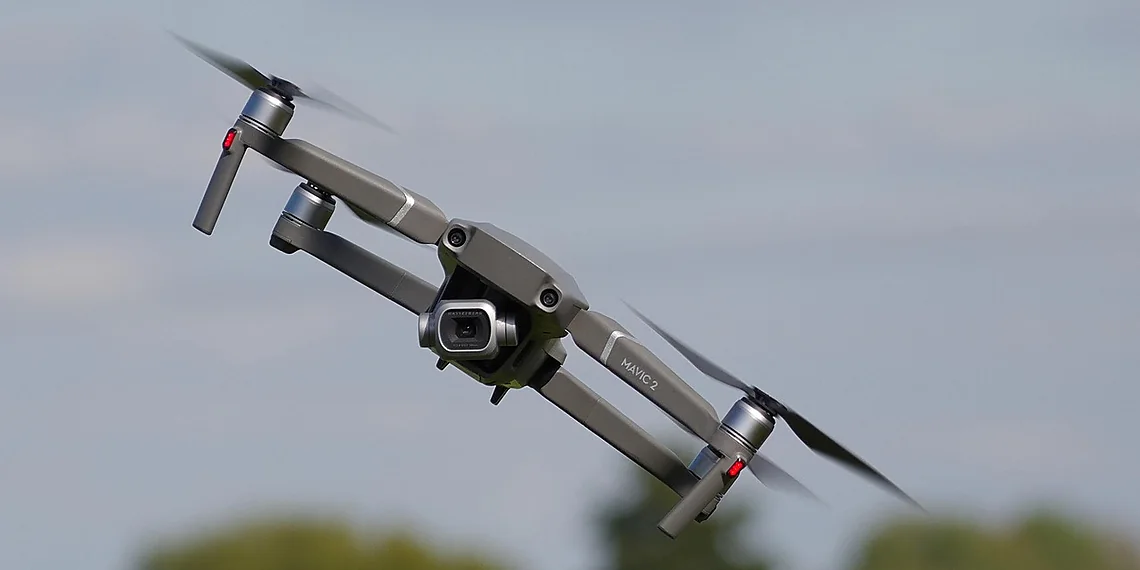
A notable area of success lies within advancements in Perception & Decision-Making. For instance, the ‘Airborne Object Recognition Challenge’ leveraged a substantial dataset of aerial imagery to spur breakthroughs in object detection and classification from drones and aircraft. This resulted not only in improved accuracy but also in models capable of operating with significantly reduced computational resources – crucial for deployment on resource-constrained platforms. Similarly, challenges focused on predictive maintenance for military aircraft have yielded AI algorithms that can accurately forecast component failures based on sensor data, leading to proactive maintenance schedules, reduced downtime, and enhanced operational readiness. The datasets generated by these efforts are now invaluable resources for researchers.
Beyond perception, the program’s ‘Autonomous Navigation Challenge’ demonstrated impressive progress in enabling AI agents to navigate complex environments with minimal human intervention. Participants developed algorithms capable of planning routes, avoiding obstacles, and adapting to unforeseen circumstances – all vital capabilities for unmanned systems operating in dynamic scenarios. The challenge specifically emphasized robustness and safety, encouraging solutions that could handle unexpected events gracefully. This focus on real-world applicability distinguishes the DAF-MIT AI Accelerator’s approach from purely theoretical research.
These successes underscore a powerful model: providing researchers with well-defined problems, high-quality data, and a competitive environment fosters rapid innovation in AI. The continued release of these datasets and challenge results ensures that advancements made through the program are broadly accessible, contributing to a wider ecosystem of AI development benefiting both national security and civilian sectors.
Advancements in Perception & Decision-Making
One significant area where DAF AI challenges have yielded remarkable progress is in perception tasks, particularly object recognition from aerial imagery. The ‘Aerial Object Recognition Challenge’ (AORC), for instance, provided participants with a massive dataset of satellite and drone-captured images containing various objects – vehicles, buildings, and infrastructure – often obscured by weather or camouflage. This challenge spurred the development of novel deep learning architectures capable of identifying these targets with significantly improved accuracy and robustness compared to previous methods. The resulting algorithms are now being explored for applications ranging from battlefield awareness to disaster response.
Beyond recognition, predictive maintenance has also benefited substantially from DAF AI challenges. The ‘Aircraft Predictive Maintenance Challenge’ focused on leveraging sensor data – engine performance metrics, vibration patterns, temperature readings – to forecast component failures before they occur. Participants developed machine learning models that outperformed traditional rule-based systems, demonstrating a potential for reducing downtime, lowering maintenance costs, and enhancing aircraft safety. This has led to ongoing research into integrating these predictive capabilities directly into fleet management systems.
Autonomous navigation also saw substantial advancement through the ‘Navigation Challenge,’ which tasked AI algorithms with planning safe and efficient routes for unmanned aerial vehicles (UAVs) in complex urban environments. The challenge incorporated realistic simulations of weather conditions, dynamic obstacles like pedestrians and other aircraft, and varying terrain types. Solutions developed often combined reinforcement learning techniques with graph search algorithms, resulting in UAV navigation systems that are more adaptable and resilient to unexpected events – a crucial capability for future autonomous operations.
Looking Ahead: Future Challenges & Impact
The DAF-MIT AI Accelerator program is committed to pushing the boundaries of artificial intelligence, and our future challenges will reflect this ambition. Building on the success of previous initiatives that fostered open innovation through large, accessible datasets, we’re shifting focus towards areas where fundamental research can yield transformative results for both national defense and civilian applications. We’ve identified several key priorities including explainable AI (XAI) – critical for building trust and understanding in AI-driven decision making – and developing robust AI systems capable of operating reliably even under adversarial attacks, a growing concern as adversaries increasingly target AI vulnerabilities.
Specifically, upcoming challenges will concentrate on enhancing the resilience of AI models against data poisoning and evasion attacks. Imagine autonomous systems being subtly manipulated to produce incorrect outputs; our research aims to preempt such scenarios by developing techniques for detecting and mitigating these threats *before* they compromise operational effectiveness. Simultaneously, we’re investing in XAI methodologies that allow humans to understand the reasoning behind an AI’s conclusions – not just what it recommends but *why*. This transparency is crucial for maintaining human oversight and ensuring accountability in critical applications ranging from military planning to disaster response.
The impact of these advancements extends far beyond defense. Robust and explainable AI are increasingly vital across sectors like healthcare, finance, and infrastructure management. By tackling these challenges within the DAF-MIT AI Accelerator program, we’re contributing to a broader ecosystem of trustworthy and reliable AI solutions that can benefit society as a whole. The open nature of our challenge datasets and results encourages collaboration and accelerates innovation, fostering a virtuous cycle of progress across both public and private sectors.
Looking ahead, the DAF-MIT AI Accelerator will continue to prioritize challenges that demand fundamental breakthroughs in AI research. We anticipate increased emphasis on areas like few-shot learning (enabling AI to learn from limited data), federated learning (training models without sharing sensitive data), and reinforcement learning for complex decision making. These developments promise to not only strengthen our national security posture but also unlock new possibilities for economic growth and societal benefit, solidifying the United States’ position as a global leader in artificial intelligence.
Emerging Priorities and Next Steps
The DAF-MIT AI Accelerator is increasingly focused on addressing critical ‘next frontier’ challenges in artificial intelligence to maintain U.S. technological leadership. Upcoming initiatives will prioritize areas like Explainable AI (XAI) – ensuring that AI decision-making processes are transparent and understandable, a crucial requirement for military applications and public trust. Another key focus involves developing robust AI systems capable of operating reliably even under adversarial attacks or in unpredictable environments; this includes research into techniques for detecting and mitigating malicious inputs designed to fool or compromise AI models.
Beyond XAI and robustness, future challenges will explore areas such as few-shot learning (enabling AI to learn effectively from limited data) and the integration of AI with human decision-making processes. The Accelerator recognizes that successful AI deployment often requires a symbiotic relationship between humans and machines, particularly in high-stakes scenarios where nuanced judgment is essential. These new challenge areas are designed to move beyond purely algorithmic advancements towards developing practical, trustworthy AI solutions.
The continued advancement of these AI capabilities has significant implications for both national security and broader civilian innovation. Successfully tackling DAF AI challenges will not only bolster the U.S.’s defense posture but also drive breakthroughs in fields like autonomous systems, data analytics, and predictive maintenance – benefiting industries ranging from healthcare to infrastructure management. The open-source nature of these challenge datasets and solutions fosters a wider ecosystem of innovation and ensures that advancements are broadly accessible.
The journey through the DAF-MIT AI Accelerator has undeniably showcased a remarkable synergy between financial expertise and cutting-edge artificial intelligence.
We’ve seen how collaborative problem-solving, fueled by diverse perspectives, can unlock innovative solutions previously considered unattainable.
From optimizing trading strategies to enhancing risk management protocols, the impact of these projects is tangible and promises significant advancements across the financial landscape.
The success of the program highlights the crucial role of specialized initiatives like this in pushing the boundaries of what’s possible with AI, particularly when tackling complex real-world scenarios – something vividly demonstrated by the DAF AI challenges that participants undertook each year..”, “These focused competitions have consistently attracted brilliant minds and fostered a culture of relentless experimentation. “, “The Accelerator isn’t just about developing algorithms; it’s about cultivating future leaders in responsible AI development within finance.”, “Looking ahead, the potential for growth is truly exciting as we anticipate further breakthroughs and expanded applications stemming from this unique partnership. ” , “DAF and MIT’s commitment to fostering innovation suggests a bright future for this program and its continued contribution to the field.”, “We believe that the lessons learned and methodologies developed within the Accelerator will serve as a blueprint for similar initiatives globally.”, “The DAF-MIT AI Accelerator represents more than just an investment in technology; it’s an investment in the future of finance itself.” ,
Continue reading on ByteTrending:
Discover more tech insights on ByteTrending ByteTrending.
Discover more from ByteTrending
Subscribe to get the latest posts sent to your email.