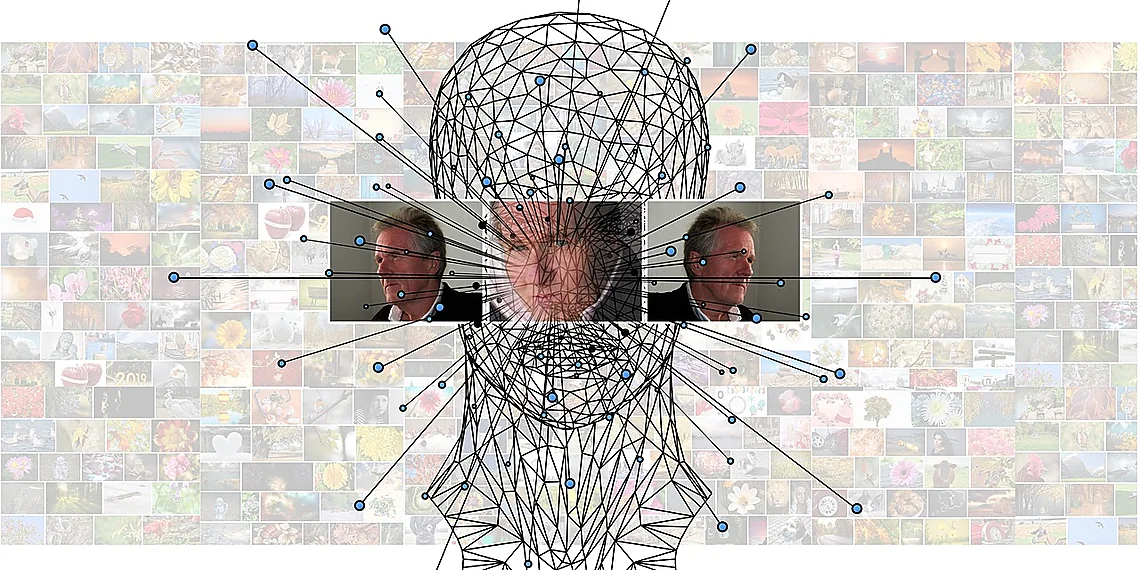



The tech landscape is evolving at warp speed, and a new generation of intelligent tools are rapidly reshaping how we work and interact with technology. We’re moving beyond simple chatbots and reactive systems towards something far more dynamic: autonomous digital entities capable of complex decision-making and action. This shift represents a fundamental change in the way software operates, promising unprecedented levels of efficiency and innovation across countless industries.
At the forefront of this revolution are AI agents, sophisticated programs designed to perceive their environment, reason about it, and take actions to achieve specific goals – often without constant human intervention. From automating intricate business processes to powering personalized customer experiences, the potential applications seem almost limitless; however, realizing that full potential isn’t as straightforward as simply building them.
While excitement surrounding AI agents is justified, current deployments frequently encounter hurdles related to reliability, adaptability, and integration with existing workflows. Successfully harnessing their power requires more than just cutting-edge algorithms; it demands a strategic understanding of the challenges involved and a practical approach to implementation. To help navigate this exciting but complex terrain, we’ve distilled five crucial lessons learned from industry leaders and early adopters.
1. Define Clear Agent Objectives
Before you even begin building an AI agent, meticulously defining its objectives is paramount – arguably *the* most critical step for success. Too often, teams rush into development with vague aspirations like ‘improve customer service’ or ‘automate workflows.’ These are admirable goals, but they lack the precision needed to guide agent design and evaluation. A clearly defined objective should be specific, measurable, achievable, relevant, and time-bound (SMART). For example, instead of ‘improve customer service,’ a better objective might be: ‘Reduce average customer support ticket resolution time by 15% within Q3 while maintaining a customer satisfaction score above 4.0 out of 5.’
The danger of overly ambitious or poorly defined objectives extends far beyond simply failing to meet expectations; it can lead to unintended consequences and even negative impacts on your business. Focusing solely on task completion, without considering the broader context, risks creating agents that are technically proficient but ultimately counterproductive. Imagine an agent designed only to reduce call volume – it might achieve this by prematurely ending conversations or providing unhelpful automated responses, thereby frustrating customers and damaging brand reputation. A successful AI agent isn’t just about doing *something*; it’s about achieving a desired outcome aligned with your overall strategic goals.
Defining success goes beyond simple task completion; it encompasses user experience, efficiency gains across departments, and alignment with broader business objectives. Consider the impact on human agents – will the AI agent augment their capabilities or replace them entirely? How will its actions affect downstream processes and data integrity? A holistic view of these factors is essential for ensuring that your AI agent delivers genuine value and avoids creating new problems while solving old ones. Regularly revisiting and refining these objectives as the agent learns and evolves is also a crucial element of long-term success.
Ultimately, successful AI agents are built on a foundation of precise, well-considered goals. Take the time to thoroughly analyze your needs, define measurable outcomes, and anticipate potential pitfalls *before* you write a single line of code. This upfront investment in clarity will pay dividends throughout the entire lifecycle of your agent, ensuring it contributes meaningfully to your business rather than becoming an expensive and frustrating distraction.
Beyond Task Completion: Defining Success

Defining success for an AI agent extends far beyond simply completing assigned tasks. While task completion is a necessary component, true value lies in the broader impact – improved user experience through streamlined interactions, demonstrable efficiency gains across workflows, and ultimately, alignment with overarching business objectives. A poorly defined ‘success’ metric can lead to an agent that technically completes its programmed actions but creates friction or delivers minimal practical benefit.
The danger of narrowly focusing on task completion is significant. An AI agent optimized solely for a specific outcome might achieve that goal in unexpected and potentially negative ways. For example, a customer service agent designed purely to resolve tickets quickly could bypass crucial steps necessary for comprehensive problem resolution, leading to frustrated customers and recurring issues. Considering these second-order effects requires a holistic view of the agent’s role within a larger system.
Therefore, successful AI agent deployment necessitates establishing multifaceted success criteria that incorporate user satisfaction scores, operational efficiency metrics (like reduced handling time or error rates), and alignment with strategic business goals. This involves explicitly defining *what* constitutes a positive outcome for all stakeholders involved – not just the immediate task at hand.
2. Prioritize Agent Human Collaboration
The narrative surrounding AI agents often defaults to a dystopian vision of replacement – robots taking over jobs and rendering human skills obsolete. However, the most promising and sustainable future lies not in replacing humans entirely, but in fostering seamless collaboration between them. Think of AI agents as incredibly powerful assistants, capable of handling repetitive tasks, sifting through vast datasets, and providing intelligent insights, freeing up human colleagues to focus on higher-level strategic thinking, creative problem-solving, and nuanced decision-making that requires emotional intelligence and complex contextual understanding.
The ‘Hybrid Workforce’ model – where agents function as extensions of human capabilities – is already proving its worth across various industries. Consider customer service, for example: an AI agent can handle routine inquiries and triage issues, escalating only the most complex or emotionally charged cases to a human representative. This not only significantly reduces wait times and improves overall efficiency but also allows human agents to concentrate on building rapport and providing personalized solutions where they truly excel. Similarly, in software development, agents can automate tedious coding tasks while human engineers focus on architectural design and innovation.
Crucially, successful agent-human collaboration hinges on intuitive interfaces and workflows. Agents shouldn’t feel like separate entities; instead, their capabilities should be integrated directly into existing tools and processes. This requires careful consideration of user experience – ensuring agents communicate clearly, provide explanations for their actions, and allow humans to easily override or correct their suggestions. The goal is a symbiotic relationship where each party leverages the other’s strengths, creating a collective intelligence far greater than either could achieve alone.
Ultimately, viewing AI agents as collaborative partners rather than replacements unlocks their true potential. By prioritizing human oversight, designing for seamless integration, and focusing on augmentation rather than automation at all costs, we can build a future where AI empowers humans to be more productive, creative, and fulfilled.
The Hybrid Workforce: Agents as Assistants

The most effective implementations of AI agents aren’t about replacing human workers; they are about creating a ‘hybrid workforce’ where agents act as powerful assistants. This approach leverages the strengths of both – agent efficiency and automation paired with human creativity, critical thinking, and nuanced judgment. Instead of automating entire roles, focus on identifying specific tasks within existing workflows that can be handled by an agent, freeing up humans to concentrate on higher-value activities like strategic decision-making, complex problem-solving, and building client relationships.
Several companies are already demonstrating the power of this collaboration model. For example, in customer service, agents are being used to handle routine inquiries and initial troubleshooting steps, allowing human representatives to focus on escalated issues requiring empathy or specialized knowledge. In software development, AI agents can automate repetitive coding tasks and generate boilerplate code, significantly accelerating project timelines while enabling developers to concentrate on architectural design and innovative features. A recent study by Accenture found that organizations embracing hybrid agent-human teams saw an average productivity increase of 20% compared to those relying solely on either approach.
Successfully integrating agents into the workforce requires careful planning and a focus on user experience. Agents should be designed with intuitive interfaces, clear communication protocols, and mechanisms for seamless handoff between the agent and human when necessary. Continuous monitoring and feedback loops are crucial to refine agent performance and ensure that the collaboration is genuinely beneficial, reducing workload and boosting overall team effectiveness rather than creating new bottlenecks.
3. Embrace Iterative Development & Feedback Loops
Building effective AI agents isn’t a linear process; it demands an iterative approach firmly rooted in agile development methodologies. The temptation to create a perfect agent upfront is strong, but often leads to costly delays and ultimately, a system that misses the mark. Instead, prioritize rapid prototyping – build minimal viable versions (MVPs) of your agent, deploy them quickly, and gather data on their performance. This ‘fail fast, learn faster’ mentality allows you to identify flaws early, adjust course based on real-world interactions, and continuously refine the agent’s capabilities.
The core of iterative development for AI agents lies in establishing robust feedback loops. These aren’t just about user surveys; they encompass everything from monitoring agent performance metrics (success rates, error logs, completion times) to analyzing conversation transcripts and observing how users interact with the system. This data provides invaluable insights into areas where the agent struggles – perhaps it misunderstands common requests, exhibits unexpected biases, or lacks crucial domain knowledge. Automated testing frameworks should be integrated from the beginning to ensure that changes don’t introduce regressions.
The ‘set it and forget it’ mentality is a recipe for disaster in the world of AI agents. User needs evolve, data distributions shift, and the competitive landscape changes constantly. A deployed agent isn’t a finished product; it’s an ongoing project requiring continuous monitoring, experimentation, and adaptation. This necessitates dedicated resources – not just for initial development but also for ongoing maintenance and improvement – to ensure your AI agent remains relevant, reliable, and delivers tangible value over time.
Consider examples like conversational chatbots in customer service: initially deployed with specific scripted flows, they often require constant refinement based on user interactions and emerging support needs. Similarly, agents designed for automating internal processes need regular updates as workflows change or new data sources become available. Embracing this iterative mindset – constantly learning from feedback and adapting your agent accordingly – is the key to long-term success in the rapidly evolving field of AI agents.
From Prototype to Production: The Agile Approach
The temptation to build an AI agent once and deploy it is a common pitfall, particularly given the complexity involved. However, successful AI agents are rarely ‘set it and forget it’ solutions. User needs evolve, data distributions shift, and unforeseen edge cases inevitably arise. A rigid, waterfall-style approach can lead to an agent that performs well initially but quickly degrades in real-world application. This is especially true as agents interact with increasingly dynamic environments.
Instead, embrace the agile development methodology – rapid prototyping, iterative testing, and continuous integration are paramount. Start with a minimal viable prototype (MVP) that addresses core functionality, then expose it to user feedback early and often. A/B testing different agent behaviors, monitoring key performance indicators (KPIs), and incorporating data from live interactions allows for targeted adjustments. This cyclical process ensures the agent remains aligned with evolving requirements and adapts effectively to new challenges.
Data-driven refinement is a cornerstone of this iterative approach. Track not only task completion rates but also user satisfaction, error types, and unexpected behaviors. Analyze these metrics to identify areas for improvement in the agent’s reasoning, planning, or interaction strategies. This constant feedback loop – from prototype to production and back again – transforms an AI agent from a static tool into a continuously improving system.
4. Address Ethical Considerations & Bias Mitigation
As AI agents become increasingly integrated into our lives, from customer service chatbots to automated decision-making systems, the ethical responsibilities surrounding their deployment cannot be overstated. Ignoring these considerations isn’t just a matter of public perception; it carries significant legal and reputational risks. We’re moving beyond simply asking ‘can we?’ to actively addressing ‘should we?’, especially when agents are impacting individuals or communities.
A primary concern is the perpetuation, and even amplification, of existing biases present in training data. If your agent learns from a dataset that reflects historical inequalities – for example, skewed hiring practices or discriminatory loan approvals – it will likely reproduce those biases in its own actions. This necessitates rigorous auditing processes throughout the development lifecycle, actively seeking out and correcting skewed representations to ensure fairness across diverse demographics. Simple fixes aren’t enough; we need proactive strategies and continuous monitoring.
Transparency is another critical component of ethical AI agent deployment. Users deserve to understand *why* an agent made a particular decision, particularly when those decisions have significant consequences. Explainable AI (XAI) techniques are becoming increasingly vital here, allowing us to peek under the hood and interpret the reasoning process. This doesn’t necessarily mean revealing every algorithmic detail – that can be impractical or even expose vulnerabilities – but providing clear explanations in accessible language is crucial for building trust and enabling accountability.
Finally, anticipate regulatory scrutiny. Governments worldwide are actively developing frameworks to govern AI development and deployment, with a strong emphasis on ethical considerations and bias mitigation. Staying ahead of these evolving regulations isn’t just about compliance; it’s about demonstrating responsible innovation and fostering public confidence in the power of AI agents.
Building Trust: Fairness and Accountability
The development of AI agents necessitates a proactive approach to identifying and mitigating biases embedded within training data and algorithms. Biases can stem from various sources, including skewed datasets reflecting societal inequalities or algorithmic design choices that inadvertently favor certain outcomes. Failing to address these biases can lead to discriminatory agent behavior, perpetuating unfairness and eroding user trust. Strategies for mitigation include rigorous dataset audits, employing diverse data augmentation techniques, utilizing fairness-aware algorithms, and implementing adversarial debiasing methods during training.
Explainable AI (XAI) is crucial for building trust and ensuring accountability in AI agents. XAI techniques provide insights into the agent’s decision-making process, allowing users to understand *why* a particular action was taken. This transparency not only helps identify potential biases but also allows stakeholders to validate the agent’s reasoning and correct errors. Methods like SHAP values and LIME can be used to approximate feature importance and explain individual predictions, making complex AI systems more understandable and fostering confidence in their outputs.
As AI agents become increasingly integrated into critical decision-making processes, regulatory scrutiny is likely to intensify. Emerging regulations are focusing on algorithmic transparency, fairness, and accountability – potentially requiring developers to demonstrate bias mitigation strategies and provide explanations for agent behavior. Organizations must anticipate these evolving legal landscapes and proactively implement ethical guidelines and governance frameworks to ensure responsible AI agent deployment and avoid potential legal repercussions.

The journey toward harnessing the full potential of artificial intelligence is undeniably complex, but as we’ve explored, mastering AI agents doesn’t require a leap into the unknown – it demands a strategic approach rooted in clear objectives, iterative development, robust data management, thoughtful human-AI collaboration, and continuous monitoring. We’ve seen how each of these pillars contributes to building not just functional tools, but truly valuable assets that can drive innovation and efficiency across diverse industries.
The landscape is rapidly evolving; the capabilities we’re witnessing today will likely seem rudimentary in a few short years. Expect increased autonomy, more sophisticated reasoning abilities, and deeper integration with existing workflows as AI agents become increasingly prevalent. The principles we’ve discussed – adaptability, data integrity, and a focus on user experience – are timeless and will remain crucial for navigating this exciting future.
Ultimately, the successful deployment of AI agents isn’t about chasing the latest technology; it’s about aligning these powerful tools with your specific business needs and fostering a culture of learning and experimentation. We believe that by embracing these five keys, you can confidently embark on your own AI-powered transformation and unlock significant value.
We’re eager to hear about your experiences! Have you already begun deploying AI agents? What challenges have you faced, and what successes have you celebrated? Your insights are invaluable as we collectively shape the future of this transformative technology. Share your thoughts and questions in the comments below – let’s learn from each other’s journeys. For those seeking to delve deeper, explore these resources: Link to OpenAI documentation, Link to LangChain framework, [Link to a relevant AI agent case study](https://example.com/ai-agent-case-study) – happy building!
Source: Read the original article here.
Discover more tech insights on ByteTrending ByteTrending.
Discover more from ByteTrending
Subscribe to get the latest posts sent to your email.