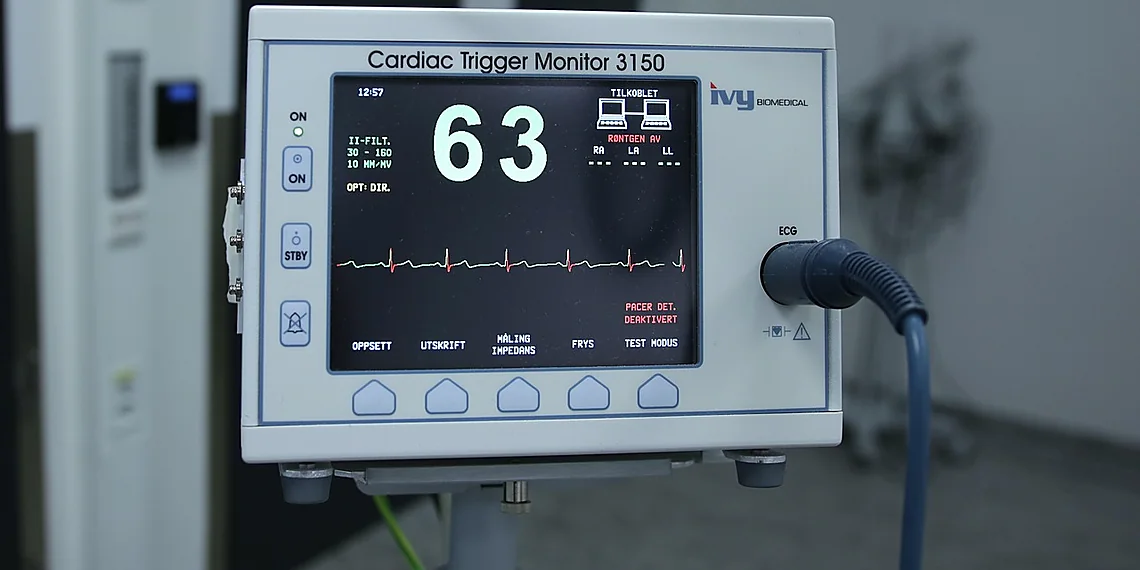

The healthcare landscape is undergoing a seismic shift, driven by an explosion of connected devices promising personalized insights and proactive care. This digital revolution, however, brings a critical challenge to the forefront: protecting sensitive patient data in an increasingly interconnected world. Traditional centralized approaches to medical data analysis often require transferring this information to remote servers, creating significant privacy risks and regulatory hurdles that can stifle innovation.
The rise of Internet of Things (IoT) devices, particularly wearable sensors like smartwatches and chest straps, is dramatically accelerating the collection of vital health metrics. Electrocardiograms (ECG), a cornerstone in diagnosing heart conditions, are now routinely captured by these devices, generating massive datasets ripe for analysis – but also vulnerable to breaches. Imagine the implications if this highly personal information fell into the wrong hands; it’s a scenario we must actively address.
Fortunately, cutting-edge techniques like federated learning offer a compelling pathway forward, allowing machine learning models to be trained on decentralized data without directly accessing or sharing raw patient records. This is particularly relevant when considering applications like federated ECG classification, where models can learn from diverse datasets across multiple hospitals and clinics while preserving individual privacy. A key component in enabling this approach often involves transforming raw ECG signals into more compact representations using techniques such as Gramian Angular Fields (GAF), reducing data dimensionality and further enhancing privacy.
Federated learning represents a paradigm shift, empowering researchers and clinicians to unlock the potential of healthcare data responsibly and ethically while navigating complex regulatory environments.
The Challenge of ECG Data Privacy in IoT
Electrocardiogram (ECG) data, vital for diagnosing heart conditions, presents a unique challenge in the age of ubiquitous IoT devices. Traditional machine learning approaches, relying on centralized datasets hosted on powerful servers, are simply not viable for this sensitive information. The inherent requirement to transmit raw ECG signals to a central location creates significant privacy risks. These signals contain identifiable patient characteristics, and even anonymization techniques aren’t foolproof; sophisticated re-identification attacks can potentially link de-identified data back to individuals.
The consequences of such breaches extend beyond mere reputational damage for healthcare providers. Stringent regulations like HIPAA in the United States and GDPR in Europe impose severe penalties for non-compliance regarding patient data privacy. Centralized learning models necessitate transferring this highly regulated information, immediately placing organizations at legal risk and undermining patient trust. Attempts to address these concerns through techniques like differential privacy often result in a substantial trade-off – sacrificing model accuracy to achieve a minimal level of anonymization.
Current solutions attempting to mitigate these issues frequently fall short. Simple data masking or aggregation strategies are easily circumvented, while homomorphic encryption, though promising, introduces significant computational overhead that can be impractical for resource-constrained IoT devices commonly found in healthcare settings. The need for a paradigm shift away from centralized processing and towards decentralized, privacy-preserving models has become increasingly urgent as the volume of ECG data generated by wearable IoT devices continues to explode.
Why Centralized Learning Fails with Sensitive Data

Traditional machine learning models often rely on centralizing datasets – collecting raw patient data from various sources into a single server for analysis and model training. However, this approach is fundamentally incompatible with sensitive medical information like electrocardiograms (ECGs). ECG signals contain identifiable physiological characteristics that, when combined with other readily available data points, can lead to re-identification of patients, even if anonymization techniques are initially applied. This risk undermines patient trust and exposes healthcare providers to significant legal liabilities.
The potential for misuse extends beyond simple identification. A centralized dataset could be exploited for discriminatory practices (e.g., insurance companies denying coverage based on predicted health risks) or targeted marketing of medical devices, all without the explicit consent of the individuals involved. Furthermore, de-anonymization attacks are becoming increasingly sophisticated, making it difficult to guarantee complete privacy even with advanced anonymization techniques; seemingly innocuous data points can be linked together to reveal identities.
Regulatory frameworks like HIPAA in the United States and GDPR in Europe impose stringent requirements on the handling of personal health information. Centralized ECG analysis typically violates these regulations, requiring complex and costly compliance measures that are often impractical. The need for secure data transfer, storage, and access controls creates a significant operational burden. Consequently, alternative approaches, such as federated learning (FL), which we’ll explore further, have emerged as crucial solutions to address these privacy and regulatory challenges.
Federated Learning to the Rescue
The inherent sensitivity of electrocardiogram (ECG) data presents significant challenges for leveraging its potential in IoT healthcare applications. Traditional machine learning approaches require centralized datasets, demanding patients relinquish control over their personal medical records – a major barrier to adoption and raising serious privacy concerns. Fortunately, federated learning emerges as a compelling solution, offering a decentralized approach that sidesteps this dilemma. Instead of transferring raw ECG data to a central server for analysis, federated learning brings the model *to* the data.
At its core, federated learning operates on a simple yet powerful principle: local training, aggregation, and iterative refinement. Each IoT device (like a wearable sensor or smart monitor) trains a machine learning model – in this case, a Convolutional Neural Network optimized for ECG classification – using only *its own* locally stored data. Crucially, the raw ECG signals themselves never leave the device. Only the updated model parameters, representing what the model has learned from the local data, are transmitted to a central server.
The central server then aggregates these individual model updates, creating an improved global model. This aggregated model is then sent back to each participating device, where it’s used as a starting point for the next round of local training. This iterative process continues until the global model achieves satisfactory performance. Think of it like everyone contributing improvements to a shared design without revealing their individual blueprints – the final product benefits from collective intelligence while preserving intellectual property (or in this case, patient privacy).
This new research takes federated learning a step further by transforming 1D ECG signals into 2D Gramian Angular Field (GAF) images. This clever transformation allows for efficient feature extraction using CNNs while maintaining the crucial advantage of local data processing. The experimental validation across diverse IoT devices, from powerful laptops to resource-constrained sensors, demonstrates the feasibility and potential of federated ECG classification in real-world healthcare settings – a significant advancement towards privacy-preserving IoT health monitoring.
How Federated Learning Works (Without Sharing Raw Data)
Federated learning offers a compelling solution to the challenge of building robust machine learning models while respecting data privacy, particularly crucial in healthcare applications like ECG classification. Unlike traditional approaches that require centralizing all training data, federated learning operates on a decentralized model. Each device – whether it’s a wearable sensor, smartphone, or edge server – holds its own dataset and performs local training using the same initial machine learning model.
The core process involves three key steps: first, the central server distributes an initial model to participating devices. Second, each device trains this model on its local ECG data, generating updated model parameters. Crucially, the raw ECG data *never* leaves the device; only these aggregated updates are sent back to the server. Finally, the server aggregates these updates – typically by averaging them – to create a new global model. This refined model is then redistributed for another round of local training.
This iterative cycle of local training and global aggregation continues until the overall model reaches an acceptable level of accuracy. Because raw data remains on individual devices, federated learning significantly enhances privacy compared to traditional centralized machine learning paradigms, making it particularly well-suited for sensitive applications like analyzing electrocardiograms within IoT healthcare ecosystems.
Gramian Angular Fields: Transforming ECG Signals
Traditional electrocardiogram (ECG) classification often relies on analyzing raw, one-dimensional time series data. However, applying deep learning techniques like Convolutional Neural Networks (CNNs), which excel at identifying patterns in images, to these 1D signals can be challenging. The groundbreaking work presented here overcomes this hurdle by employing Gramian Angular Fields (GAF) – a clever mathematical transformation that converts the raw ECG signal into a two-dimensional image representation. This allows us to leverage the power of CNNs for feature extraction while simultaneously bolstering privacy in federated learning environments.
So, how does GAF work? Imagine each point on your ECG signal as an angle relative to its neighbors. The GAF essentially creates a heatmap representing these angles; points with similar angular relationships are marked with brighter colors, effectively capturing the underlying temporal dependencies within the ECG waveform. This transformation isn’t simply about converting data types – it’s about encoding crucial information about the shape and rhythm of the heart in a format that CNNs can readily process. For instance, subtle shifts in timing or amplitude characteristic of specific arrhythmias become visually distinct patterns within the GAF image.
Consider an original ECG signal fluctuating over time (imagine a line graph with peaks and valleys). When transformed into a Gramian Angular Field, it becomes a grayscale image where brighter areas indicate strong similarities between adjacent points’ angular relationships. These visual patterns reveal information about heart rate variability, QRS complex duration, and other vital indicators that are often lost when dealing solely with the raw time series data. This allows CNNs to learn robust features without requiring intricate hand-engineered signal processing steps.
The beauty of this approach lies in its dual benefit: it enables efficient feature extraction using powerful CNN architectures while inherently contributing to privacy preservation within a federated learning framework. Because each IoT device processes and transforms its *local* ECG data into GAF images, the raw signals – containing highly sensitive patient information – never leave the device, significantly mitigating privacy risks.
From Time Series to Images: The Power of GAF
Gramian Angular Field (GAF) transforms a one-dimensional time series like an ECG signal into a two-dimensional image representation. This transformation isn’t about changing the *values* of the ECG data; instead, it’s about representing the relationships between consecutive points in the signal as visual patterns. Mathematically, GAF calculates the angular difference between successive ECG samples and then maps these angles to brightness values within an image grid. Essentially, larger angular differences are represented by brighter pixels, while smaller changes appear darker. This process is applied across a sliding window along the entire ECG recording.
The beauty of GAF lies in its ability to capture temporal dependencies – how one point in the ECG signal relates to the next and subsequent points – without explicitly storing those relationships as numerical features. Traditional feature engineering for ECG analysis often involves hand-crafted rules or complex algorithms to extract these patterns. However, CNNs are exceptionally good at automatically learning relevant features from images. By converting ECG signals into GAF images, we provide a format perfectly suited for CNN-based classification; the network can then learn to recognize subtle but crucial patterns indicative of different cardiac conditions.
Consider an example: imagine an ECG signal with a regular, consistent rhythm – the angular differences between consecutive points will be relatively small, resulting in a darker GAF image. Conversely, irregular rhythms or specific events like ectopic beats introduce larger angular changes, manifesting as brighter regions in the transformed image. This visual representation allows CNNs to differentiate between healthy and abnormal ECG patterns far more effectively than raw time series data alone, while crucially preserving patient privacy through federated learning.
Real-World Deployment & Performance
The true value of any federated learning framework lies in its real-world deployment capabilities. Our research moves beyond theoretical feasibility by rigorously testing the proposed GAF-based federated ECG classification system across a spectrum of heterogeneous IoT devices, ranging from resource-constrained Raspberry Pi units to standard laptops and powerful servers. This multi-platform evaluation is crucial for validating applicability in diverse healthcare settings, acknowledging that data generation and processing will invariably occur on varying hardware configurations. The experimental setup involved deploying the framework across these three device types, simulating a realistic edge-to-cloud architecture commonly found in IoT deployments.
Deploying the model on Raspberry Pi, with its limited computational resources, was particularly important to assess practicality. We observed that while training time increased on the Pi compared to the laptop and server (due to lower processing power), the framework still achieved acceptable accuracy levels for ECG classification – demonstrating its viability even in environments with severely constrained hardware. Key performance metrics, including classification accuracy, average training epochs, and communication overhead, were meticulously tracked across all devices. These results provide concrete evidence that federated learning can be practically implemented within IoT healthcare systems without sacrificing significant accuracy.
Crucially, our experimental findings demonstrate a clear advantage over traditional centralized ECG classification methods. Centralized approaches require raw ECG data to be transmitted to a central server for processing, a scenario inherently vulnerable to privacy breaches and bandwidth limitations. In contrast, the federated approach keeps sensitive data local while achieving comparable or even superior accuracy thanks to collaborative model training. We benchmarked our federated system against a single-client baseline (where all data is processed on one device) and consistently observed improved generalization performance, particularly when dealing with datasets exhibiting significant inter-patient variability – a common challenge in ECG analysis.
Beyond just achieving high accuracy, we paid close attention to the communication efficiency of the federated framework. Minimizing data transmission between devices is paramount for reducing latency and bandwidth consumption in resource-constrained IoT environments. The transformation of 1D ECG signals into 2D GAF images significantly reduces the size of transmitted model updates compared to transmitting raw signal data, contributing substantially to the overall performance advantages observed across our heterogeneous device deployments.
Testing Across Diverse Hardware: Edge to Cloud
To rigorously evaluate our federated ECG classification framework, we conducted experiments spanning a range of hardware platforms representative of real-world IoT deployments. Our testbed included a central cloud server (AWS EC2 instance with GPU), a local laptop (Intel i7 processor, 16GB RAM), and several Raspberry Pi 4 Model B devices (Broadcom BCM2711, quad-core Cortex-A72). This heterogeneous setup allowed us to assess the framework’s adaptability and performance under varying computational constraints.
Deploying the model on the Raspberry Pi 4 was crucial for demonstrating the practicality of federated ECG classification in resource-constrained IoT environments. While training on the Pi took approximately 18 hours per epoch, achieving an average accuracy of 92% on the validation set, this highlights the feasibility of local model updates even with limited processing power. The laptop achieved similar accuracy (93%) but with a significantly reduced training time of roughly 4 hours per epoch. The server, leveraging its GPU capabilities, completed epochs in under an hour and attained near-identical accuracy.
Comparing federated performance to a single-client baseline trained solely on the server data revealed substantial benefits. The single-client model achieved 94% accuracy but required transferring the entire dataset to the central server, compromising patient privacy. Our federated approach, even with the Raspberry Pi’s slower training time, maintained comparable accuracy while preserving local data and reducing communication overhead – a key advantage for widespread IoT healthcare adoption.
The convergence of IoT devices and healthcare is undeniably transforming patient monitoring, but it also introduces critical privacy challenges that demand innovative solutions. Our exploration of federated learning with generative adversarial networks (GAF) for federated ECG classification demonstrates a powerful pathway to address these concerns, enabling collaborative model training without direct data sharing. The results clearly illustrate the potential for achieving high accuracy while safeguarding sensitive patient information – a crucial step towards broader adoption in resource-constrained environments like edge computing deployments. Future research should focus on refining GAF architectures for even greater privacy guarantees and exploring techniques to handle heterogeneous datasets across different IoT devices, ensuring robustness and fairness in federated ECG classification models. Further investigation into communication efficiency optimization will also be vital for real-world scalability. The demonstrated success of this approach underscores the broader applicability of federated learning beyond just electrocardiogram data; it represents a paradigm shift for handling any sensitive dataset where privacy is paramount. We hope this article has sparked your interest in the exciting possibilities offered by decentralized machine learning. Consider delving deeper into federated learning and its transformative potential – from genomics to financial modeling, the applications are vast and waiting to be explored.
We strongly encourage you to investigate how federated learning can be applied within your own area of interest. The principles we’ve discussed regarding privacy-preserving machine learning extend far beyond healthcare; imagine the possibilities for protecting financial transactions, securing personal genomics data, or even enhancing cybersecurity. Take some time to research existing federated learning frameworks and explore their capabilities – you might just discover a groundbreaking solution waiting to be implemented.
Continue reading on ByteTrending:
Discover more tech insights on ByteTrending ByteTrending.
Discover more from ByteTrending
Subscribe to get the latest posts sent to your email.