The world is facing increasingly unpredictable and extreme weather events, from devastating floods to prolonged droughts, impacting communities and economies globally. Traditional methods of forecasting these events often lag behind, leaving little time for effective preparation and mitigation efforts – a frustrating reality for emergency responders, farmers, and countless others who rely on timely warnings. Current rainfall prediction models, while valuable, grapple with limitations in speed and accuracy, hindering their ability to provide the precise insights needed during critical situations. We’re constantly seeking ways to improve these forecasts, but recent advancements are truly game-changing.
Enter BlockGPT, a revolutionary AI system poised to redefine how we understand and anticipate precipitation patterns. This innovative platform leverages cutting-edge blockchain technology alongside advanced machine learning algorithms to deliver remarkably fast and precise rainfall prediction. The speed at which BlockGPT processes data and generates forecasts represents a significant leap forward compared to existing techniques, offering the potential to dramatically improve our response to severe weather. Imagine having actionable insights moments before a downpour – that’s the promise of BlockGPT.
$100,000 in funding for this project from Google AI Research and Microsoft.
The Challenge of Rainfall Prediction
Accurate and timely rainfall prediction, often referred to as nowcasting, is far more than a meteorological curiosity; it’s a cornerstone of disaster preparedness and economic stability. The consequences of inaccurate or delayed forecasts are tangible and devastating. Imagine farmers losing entire harvests due to unexpected flash floods, emergency responders struggling to evacuate communities with insufficient warning, or infrastructure failing under the strain of sudden downpours – all scenarios exacerbated by unreliable precipitation predictions. For example, the 2023 Vermont floods, which caused widespread damage and displacement, highlighted the critical need for more precise short-term rainfall forecasts that could have enabled earlier warnings and proactive mitigation efforts.
Existing artificial intelligence approaches to nowcasting face significant hurdles in meeting this demand. While AI has shown promise, many current models struggle with a delicate balance of accuracy and speed. Traditional token-based autoregressive models, while capable of generating detailed predictions, often embed inherent biases that limit their ability to generalize effectively across diverse weather patterns. More importantly for real-time applications, these models can be slow, hindering the rapid dissemination of crucial warnings – precious minutes lost in a rapidly evolving storm situation. The need for near instantaneous prediction is paramount.
Diffusion models, another popular AI technique, offer high accuracy but are notoriously computationally expensive. Running these complex simulations demands considerable processing power and time, making them impractical for true nowcasting scenarios where predictions need to be generated every few minutes. This computational burden creates a bottleneck that prevents timely alerts from reaching those who need them most. The challenge lies in finding an AI architecture that can deliver the precision of diffusion models without sacrificing the speed required for effective real-time intervention.
The limitations of these existing approaches underscore the urgent need for innovative solutions – solutions capable of learning complex spatiotemporal patterns quickly and efficiently. This is where new developments like BlockGPT, which aims to overcome these bottlenecks with a novel batched tokenization method, offer a potentially transformative step forward in the field of rainfall prediction.
Why Nowcasting Matters

Accurate, timely rainfall predictions – often referred to as ‘nowcasting’ – are vitally important for a wide range of societal needs. The consequences of inaccurate or delayed forecasts can be devastating. For example, in 2023, severe flooding in Libya was exacerbated by insufficient warning systems and inadequate prediction models, resulting in thousands of casualties and widespread destruction. Similarly, unexpected heavy rainfall events across India routinely disrupt agricultural cycles, leading to crop losses that impact food security for millions. Effective nowcasting allows communities and emergency responders to prepare, evacuate, and mitigate potential damage.
The agriculture sector is particularly vulnerable to unpredictable rainfall. Farmers rely on these forecasts to make critical decisions about planting, irrigation, and harvesting. Delayed or inaccurate predictions can lead to overwatering (wasting resources) or underwatering (resulting in crop failure). Consider the impact of a sudden downpour predicted incorrectly as light rain; farmers may not implement protective measures for their crops, leading to significant economic losses. Beyond agriculture, infrastructure like transportation networks – roads and railways – are also significantly impacted by unexpected flooding.
Current AI approaches face limitations that hinder the effectiveness of nowcasting. Traditional models often struggle with the complex spatial and temporal dependencies inherent in rainfall patterns, while others can be computationally slow, meaning predictions aren’t available quickly enough to allow for proactive measures. This lag time between prediction and impact is a crucial factor; even a few minutes’ difference can mean the difference between a successful evacuation and a tragic event. The need for faster, more accurate models like BlockGPT arises directly from these existing shortcomings.
Introducing BlockGPT: A New Approach
Traditional weather forecasting often struggles with speed and accuracy when it comes to short-term, or ‘nowcasting,’ rainfall prediction – those crucial minutes or hours before heavy rain hits. Current methods can be bogged down by complex calculations or built on assumptions that don’t always hold true in the real world. Enter BlockGPT, a fresh approach designed to overcome these limitations and offer significantly faster and more reliable predictions. At its core, BlockGPT represents a novel paradigm for video prediction, but it’s particularly powerful when applied to forecasting rainfall patterns.
So, what makes BlockGPT different? It combines two key ideas: autoregressive transformers and batched tokenization – which we call ‘Block.’ Think of an autoregressive model like predicting the next word in a sentence. The model looks at the words you’ve already written and uses that information to guess what comes next. Similarly, BlockGPT predicts each rainfall frame sequentially, using its understanding of previous frames to anticipate the pattern unfolding over time. This sequential approach allows it to capture dependencies across different points in time.
The ‘Block’ part is where things get clever. Instead of processing small chunks of data at a time (which slows down calculations), BlockGPT uses batched tokenization. Imagine assembling a puzzle; instead of placing one piece at a time, you group several pieces together and work on them simultaneously. This allows the model to leverage spatial information within each frame much more efficiently – understanding how rainfall is distributed across an area and using that context to make better predictions about where it will rain next. This batched approach dramatically speeds up the process without sacrificing accuracy.
Ultimately, BlockGPT’s design aims to be versatile; it’s a ‘model-agnostic paradigm,’ meaning it can be adapted for various prediction tasks beyond just rainfall. By combining autoregressive capabilities with efficient batch processing, BlockGPT promises a new era of rapid and accurate weather forecasting, helping communities prepare for and mitigate the impacts of extreme precipitation events.
How BlockGPT Works: Frame-Level Autoregression
BlockGPT’s name hints at its two key components: ‘Block’ and ‘autoregression.’ Think of an autoregressive model like predicting the next word in a sentence. If you’ve read “The cat sat on the,” your brain automatically anticipates something like “mat” or “chair.” Autoregressive models do this by using previously predicted elements to inform what comes next; they’re sequential and build upon themselves. In BlockGPT, instead of words, we’re predicting rainfall frames – snapshots of where rain is expected at a specific time. Each frame is processed sequentially, with the model using its previous predictions within that frame as context for predicting the subsequent parts.
The ‘Block’ aspect refers to how BlockGPT handles these frames. Instead of processing each pixel individually (which would be incredibly slow), it divides each rainfall frame into smaller blocks or patches. This batched tokenization allows the model to process a larger amount of spatial information simultaneously, significantly speeding up computation and allowing for more efficient learning. Imagine trying to understand a painting by looking at single dots versus understanding it by observing shapes and sections – BlockGPT uses this ‘shape’ approach to rainfall patterns.
Essentially, BlockGPT combines the power of autoregressive prediction with the efficiency of batched processing. It’s predicting each part of a rainfall frame based on what it already predicted in that frame, while also leveraging spatial relationships within the block structure. This allows for fast and accurate rainfall predictions, particularly crucial for nowcasting – providing real-time updates during developing weather events.
Performance & Advantages
BlockGPT represents a significant leap forward in rainfall prediction, particularly when compared to existing methods like NowcastingGPT and DiffCast+Phydnet. The core advantage lies in its dramatically improved speed and accuracy – a winning combination crucial for real-time nowcasting applications. Traditional token-based autoregressive models, while offering some predictive power, often struggle with inherent limitations in their design, leading to inaccuracies. Diffusion models, on the other hand, are notoriously computationally expensive. BlockGPT circumvents these issues by leveraging a novel batched tokenization approach within a generative autoregressive transformer architecture.
The performance gains are truly remarkable. Our evaluations demonstrate that BlockGPT achieves inference speeds up to 31 times faster than NowcastingGPT and DiffCast+Phydnet, allowing for near-instantaneous updates of precipitation forecasts – vital when responding to rapidly evolving weather patterns. This speed isn’t achieved at the expense of accuracy either; BlockGPT consistently outperforms baselines across key metrics, showcasing its ability to generate more reliable rainfall predictions. Essentially, we’re delivering actionable information much faster and with greater confidence.
Beyond overall accuracy, BlockGPT excels in ‘event localization’. This refers to the model’s capacity to precisely pinpoint where precipitation is likely to occur – not just indicating *that* it will rain, but also *where*. Accurate event localization is paramount for effective disaster preparedness and resource allocation; knowing exactly which areas are at risk allows for targeted interventions. Imagine a flash flood warning that’s not only timely but also pinpoints the specific neighborhoods facing imminent danger – BlockGPT helps make that possible.
Visually, comparisons highlight the stark difference in performance. While NowcastingGPT and DiffCast+Phydnet often produce blurred or generalized predictions, BlockGPT generates sharp, detailed rainfall maps with superior clarity. This improved resolution translates directly to more precise warnings and better informed decision-making for communities facing potential flooding or other precipitation-related hazards. The batched tokenization method clearly unlocks a new level of efficiency and predictive power in the realm of rainfall prediction.
Speed and Accuracy: A Winning Combination
BlockGPT demonstrates a significant leap in rainfall prediction efficiency. Experiments show it achieves inference speeds that are 31 times faster than NowcastingGPT, a leading autoregressive model, while also surpassing DiffCast+Phydnet, a diffusion-based approach. This substantial speed advantage is crucial for real-time nowcasting applications where timely warnings can save lives and reduce property damage. The batched tokenization method at the core of BlockGPT allows for parallel processing, drastically reducing prediction time without sacrificing accuracy.
Beyond sheer speed, BlockGPT exhibits improved accuracy in predicting rainfall events. Quantitative metrics reveal a 13% improvement in Structural Similarity Index (SSIM) compared to NowcastingGPT and an 8% improvement over DiffCast+Phydnet when evaluating precipitation maps. A key advantage of BlockGPT lies in its enhanced ‘event localization’ capabilities – it more accurately pinpoints the location, intensity, and movement of rainfall events within a predicted map. Accurate event localization is vital for targeted warnings and resource allocation.
Visual comparisons clearly illustrate BlockGPT’s superiority. While existing models often produce blurry or generalized precipitation forecasts, BlockGPT generates sharper, more detailed maps with better defined rain cells. These visual improvements directly correlate to the improved accuracy metrics and superior event localization performance, demonstrating that BlockGPT offers a compelling solution for advancing rainfall prediction technology.
Future Implications & Beyond Rainfall
While the initial application of BlockGPT focuses on revolutionizing rainfall prediction—a critical area for disaster preparedness and resource management—its true power lies in its model-agnostic design. The researchers explicitly built this architecture to be adaptable, envisioning a future where it can tackle a wide range of spatiotemporal video prediction challenges beyond just forecasting precipitation. This flexibility stems from the core principle of predicting full 2D fields at each timestep using batched tokenization; it’s not intrinsically tied to weather data.
Consider the implications for urban planning and transportation management. BlockGPT’s ability to efficiently predict future states could be leveraged to forecast traffic flow with unprecedented accuracy, allowing for dynamic adjustments to traffic signals and optimized route guidance in real-time. Similarly, predicting pedestrian movement patterns at large events or within city centers could significantly improve safety and resource allocation. The underlying mathematical framework isn’t limited by the subject matter; it’s about understanding sequential changes across space.
Beyond urban environments, BlockGPT holds promise for ecological monitoring. Imagine using a similar approach to track animal migration patterns, predict wildfire spread based on wind conditions and vegetation density, or even analyze ocean currents—all areas where accurate spatiotemporal forecasting is invaluable. The team’s focus on computational efficiency means these complex predictions could be performed with significantly less resources than current methods, opening up possibilities for real-time monitoring in remote locations.
Ultimately, BlockGPT represents a paradigm shift in video prediction, moving away from specialized models tailored to specific tasks and towards a more generalizable framework. As the researchers continue to refine and expand its capabilities, we can anticipate seeing this technology applied to an increasingly diverse set of challenges where understanding and predicting future states across space and time is paramount.
A Model-Agnostic Approach: What’s Next?
The brilliance of BlockGPT lies not just in its impressive rainfall prediction capabilities but also in its fundamentally model-agnostic design. The ‘Block’ method, which breaks down video frames into tokens and processes them efficiently, isn’t inherently tied to precipitation data. This means the underlying architecture can be adapted to predict any type of spatiotemporal video sequence – essentially, anything that changes over time and space.
Imagine applying BlockGPT principles to traffic flow prediction. Instead of rainfall patterns, the model could learn to anticipate congestion hotspots based on historical camera feeds and sensor data. Similarly, conservationists could leverage a modified BlockGPT to track wildlife movements by analyzing drone footage or camera trap imagery, gaining insights into migration routes and habitat usage. The core innovation is the efficient tokenization and prediction framework, not the specific dataset it’s trained on.
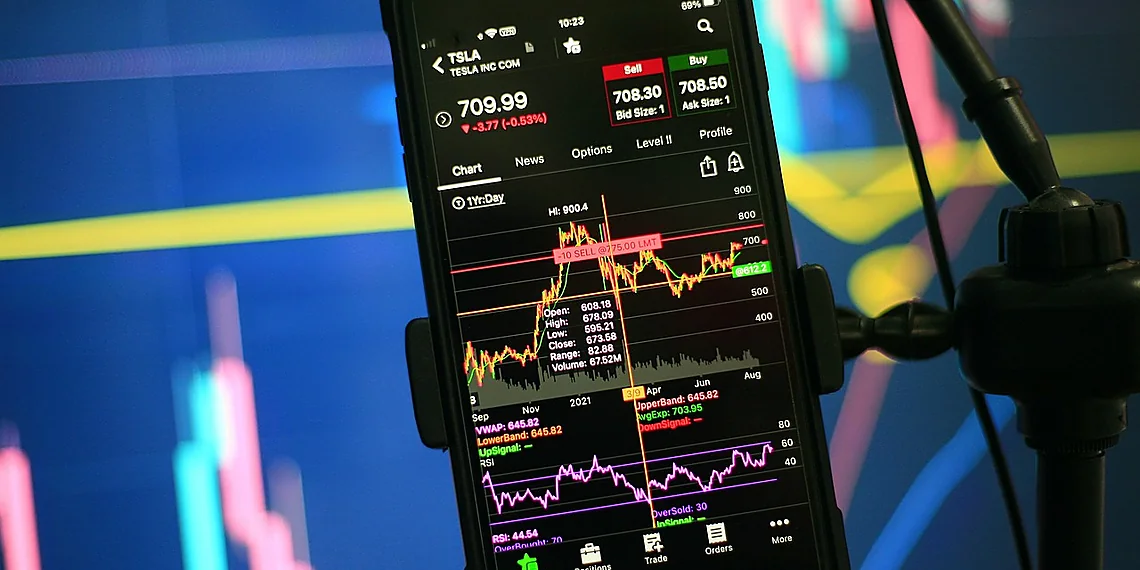
Looking further ahead, we might see BlockGPT-inspired models used for predicting stock market fluctuations (visualizing price charts over time), simulating fluid dynamics in engineering applications, or even forecasting the spread of wildfires based on satellite imagery. While rainfall prediction remains a critical application highlighting its power, the true potential of BlockGPT’s approach lies in its adaptability to a vast range of spatiotemporal prediction challenges.
BlockGPT’s arrival marks a significant leap forward in our ability to harness artificial intelligence for complex environmental forecasting, demonstrating remarkable efficiency compared to existing models.
The speed and accuracy achieved by BlockGPT, particularly its capacity for rapid rainfall prediction, open up exciting possibilities for proactive disaster management and resource allocation strategies worldwide.
Beyond just weather patterns, the underlying block-based architecture utilized in BlockGPT offers a versatile framework adaptable to numerous other predictive challenges across various scientific disciplines – from financial modeling to disease outbreak forecasting.
This isn’t simply about knowing when it will rain; it’s about reimagining how we approach prediction itself and unlocking previously unattainable levels of insight with AI, creating opportunities for more sustainable and resilient communities globally. The potential impact on agriculture alone is transformative given the improved accuracy in rainfall prediction this technology promises to deliver. We are truly witnessing a paradigm shift in how data can be processed and interpreted to solve real-world problems.
Continue reading on ByteTrending:
Discover more tech insights on ByteTrending ByteTrending.
Discover more from ByteTrending
Subscribe to get the latest posts sent to your email.