
Related Post
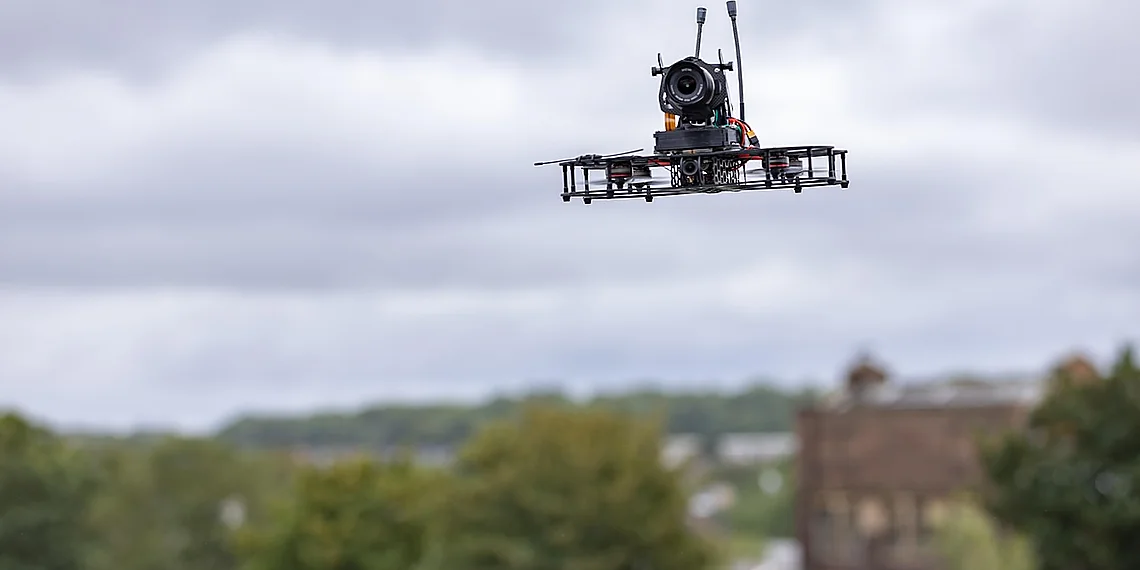
Imagine delivering vital medical supplies to disaster zones, constructing towering wind farms in remote locations, or even building infrastructure on other planets – all relying on aerial transport. The challenge? Current drone technology often hits a payload wall; single drones simply can’t lift the heavy loads required for these ambitious scenarios.
The limitations of individual drone capacity have historically restricted their potential in industries demanding significant lifting power. Think about large-scale agricultural spraying, or quickly deploying emergency response equipment after natural disasters – these applications need more than what a standard delivery drone offers.
Researchers at TU Delft University in the Netherlands are tackling this hurdle head-on with groundbreaking advancements that promise to reshape aerial logistics. They’ve developed an innovative algorithm enabling groups of drones to work together seamlessly, effectively creating a system of ‘collaborative drones’ capable of handling payloads far exceeding the limits of any single aircraft.
This isn’t just about lifting more; it’s about optimizing efficiency and safety through coordinated flight patterns and intelligent load distribution. The implications are vast, potentially revolutionizing construction, emergency services, logistics, and even space exploration as we know them.
The Challenge of Heavy Drone Logistics
Current drone technology faces significant hurdles when it comes to heavy lifting and operating in challenging conditions. While individual drones offer incredible versatility for tasks like package delivery and aerial photography, their payload capacity is inherently limited by factors such as battery life, motor strength, and structural integrity. A single drone simply can’t carry exceptionally heavy loads without sacrificing flight time or risking instability – a critical concern when dealing with infrastructure maintenance or disaster relief scenarios.
Beyond weight limitations, the environment presents another major obstacle. Wind gusts, rain, and even subtle shifts in air pressure can dramatically impact a drone’s stability, making precise maneuvering difficult and potentially dangerous. Maintaining control of a heavy payload in such conditions is exponentially harder than controlling a lighter one. Traditional piloting techniques often struggle to compensate for these unpredictable forces, particularly when operating in remote or hard-to-reach locations like offshore wind farms where consistent weather data isn’t always available.
The need for robust and reliable solutions has spurred innovation beyond single-drone operation. The complexities of heavy lifting demand a different approach – one that leverages the collective power and redundancy of multiple drones working in concert. This is where collaborative drone systems become essential, enabling the transport of loads far exceeding the capacity of any individual aircraft while simultaneously mitigating the risks associated with environmental instability.
Ultimately, the ability to safely and effectively manage heavy payloads in unpredictable conditions requires sophisticated coordination and control. The newly developed algorithm from TU Delft represents a significant step forward, promising to unlock new possibilities for drone-based logistics and infrastructure maintenance by addressing these crucial challenges directly.
Payload Limitations & Environmental Factors

Current single-drone systems face significant physical limitations when attempting to carry substantial weight. Most commercially available drones have payload capacities ranging from a few kilograms to perhaps 20 kilograms, depending on size and design. Exceeding these limits drastically reduces flight time due to increased energy consumption required to overcome gravity. Furthermore, the drone’s structural integrity is compromised; pushing beyond safe load thresholds risks mechanical failure mid-flight, leading to dangerous crashes and potential damage to both the drone and the payload.
Environmental factors pose another considerable challenge. Wind gusts, even seemingly minor ones, can destabilize a drone carrying a heavy load, making precise maneuvering difficult and potentially hazardous. Rain, snow, or extreme temperatures impact battery performance and aerodynamic efficiency, further reducing operational capabilities. Unpredictable terrain – uneven ground, obstacles in the flight path – require constant adjustments and increases the risk of collisions, particularly when dealing with heavier payloads that have less maneuverability.
The inherent instability introduced by both payload weight and challenging environmental conditions necessitates significant safety margins for drone operation. This often means operating well below a drone’s theoretical maximum capacity to guarantee stability and prevent accidents. Consequently, transporting truly heavy loads or performing tasks in harsh environments remains largely impractical with single-drone systems, highlighting the need for innovative solutions like collaborative drone approaches.
Introducing the Collaborative Algorithm
The key to lifting heavier loads and tackling challenging environments lies in collaboration – a principle now being realized through groundbreaking work at TU Delft University. Their newly developed algorithm for collaborative drones represents a significant leap forward, enabling multiple autonomous aerial vehicles to function as a single, coordinated unit. Instead of each drone operating independently, this system allows them to share information, adjust their actions dynamically, and collectively manage the transportation of substantial payloads – far exceeding what any single drone could achieve.
At its core, the TU Delft algorithm utilizes distributed control. This means that no central ‘brain’ dictates every action; instead, each drone possesses a degree of autonomy while simultaneously communicating and reacting to data from its peers. Imagine several cranes working together to hoist an enormous beam – this algorithm facilitates a similar level of coordination for drones. They constantly exchange information about their position, the payload’s stability, wind conditions, and other relevant factors. This ongoing dialogue allows them to adjust their individual flight paths and forces in real-time, maintaining balance and ensuring a smooth transport.
A crucial element is the algorithm’s adaptive nature. It isn’t programmed with rigid rules; rather, it learns and adjusts based on feedback from the drones themselves. For example, if wind gusts suddenly buffet the payload, the system instantly reallocates force among the participating drones to compensate. This dynamic response is vital for maintaining stability in unpredictable environments like those found around offshore wind turbines, which are a primary target application for this technology. Furthermore, the algorithm handles changes in payload weight or shape gracefully, ensuring consistent performance regardless of the load.
This collaborative approach not only increases lifting capacity but also improves safety and resilience. Should one drone experience an issue, the others can compensate, preventing catastrophic failure. The decentralized nature of the control system inherently makes it more robust than traditional, centralized approaches to drone operation. Ultimately, this algorithm paves the way for drones to play a far greater role in infrastructure maintenance, disaster relief, and other demanding applications.
How It Works: Distributed Control & Coordination
The heart of this collaborative drone system lies in its distributed control approach. Instead of a central computer dictating every movement, each drone within the swarm possesses its own processing power and makes decisions based on local information and communication with nearby drones. This decentralized architecture improves robustness; if one drone experiences an issue or loses connection, the others can seamlessly adjust to maintain stability and continue the operation without interruption.
Communication is critical for coordinated flight. The algorithm utilizes a peer-to-peer network where drones constantly share data like position, velocity, and sensor readings (e.g., wind speed). This allows them to anticipate each other’s movements and react proactively. A key innovation is the ability to handle intermittent communication – if signals are temporarily lost due to obstacles or interference, the drones can still maintain formation based on recent data and predicted trajectories.
The algorithm also incorporates adaptive control mechanisms. It continuously monitors the payload’s weight distribution and adjusts individual drone motor speeds accordingly. Furthermore, it compensates for environmental factors like wind gusts in real-time by dynamically modifying flight paths and thrust levels. This adaptability ensures a stable and controlled transport even under challenging conditions, significantly improving safety and efficiency compared to traditional single-drone operations.
Real-World Applications & Impact
While the initial focus of this collaborative drone technology has been on revolutionizing wind turbine maintenance – a critical but challenging task given their offshore location and exposure to harsh weather – its potential extends far beyond renewable energy. The ability for multiple drones to intelligently coordinate, share load, and compensate for environmental factors unlocks opportunities across numerous industries currently hampered by logistical difficulties or safety concerns related to heavy lifting.
Consider the construction sector. Imagine a future where prefabricated building components are delivered directly to high-rise sites using a swarm of collaborative drones, bypassing congested roads and eliminating the need for cranes in certain situations. Similarly, disaster relief efforts could be dramatically improved; drones capable of carrying essential supplies like water, medicine, and communication equipment could reach remote or inaccessible areas following earthquakes, floods, or other natural disasters far more rapidly than traditional methods allow. The precision offered by coordinated drone teams also minimizes environmental impact compared to heavy machinery.
The implications for cargo transport are particularly intriguing. While widespread deployment of large-scale collaborative drone delivery networks is still some time away, the foundational technology developed at TU Delft represents a significant step towards realizing that vision. We can envision scenarios involving the transport of specialized equipment to research stations in Antarctica or the movement of vital parts to remote industrial facilities – all autonomously and with significantly reduced risk compared to current practices.
Looking further ahead, advancements in battery technology and payload capacity could see collaborative drones undertaking even more ambitious tasks, potentially including the assembly of large structures in space or the deployment of infrastructure in challenging environments like deep-sea exploration. The key is that this algorithm provides a flexible framework; as drone capabilities improve, so too will the scope of what these coordinated teams can accomplish.
Beyond Wind Turbines: Construction, Disaster Relief, and More

While initial demonstrations have focused on maintaining offshore wind turbines – a challenging task given their height and exposure to harsh weather – the implications of TU Delft’s collaborative drone algorithm extend far beyond this specific application. The ability for multiple drones to coordinate precisely, sharing load and adapting to environmental conditions unlocks new possibilities for industries facing logistical hurdles or needing access to difficult-to-reach locations. Imagine construction sites where materials are delivered directly to workers via a swarm of drones, bypassing the need for heavy machinery on uneven terrain.
Disaster relief efforts stand to benefit significantly from this technology as well. Following earthquakes, floods, or other catastrophic events, accessing affected areas can be incredibly difficult and dangerous. Collaborative drones could be deployed to deliver essential supplies – water, medical kits, communication devices – to isolated communities, conduct rapid damage assessments, and even assist in search and rescue operations by locating survivors under debris. The coordinated lift capacity of multiple drones would allow for the transport of larger emergency equipment than currently feasible with single-drone systems.
Looking further ahead, this technology could pave the way for a new era of large-scale cargo transport. While regulatory hurdles and safety concerns remain significant challenges, envisioning a future where collaborative drone fleets handle deliveries too heavy or bulky for traditional methods – transporting prefabricated building components to remote locations, moving equipment to mining sites, or even facilitating specialized logistics in urban environments – is no longer pure science fiction but a potential trajectory driven by advancements like the TU Delft algorithm. Further research into battery technology and robust communication protocols will be crucial to realizing this vision.
The Future of Autonomous Drone Teams
The successful demonstration of collaborative drones lifting heavy payloads marks a significant leap toward transforming how we approach infrastructure maintenance, logistics, and even disaster relief. Beyond simply moving objects, this technology signals a broader shift towards autonomous drone teams capable of complex tasks previously deemed impossible for single machines. Imagine swarms of these ‘collaborative drones’ inspecting and repairing offshore wind farms, constructing bridges in remote locations, or delivering vital supplies to areas impacted by natural disasters – all without constant human intervention. This development isn’t just about increased payload capacity; it’s about unlocking a new level of efficiency, safety, and accessibility for operations across diverse industries.
However, the widespread adoption of collaborative drone teams presents considerable challenges that must be addressed proactively. Airspace management becomes exponentially more complex with multiple autonomous vehicles operating in close proximity, necessitating sophisticated algorithms and robust communication protocols to prevent collisions and ensure safe navigation. Current regulatory frameworks are often inadequate for handling such coordinated operations, requiring significant updates and potentially new licensing schemes. Furthermore, the reliance on AI and machine learning introduces concerns about algorithmic bias and unforeseen consequences – what happens when a drone team encounters an unexpected environmental condition or makes a critical error?
The potential for malicious actors to exploit these systems also represents a serious threat. Cybersecurity risks associated with ‘drone hacking’ are amplified in collaborative environments, as compromising one drone could potentially jeopardize the entire team and its payload. Ethical considerations surrounding job displacement – particularly within industries reliant on manual labor currently performed by human workers – must be carefully examined and mitigated through retraining programs and the creation of new roles focused on drone management and maintenance. As drone swarms become increasingly integrated into urban environments, questions about privacy, noise pollution, and public acceptance will also demand careful consideration.
Looking ahead, the future likely holds even more sophisticated forms of collaborative drone operations, potentially involving fully autonomous ‘drone swarms’ capable of adapting to dynamic conditions in real-time. These advancements promise unprecedented capabilities, but they also necessitate a continued focus on responsible development and deployment – ensuring that these powerful tools are used safely, ethically, and for the benefit of society as a whole.
Challenges & Ethical Considerations
The rise of collaborative drones, while promising significant advancements in industries like infrastructure maintenance and logistics, presents several complex challenges that require careful consideration. A primary concern revolves around airspace management. As more teams of drones operate autonomously, particularly in increasingly dense urban environments, ensuring safe separation from other aircraft (manned or unmanned) becomes paramount. Current air traffic control systems are not fully equipped to handle the volume and complexity of coordinated drone swarms, necessitating new protocols and potentially AI-powered solutions for dynamic airspace allocation and conflict resolution.
Safety regulations and cybersecurity risks also loom large. While the TU Delft algorithm enhances stability and payload control, accidents involving multiple drones could have cascading consequences. Robust safety standards are needed to govern operational parameters, pilot training (even for autonomous systems), and fail-safe mechanisms. Furthermore, the interconnected nature of collaborative drone networks makes them vulnerable to cyberattacks – a malicious actor gaining control of even a single drone within a swarm could potentially disrupt operations or cause harm. Strong cybersecurity measures, including encryption and intrusion detection systems, are crucial.
Beyond technical hurdles, ethical considerations regarding job displacement warrant attention. The automation potential of collaborative drones could impact human roles in industries like construction, delivery services, and inspection work. While new opportunities may emerge in drone operation and maintenance, proactive strategies such as retraining programs and social safety nets will be essential to mitigate the negative impacts on affected workers. Looking ahead, fully autonomous drone swarms operating seamlessly within urban landscapes represent a compelling vision, but realizing this future requires addressing these challenges responsibly and collaboratively.
The journey through AI-powered heavy lifting has revealed a truly remarkable shift in what’s possible, moving beyond simple delivery to complex logistical operations. We’ve seen how coordinated flight paths and distributed processing power unlock efficiencies previously unimaginable for unmanned aerial vehicles. The potential impact on industries ranging from construction to emergency response is undeniable, promising faster deployment of resources and reduced operational costs. A key element driving this progress lies in the sophistication of systems enabling collaborative drones – these interconnected machines working together to achieve tasks far beyond individual capabilities. This isn’t just about flying heavier payloads; it’s about fundamentally reshaping how we move goods and materials across diverse landscapes, particularly where traditional methods are impractical or dangerous. The advancements discussed highlight a future where drone logistics become an integral part of our infrastructure, seamlessly integrated into existing workflows. As research continues and regulatory frameworks evolve, expect to see even more innovative applications emerge, further solidifying the transformative power of this technology. Now we want to hear from you: what applications for collaborative drones are you most excited about witnessing in the years to come? Share your predictions and insights on the future of drone logistics in the comments below!
The ongoing development of AI algorithms, coupled with increasingly robust drone hardware, paints a compelling picture of logistical revolution. The ability for multiple drones to dynamically adjust their flight patterns based on real-time data creates an unparalleled level of adaptability and efficiency. We’ve only scratched the surface of what’s achievable, and the possibilities are truly expansive. Think beyond simple package delivery; envision rapid deployment of medical supplies in disaster zones or construction materials directly to building sites – all orchestrated by a network of collaborative drones. The challenges remain, including airspace management and public acceptance, but the potential rewards are simply too significant to ignore.
Continue reading on ByteTrending:
Discover more tech insights on ByteTrending ByteTrending.
Discover more from ByteTrending
Subscribe to get the latest posts sent to your email.