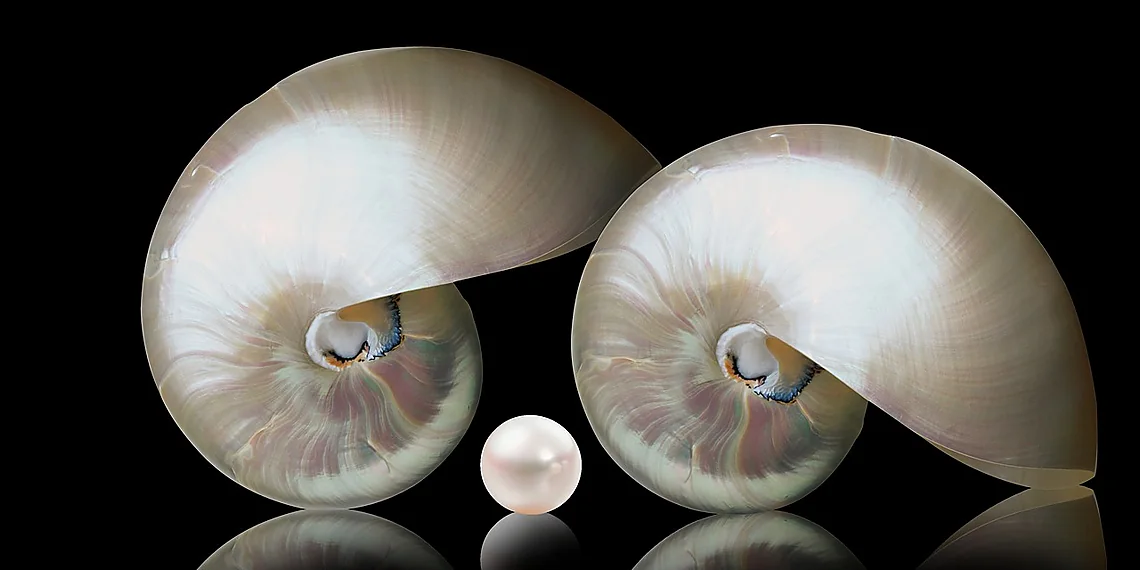



Imagine a material stronger than steel yet as delicate and iridescent as a pearl – that’s the essence of nacre, also known as mother of pearl. Found lining the shells of mollusks like oysters and abalone, this natural wonder has captivated scientists and engineers for centuries with its exceptional combination of strength, toughness, and shimmering beauty. The secret lies in its unique layered microstructure, an intricate arrangement of microscopic aragonite platelets bound together by a protein matrix, creating a composite material unlike anything else on Earth. Replicating the complex architecture of nacre composites has long been considered one of the holy grails of materials science, as traditional manufacturing methods struggle to achieve the same level of performance. However, recent research published on Phys.org offers promising new insights into mimicking this incredible natural design with unprecedented accuracy and control, potentially revolutionizing industries from aerospace to biomedicine. The quest to unlock the full potential of nacre-inspired materials continues, pushing the boundaries of what’s possible in engineering applications.
For millennia, humans have admired nacre for its aesthetic appeal, using it to create stunning jewelry and decorative objects. But beyond its beauty, researchers are increasingly focused on understanding the underlying mechanics that make it so remarkably strong – a strength far exceeding what would be predicted based solely on the properties of its constituent materials. This remarkable performance stems from how these tiny building blocks interlock and deflect stress, distributing force across the entire structure instead of concentrating it at failure points. The challenge has always been translating this natural brilliance into scalable and cost-effective engineering solutions; creating robust nacre composites that can withstand demanding conditions remains a significant hurdle.
The Natural Wonder: Understanding Nacre
Nacre, also known as mother-of-pearl, is a naturally occurring composite material prized for its iridescent beauty and remarkable strength. Found lining the inner shells of mollusks like oysters, mussels, and abalone, it’s the same substance that forms those shimmering pearls we often admire. While seemingly delicate, nacre possesses an astonishing level of toughness – far exceeding what would be expected given its composition. This exceptional performance has captivated materials scientists for decades, inspiring research aimed at replicating its incredible properties in engineered materials.
The secret to nacre’s strength lies not in the individual components themselves, but in their ingenious arrangement. Nacre is composed primarily of microscopic aragonite platelets – a form of calcium carbonate – which are inherently brittle and relatively weak. These platelets are held together by a thin layer of organic protein matrix. Individually, neither the aragonite nor the protein would offer significant structural integrity; however, when combined in this specific layered architecture, they create something truly extraordinary.
Imagine a brick wall: the bricks themselves might be fragile, but their arrangement, along with the mortar holding them together, creates a robust and stable structure. Nacre follows a similar principle, but on a vastly smaller scale. These ‘bricks’ (aragonite platelets) are stacked in thin, parallel layers, separated by the protein matrix (‘mortar’). This layered design forces cracks to change direction repeatedly as they propagate through the material, dissipating energy and preventing catastrophic failure – effectively stopping cracks from spreading quickly.
This unique brick-and-mortar structure, combined with the ability of the organic protein matrix to deform and adapt under stress, allows nacre to absorb significant impact without fracturing. It’s a prime example of how nature has evolved incredibly efficient designs for structural materials, providing valuable insights for engineers seeking to develop stronger, more resilient, and potentially even transparent protective coatings and composites in various technological applications.
Nature’s Armor: The Microstructure Explained

Nacre, also known as mother-of-pearl, is a naturally occurring composite material renowned for its remarkable strength and toughness. Found lining the inner shells of mollusks like oysters, mussels, and abalone, it’s responsible for the iridescent sheen often admired in pearls and shell jewelry. Despite being composed primarily of brittle aragonite platelets – calcium carbonate crystals – nacre exhibits fracture toughness significantly exceeding that of steel or ceramics.
The secret to nacre’s exceptional properties lies in its unique layered microstructure. It consists of microscopic, thin (around 20 micrometers thick) hexagonal platelets of aragonite arranged in parallel layers, much like bricks in a wall. These ‘bricks’ are held together by a thin, flexible organic matrix primarily composed of proteins such as silk-like conchiolin. This brick-and-mortar arrangement is crucial to its mechanical performance.
This layered structure effectively prevents crack propagation. When a crack initiates within the nacre composite, it’s forced to travel across interfaces between the aragonite platelets and the protein matrix. The proteins’ ability to deform and absorb energy during this process deflects the crack’s path, making it much more difficult for the fracture to extend – thereby drastically increasing the material’s overall toughness.
Mimicking Nature: The Engineering Challenge
The remarkable strength and resilience found in nature often serves as a powerful inspiration for engineering innovation. Take nacre, also known as mother-of-pearl – the iridescent lining of seashells. Its exceptional toughness, far exceeding that of its individual mineral components (calcium carbonate), stems from an intricate hierarchical structure: layers of microscopic calcium carbonate platelets held together by a thin organic matrix. Replicating this astonishing architecture artificially has proven to be an incredibly complex engineering challenge, one that researchers have been tackling for decades.
Early attempts at mimicking nacre composites often fell short due to fundamental limitations in the manufacturing process and material properties. Many approaches focused on layering ceramic platelets within a polymer matrix, but achieving the precise alignment and uniform distribution of these platelets – crucial for replicating nacre’s fracture toughness – proved incredibly difficult. Issues arose from platelet aggregation during assembly, uneven stress distribution within the composite, and the tendency for brittle failure along layer boundaries. Furthermore, scaling up these fabrication methods to produce usable material sizes consistently presented a significant obstacle.
Previous efforts also frequently struggled with the choice of materials themselves. While calcium carbonate is ideal in nature due to its availability and specific properties, creating high-quality, uniformly sized platelets for artificial composites has been problematic. Similarly, replicating the precise composition and function of the organic ‘glue’ that binds nacre’s platelets together – providing flexibility and preventing crack propagation – proved elusive. Early polymer matrices often lacked the necessary adhesion or were too brittle to effectively transfer stress between the ceramic layers.
These past shortcomings highlight just how challenging it is to truly capture the brilliance of nature’s design. While researchers have made incremental progress, fully replicating nacre’s multi-level architecture and achieving its exceptional mechanical properties in a scalable and cost-effective manner has remained an elusive goal – until now, as recent breakthroughs begin to address these long-standing issues.
Previous Attempts & Why They Failed
Early attempts to mimic nacre’s architecture focused on layering brittle ceramic platelets (like alumina or silicon carbide) within a polymer matrix. The core challenge lay in achieving the precise alignment of these platelets – nacre’s remarkable strength stems from their near-perfect parallel arrangement, allowing for crack deflection and energy absorption. Initial methods like tape casting and spin coating often resulted in platelet misalignment, leading to composites with significantly reduced toughness compared to natural nacre. Furthermore, controlling the thickness and uniformity of each layer proved difficult, creating interfaces that acted as stress concentrators.
Another significant hurdle involved ensuring uniform distribution of the polymer matrix between the platelets. Early approaches frequently suffered from uneven penetration or voids within this interphase, compromising load transfer and increasing brittleness. Researchers experimented with various polymers (epoxies, polyurethanes) but often encountered limitations in their ability to effectively wet and coat the ceramic platelets uniformly at a large scale. Material selection was also constrained; many polymers exhibited poor adhesion to the ceramic fillers, further weakening the composite.
Scalability presented a final major impediment. The fabrication techniques used in laboratory settings—often involving manual layer deposition or complex self-assembly processes—were difficult and expensive to translate into industrial production volumes. Achieving consistent quality across larger areas was problematic, with variations in platelet alignment and polymer distribution becoming more pronounced as the composite size increased. These limitations effectively prevented widespread adoption of early nacre-inspired composites despite their theoretical promise.
The Breakthrough: Color Control & Wave Transparency
Researchers have achieved a significant breakthrough in nacre composites, successfully engineering materials that combine exceptional strength with unprecedented control over light transmission and color. Building upon the natural inspiration of nacre (mother-of-pearl), renowned for its remarkable toughness found in seashells, this new research moves beyond simple structural mimicry to unlock entirely new functionalities. Previous attempts at replicating nacre’s structure often resulted in opaque materials; however, this latest innovation addresses that limitation directly.
The key lies in a meticulous layering process utilizing alternating sheets of poly(vinyl alcohol) (PVA), a water-soluble polymer, and precisely sized silica nanoparticles. The researchers developed a technique to control the alignment of these nanoparticles within the PVA layers, creating a highly ordered, brick-and-mortar microstructure remarkably similar to natural nacre. Crucially, by carefully adjusting the size and spacing of the silica platelets – essentially tuning the refractive index of each layer – they’ve achieved both high wave transparency (allowing visible light to pass through) and the ability to manipulate reflected colors.
Color control is achieved not through pigments or dyes, but through constructive interference effects arising from the precisely engineered layered structure. By varying the platelet size and spacing within the composite, researchers can selectively reflect specific wavelengths of light, resulting in a range of tunable colors – everything from vibrant blues and greens to subtle iridescent shifts. This eliminates the need for traditional colorants, offering potential advantages in terms of stability and environmental impact.
The implications of this advancement are far-reaching. Imagine protective coatings that not only withstand significant impacts but also change color based on external stimuli or act as transparent displays. Potential applications span diverse fields including aerospace, automotive engineering, flexible electronics, and even biomedical implants. This work demonstrates a powerful new approach to materials design, highlighting the potential for bio-inspired solutions to address complex engineering challenges.
New Materials & Techniques
Researchers are creating novel ‘nacre composites’ by meticulously layering two-dimensional polymer sheets, typically polyurethane (PU) or polydimethylsiloxane (PDMS), interspersed with precisely aligned nanoparticles like silica or titanium dioxide. The polymers act as the ‘glue’ binding the platelets together, mimicking the organic matrix found in natural nacre. Crucially, the nanoparticle content is carefully controlled – usually ranging from 1-5% by weight – to optimize both mechanical strength and optical properties without compromising the composite’s integrity. This layered structure directly replicates the hierarchical architecture of mother-of-pearl.
Achieving transparency and color control hinges on several key techniques. The nanoparticles are aligned using electric or magnetic fields during the layering process, ensuring minimal light scattering. Color is primarily controlled by manipulating the size and spacing between these nanoparticle platelets; smaller platelet sizes and closer spacing generally lead to a shift towards blue wavelengths, while larger particles and wider gaps promote redder hues. This precise control over nanoparticle characteristics allows for tailoring the composite’s optical response across the visible spectrum – essentially ‘tuning’ its color.
A significant innovation lies in the development of a ‘self-healing’ polymer matrix within these nacre composites. Incorporating microcapsules containing reactive monomers into the PU or PDMS layer enables cracks to automatically seal upon formation, further enhancing the material’s durability and lifespan. This self-healing capability, combined with the inherent strength from the layered structure and tunable optical properties, represents a substantial advancement over traditional composite materials.
Future Applications & Impact
The promise of nacre composites extends far beyond simply creating stronger protective coatings. Imagine a future where car windshields aren’t just shatter-resistant but can dynamically adjust their color and opacity for improved aesthetics or glare reduction – all while maintaining exceptional impact resistance. Similarly, flexible displays could become significantly more durable, moving past the fragility that currently limits foldable smartphone technology. We’re also looking at potential breakthroughs in aerospace; lightweight yet incredibly strong aircraft components inspired by nacre’s structure could drastically reduce fuel consumption and improve performance. These are just a few glimpses into what’s possible when we successfully translate nature’s ingenious designs into engineering solutions.
Beyond the obvious protective applications, nacre composites hold exciting potential for advanced optics. The layered microstructure, which contributes to its strength, also interacts with light in unique ways. By carefully controlling these layers and their composition, researchers could engineer materials exhibiting unusual refractive properties – leading to new types of lenses, filters, or even transparent displays. Furthermore, the biocompatibility inherent in nacre’s natural origins opens doors for biomedical applications. We might see implants constructed from these composites that are both strong and well-tolerated by the body, or even scaffolds designed to promote tissue regeneration.
However, translating this concept from lab to large-scale production faces significant hurdles. Replicating the complex hierarchical structure of nacre is incredibly challenging and currently expensive. Scalable manufacturing processes need to be developed that can reliably produce these composites with consistent quality. The cost of raw materials, particularly if specialized polymers or ceramics are required, also represents a barrier to widespread adoption. Overcoming these challenges will require continued innovation in both material science and manufacturing techniques.
Looking ahead, the impact of successful nacre composite development could be transformative across numerous industries. While full-scale implementation remains years away, ongoing research is steadily chipping away at the existing limitations. The long-term implications include a shift towards materials that are not only strong but also functional – offering tailored optical properties, flexibility, and biocompatibility. Nacre composites represent a compelling example of biomimicry driving innovation, demonstrating how nature’s solutions can inspire groundbreaking advancements in engineering and technology.
Beyond Protection: A Spectrum of Possibilities
The promise of nacre composites extends far beyond simply replicating the bulletproof capabilities observed in mollusk shells. Imagine a future where automotive windshields aren’t just shatter-resistant, but also customizable in color and opacity – offering both safety and aesthetic appeal. Similarly, body armor could be lighter, more flexible, and potentially even integrated with sensors for real-time threat assessment. The inherent optical properties of nacre, achievable through precise control over the layered microstructure, open doors to entirely new types of displays; envision flexible screens that are incredibly robust, capable of bending and flexing without cracking, and exhibiting vibrant color reproduction thanks to tailored light scattering.
Beyond protective applications, nacre composites hold significant potential in biomedical engineering. The biocompatibility of calcium carbonate (a primary component of natural nacre) combined with the material’s inherent strength could lead to advanced bone implants or scaffolds for tissue regeneration that promote faster healing and integration. Furthermore, researchers are exploring its use in creating highly sensitive biosensors – leveraging the layered structure to amplify signal detection. In optics, these composites could revolutionize lenses and light guides, allowing for smaller, lighter, and potentially even self-healing optical devices.
Despite the exciting possibilities, several challenges remain before nacre composites achieve widespread adoption. Scalable and cost-effective manufacturing processes are paramount; current fabrication techniques often involve complex layering procedures that are difficult to replicate at industrial levels. Controlling the precise arrangement of building blocks – typically ceramics and polymers – to consistently achieve desired mechanical and optical properties requires sophisticated control over material deposition and assembly. Finally, long-term durability and environmental stability need further investigation to ensure these materials perform reliably in real-world conditions.
The journey through understanding nacre’s remarkable properties has revealed a paradigm shift in materials engineering, moving beyond conventional approaches to mimic nature’s ingenious designs.
We’ve seen how precisely layered structures can yield exceptional strength and surprising transparency, defying expectations for composite materials.
The creation of robust and optically clear components using nacre composites represents more than just an academic achievement; it’s a tangible pathway toward revolutionizing industries from aerospace and automotive to biomedical devices and flexible electronics.
While challenges remain in scaling up production and fully replicating the intricate architecture found in natural abalone shells, ongoing research is rapidly addressing these hurdles with innovative fabrication techniques and novel material combinations. Expect to see increasingly sophisticated iterations of these bio-inspired materials emerge soon, pushing the boundaries of what’s structurally possible while maintaining aesthetic appeal. The potential for lightweight yet incredibly durable and visually appealing products is truly exciting to contemplate. Further exploration into the intricacies of nacre composites promises even more surprising discoveries in the years ahead, potentially unlocking entirely new functionalities we haven’t even conceived of yet. To delve deeper into this fascinating field, we encourage you to explore the research papers cited within this article and beyond; understanding these innovations is key to anticipating their transformative impact across diverse sectors. Consider how these advancements might reshape your own industry and what opportunities they present for future innovation.
Continue reading on ByteTrending:
Discover more tech insights on ByteTrending ByteTrending.
Discover more from ByteTrending
Subscribe to get the latest posts sent to your email.