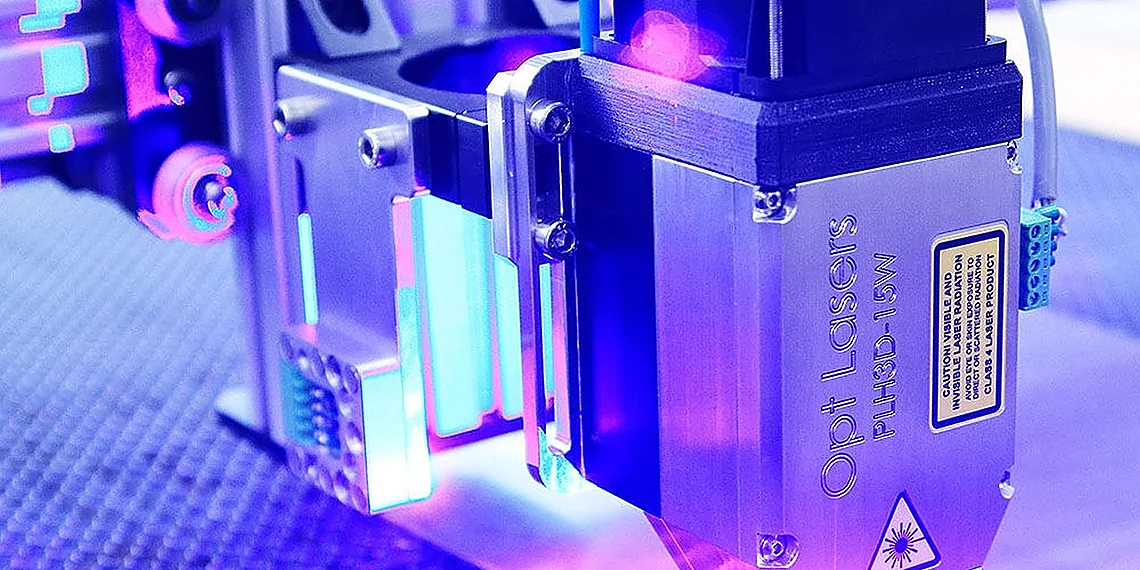

Imagine a world where powerful, precision tools once confined to laboratories are now fitting comfortably in your hand – that future is rapidly arriving.
For decades, laser technology felt like something out of science fiction, requiring bulky equipment and specialized expertise.
But groundbreaking advancements are shattering those perceptions, leading to an astonishing miniaturization we’re only beginning to understand.
The rise of portable lasers represents a paradigm shift, enabling applications previously deemed impossible or impractical due to size and power constraints – think advanced medical diagnostics in remote areas or incredibly precise manufacturing processes on-site. We’re seeing incredible innovation as researchers combine these shrinking devices with other cutting-edge technologies like AI and electrohydrodynamics to unlock entirely new possibilities across numerous fields including materials science, robotics, and even environmental remediation. The implications are profound, promising a wave of disruptive innovations in the years to come.

The Challenge: Shrinking Powerful Lasers
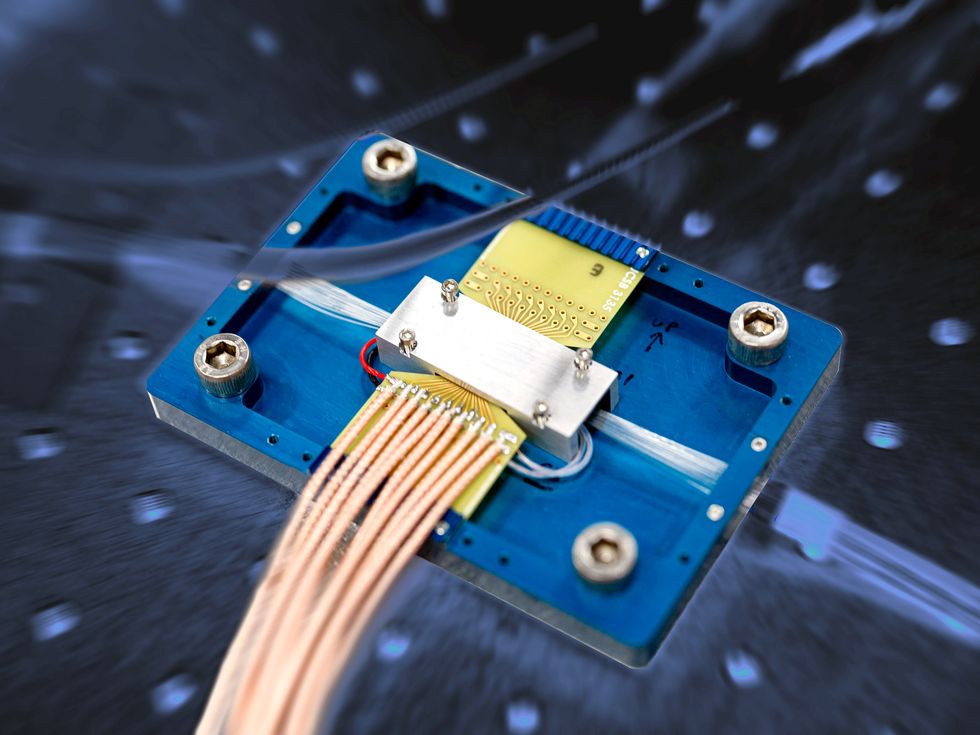
Traditional excimer lasers, widely used in applications like eye surgery (LASIK), semiconductor manufacturing, and materials processing, have long faced a fundamental challenge: their sheer size. These powerful tools rely on a process called ‘excimer’ formation – the creation of short-lived molecules that emit intense ultraviolet light when stimulated. The physics behind this process demands stringent conditions; excimer lasers require robust cooling systems to manage the heat generated during operation, precise and often large optical components to focus the beam, and frequently, vacuum environments to prevent unwanted reactions with atmospheric gases.
The need for these complex support systems directly translates into bulky equipment. A typical excimer laser setup can easily occupy a room or more, making them impractical for many field applications and severely limiting their deployment in resource-constrained settings. This lack of portability has been a significant hurdle, preventing widespread adoption in areas like remote medical procedures or on-site industrial processing where traditional, large-scale lab setups are simply not feasible. The cost associated with transporting and maintaining such cumbersome devices also adds to the overall expense.
Beyond physical size, the complexity of excimer lasers contributes to higher maintenance costs and requires specialized personnel for operation. This creates a barrier to entry for smaller businesses or research groups who might otherwise benefit from their capabilities. Therefore, reducing the footprint – and associated expenses – of these powerful tools has been a longstanding goal within the optics and photonics community, representing a significant technological challenge requiring innovative solutions.
Why Traditional Excimer Lasers Are So Big
Excimer lasers, widely used in precision manufacturing, laser eye surgery (LASIK), and scientific research, rely on a unique process called ‘excimer’ chemistry – short for excited dimers. These lasers don’t use traditional lasing mediums like ruby or neodymium; instead, they utilize reactive gas mixtures (like argon fluoride or krypton fluoride) that form temporary molecules which then decay to produce laser light. This fundamental requirement necessitates stringent operational conditions, primarily involving substantial cooling systems. The chemical reactions involved generate considerable heat, and without robust cooling mechanisms – often liquid nitrogen-based – the laser would quickly overheat and cease functioning.
Beyond cooling, excimer lasers demand high-quality optical components precisely aligned within a stable system. Because excimer molecules exist only fleetingly, the laser beam isn’t produced through a solid medium; it’s formed by stimulated emission within a gas discharge. This necessitates sophisticated mirrors and lenses with extremely tight tolerances to focus and direct the light. Furthermore, many excimer lasers require high vacuum or precisely controlled gas pressure environments to maintain optimal performance and prevent unwanted chemical reactions that could degrade the laser beam quality.
The combination of these factors – substantial cooling requirements, demanding optical precision, and often a need for vacuum or specialized gas handling – has historically made excimer lasers bulky and complex. This size and complexity significantly limited their portability, restricting their deployment to laboratory settings or dedicated facilities. The development of truly portable excimer lasers has been a long-standing challenge, requiring significant advancements in materials science, optical engineering, and now, as demonstrated by Prof. Xu’s team, innovative approaches like leveraging electrohydrodynamics and artificial intelligence.
Electrohydrodynamics: A New Approach
Traditional fluidic systems often rely on mechanical pumps – bulky components that limit miniaturization and introduce lag in response times. A revolutionary alternative is emerging: electrohydrodynamic (EHD) pumping. At its core, EHD leverages strong electric fields to directly manipulate fluids at the molecular level. Imagine a scenario where instead of pistons and valves, precisely controlled electrical forces are used to ‘push’ liquids through microchannels – this is the power of EHD.
The underlying principle is surprisingly elegant. When a voltage is applied between electrodes near a liquid surface, an electric field develops. This field interacts with charges present in the fluid (either naturally occurring ions or intentionally introduced), creating a body force that propels the fluid forward. Unlike mechanical pumps, EHD systems have no moving parts, leading to significantly smaller sizes and dramatically faster response times – crucial for applications demanding precision and speed.
The advantages of EHD extend beyond just size and responsiveness. Because there are no physical contacts involved in pumping, contamination risks are minimized, making it ideal for sensitive applications like drug delivery or micro-reactor technology. Furthermore, the precise control afforded by electric fields allows for complex fluidic operations – mixing, sorting, and even creating intricate patterns – that would be difficult or impossible to achieve with conventional methods. This opens up exciting new possibilities across numerous scientific and engineering disciplines.
The recent development of an ultra-compact excimer laser, as detailed in APL Photonics, showcases the potential of combining EHD with advanced technologies like lasers. By utilizing EHD for crucial fluidic processes within the laser system, researchers have dramatically reduced its size while maintaining performance – a testament to the transformative power of this innovative approach.
Understanding Electrohydrodynamic Pumping

Traditional fluidic systems, like those found in microfluidic devices, typically rely on mechanical pumps – tiny valves and diaphragms that push liquids through channels. These components add bulk, complexity, and introduce limitations in speed and responsiveness. Electrohydrodynamic (EHD) pumping offers a fundamentally different approach: it leverages strong electric fields to move fluids without any moving parts. Essentially, an applied voltage creates an electrical force on the fluid’s constituent molecules, causing them to migrate and generate flow.
The principle behind EHD is relatively straightforward. When a high-voltage electric field is applied between two electrodes, charges within the liquid redistribute themselves. This charge redistribution generates a body force – known as the Coulomb force – which propels the fluid. The magnitude of this force depends on factors like voltage, dielectric constant (a measure of how well a material insulates), and the geometry of the electrodes. By carefully designing these parameters, researchers can precisely control the flow rate and direction.
The advantages of EHD pumping are significant. Devices built with EHD are inherently smaller and simpler than those using mechanical pumps, leading to miniaturization opportunities. Furthermore, the response time is exceptionally fast – often in the microsecond range – because there’s no inertia from moving parts. This rapid response makes EHD particularly attractive for applications requiring precise control of fluid flow, such as advanced laser systems like the recently developed portable excimer laser discussed elsewhere in this article.
Machine Learning’s Role in Optimization
The groundbreaking development of an ultra-compact excimer laser, resembling a thermos bottle in size, hinges significantly on the application of machine learning algorithms. Researchers weren’t simply building a miniaturized laser; they were leveraging AI to optimize its performance within a novel electrohydrodynamic (EHD) framework. Traditional laser design involves complex and often cumbersome optical components. This new approach utilizes EHD – the manipulation of fluids using electric fields – to generate and focus the laser beam, but achieving optimal efficiency required tackling a vast parameter space involving voltage levels, excitation frequencies, electrode geometries, and gas mixtures.
To navigate this complexity, Prof. Liang Xu’s team employed a neural network trained on simulated and experimental data. The process began with defining key performance indicators – primarily laser output power and beam quality – which served as the target metrics for optimization. The AI was then tasked with iteratively adjusting the aforementioned parameters within defined ranges, predicting the resulting laser characteristics. This predictive capability allowed researchers to rapidly explore numerous configurations without needing to physically test each one exhaustively.
The training process itself involved a continuous cycle of simulation, experimentation, and refinement. Initial simulations provided broad insights into parameter relationships, while subsequent physical experiments validated these predictions and generated new data for the AI to learn from. This feedback loop allowed the neural network to progressively refine its understanding of how each parameter influenced laser performance. Validation datasets were crucial; they ensured that the optimized parameters not only performed well in the training environment but also maintained stability and efficiency under varying conditions.
Ultimately, this machine learning-driven optimization was instrumental in achieving a stable and powerful portable laser using EHD principles. Without AI’s ability to efficiently explore and optimize such a complex system, creating a device of this size and performance would have been significantly more challenging, if not impossible. The success highlights the growing synergy between artificial intelligence and cutting-edge physics, paving the way for further miniaturization and innovation in laser technology.
Training the AI: Refining Laser Efficiency
The development of this compact excimer laser relied heavily on machine learning to overcome inherent challenges in optimizing electrohydrodynamic (EHD) systems. Traditional methods for tuning parameters like voltage, frequency, electrode geometry, and gas composition are often time-consuming and require extensive experimentation. Recognizing this bottleneck, researchers employed a neural network to predict optimal settings based on simulated and experimental data. The AI model was trained to correlate input parameter combinations with resulting laser output metrics such as pulse energy and repetition rate.
The training process involved an iterative loop where the neural network would suggest parameter adjustments, these adjustments were then tested (either through simulation or physical experimentation), and the results fed back into the model to refine its predictions. This closed-loop system allowed for rapid exploration of a vast design space that would be impractical to navigate manually. Validation datasets, separate from the training data, were crucial to ensure the AI wasn’t simply memorizing patterns but was instead learning underlying physical principles governing EHD laser operation.
Specifically, the researchers used simulations alongside real-world measurements to generate a large dataset for training. This hybrid approach allowed them to efficiently explore parameter combinations and accelerate the optimization process significantly. The resulting AI model demonstrated a remarkable ability to predict optimal operating conditions, leading to substantial improvements in laser efficiency and paving the way for further miniaturization of EHD lasers.
Future Implications & Potential Applications
The emergence of truly portable lasers promises to revolutionize numerous fields, extending capabilities previously confined to bulky laboratory setups. Imagine a world where advanced surgical procedures can be performed in remote locations with minimal equipment, or autonomous vehicles benefit from dramatically smaller and more efficient LiDAR systems for enhanced navigation. This isn’t science fiction; the recent breakthrough in creating an excimer laser roughly the size of a thermos bottle signifies a tangible step towards these possibilities. The combination of AI-driven optimization and electrohydrodynamics opens doors to designs that were previously unimaginable, allowing for significant reductions in size while maintaining performance.
Within healthcare, portable lasers hold immense potential for expanding access to specialized treatments. Remote surgical assistance, particularly valuable in underserved communities or disaster relief scenarios, becomes a much more realistic prospect. Beyond surgery, applications like ophthalmology and dermatology could see the development of handheld devices for targeted therapies with improved precision and reduced invasiveness. Furthermore, scientific research itself stands to benefit – researchers can deploy compact laser systems in field studies for atmospheric sensing, environmental monitoring, or even geological exploration, drastically reducing logistical barriers.
Beyond medical applications, consider the impact on industries like materials processing and automotive technology. Miniaturized lasers could enable more precise and efficient manufacturing techniques, leading to advancements in fields ranging from microelectronics fabrication to additive manufacturing. The development of compact LiDAR systems for autonomous vehicles is another exciting prospect. Smaller, lighter, and more energy-efficient LiDAR sensors would contribute directly to improved vehicle performance, safety, and overall design aesthetics. Future iterations might even integrate these lasers into consumer electronics like smartphones for advanced imaging or sensing capabilities.
Looking ahead, the continued refinement of AI algorithms and electrohydrodynamic techniques will likely lead to even smaller and more powerful portable laser systems. We can anticipate increased efficiency, broader wavelength options, and improved beam control. The convergence of these technologies signifies a shift towards decentralized and accessible high-precision tools, fundamentally altering how we interact with and manipulate light in countless applications – marking a new era for optics and photonics.
Beyond the Lab: Real-World Possibilities
The advent of portable lasers, exemplified by recent breakthroughs like the thermos-bottle-sized excimer laser developed in China, unlocks a plethora of real-world applications previously limited by bulky and power-hungry systems. One particularly impactful area is remote healthcare. Imagine surgeons performing delicate procedures in underserved communities or disaster zones using compact, battery-powered surgical lasers – significantly expanding access to specialized medical care where traditional equipment is impractical. The portability also allows for personalized treatments and potentially even at-home laser therapies under appropriate medical supervision.
Beyond medicine, portable lasers are poised to revolutionize autonomous vehicle technology. Current lidar (Light Detection and Ranging) systems, crucial for self-driving cars, are often large and complex. Miniaturized, high-performance lidar based on portable laser platforms could drastically reduce the size and cost of these systems while improving resolution and range. This advancement would not only benefit automotive applications but also extend to robotics, mapping drones, and other fields requiring precise distance measurement and environmental perception.
Looking ahead, we can anticipate even more specialized uses for portable lasers. Miniaturized tools for precision materials processing – think micro-machining of semiconductors or intricate laser etching on various surfaces – are becoming increasingly feasible. Further integration with AI could lead to adaptive laser systems that automatically adjust power and focus based on material properties and desired outcomes. The convergence of artificial intelligence, electrohydrodynamics, and advanced optics promises a future where powerful laser technology is accessible and adaptable for diverse applications across numerous industries.
The convergence of electrohydrodynamics (EHD) and artificial intelligence is rapidly reshaping possibilities across numerous fields, and our exploration of this intersection has revealed a truly remarkable trajectory.
From precision manufacturing to advanced medical treatments, the ability to manipulate electric fields with such granular control unlocks solutions previously confined to theoretical realms.
The development of increasingly sophisticated AI algorithms is proving crucial in optimizing EHD systems, allowing for dynamic adjustments and real-time feedback loops that dramatically improve efficiency and accuracy – a key factor enabling technologies like compact, powerful portable lasers.
We’ve seen how these advancements can lead to lighter, more energy-efficient devices with unprecedented capabilities, promising breakthroughs in areas ranging from propulsion to material science and beyond. The potential for miniaturization alone is staggering, opening doors to applications we are only beginning to imagine today. The synergy between AI and EHD isn’t merely incremental; it’s fundamentally transformative, pushing the boundaries of what’s achievable with electric fields and light manipulation combined. It truly represents a new era in engineering innovation and problem solving across multiple sectors. The future is bright, charged with possibilities, and powered by this unique combination of disciplines. Staying informed about these developments will be vital for anyone seeking to understand the next wave of technological advancement. We encourage you to remain curious and engaged as this fascinating field continues its rapid evolution.
Continue reading on ByteTrending:
Discover more tech insights on ByteTrending ByteTrending.
Discover more from ByteTrending
Subscribe to get the latest posts sent to your email.