
The relentless pursuit of ever more powerful artificial intelligence is ushering in a new era, one defined by colossal computational demands and unprecedented energy consumption.
We’re moving beyond the idea of server farms to something fundamentally different: sprawling facilities we’re calling ‘Gigawatt AI Factories,’ environments designed from the ground up to house and power the next generation of models.
These aren’t just upgrades; they represent a paradigm shift, enabling breakthroughs like those achieved by projects training massive cosmological simulations or powering advanced scientific instruments such as the Vera Rubin Observatory.
The sheer scale required for these endeavors necessitates robust and specialized AI Infrastructure – think liquid cooling systems capable of handling immense heat loads, custom power distribution networks, and tightly integrated hardware-software ecosystems optimized for peak performance. It’s a far cry from traditional data centers’ capabilities, demanding entirely new architectural approaches to computing resources and energy management. NVIDIA is undeniably at the forefront of this revolution, providing the GPUs and software platforms that are making these Gigawatt AI Factories not just possible, but increasingly essential for pushing the boundaries of what AI can achieve.


The Rise of Gigawatt AI Factories
The landscape of artificial intelligence is undergoing a profound shift, moving beyond incremental improvements to an era defined by massive scale. This transformation isn’t just about algorithms; it demands entirely new approaches to infrastructure. We’re witnessing the emergence of ‘Gigawatt AI Factories,’ sprawling facilities consuming power levels previously unheard of in data centers – often exceeding one gigawatt (GW) and rapidly approaching multiple GWs. These aren’t simply larger versions of existing data centers, but fundamentally redesigned ecosystems built from the ground up to support the insatiable demands of increasingly complex AI models, particularly Large Language Models (LLMs), and other computationally intensive workloads.
The driving force behind this infrastructure revolution is the relentless pursuit of greater intelligence. Each new generation of LLMs—GPT-4, Gemini, LLaMA 2, and beyond—is significantly larger than its predecessor, boasting billions or even trillions of parameters. Training these models requires colossal datasets processed through vast networks of specialized AI accelerators like GPUs and TPUs. Inference – using the trained model to generate responses – also demands substantial resources, especially for applications requiring low latency and high throughput. The sheer scale of computation involved necessitates a radical rethinking of how we design, power, and cool these AI systems.
Exponential Growth in AI Model Size
The growth trajectory of LLM size is nothing short of exponential. In 2018, models like BERT had around 340 million parameters. Today’s leading LLMs routinely possess hundreds of billions or even trillions of parameters – a thousand-fold increase in just five years. This expansion isn’t merely about adding more numbers; each parameter represents a connection that must be processed during both training and inference, dramatically increasing the computational requirements. For instance, training GPT-3 was estimated to have cost around $4.6 million in compute alone, while training newer models likely incurs costs several times higher.
This exponential growth translates directly into an escalating demand for compute power. Training a model with trillions of parameters can require weeks or even months on thousands of high-end GPUs or TPUs. Inference workloads are similarly impacted; serving millions of users simultaneously necessitates vast clusters of accelerators operating at peak efficiency. The cost implications are staggering, making the development and deployment of these models accessible only to organizations with significant resources and a willingness to invest in specialized infrastructure.
Beyond Traditional Data Centers
Traditional data centers were designed for general-purpose computing tasks, prioritizing flexibility and broad compatibility. While they can certainly host AI workloads, their architecture isn’t optimized for the unique demands of LLMs and other large-scale AI applications. They often rely on standardized power distribution units (PDUs) and cooling systems that are inefficient when dealing with the concentrated heat generated by dense arrays of AI accelerators. Furthermore, traditional data centers frequently lack the specialized networking infrastructure needed to move massive datasets between GPUs at the required speeds.
Gigawatt AI Factories, in contrast, are purpose-built environments. They often incorporate custom power delivery architectures (e.g., direct liquid cooling and high-voltage power distribution) designed to maximize efficiency and minimize energy loss. Cooling systems are also radically different, frequently employing immersion cooling or other advanced techniques to manage the intense heat generated by thousands of GPUs operating at near maximum capacity. Networking is also a key differentiator, with factories utilizing custom interconnects like NVIDIA’s NVLink or similar technologies to enable high-bandwidth communication between accelerators, drastically reducing latency and accelerating training times. These facilities prioritize density, efficiency, and scalability above all else – characteristics that are simply not possible within the constraints of traditional data center designs.
NVIDIA Vera Rubin: The Cornerstone
A seismic shift is occurring in the landscape of artificial intelligence: the rise of ‘Gigawatt AI Factories.’ These aren’t traditional data centers; they are purpose-built facilities designed to house and operate colossal AI models, demanding unprecedented levels of computing power and specialized infrastructure. Unlike general-purpose cloud providers, these factories prioritize raw performance for training and inference, often catering to hyperscalers, research institutions, and companies developing cutting-edge generative AI. The emergence of these Gigawatt AI Factories signals a new era where computational resources are as critical – and expensive – as the algorithms themselves, fundamentally reshaping how AI is developed and deployed.
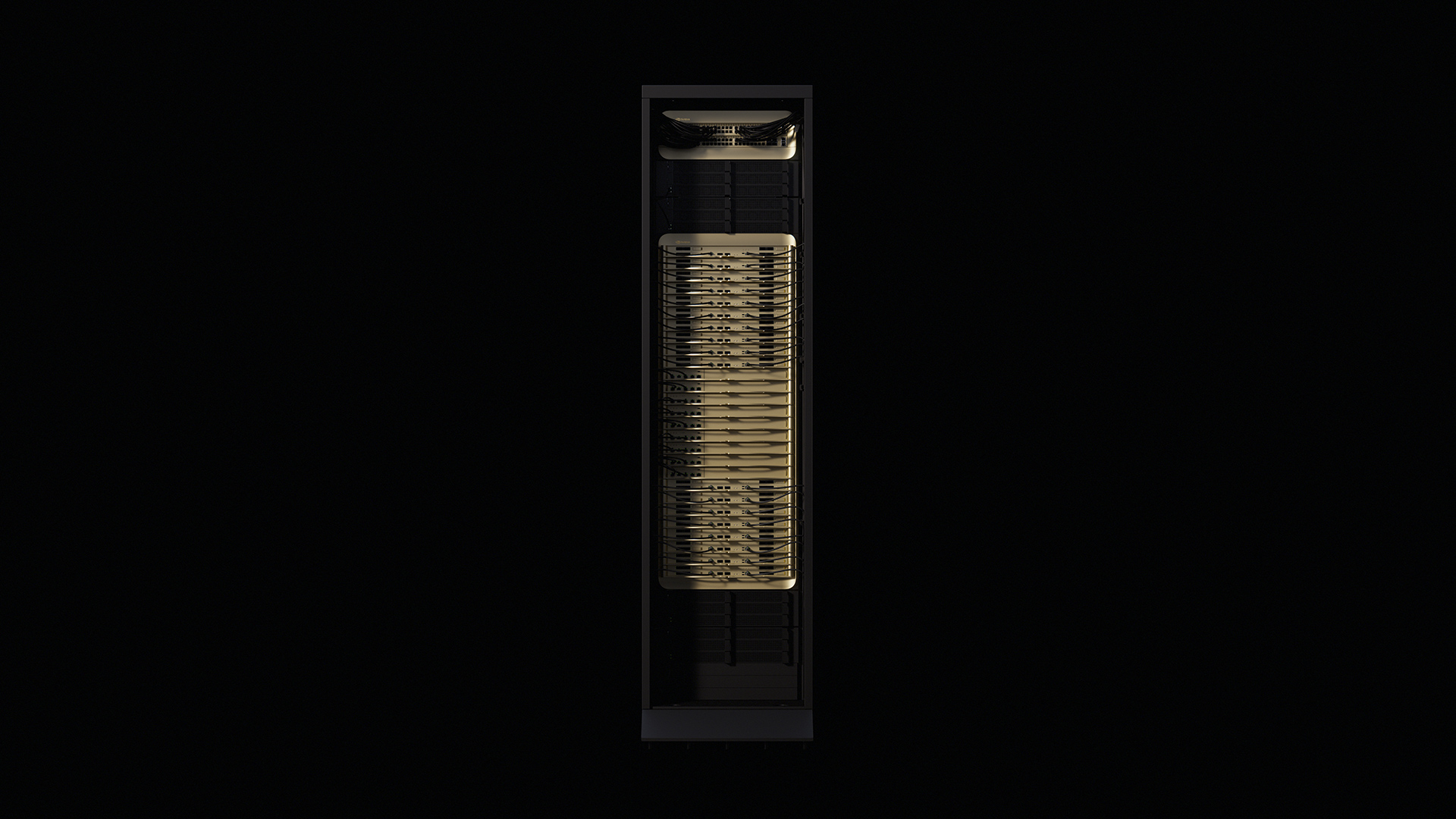
At the heart of this revolution lies a crucial hardware component: NVIDIA’s Vera Rubin server. More than just a server rack, it represents a carefully engineered system designed to maximize GPU density, performance, and efficiency specifically for demanding AI workloads. The Vera Rubin isn’t merely selling GPUs; it’s offering an integrated solution – power delivery, cooling, interconnectivity, and management software – optimized for the unique needs of these Gigawatt AI Factories, effectively lowering the barrier to entry for organizations seeking massive-scale AI capabilities.
The sheer scale involved is staggering. A single Vera Rubin deployment can consume upwards of 100 megawatts of power, requiring significant investment in dedicated energy infrastructure and sophisticated cooling solutions. This specialization underscores a move away from shared cloud resources toward customized, high-performance environments tailored for the most computationally intensive AI applications. The proliferation of these factories suggests that the demand for specialized AI infrastructure is only going to intensify in the coming years.
NVL144 Architecture & Specs
The NVIDIA Vera Rubin server utilizes the NVL144 architecture, a monumental advancement in rack-scale computing. Each NVL144 unit is designed to accommodate up to eight NVIDIA H100 or HB200 Tensor Core GPUs – the current flagship offerings for AI training and inference. This configuration provides an astonishing 32 terabytes of HBM3e memory across those eight GPUs, facilitating the handling of exceptionally large model sizes that are increasingly common in generative AI applications.
Power consumption is a key consideration within Gigawatt AI Factories. The NVL144 rack server is engineered for high power density while maintaining thermal stability. While peak power draw per unit can exceed 700 watts per GPU, NVIDIA’s advanced cooling solutions – including liquid cooling – are crucial for managing this heat load efficiently and preventing performance throttling. The architecture also prioritizes energy efficiency, striving to maximize compute performance per watt consumed.
Beyond raw specifications, the NVL144 incorporates several architectural improvements aimed at simplifying deployment and management. These include advanced power distribution units (PDUs) designed for high-density environments, redundant cooling systems for increased reliability, and integrated monitoring tools providing real-time insights into server health and performance. The chassis itself is optimized to minimize footprint and maximize GPU density within the rack space.
Kyber Interconnect: Scaling GPU Power
One of the most significant challenges in building Gigawatt AI Factories is scaling GPU resources efficiently. Simply adding more servers isn’t enough; the interconnectivity between those servers must be fast and low-latency to prevent bottlenecks that would cripple performance. This is where NVIDIA’s Kyber Interconnect technology becomes indispensable.
Kyber allows for a truly massive scale-out architecture, enabling connections of up to 576 Vera Rubin Ultra GPUs in a single system. This interconnect boasts significantly higher bandwidth and lower latency compared to previous generations, effectively creating a unified computing pool that behaves as a single, powerful resource. The Kyber links operate at speeds exceeding 900 GB/s per GPU pair, minimizing communication overhead during distributed training.
The benefits of this scale-out capability extend beyond raw performance. It allows for greater flexibility in workload distribution and fault tolerance – if one GPU fails, the impact is minimized as the remaining resources can compensate. This interconnected fabric also simplifies software development by providing a more uniform view of the underlying hardware, abstracting away much of the complexity associated with managing disparate servers. The ability to scale to such a high density of GPUs, while maintaining performance and reliability, is a defining characteristic of NVIDIA’s approach to enabling Gigawatt AI Factories.
Open Compute Project (OCP) Collaboration
The rapid proliferation of generative artificial intelligence models is creating unprecedented demand for specialized compute infrastructure – a need that’s driving the emergence of massive, purpose-built AI factories. These aren’t your typical data centers; they are meticulously designed environments optimized solely for training and deploying large language models (LLMs) and other computationally intensive AI workloads. Early examples showcase designs consuming hundreds of megawatts, significantly exceeding traditional data center power budgets. The scale is staggering, pushing the limits of existing infrastructure and necessitating a new approach to both hardware and software architecture.
A key trend shaping these emerging AI factories is the shift towards open standards and collaborative development. Rather than relying on proprietary solutions, leading players are embracing open-source principles to accelerate innovation and reduce costs. This paradigm shift fosters wider adoption and enables more organizations to participate in the AI revolution. Crucially, it allows for greater flexibility and customization – essential qualities when dealing with the constantly evolving landscape of AI models and algorithms.
NVIDIA is at the forefront of this movement, actively partnering with the Open Compute Project (OCP) to define and build out next-generation AI infrastructure. This collaboration isn’t just about building faster hardware; it’s about establishing a foundation for sustainable growth in the AI ecosystem by promoting interoperability and reducing vendor lock-in. The Vera Rubin Observatory’s ambitious computational demands, requiring exascale computing capabilities, have become a significant proving ground for these collaborative efforts.
MGX Partner Ecosystem
The Vera Rubin Observatory’s (VRO) ambitious scientific goals – mapping the entire visible sky to detect dark matter and energy – necessitate an unprecedented level of computational power. To achieve this, NVIDIA’s MGX (Modular GPU eXtensible) initiative has fostered a robust partner ecosystem working in tandem with OCP principles. Over 50 partners are actively involved in building out the VRO infrastructure, contributing expertise across diverse areas including liquid cooling solutions, custom server designs, networking hardware, and software optimization.
These partnerships extend beyond simply supplying components; they represent collaborative engineering efforts aimed at pushing the boundaries of AI infrastructure performance. Examples include companies specializing in high-density rack designs to maximize compute density within a limited footprint, vendors developing advanced thermal management systems capable of handling the immense heat generated by thousands of GPUs, and software developers creating optimized libraries for accelerating AI workloads on MGX-compliant hardware. The collective knowledge and resources of this extensive network are instrumental in realizing VRO’s exascale computing vision.
The collaborative nature is particularly vital as each partner brings unique strengths to the table. Some focus on specialized cooling techniques – crucial given the power density challenges – while others contribute expertise in high-bandwidth networking, enabling efficient data transfer between GPUs during training. This division of labor and shared innovation significantly accelerates development cycles and reduces overall costs compared to traditional, vertically integrated approaches.
Standardization for Efficiency
The Open Compute Project’s (OCP) core philosophy revolves around open-source hardware designs and standardized components. This approach directly addresses the scalability challenges presented by AI factories, fostering efficiency gains across multiple dimensions. By moving away from proprietary solutions, OCP promotes interoperability – allowing organizations to mix and match hardware from different vendors without compatibility issues.
The benefits of standardization extend beyond mere compatibility. Open designs enable greater customization; organizations can adapt existing blueprints to meet their specific workload requirements rather than being constrained by vendor-specific offerings. This flexibility is particularly valuable in the rapidly evolving field of AI, where new model architectures and training techniques frequently emerge. Standardized components also drive down costs through increased competition and economies of scale – a significant advantage for companies building out large-scale AI infrastructure.
Furthermore, OCP’s commitment to open documentation and community collaboration dramatically reduces deployment times. Detailed specifications and readily available design resources allow organizations to quickly build and deploy new AI factories without reinventing the wheel. This accelerated development cycle is crucial in keeping pace with the relentless demand for increased computational power driven by the advancements in generative AI.
Implications & Future Outlook
The emergence of “gigawatt AI factories” – massive data centers specifically designed to house the immense computational resources required for training cutting-edge artificial intelligence models – represents a paradigm shift in how AI is developed. These facilities, consuming power on par with entire cities (and often exceeding one gigawatt), are no longer theoretical concepts; they’re rapidly becoming operational realities driven by the relentless pursuit of ever-larger and more capable language models, generative image tools, and other complex AI systems. Companies like Microsoft, Google, Amazon, and increasingly specialized providers are investing heavily in these infrastructures to maintain a competitive edge, triggering an arms race for AI compute capacity that is reshaping the global technology landscape.
Historically, access to the resources necessary to train state-of-the-art AI models has been limited to organizations with deep pockets and established data center infrastructure. The costs associated with procuring thousands of high-powered GPUs or TPUs (Tensor Processing Units), along with the supporting power and cooling systems, effectively created a significant barrier for smaller research teams, startups, and academic institutions. Gigawatt AI factories are indirectly changing this dynamic; while individual access to these facilities may still be premium, they are driving down the overall cost per unit of compute over time through economies of scale and innovation in hardware design. This increased efficiency makes advanced AI development more feasible for a wider range of actors.
Beyond simply enabling larger models, the rise of these factories is also influencing architectural decisions within the AI field itself. The sheer scale of power consumption incentivizes researchers to develop more energy-efficient algorithms and hardware accelerators. It’s fostering a feedback loop where the demand for greater compute drives innovation in both AI model design *and* the underlying infrastructure that supports it, leading to potentially faster advancements across the board.
Democratizing Access to AI Power
While direct access to a gigawatt-scale facility remains exclusive for now, the existence of these factories is indirectly contributing to democratization within the AI development ecosystem. The pressure on major cloud providers to offer competitive pricing and specialized services – including access to powerful GPUs or TPUs – is intensifying. This competition translates into more affordable options for smaller organizations and researchers who previously lacked the resources to train large models.
The emergence of ‘AI-as-a-Service’ platforms, built upon these massive data centers, further lowers the barrier to entry. Researchers can leverage pre-configured environments and pay only for the compute they use, avoiding significant upfront capital expenditure on hardware or infrastructure management. This shift moves AI development away from a model requiring large in-house teams and expensive equipment towards a more accessible, cloud-based paradigm.
Furthermore, open-source initiatives and collaborative research efforts are increasingly benefiting from these advancements. Researchers can leverage publicly available datasets and pre-trained models that have been trained on infrastructure similar to those found in gigawatt factories, allowing them to fine-tune or adapt existing AI for specific applications without needing to train a model from scratch.
Challenges in Power & Cooling
The staggering power consumption of gigawatt AI factories presents significant challenges. A single facility consuming over one gigawatt requires enormous amounts of electricity, placing strain on local power grids and potentially contributing to carbon emissions if the energy source is not renewable. This necessitates careful planning for grid connectivity, potential investments in localized power generation (e.g., solar farms or wind turbines), and a strong commitment to sustainable energy sources.
Beyond power supply, managing heat dissipation is another critical hurdle. Thousands of GPUs operating at peak performance generate immense amounts of thermal energy that must be removed efficiently to prevent equipment failure and maintain stable operation. Traditional air cooling methods are often insufficient for these facilities, leading to exploration of more advanced techniques like liquid cooling (direct-to-chip or immersion cooling) and even novel approaches such as using captured carbon dioxide as a coolant.
The environmental impact goes beyond just power and cooling. Water usage for some cooling systems is also a concern in water-scarce regions. Innovations are being sought that minimize water consumption, such as dry cooling technologies or utilizing recycled water sources. The entire lifecycle of the hardware used within these factories – from manufacturing to eventual disposal – also requires careful consideration to mitigate environmental impact and promote circular economy principles.
Source: Read the original article here.
Discover more tech insights on ByteTrending ByteTrending.
Discover more from ByteTrending
Subscribe to get the latest posts sent to your email.