ByteTrending
  • Home
    • About ByteTrending
    • Contact us
    • Privacy Policy
    • Terms of Service
  • Tech
  • Science
  • Review
  • Popular
  • Curiosity
Donate
No Result
View All Result
ByteTrending
No Result
View All Result
Home Science
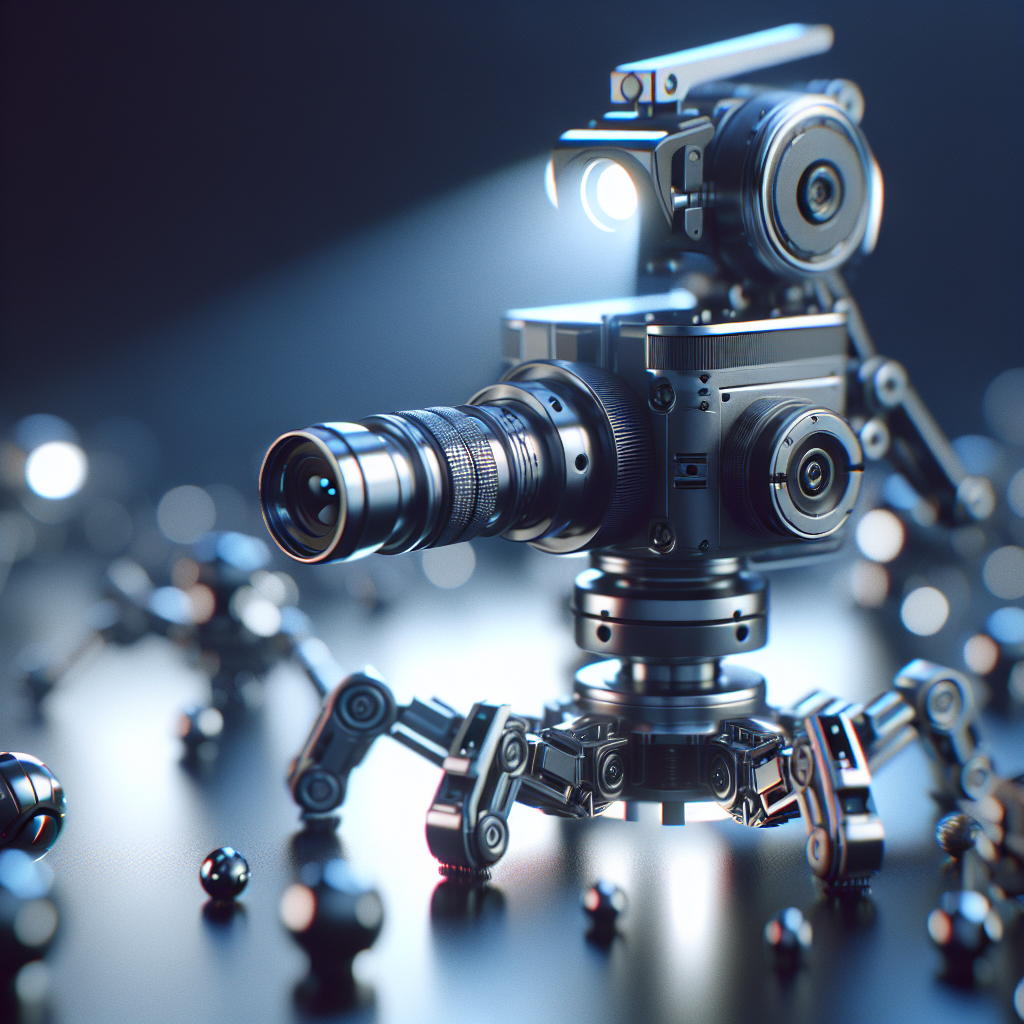
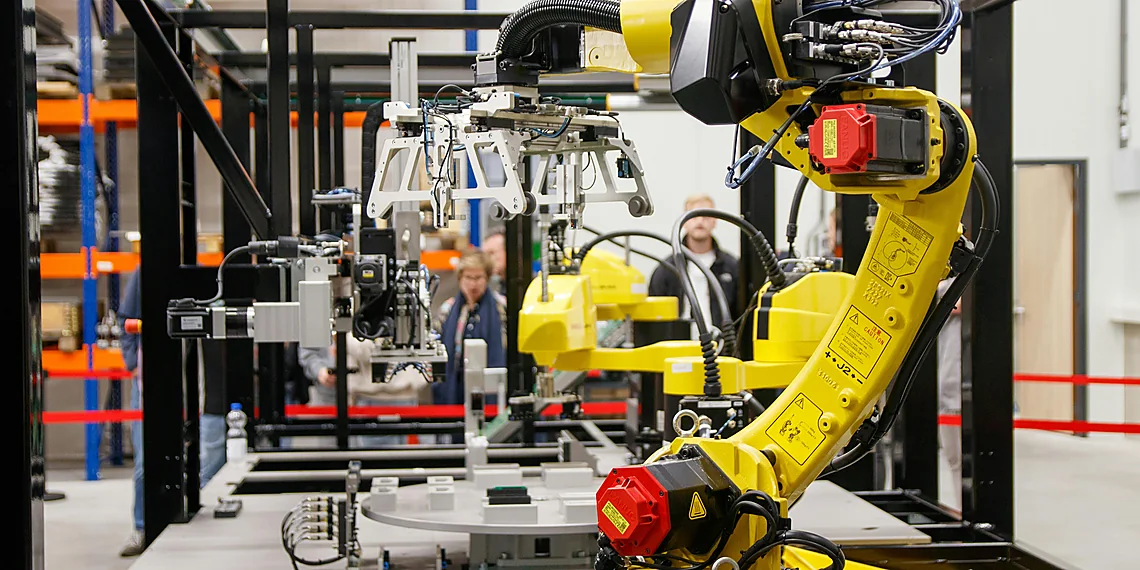
Related image for robotics

Robotics: The Future is Here – What You Need to Know

ByteTrending by ByteTrending
October 19, 2025
in Science, Tech
Reading Time: 2 mins read
0
Share on FacebookShare on ThreadsShare on BlueskyShare on Twitter

Related Post

socially assistive robotics supporting coverage of socially assistive robotics

Socially Assistive Robotics: Integrating Cognition for Human Support

May 24, 2026
ai quantum computing supporting coverage of ai quantum computing

ai quantum computing How Artificial Intelligence is Shaping

May 5, 2026

Construction Robots: How Automation is Building Our Homes

May 5, 2026

Why Reinforcement Learning Needs to Rethink Its Foundations

May 5, 2026

Chatbots like ChatGPT and Claude have experienced a remarkable surge in popularity over the past three years due to their ability to assist with diverse tasks—from crafting Shakespearean sonnets to debugging code. The versatility of these artificial intelligence systems stems from training on billions, even trillions, of data points extracted from across the internet. However, this vast dataset isn’t sufficient for teaching a robot how to perform practical tasks like handling objects in a kitchen or factory setting. Robots need demonstrations—essentially, video tutorials showing each step of a process. Collecting these demonstrations using real robots is incredibly time-consuming and often yields inconsistent results; therefore, engineers have explored alternative methods like AI-generated simulations (which can lack realism) or painstakingly handcrafted digital environments.

Revolutionizing Robot Training with Steerable Scene Generation

Researchers at MIT’s Computer Science and Artificial Intelligence Laboratory (CSAIL) and the Toyota Research Institute are pioneering a new approach to address this challenge. Their innovative “steerable scene generation” method creates realistic, digital environments—like kitchens, living rooms, and restaurants—perfect for simulating countless real-world interactions and scenarios. This tool is trained on over 44 million 3D room models containing objects like tables and plates, enabling it to place existing assets in new scenes and refine them into physically accurate, lifelike environments.

How Steerable Scene Generation Works

The process begins by “steering” a diffusion model—an AI system that generates visuals from random noise—towards the creation of a recognizable scene. Essentially, it’s like starting with static and gradually transforming it into a detailed kitchen filled with 3D objects. These objects are then carefully arranged to accurately reflect real-world physics; for instance, ensuring a fork doesn’t pass through a bowl on a table—a common problem known as “clipping” in 3D graphics.

The Power of Monte Carlo Tree Search

A key element driving the realism and complexity of these generated scenes is the use of Monte Carlo tree search (MCTS). This technique allows the model to explore various alternative scene arrangements, optimizing for specific objectives—such as maximizing physical accuracy or including a high number of edible items. Notably, MCTS is also employed in AlphaGo, enabling it to defeat human opponents in the game of Go by strategically considering potential moves. As researchers explain, “We are the first to apply MCTS to scene generation by framing the scene generation task as a sequential decision-making process,” creating scenes more complex than what the diffusion model was initially trained on.

Expanding the Boundaries of Simulated Environments

The effectiveness of this approach is demonstrated through a compelling experiment where MCTS enabled the system to populate a simple restaurant scene with an impressive 34 items—a significant increase compared to the average of 17 objects in its training data. This showcases how steerable scene generation can go beyond simply recreating existing environments; it facilitates the creation of novel, complex scenarios for robot training. For example, this expanded dataset allows robots to learn about different table layouts and plate arrangements.

The Impact on Robotics and Automation


Source: Read the original article here.

Discover more tech insights on ByteTrending.

Share this:

  • Share on Facebook (Opens in new window) Facebook
  • Share on Threads (Opens in new window) Threads
  • Share on WhatsApp (Opens in new window) WhatsApp
  • Share on X (Opens in new window) X
  • Share on Bluesky (Opens in new window) Bluesky

Like this:

Like Loading…

Discover more from ByteTrending

Subscribe to get the latest posts sent to your email.
Tags: AIDiffusionMCTSRoboticssimulation

Related Posts

socially assistive robotics supporting coverage of socially assistive robotics
AI

Socially Assistive Robotics: Integrating Cognition for Human Support

by Sofia Navarro
May 24, 2026
ai quantum computing supporting coverage of ai quantum computing
AI

ai quantum computing How Artificial Intelligence is Shaping

by Sofia Navarro
May 5, 2026
construction robots supporting coverage of construction robots
Popular

Construction Robots: How Automation is Building Our Homes

by Sofia Navarro
May 5, 2026
Next Post
AI-generated image for microrobots

3D-Printed Microrobots Adapt to Environments

Leave a ReplyCancel reply

Recommended

Related image for Ray-Ban hack

Ray-Ban Hack: Disabling the Recording Light

October 24, 2025
Generative Video AI supporting coverage of generative video AI

Generative Video AI Sora’s Debut: Bridging Generative AI Promises

May 5, 2026
Related image for Ray-Ban hack

Ray-Ban Hack: Disabling the Recording Light

October 28, 2025
Diagram comparing Amazon Bedrock and OpenSearch for hybrid RAG search implementation.

Hybrid RAG search Amazon Bedrock vs OpenSearch: Which Search

May 5, 2026
Generative AI inference deployment supporting coverage of Generative AI inference deployment

SageMaker vs Bare Metal for Generative AI Inference Deployment

May 24, 2026
AI agent performance loop supporting coverage of AI agent performance loop

AI Agent Performance Loop: How to Keep AI Agents Reliable After

May 24, 2026
AI sparsity hardware supporting coverage of AI sparsity hardware

AI Sparsity Hardware: How Hardware Sparsity Can Make Massive AI

May 15, 2026
Cybersecurity consultant skills supporting coverage of Cybersecurity consultant skills

Cybersecurity Consultant Skills: What Changes for Enterprise AI

May 15, 2026
ByteTrending

ByteTrending is your hub for technology, gaming, science, and digital culture, bringing readers the latest news, insights, and stories that matter. Our goal is to deliver engaging, accessible, and trustworthy content that keeps you informed and inspired. From groundbreaking innovations to everyday trends, we connect curious minds with the ideas shaping the future, ensuring you stay ahead in a fast-moving digital world.
Read more »

Pages

  • Contact us
  • Privacy Policy
  • Terms of Service
  • About ByteTrending
  • Home
  • Authors
  • AI Models and Releases
  • Consumer Tech and Devices
  • Space and Science Breakthroughs
  • Cybersecurity and Developer Tools
  • Engineering and How Things Work

Categories

  • AI
  • Curiosity
  • Popular
  • Review
  • Science
  • Tech

Follow us

Advertise

Reach a tech-savvy audience passionate about technology, gaming, science, and digital culture.
Promote your brand with us and connect directly with readers looking for the latest trends and innovations.

Get in touch today to discuss advertising opportunities: Click Here

© 2025 ByteTrending. All rights reserved.

No Result
View All Result
  • Home
    • About ByteTrending
    • Contact us
    • Privacy Policy
    • Terms of Service
  • Tech
  • Science
  • Review
  • Popular
  • Curiosity

© 2025 ByteTrending. All rights reserved.

%d