ByteTrending
  • Home
    • About ByteTrending
    • Contact us
    • Privacy Policy
    • Terms of Service
  • Tech
  • Science
  • Review
  • Popular
  • Curiosity
Donate
No Result
View All Result
ByteTrending
No Result
View All Result
Home Science
Related image for diffusion

Steering Diffusion Models with Anisotropic Noise

ByteTrending by ByteTrending
October 16, 2025
in Science, Tech
Reading Time: 2 mins read
0
Share on FacebookShare on ThreadsShare on BlueskyShare on Twitter

Related Post

socially assistive robotics supporting coverage of socially assistive robotics

Socially Assistive Robotics: Integrating Cognition for Human Support

May 24, 2026
ai quantum computing supporting coverage of ai quantum computing

ai quantum computing How Artificial Intelligence is Shaping

May 5, 2026

Construction Robots: How Automation is Building Our Homes

May 5, 2026

Why Reinforcement Learning Needs to Rethink Its Foundations

May 5, 2026

Understanding Spectrally Anisotropic Gaussian Diffusion (SAGD)

Diffusion Probabilistic Models (DPMs) have revolutionized generative AI, consistently producing remarkable results across various domains. However, a persistent challenge lies in comprehending and controlling their inherent inductive biases – the built-in assumptions that guide the learning process. New research introduces Spectrally Anisotropic Gaussian Diffusion (SAGD), offering a refined approach to shape these crucial biases for significantly improved generative performance. Essentially, SAGD provides an innovative way to manage the diffusion process.

The Core Innovation: Anisotropic Noise

Traditional DPMs typically employ isotropic forward noise, which means that noise is added uniformly across all frequencies during the diffusion process. SAGD diverges from this convention by utilizing an anisotropic noise operator. This involves replacing uniform noise with a structured covariance matrix, effectively allowing for targeted emphasis or suppression of specific frequency bands. Consequently, instead of adding noise equally in all directions, SAGD enables control over particular frequencies.

Key Benefits and Unification

  • Unifies Existing Techniques: SAGD elegantly combines the benefits of band-pass masks (which filter out certain frequencies) and power-law weightings (which scale noise based on frequency).
  • Gaussian Process Preservation: Notably, SAGD maintains the Gaussian nature of the forward process, which is vital for mathematical tractability and efficient training.
  • Probability Flow Shaping: The anisotropy reshapes the ‘probability-flow path,’ – the trajectory taken from pure noise towards a generated data sample – thereby enabling finer control over the generation process. Furthermore, this reshaping contributes to more predictable outcomes in the diffusion model’s behavior.

Practical Implications & Selective Omission

The research team convincingly demonstrated SAGD’s effectiveness through rigorous empirical testing across several vision datasets. The results were compelling; SAGD consistently outperformed standard diffusion models, showcasing its practical advantages. In addition to improved performance, SAGD’s design opens up avenues for more interpretable and controllable generative processes.

Selective Omission – A Powerful Feature

Perhaps the most exciting aspect of SAGD is its ability to perform ‘selective omission.’ This innovative feature allows the model to learn to ignore known corruptions or noise present in specific frequency bands. For example, if a dataset contains artifacts predominantly at a certain frequency, SAGD can be configured to effectively disregard them during training, leading to cleaner and more accurate generations. As a result, generated outputs are less susceptible to inheriting these unwanted artifacts.

Selective Omission Visualization Placeholder
Illustrating how SAGD can selectively ignore known corruptions in specific frequency bands.

Conclusion: A Principled Approach to Inductive Bias

The introduction of Spectrally Anisotropic Gaussian diffusion (SAGD) signifies a substantial advancement in the development of diffusion models. By providing a simple, yet principled method for tailoring inductive bias through carefully designed anisotropic noise, SAGD not only enhances generative performance but also unlocks exciting new possibilities for selective learning and robust model training. Consequently, SAGD represents a valuable tool for researchers and practitioners seeking to refine and control the behavior of generative AI systems.


Source: Read the original article here.

Discover more tech insights on ByteTrending.

Share this:

  • Share on Facebook (Opens in new window) Facebook
  • Share on Threads (Opens in new window) Threads
  • Share on WhatsApp (Opens in new window) WhatsApp
  • Share on X (Opens in new window) X
  • Share on Bluesky (Opens in new window) Bluesky

Like this:

Like Loading…

Discover more from ByteTrending

Subscribe to get the latest posts sent to your email.
Tags: AIDiffusionGenerativeNoiseSAGD

Related Posts

socially assistive robotics supporting coverage of socially assistive robotics
AI

Socially Assistive Robotics: Integrating Cognition for Human Support

by Sofia Navarro
May 24, 2026
ai quantum computing supporting coverage of ai quantum computing
AI

ai quantum computing How Artificial Intelligence is Shaping

by Sofia Navarro
May 5, 2026
construction robots supporting coverage of construction robots
Popular

Construction Robots: How Automation is Building Our Homes

by Sofia Navarro
May 5, 2026
Next Post
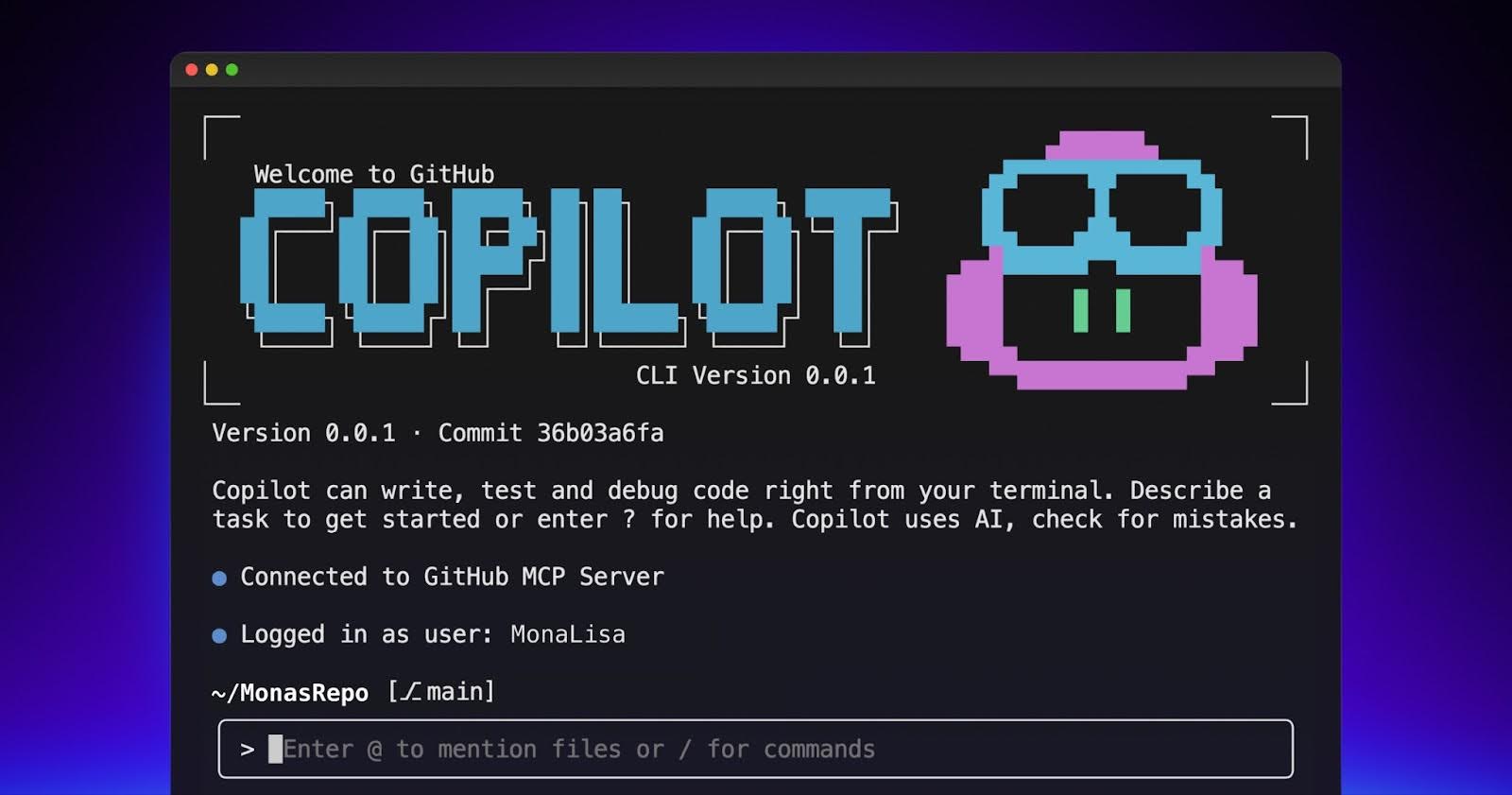
Related image for GitHub Copilot CLI

GitHub Copilot CLI: How to get started

Leave a ReplyCancel reply

Recommended

Related image for Ray-Ban hack

Ray-Ban Hack: Disabling the Recording Light

October 24, 2025
Generative Video AI supporting coverage of generative video AI

Generative Video AI Sora’s Debut: Bridging Generative AI Promises

May 5, 2026
Related image for Ray-Ban hack

Ray-Ban Hack: Disabling the Recording Light

October 28, 2025
Related image for Sora 2 limitations

Sora 2’s Guardrails: A Creative Block?

November 15, 2025
Generative AI inference deployment supporting coverage of Generative AI inference deployment

SageMaker vs Bare Metal for Generative AI Inference Deployment

May 24, 2026
AI agent performance loop supporting coverage of AI agent performance loop

AI Agent Performance Loop: How to Keep AI Agents Reliable After

May 24, 2026
AI sparsity hardware supporting coverage of AI sparsity hardware

AI Sparsity Hardware: How Hardware Sparsity Can Make Massive AI

May 15, 2026
Cybersecurity consultant skills supporting coverage of Cybersecurity consultant skills

Cybersecurity Consultant Skills: What Changes for Enterprise AI

May 15, 2026
ByteTrending

ByteTrending is your hub for technology, gaming, science, and digital culture, bringing readers the latest news, insights, and stories that matter. Our goal is to deliver engaging, accessible, and trustworthy content that keeps you informed and inspired. From groundbreaking innovations to everyday trends, we connect curious minds with the ideas shaping the future, ensuring you stay ahead in a fast-moving digital world.
Read more »

Pages

  • Contact us
  • Privacy Policy
  • Terms of Service
  • About ByteTrending
  • Home
  • Authors
  • AI Models and Releases
  • Consumer Tech and Devices
  • Space and Science Breakthroughs
  • Cybersecurity and Developer Tools
  • Engineering and How Things Work

Categories

  • AI
  • Curiosity
  • Popular
  • Review
  • Science
  • Tech

Follow us

Advertise

Reach a tech-savvy audience passionate about technology, gaming, science, and digital culture.
Promote your brand with us and connect directly with readers looking for the latest trends and innovations.

Get in touch today to discuss advertising opportunities: Click Here

© 2025 ByteTrending. All rights reserved.

No Result
View All Result
  • Home
    • About ByteTrending
    • Contact us
    • Privacy Policy
    • Terms of Service
  • Tech
  • Science
  • Review
  • Popular
  • Curiosity

© 2025 ByteTrending. All rights reserved.

%d