

The rapid expansion of artificial intelligence extends far beyond powerful cloud servers; increasingly, AI processing shifts closer to the data source—the “edge”—unlocking exciting possibilities in areas like robotics, smart homes, and industrial automation. Google’s Coral initiative has been instrumental in this transformative shift, and their latest offering, the Coral NPU (Neural Processing Unit), signifies a considerable advancement. This article delves into what the Coral NPU is, its capabilities, and why it holds significant importance for developers working with edge AI.
Understanding the Coral NPU
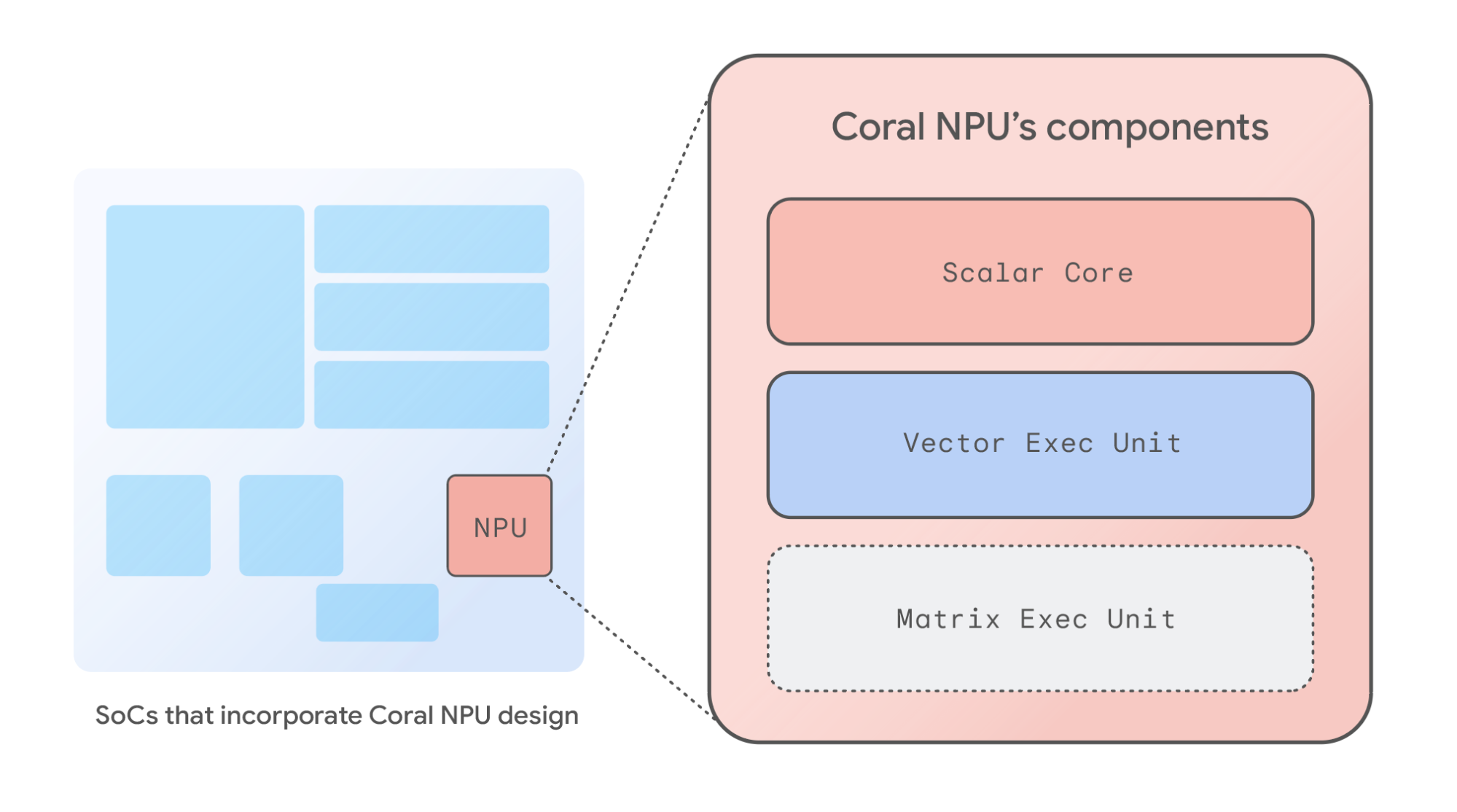
Fundamentally, the Coral NPU is a dedicated hardware accelerator meticulously designed to efficiently execute machine learning models at the edge. It’s an integral component of Google’s broader Coral platform, which encompasses software libraries and development tools alongside the hardware itself. Unlike general-purpose CPUs or GPUs, NPUs are specifically optimized for the mathematical operations inherent in neural networks, resulting in significantly improved performance and power efficiency. The NPU is integrated into various Coral devices, ranging from USB accelerators to system-on-modules (SoMs).
Key Features & Technical Specifications
To better understand its capabilities, let’s examine some core features and specifications of the Coral NPU. Firstly, it boasts high performance, enabling real-time inference with remarkably low latency. Furthermore, its power efficiency is a key differentiator; it consumes considerably less power than CPUs or GPUs while performing comparable AI tasks. Notably, the NPU’s scalability allows it to be deployed in diverse form factors, accommodating everything from small embedded devices to larger edge servers. Finally, extensive software support, particularly through TensorFlow Lite integration, simplifies model deployment and optimization.
| Feature | Specification |
|---|---|
| Operations per Second | Trillions |
| Power Consumption | Optimized for low power usage |
| Compatibility | TensorFlow Lite, Coral Flow |
The NPU’s specialized architecture allows it to perform trillions of operations per second while maintaining impressive power efficiency. Consequently, it’s exceptionally well-suited for applications where battery life or thermal constraints are paramount.
Applications Across Diverse Industries
The capabilities afforded by the Coral NPU enable a wide spectrum of edge AI applications. Let’s explore some significant use cases across various industries:
- Robotics: The Coral NPU empowers robots to process visual data locally, facilitating faster response times and enhancing navigation within complex environments.
- Smart Retail: It powers intelligent cameras for inventory management, customer behavior analysis, and personalized promotions without relying on cloud connectivity, improving operational efficiency.
- Industrial Automation: The Coral NPU facilitates real-time quality control inspections, predictive maintenance, and anomaly detection on factory floors, contributing to increased productivity.
- Agriculture: It supports precision farming techniques such as crop monitoring, disease detection, and automated irrigation, leading to improved yields.

For instance, consider a smart security camera—with the Coral NPU, it can identify potential threats locally and in real-time without sending video data to the cloud, thereby preserving privacy and reducing bandwidth consumption. Therefore, edge AI solutions become more practical and accessible.
The Full-Stack Advantage: Hardware & Software Synergy
What truly distinguishes Coral is its comprehensive full-stack approach. It’s not merely about the NPU hardware; Google provides a complete ecosystem that includes several valuable tools:
- TensorFlow Lite: A streamlined version of TensorFlow optimized for mobile and embedded devices, enabling developers to easily adapt existing models for deployment on the Coral NPU.
- Coral Flow: An open-source framework designed for constructing computer vision applications, simplifying development workflows.
- Model Zoo: A repository of pre-trained machine learning models ready for immediate deployment on Coral hardware, accelerating project timelines.
This integrated platform significantly simplifies the development process, allowing developers of all skill levels to rapidly deploy AI solutions at the edge using the Coral NPU. As a result, innovation in edge computing is readily accessible.
“Coral’s full-stack approach substantially lowers the barrier to entry for edge AI development.”
In conclusion, the Coral NPU represents a powerful tool that brings artificial intelligence closer to where it’s needed most. Its compelling combination of high performance, power efficiency, and comprehensive software support makes it an attractive option for developers building innovative solutions across various industries seeking efficient edge AI processing.
Source: Read the original article here.
Discover more tech insights on ByteTrending.
Discover more from ByteTrending
Subscribe to get the latest posts sent to your email.