

Introduction: Reinforcement Learning and the Future of Autonomous Vehicles
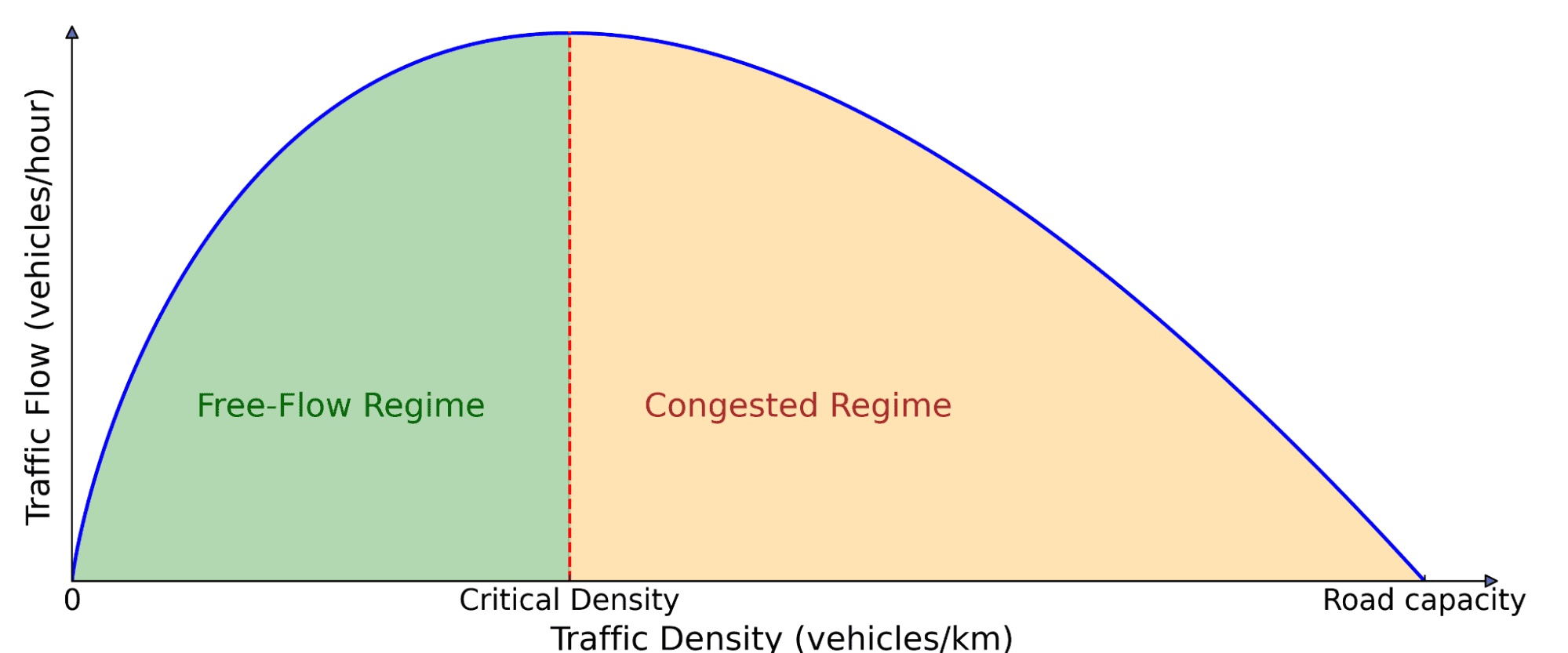
The pursuit of truly autonomous vehicles has presented numerous challenges, demanding innovative solutions beyond traditional rule-based programming. One promising approach gaining traction is reinforcement learning, a powerful branch of machine learning where agents learn through trial and error to maximize a reward signal. Consequently, this technique allows for adaptation to complex, unpredictable real-world scenarios. Specifically, applying reinforcement learning to autonomous vehicle control holds the potential to optimize traffic flow, reduce congestion, and improve overall transportation efficiency – a vision we’re actively exploring.
Understanding Reinforcement Learning Fundamentals
At its core, reinforcement learning involves an agent interacting with an environment. The agent takes actions, receives feedback in the form of rewards or penalties, and learns to adjust its strategy (or policy) to maximize cumulative reward over time. Unlike supervised learning, which relies on labeled datasets, reinforcement learning generates its own training data through interaction. This self-learning capability makes it particularly well-suited for complex systems like autonomous vehicles where defining all possible scenarios beforehand is impractical.
Key Components of an RL System
Several key components define a reinforcement learning system. Firstly, the agent is the decision-making entity—in our case, the autonomous vehicle’s control system. Secondly, the environment represents the world around the agent, including other vehicles, pedestrians, and traffic signals. Furthermore, the state describes the current situation of the environment (e.g., speed, position relative to other cars). The agent then selects an action based on its policy, which is a mapping from states to actions. Finally, the reward function defines the immediate feedback received after taking an action—for instance, a positive reward for maintaining safe following distance and a negative one for collisions.
The Challenge of Reward Design
Designing effective reward functions in reinforcement learning is crucial. A poorly designed reward function can lead to unintended consequences or suboptimal behavior. For example, simply rewarding speed might encourage reckless driving. Therefore, it’s essential to carefully consider all factors influencing safety and efficiency when defining rewards; consequently, we use a combination of positive reinforcement for maintaining safe distances, smooth acceleration/deceleration, and adherence to traffic laws, alongside negative penalties for collisions or violations.
Applying Reinforcement Learning to Traffic Management
Traditionally, autonomous vehicle control has relied on pre-programmed rules and algorithms. However, these approaches struggle to adapt to dynamic traffic conditions. Reinforcement learning, conversely, offers a data-driven approach that enables vehicles to learn optimal strategies for navigating complex scenarios. Our experiments involve deploying simulated and real-world controlled vehicles into rush hour environments.
Simulating Rush Hour Traffic
To effectively train our reinforcement learning agents, we’ve created sophisticated simulations of rush-hour traffic conditions. These simulations model realistic vehicle behavior, road layouts, and traffic signals; therefore, they provide a safe and cost-effective environment for experimentation. We can rapidly iterate through different training scenarios and reward functions without the risks associated with real-world testing.
Real-World Deployment Considerations
While simulations are valuable, transitioning to real-world deployment presents unique challenges. Factors like sensor noise, unpredictable human behavior, and variations in road conditions require robust algorithms that can generalize well beyond the training environment. As a result, we’re focusing on techniques like transfer learning, which allows agents trained in simulation to adapt quickly to real-world scenarios. Furthermore, safety is paramount; therefore, we incorporate safeguards such as emergency override systems.
Future Directions and Challenges for Reinforcement Learning in Autonomous Vehicles
The application of reinforcement learning to autonomous vehicle control is still a relatively nascent field with immense potential. Looking ahead, several key research areas warrant further investigation. These include developing more efficient exploration strategies, improving generalization capabilities, and addressing the safety concerns associated with deploying learning agents in unpredictable environments; consequently, we are exploring meta-learning approaches that enable faster adaptation to new conditions.
Moreover, integrating reinforcement learning with other AI techniques, such as imitation learning and model predictive control, holds promise for creating even more sophisticated and robust autonomous systems. Finally, the ethical implications of deploying autonomous vehicles powered by reinforcement learning—particularly concerning responsibility in accidents—must be carefully considered to ensure public trust and acceptance.
Conclusion
In conclusion, reinforcement learning represents a powerful paradigm shift for developing truly adaptive and intelligent autonomous vehicle control systems. While challenges remain, the potential benefits – smoother traffic flow, reduced fuel consumption, and enhanced safety – are significant; therefore, continued research and development in this area is essential for realizing the full promise of self-driving technology. We believe that reinforcement learning will play a crucial role in shaping the future of transportation.
Source: Read the original article here.
Discover more tech insights on ByteTrending.
Discover more from ByteTrending
Subscribe to get the latest posts sent to your email.