

Understanding Graph Convolutions
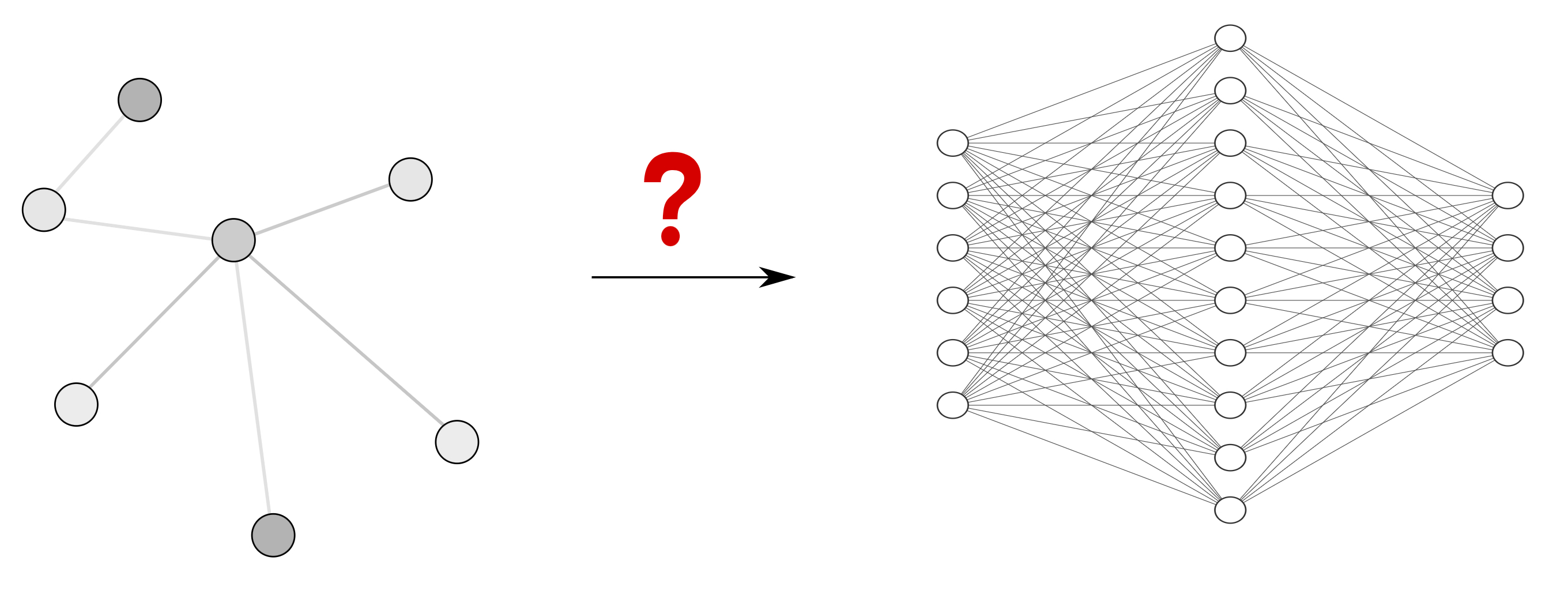
Graph Neural Networks (GNNs) have emerged as a powerful tool for analyzing data structured as graphs, finding applications in diverse fields from social network analysis to drug discovery. At their core, GNNs leverage the concept of convolutions – but unlike traditional image or text processing, graph convolutions operate on irregular and non-Euclidean structures. This article explores the foundational principles behind graph convolutions, dissecting their mechanics and highlighting key design choices. Graph convolution techniques allow us to extract meaningful patterns from complex relationships within data.
What are Graph Convolutions?
Traditional convolutional layers excel at identifying spatial hierarchies in grid-like data like images. However, graphs lack this inherent structure; nodes can have varying degrees of connectivity, and edges define relationships that aren’t easily aligned into a fixed grid. Consequently, graph convolutions must adapt to these irregularities. The fundamental idea remains the same: aggregating information from neighboring nodes to update a node’s representation. This aggregation is typically performed through weighted sums, where weights are determined by learnable parameters (or predefined kernels).
Different Approaches to Graph Convolutions
- Spectral Graph Convolutional Networks (GCN): GCN utilizes the graph Laplacian’s eigenvectors as a basis for defining convolutions. Essentially, it performs convolution in the spectral domain of the graph. This approach leverages graph signal processing theory and provides strong theoretical foundations. However, its practical limitations arise from computational complexity associated with eigenvector computation and sensitivity to graph structure changes.
- Spatial Graph Convolutions: These methods directly operate on the spatial structure of the graph. The most common type aggregates features from a node’s immediate neighbors, using learnable weights for each neighbor. This is often implemented through message passing, where nodes exchange information with their neighbors and update their own representations based on this received data. Furthermore, different aggregation functions (e.g., mean, max, sum) can be used in the spatial convolution.
- Edge-centric Convolutions: Instead of focusing solely on node features, edge-centric methods consider edge attributes as well. They aggregate information from neighboring nodes and edges to update edge representations, which then influence node updates. These are useful when edge characteristics carry significant meaning, such as in molecular graphs where bond types are crucial.
Key Design Choices & Considerations
Several factors shape the behavior of graph convolutions. For example, the choice of aggregation function significantly impacts how information propagates through the graph.
- Aggregation Function: The choice of aggregation function (sum, mean, max, etc.) significantly impacts how information propagates through the graph. Each function has its strengths and weaknesses depending on the specific application.
- Neighborhood Definition: Determining which nodes constitute a node’s neighborhood is crucial. Simple k-nearest neighbors or all connected nodes are common choices, but more sophisticated approaches exist that consider edge weights or distance metrics.
- Weighting Mechanism: The way edges influence the aggregation process—through learned parameters or predefined kernels—defines how connections shape node representations. Attention mechanisms are increasingly popular for dynamically weighting neighbor contributions.
- Normalization Techniques: Normalization is vital to stabilize training and prevent feature explosion due to repeated aggregations. Layer normalization, batch normalization, or symmetric normalization are commonly employed.
The Distill Publication & Further Exploration
For a visually rich and interactive explanation of graph convolutions, the Distill publication provides an exceptional resource. It breaks down the concepts with animations and clear explanations.
Conclusion
Graph convolutions are a powerful tool for extracting meaningful information from graph-structured data. Understanding their underlying principles, different approaches, and key design choices is crucial for effectively applying GNNs to solve real-world problems. Notably, while the mathematical foundations can be complex, the core idea—aggregating information from neighbors—remains intuitive and adaptable to various scenarios. The ability of graph convolution to analyze relationships makes it an important technique.
Source: Read the original article here.
Discover more from ByteTrending
Subscribe to get the latest posts sent to your email.