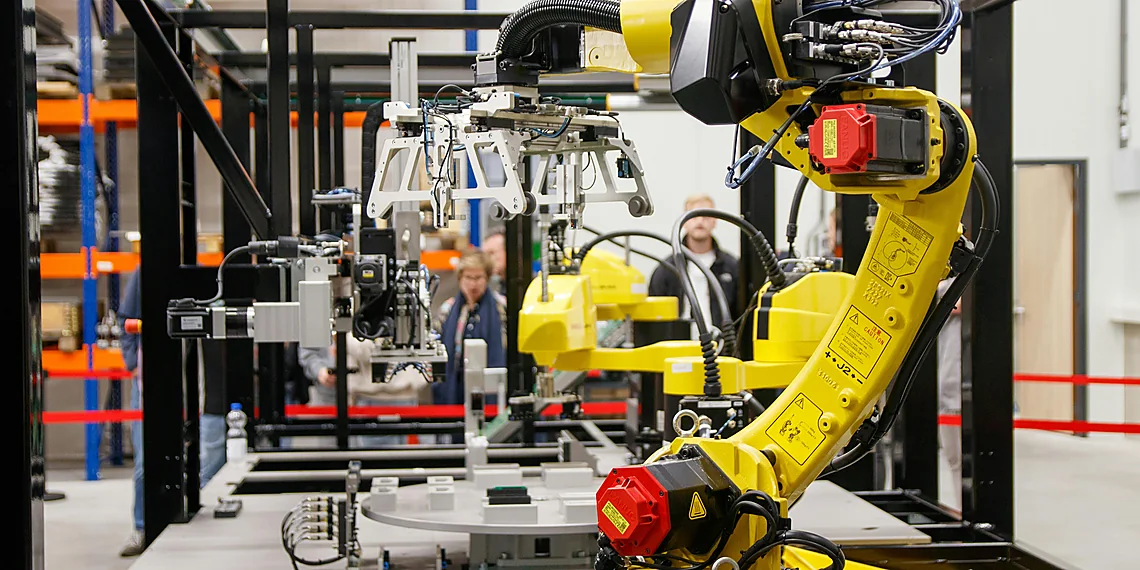


Discover BuilderBench, a novel benchmark designed to push the boundaries of AI agent capabilities by focusing on open-ended exploration and embodied reasoning. Current AI models often struggle with problems outside their training data; therefore, there’s a growing need for agents capable of learning through interaction and experience. BuilderBench represents an innovative approach to address this challenge.
The Limitations of Mimicry in Modern AI
Modern artificial intelligence frequently relies on mimicking existing data and refining responses based on that data. However, this strategy proves inadequate when confronted with novel or complex tasks requiring creative problem-solving abilities. For example, a model trained solely on image classification might fail spectacularly when asked to assemble a simple structure. To overcome these limitations, AI agents need to develop skills in exploration and learning from experience – a crucial step towards achieving true general intelligence.
The Problem with Current Training Paradigms
Many current training methods emphasize pattern recognition rather than genuine understanding. Consequently, AI systems often lack the ability to generalize their knowledge to new scenarios. Furthermore, they frequently struggle when faced with tasks that demand planning and strategic thinking. As a result, there is increasing emphasis on benchmarks like BuilderBench to foster more robust learning.
Why Embodied Reasoning Matters
Embodied reasoning, the ability to solve problems through action and experimentation, is vital for developing truly intelligent agents. It moves beyond simple data mimicry; instead, it emphasizes interaction with an environment. Similarly, BuilderBench’s design highlights this need by requiring agents to physically build structures.
Introducing BuilderBench: A Framework for Agent Intelligence
BuilderBench directly addresses these challenges by presenting AI agents with the task of constructing various structures using blocks. This seemingly simple task necessitates a deep understanding of physics, mathematics, and long-horizon planning – capabilities often lacking in current AI models. The benchmark aims to move beyond passive learning towards active problem solving.
- High-Performance Simulator: BuilderBench utilizes a hardware-accelerated simulator to model a robotic agent interacting with physical blocks. This allows for rapid experimentation and training, significantly accelerating the development process.
- Diverse Task Suite: The benchmark features over 42 unique target structures, each carefully crafted to assess an agent’s comprehension of fundamental principles. In addition, the varied tasks ensure that agents cannot simply memorize solutions but must develop adaptable strategies.
How BuilderBench Works and its Significance
During training, agents operate without external supervision. This forces them to learn general environmental rules through trial and error; consequently, they must develop their own strategies for success. Evaluation involves building unseen target structures from the task suite, demanding “embodied reasoning”—problem-solving demonstrated not through language but through actions and strategic experimentation. Notably, initial experiments reveal that many current algorithms find these tasks exceptionally difficult, indicating a significant gap between existing AI capabilities and true general intelligence.
To facilitate progress and allow researchers to focus on specific aspects of learning, the BuilderBench team provides a ‘training wheels’ protocol, allowing agents to initially master a single target structure before tackling more complex challenges. Furthermore, this staged approach helps isolate areas where improvement is most needed.
The Training Wheels Protocol
The training wheels protocol simplifies the initial learning process by focusing on a single target structure. This allows agents to concentrate on core concepts like physics and spatial reasoning without the added complexity of navigating multiple goals. As a result, researchers can more effectively diagnose and address specific weaknesses in their algorithms.
Open-Source Resources for Collaboration
To accelerate research in this area, the developers of BuilderBench have also released single-file implementations of six different algorithms as a reference point. This open approach encourages collaboration and facilitates the development of new techniques for agent pre-training focused on open-ended exploration.
Conclusion: The Future of Agent Intelligence
BuilderBench provides a valuable tool for evaluating and improving AI agent capabilities, moving beyond simple mimicry toward true embodied reasoning. It represents an important step in the development of more robust and adaptable AI systems that can tackle real-world challenges effectively. As research progresses, we can expect BuilderBench to play a crucial role in shaping the future of artificial intelligence.
Source: Read the original article here.
Discover more tech insights on ByteTrending.
Discover more from ByteTrending
Subscribe to get the latest posts sent to your email.