A team of researchers spanning 20 European countries is pioneering a fresh approach to planetary exploration: spherical, rolling robots designed for affordability and resilience. This initiative, known as “Team Tumbleweed,” aims to develop low-cost rovers capable of traversing challenging terrain, potentially revolutionizing our access to the Red Planet. Furthermore, this innovative design promises a new era in how we approach space missions.
The Concept: Spherical Rovers for Challenging Terrain
Traditional planetary rovers, like Curiosity and Perseverance, are complex machines requiring extensive engineering and significant financial investment. Team Tumbleweed’s approach diverges considerably from this model. These robots, shaped like spheres, offer inherent advantages in navigating uneven surfaces. Their ability to roll over obstacles – rocks, craters, even slopes – makes them ideally suited for the unpredictable Martian landscape. Notably, their simple design enhances operational efficiency.
Why Spherical Design?
- Obstacle Negotiation: The spherical shape allows for easy traversal over rocks and uneven terrain, which is particularly crucial on Mars.
- Simplicity & Cost Reduction: Fewer moving parts translate to lower manufacturing costs and increased reliability; this makes deploying more robots feasible.
- Improved Stability: The design inherently offers stability even on slopes, allowing for greater operational flexibility.

Technology & Development for These Robots
The robots are designed with a minimalist approach, focusing on essential functionalities for navigation and data collection. While detailed specifications remain somewhat limited, initial prototypes utilize simple sensors – cameras, basic proximity detectors – to map their surroundings and avoid hazards. As a result of this streamlined design, the power source is expected to be solar-powered, offering sustainable operation on Mars. Furthermore, the use of readily available components helps keep costs low.
// Simplified pseudocode for obstacle avoidance
if (proximitySensor.distance() < threshold) {
  rotate(randomAngle()); // Rotate to avoid obstacle
}
Materials and Construction
A critical element of the project is affordability, which directly impacts the viability of deploying numerous robots. Researchers are exploring lightweight, durable materials – potentially composites or advanced plastics – for construction. This reduces both launch costs (a major expense in space missions) and the overall complexity of the robots; similarly, it increases their resilience to harsh conditions.

Potential Applications Beyond Mars
While the primary focus is Martian exploration, Team Tumbleweed’s technology has broader applications. These spherical robots could be deployed for:
- Search & Rescue: Navigating disaster zones and locating survivors – their ability to traverse difficult terrain makes them invaluable.
- Environmental Monitoring: Collecting data in hazardous or inaccessible areas (e.g., volcanoes, glaciers).
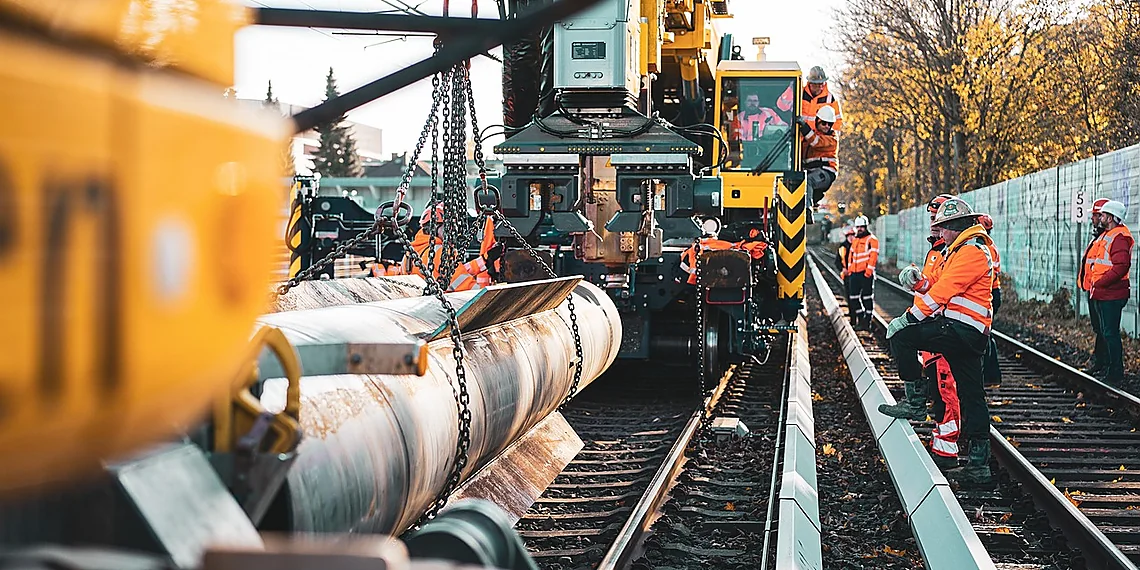
- Industrial Inspection: Examining infrastructure like pipelines or power plants; on the other hand, they can reach locations humans cannot safely access.
The adaptability of the design suggests a wide range of potential uses beyond planetary science.
Conclusion: Ushering in a New Era for Planetary Exploration?
Team Tumbleweed’s approach represents a paradigm shift in how we explore other planets. By prioritizing simplicity, affordability, and resilience, they are opening doors to more frequent and ambitious missions to Mars and beyond. The success of this project could democratize space exploration, allowing smaller nations and research institutions to participate in groundbreaking discoveries. Therefore, the potential impact extends far beyond scientific advancement.
The team’s innovative design offers a promising future for robotic planetary exploration, paving the way for more accessible and efficient scientific investigation of our solar system. In addition, these robots represent a significant step toward affordable and robust space exploration initiatives.
Source: Read the original article here.
Discover more tech insights on ByteTrending.
Discover more from ByteTrending
Subscribe to get the latest posts sent to your email.