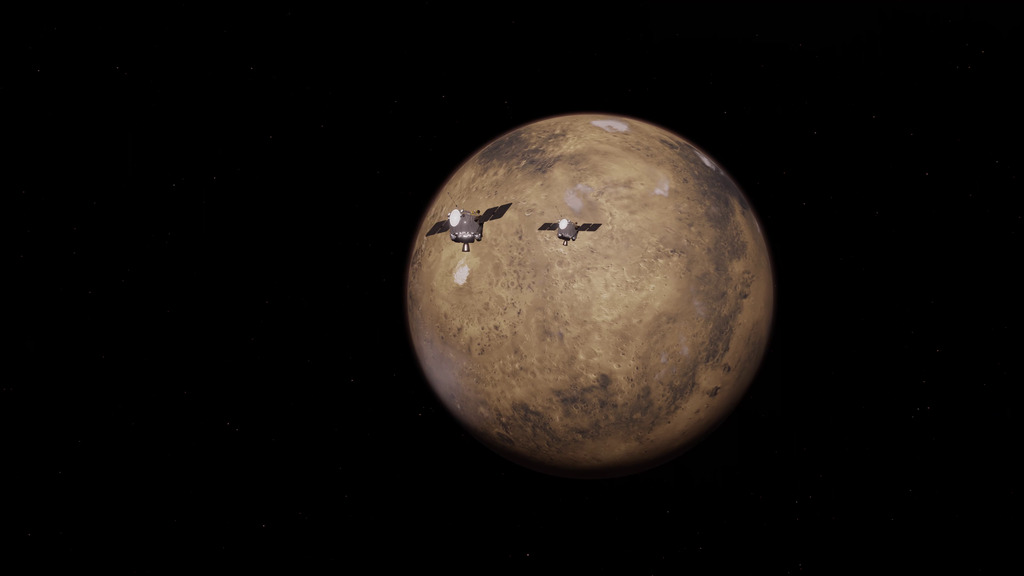

NASA and Blue Origin are reopening media accreditation for the launch of the agency’s ESCAPADE (Escape and Plasma Acceleration and Dynamics Explorers) mission. The twin ESCAPADE spacecraft will study the solar wind’s interaction with Mars, providing insight into the planet’s real-time response to space weather and how solar activity drives atmospheric escape. This launch marks the second mission for Blue Origin’s New Glenn rocket.
Understanding the ESCAPADE Mission
The ESCAPADE mission aims to investigate the complex relationship between the sun’s energy and Mars’ atmosphere. Specifically, the twin spacecraft will analyze how solar wind – a constant stream of charged particles from the Sun – interacts with the Martian environment. This interaction is crucial for understanding why Mars lost much of its early atmosphere and continues to lose atmospheric components today. Furthermore, the data gathered by ESCAPADE will help scientists refine models predicting space weather effects on other planets and even Earth.
Mission Objectives
The primary objective of the ESCAPADE mission is to directly measure the plasma environment around Mars and its interaction with the planet’s atmosphere. Consequently, researchers hope to understand how energy from the solar wind drives atmospheric escape. In addition to this main goal, ESCAPADE will also gather data on the magnetic field surrounding Mars and its influence on the solar wind.
The Significance of Twin Spacecraft
Deploying two identical spacecraft allows for a simultaneous, stereoscopic view of the Martian environment. This approach provides unparalleled opportunities to study spatial variations in plasma density, temperature, and velocity – factors that significantly impact atmospheric escape. For instance, by comparing data from both probes, scientists can better discern how local conditions influence the overall process.

Media Accreditation Details
NASA is providing an opportunity for media representatives to witness and cover launch activities surrounding the ESCAPADE mission. Those who have already applied for accreditation do not need to reapply. The deadline for new applications from U.S. media and international media represented by U.S. citizens is October 13th at 11:59 PM EDT. Applications are submitted online through the Kennedy Space Center’s media portal. NASA’s agency-wide media accreditation policy applies to all applicants, ensuring fair access for all interested parties.
Launch Timing & Mission Overview
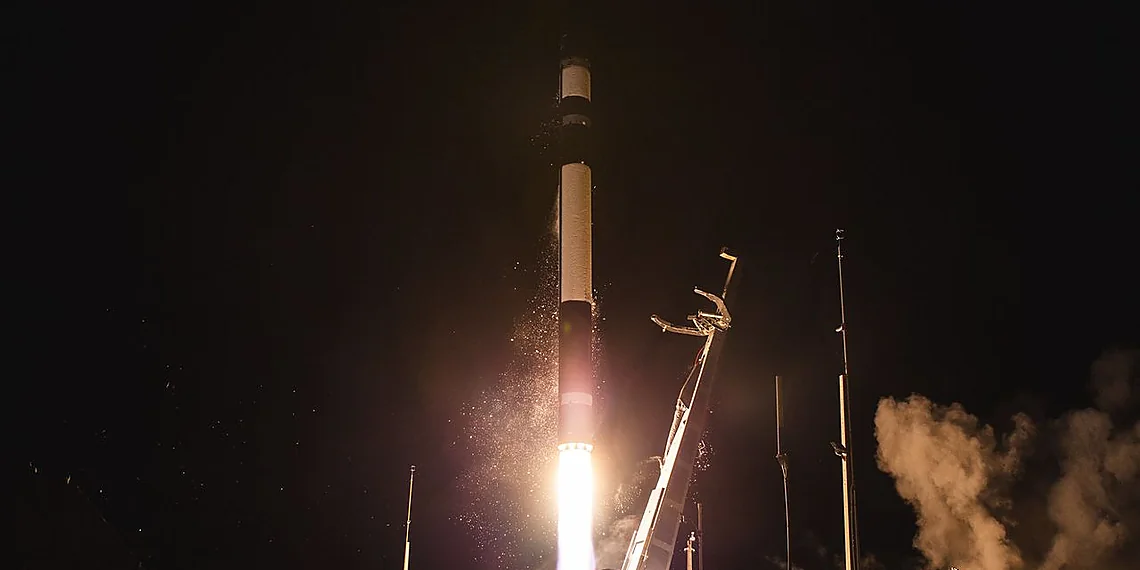
Blue Origin is targeting a launch later this fall from Space Launch Complex 36 at Cape Canaveral Space Force Station in Florida, utilizing the New Glenn rocket. Accredited media will have access to prelaunch activities and coverage of the actual launch event. A detailed schedule will be released when a specific launch date is confirmed. Notably, this mission highlights NASA’s continued commitment to exploring Mars and understanding its past climate conditions.
The ESCAPADE mission represents NASA’s commitment to small-scale innovative missions exploring our solar system. It’s funded by the Heliophysics Division, led by the University of California, Berkeley Space Sciences Laboratory, and utilizes spacecraft designed by Rocket Lab. NASA’s Launch Services Program secured launch services under a Venture-class Acquisition contract. Therefore, this mission showcases collaboration across various organizations to achieve ambitious scientific goals.
For more information about ESCAPADE, visit: https://science.nasa.gov/mission/escapade
Source: Read the original article here.
Discover more tech insights on ByteTrending.
Discover more from ByteTrending
Subscribe to get the latest posts sent to your email.