


Securing Europe’s Future with Quantum Communication
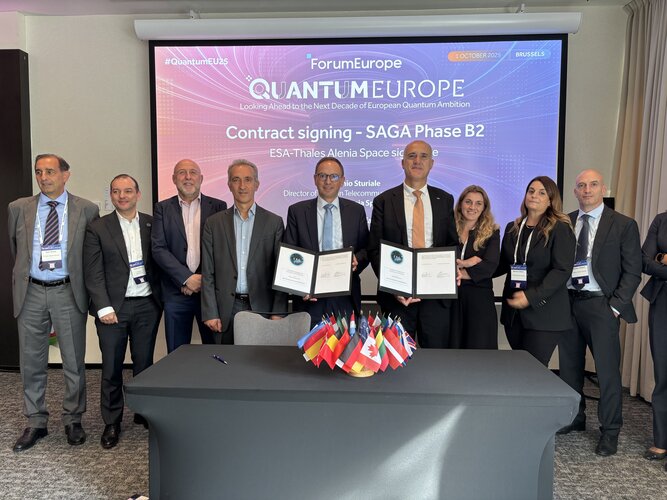
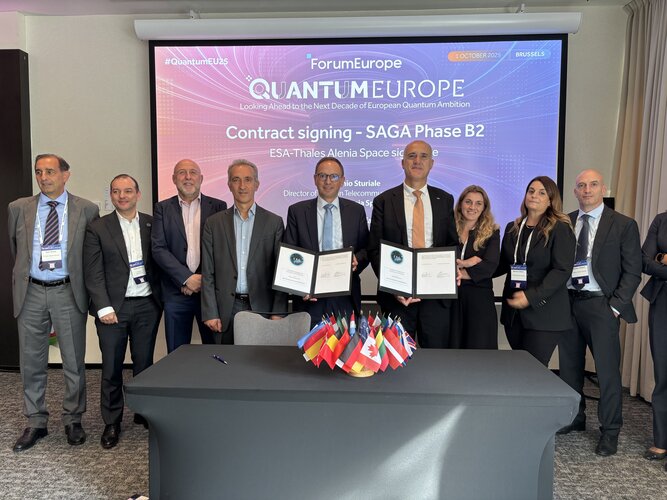
A significant shift is underway in secure communication practices, and Europe is taking a leading role. The European Space Agency (ESA) has recently solidified its commitment to quantum-safe communications from space by signing a €50 million contract with Thales Alenia Space. This agreement marks Phase B2 of the Security And cryptoGrAphic (SAGA) mission, propelling the project towards a preliminary design review and ultimately, operational deployment – a crucial step in securing European data.
Understanding Quantum Key Distribution (QKD) in Space
Traditional encryption methods, while effective today, face increasing vulnerability to attacks from powerful quantum computers. Consequently, adopting post-quantum cryptography is essential – and even better, employing inherently secure systems like Quantum Key Distribution (QKD). SAGA aims to leverage QKD via satellite, offering a robust solution against future threats related to emerging quantum capabilities.
How Quantum Key Distribution Works
Quantum Key Distribution utilizes the unique quantum properties of photons to generate and distribute cryptographic keys. For example, unlike traditional methods that transmit encryption keys electronically (which are susceptible to interception), QKD’s process inherently alerts the sender and receiver to any attempted eavesdropping; this is because any attempt to intercept these photons inevitably disturbs them.
The Advantages of Space-Based QKD
Space offers a distinct advantage for transmitting these delicate quantum signals over long distances, bypassing limitations inherent in terrestrial infrastructure. Furthermore, the clear path available from space minimizes signal degradation. SAGA’s role is to demonstrate QKD from space, establishing secure communication links between ground stations across Europe and showcasing the potential of quantum technology.
The system will employ a technique called “device-independent quantum key distribution” (DIQKD), which further enhances security by making it considerably more difficult for attackers to exploit vulnerabilities in the equipment itself.
Challenges and Future Implications of Quantum Space Communication
Deploying QKD from space presents several unique engineering challenges, however, the potential rewards are substantial. Maintaining precise alignment between ground stations and satellites is critical; additionally, compensating for atmospheric disturbances and ensuring the long-term stability of quantum components in the harsh space environment demand innovative solutions.
Benefits Beyond Security
Despite these challenges, the benefits are significant. For example, enhanced national security becomes achievable through secure government communications, a key priority for any nation. Furthermore, protecting critical infrastructure – including power grids, financial networks, and transportation systems – from cyber threats is vital for societal stability; quantum-secured communication provides substantial defenses. In addition, a secure communications infrastructure fosters trust and enables the growth of digital economies.
Looking Ahead: A Quantum Constellation
Beyond SAGA’s initial deployment, this technology could pave the way for a European quantum satellite constellation, solidifying Europe’s position as a leader in advanced technologies. This expansion would significantly bolster global cybersecurity efforts and demonstrate leadership in secure data transmission using quantum principles.
Conclusion: Securing the Future with Quantum Solutions
The ESA’s commitment to the SAGA mission highlights the growing importance of quantum-safe communication. By leveraging space and embracing innovative technologies like QKD, Europe is actively shaping a future where data security remains paramount in an increasingly interconnected world. The preliminary design phase will be crucial for refining the system and preparing it for its ultimate demonstration of secure, space-based quantum communications – ultimately ensuring a more secure horizon.
Source: Read the original article here.
Discover more tech insights on ByteTrending.
Discover more from ByteTrending
Subscribe to get the latest posts sent to your email.