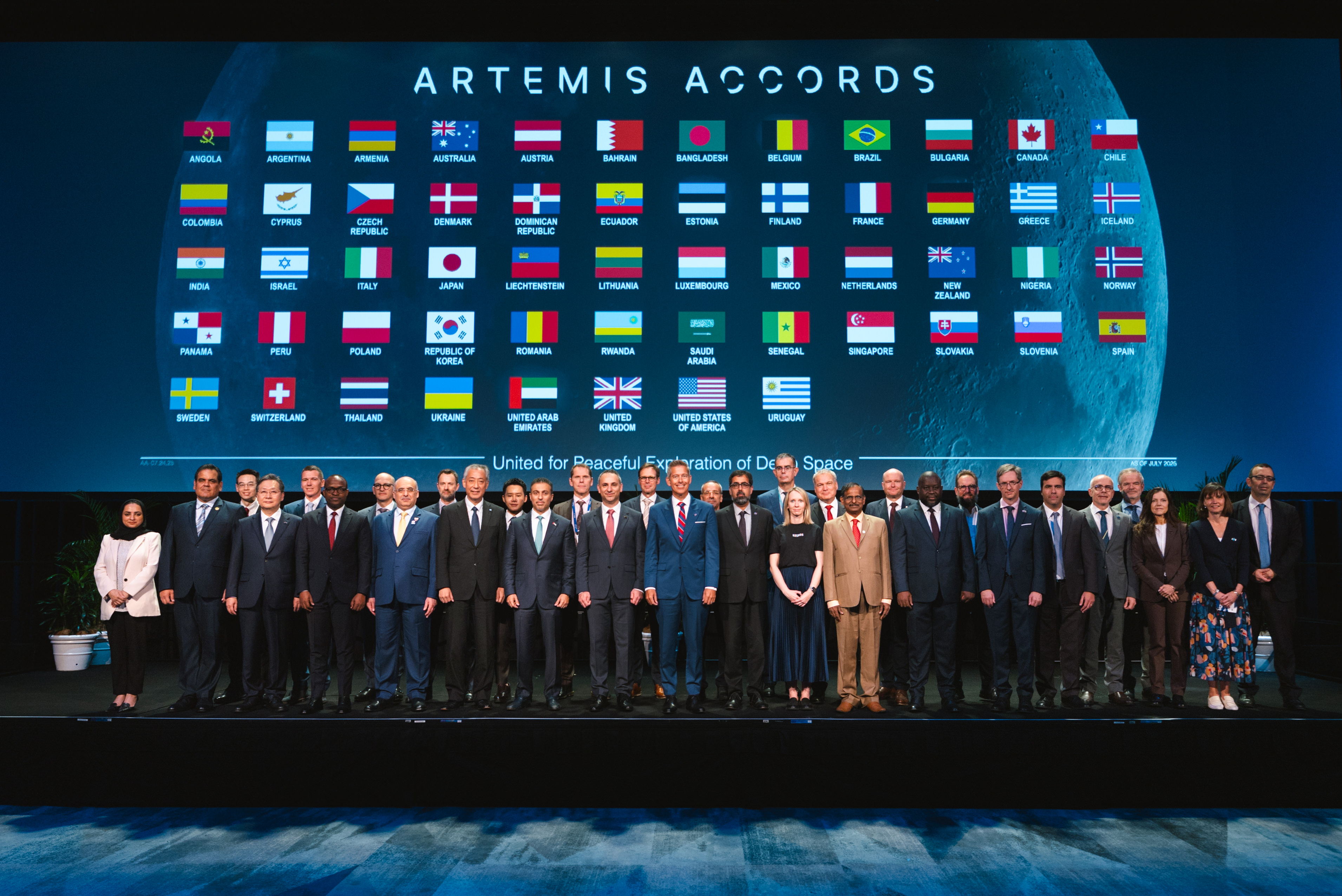

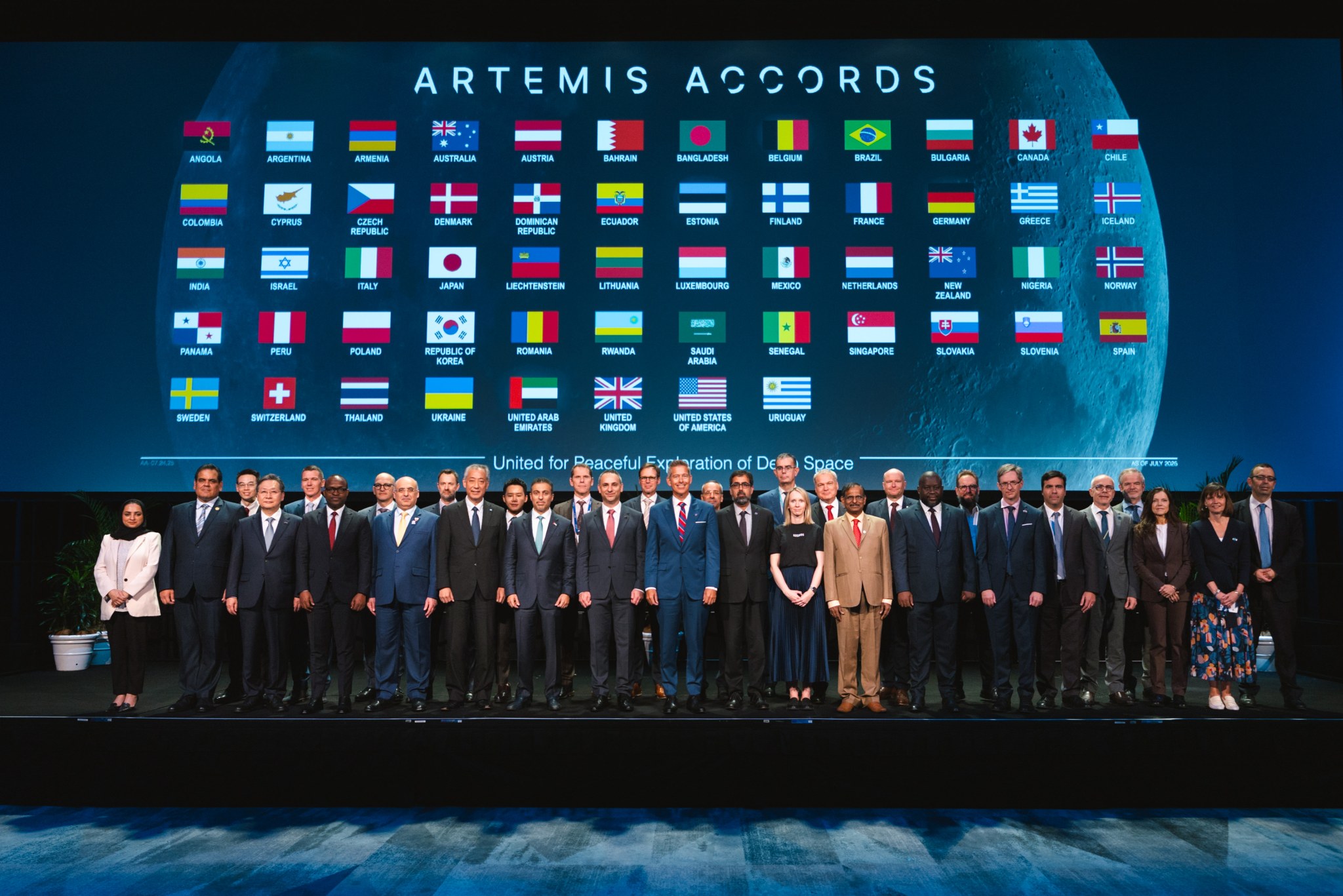
Representatives of the Artemis Accords signatories, including acting NASA Administrator Sean Duffy and NASA Associate Administrator Amit Kshatriya, met Sept. 29, 2025, for a principals meeting during the 76th International Astronautical Congress in Sydney.
Credit: NASA/Max van Otterdyk
NASA and leaders from global space agencies recently convened to reinforce their commitment to the Artemis Accords, a set of principles guiding responsible exploration of the Moon, Mars, and beyond. The meeting occurred during the 76th International Astronautical Congress (IAC) in Sydney.
Understanding the Artemis Accords
The Artemis Accords were established by the United States, led by NASA and the U.S. Department of State, on October 13, 2020. They serve as a framework for international cooperation in space exploration, which is particularly crucial given the increasing interest from both governments and private companies. For instance, several nations are now developing lunar landers and robotic explorers.
Currently, 56 countries – nearly 30% of the world’s nations – have signed onto the Artemis Accords, demonstrating its global significance. The accords aim to ensure that lunar activities are conducted peacefully and sustainably; therefore, they outline a shared vision for responsible space behavior.
Key Discussions at IAC 2025
Acting NASA Administrator Sean Duffy underscored the importance of maintaining American values in space exploration during his opening remarks, celebrating the upcoming fifth anniversary of the Accords. He emphasized the need to surpass China’s lunar ambitions not just through physical presence but also by establishing a long-term, sustainable presence.
The meeting, co-chaired by NASA, the Australian Space Agency, and the UAE Space Agency, facilitated discussions on vital aspects of responsible space exploration. These included:
- Transparency in Activities: Sharing details about launch dates, planned activities, and landing locations to avoid potential conflicts and ensure safety. Furthermore, this fosters trust among participating nations.
- Orbital Debris Mitigation: Developing strategies for managing and disposing of orbital debris, a growing concern for space operations. As a result of the increasing number of satellites, mitigating this risk is paramount.
- System Interoperability: Ensuring compatibility between different systems to enhance operational efficiency and safety; notably, standardized communication protocols are being explored.
- Data Sharing: Promoting the release of scientific data gathered during missions to benefit global research efforts. In addition, this accelerates scientific discovery and benefits all humankind.
Head of the Australian Space Agency, Enrico Palermo, highlighted Australia’s dedication to supporting new signatories in the Indo-Pacific region, reinforcing that the purpose of the Artemis Accords remains as critical today as when they were first established. For example, providing technical assistance and training can encourage wider participation.
Building a Collaborative Future
The United Arab Emirates recently hosted an Artemis Accords workshop focusing on non-interference and space object registration beyond Earth orbit. Such workshops underscore the ongoing commitment to strengthening international partnerships and fostering innovation in space exploration; however, these are just one step in a long journey.
Through continued collaboration and adherence to the principles outlined in the Artemis Accords, NASA and its partners are paving the way for a new era of peaceful, sustainable, and innovative space exploration. Ultimately, these accords represent a vital step towards ensuring that humanity’s return to the Moon and subsequent missions to Mars are conducted responsibly and collaboratively.
Source: Read the original article here.
Discover more tech insights on ByteTrending.
Discover more from ByteTrending
Subscribe to get the latest posts sent to your email.