
A Mesmerizing Flight Over Martian Terrain
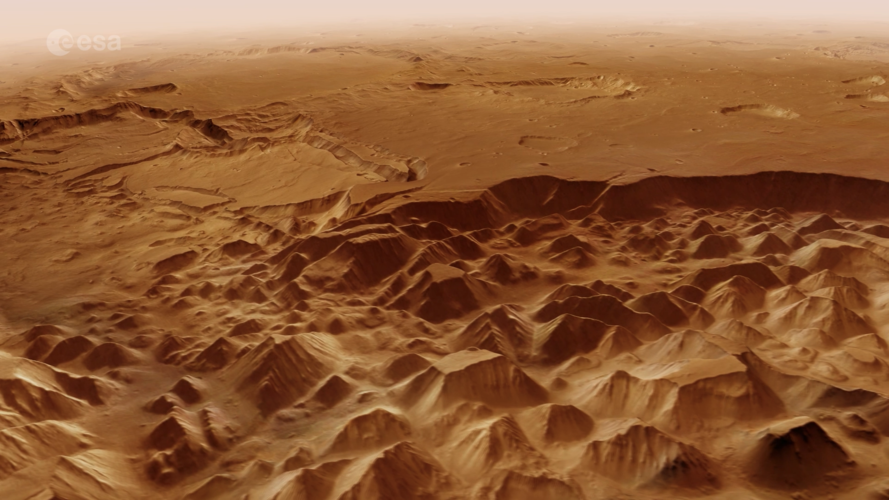
ESA’s Mars Express mission continues to provide us with incredible insights into our solar system, and its latest offering is a breathtaking virtual tour of the Red Planet’s surface. This new video presents a stunning flyover of Xanthe Terra, showcasing remarkable geological features shaped by ancient water activity and marked by dramatic impact events – allowing us to explore Mars like never before.
Unveiling Shalbatana Vallis: A River’s Legacy
The focal point of this virtual journey is Shalbatana Vallis, an immense outflow channel extending over 1300 kilometers. This colossal feature isn’t just impressive in size; it serves as a powerful testament to Mars’s watery past. The video follows Shalbatana Vallis’ path as it descends from the highland region of Xanthe Terra towards the lowlands of Chryse Planitia. Billions of years ago, powerful surges of water carved out this channel, leaving behind the distinctive landscape we observe today: curving channels, eroded plains, and isolated islands that somehow withstood the erosive forces; therefore, its study remains crucial in understanding Mars’s evolution.
The Formation of Shalbatana Vallis
Scientists believe that the formation of Shalbatana Vallis was likely caused by catastrophic flooding events, possibly triggered by subsurface ice melt or volcanic activity. Furthermore, the sheer scale of the channel suggests an immense volume of water released over a relatively short period. Consequently, understanding the mechanisms behind these floods is key to reconstructing Mars’s climate history.
Geological Wonders & Impact Craters
Beyond Shalbatana Vallis, the flyover reveals a complex maze of hilly terrain, showcasing the varied geology of Xanthe Terra. The video highlights how scientists utilize data from the High Resolution Stereo Camera (HRSC) to create these immersive 3D experiences. Notably, the final visual treat is a spectacular view of a massive impact crater, approximately 100 kilometers wide, providing evidence of past collisions with space rocks – further illustrating the dynamic and eventful history of Mars.

Data Processing Behind the Visuals
Creating this immersive experience required significant data processing and rendering. For example, the video utilizes data from the Mars Express High Resolution Stereo Camera (HRSC) Mars Chart (HMC30). This mosaic is constructed from multiple orbit observations combined with topographical information to generate a detailed 3D landscape. As a result, for each second of video, approximately 50 frames are rendered along a pre-defined camera path; this process employs a three-fold vertical exaggeration for enhanced visual impact. In addition, atmospheric effects, such as clouds and haze, are added to mask limitations in the terrain model.
Experience Mars Like Never Before
This ESA Mars Express flyover provides a unique and captivating perspective on the Red Planet, offering both visual spectacle and valuable insights into its geological history. Therefore, be sure to turn up your audio for the full immersive experience – it’s truly captivating and offers an unprecedented opportunity to explore Mars.
Source: Read the original article here.
Discover more tech insights on ByteTrending.
Discover more from ByteTrending
Subscribe to get the latest posts sent to your email.