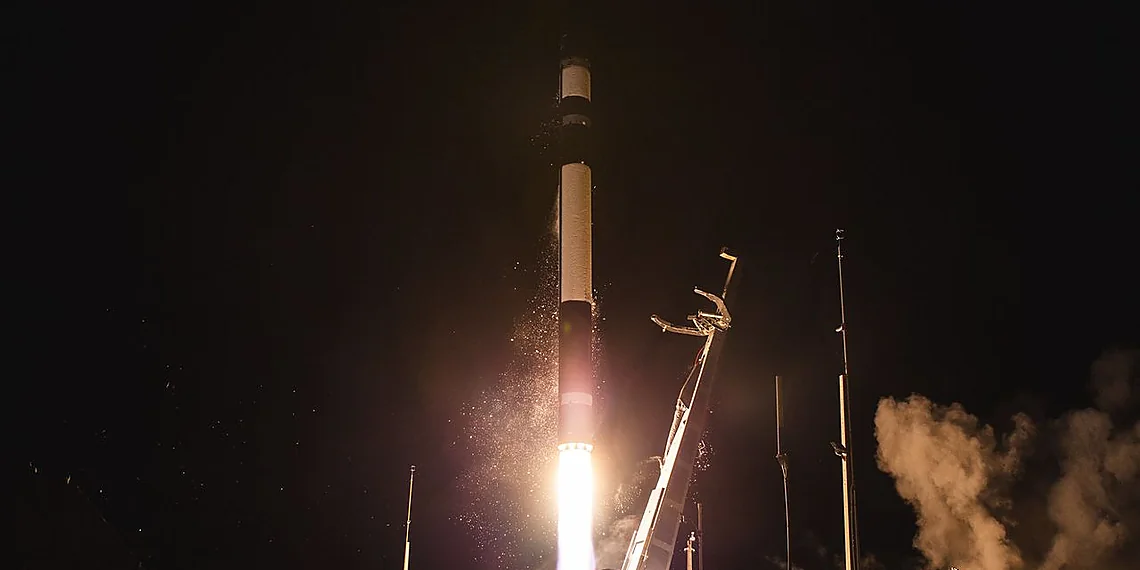

Lockheed Martin’s Orion Spacecraft: A Potential ‘Spacecraft-as-a-Service’
Enthusiasts of space activities, take note! The Orion spacecraft is being prepared for the Artemis 2 mission. As reported by SpaceNews on October 1st, Lockheed Martin’s agreement to study a private astronaut mission represents an initial step toward offering the spacecraft as a service, signifying a significant shift in how we approach space exploration.
The Evolving Landscape: From Government Missions to Commercial Services
Lockheed Martin’s recent announcement, detailed by SpaceNews on October 1st, indicates a potentially transformative change in how space exploration is undertaken. Traditionally, the Orion spacecraft has been developed and utilized primarily for NASA’s Artemis program, focusing heavily on lunar missions. However, this new agreement to study a private astronaut mission marks Lockheed Martin’s initial foray into providing Orion as a commercial service – a model that’s gaining traction across various sectors of the aerospace industry. For example, companies are increasingly seeking alternative options beyond traditional government contracts.
Furthermore, this move aligns with the broader trend of space privatization; companies like SpaceX and Blue Origin have already demonstrated the viability of providing launch services. Consequently, Lockheed Martin aims to capitalize on the demand for spacecraft themselves. The study will carefully assess the feasibility and logistical requirements of supporting a mission where private citizens would be flown aboard Orion, potentially opening new avenues for space tourism or specialized research endeavors.
Understanding the Orion Spacecraft: Design & Capabilities
Before exploring Lockheed Martin’s strategy further, it’s crucial to understand what the Orion spacecraft is and its capabilities. The Orion spacecraft functions as a crew and cargo transportation system specifically designed for deep-space missions. It features several key components that contribute to its overall functionality.
Core Components of the Orion System
- Crew Module: This serves as the habitable area where astronauts reside during flight, providing essential life support and controls.
- Service Module: The service module provides propulsion capabilities, power generation, thermal control mechanisms, and critical life-support systems.
- European Service Module (ESM): Built by Airbus Defence and Space, it’s a vital component of Orion’s functionality, responsible for key operational aspects.
Notably, the Orion spacecraft is designed to be adaptable for diverse mission profiles, ranging from lunar orbits to potential future missions destined for Mars. Its robust design and proven performance make it an attractive option for both government agencies and private companies seeking opportunities beyond Earth’s orbit. The versatility of the Orion spacecraft is a key factor in its appeal.
The Study & Future Possibilities: What Lies Ahead for Orion
The study agreement itself represents a critical step toward determining the viability of offering Orion as a service. It will likely involve a thorough examination of various aspects, including cost analysis and safety assessments. For instance, detailed cost analyses will be performed to determine the financial implications of supporting private missions.
- Cost Analysis: A comprehensive assessment will be conducted to ascertain the cost structure for supporting private missions, encompassing personnel expenses, logistical requirements, and potential spacecraft modifications.
- Safety Assessments: Rigorous safety protocols and procedures specific to private astronaut operations will be meticulously evaluated to ensure passenger well-being.
- Regulatory Compliance: The legal and regulatory framework surrounding commercial spaceflight must be navigated carefully, adhering to all applicable guidelines.
If the study proves successful, Lockheed Martin could potentially begin offering Orion spacecraft for a variety of purposes. As a result, new opportunities might emerge.
- Space Tourism: Providing orbital flights or lunar flybys for paying customers is one potential application of the service.
- Commercial Research: Supporting private companies conducting experiments in microgravity environments represents another exciting possibility.
- Government Partnerships: Collaborating with other nations on joint space exploration initiatives could expand Orion’s reach and impact.
This signifies a significant evolution for Lockheed Martin, potentially opening up new revenue streams and broadening access to space for a wider range of stakeholders, showcasing the potential of the Orion spacecraft.
Conclusion: A New Era in Space Exploration
Lockheed Martin’s initiative to study private astronaut missions using the Orion spacecraft underscores the growing trend toward commercialization within the space industry. While still relatively early in its development, this undertaking could pave the way for a future where access to deep-space exploration isn’t limited solely to government agencies, ushering in an era of increased participation and innovation in space travel. The future looks bright for the Orion program and the expansion of commercial space services.
Source: Read the original article here.
Discover more tech insights on ByteTrending.
Discover more from ByteTrending
Subscribe to get the latest posts sent to your email.