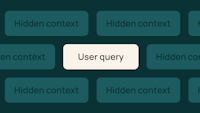



Large language models (LLMs) are rapidly evolving, and accurately assessing their capabilities remains a significant challenge in the field of LLM evaluation. A recent blog post from Allen Institute for AI (AI2) underscores a frequently overlooked aspect of evaluations: how context dramatically influences responses to underspecified queries. It demonstrates that subtle alterations in surrounding information can significantly change model rankings, revealing underlying biases and limitations. Let’s explore why this matters and what insights the research uncovered.
The Challenge of Underspecified Queries in LLM Evaluation
In practical applications, many questions are inherently ambiguous or lack sufficient detail—they’re considered “underspecified.” For instance, a simple query like “What is the capital?” could refer to a country, a state, or even a historical period. Consequently, current LLM evaluation methods often rely on relatively clean and straightforward prompts, creating an artificial scenario that doesn’t accurately reflect real-world usage.
The Impact of Ambiguity
This reliance on clear prompts masks a crucial problem: the ability of LLMs to handle genuine ambiguity. The AI2 research directly addressed this issue, investigating how to reliably evaluate these models when questions themselves are open to multiple interpretations. Understanding how an LLM evaluation process can be adjusted is essential for deploying robust systems.
Why Current Benchmarks Fall Short
Existing benchmarks frequently fail to capture the nuances of real-world interactions because they prioritize precise prompts. Therefore, the rankings generated by these benchmarks may not accurately reflect a model’s true understanding and reasoning abilities. Furthermore, they can give a false sense of security regarding performance in less controlled environments.
Contextualized Evaluations: A New Approach to LLM Evaluation
The AI2 team designed experiments presenting LLMs with underspecified queries, followed by varying contexts intended to clarify the question’s meaning. They utilized several models, including those powering popular chatbots, for a comprehensive LLM evaluation.
- Underspecified Queries: These were deliberately vague questions, such as “What is X?” or “How do you do Y?”.
- Contextual Variations: For each query, multiple contexts were created. One context might indicate ‘X’ refers to a geographical location, while another suggests it’s a historical figure.
- Human Evaluation: Critically, human evaluators judged the responses both with and without the clarifying context, allowing researchers to quantify how much additional information influenced perceived quality in LLM evaluation.
Key Findings and Their Implications for LLM Evaluation
The results revealed that adding contextual information significantly altered model rankings. Models performing well under ideal conditions often saw their rank decline when confronted with clarifying contexts, while others ascended to the top. This demonstrates a critical flaw in current benchmarks—they may be misleading, not truly reflecting understanding or reasoning abilities.
Revealing Hidden Biases Through LLM Evaluation
Furthermore, these contextual variations exposed biases within the models. Researchers consistently found that certain models generated responses aligned with specific (and potentially problematic) interpretations of ambiguous queries, even when other valid understandings existed. For example, a model might default to associating “What is X?” with a Western perspective, neglecting alternative cultural viewpoints. Improved LLM evaluation methods are needed to detect and mitigate these biases.
Improving Future LLM Evaluation Processes
Moving forward, it’s crucial to incorporate contextualized evaluations into the standard toolkit for assessing large language models. By acknowledging the impact of context on underspecified queries, we can develop more robust and reliable LLM evaluation metrics that better reflect real-world performance.
In conclusion, the AI2 research highlights a vital need for rethinking how we assess LLMs. A move towards contextualized evaluations will lead to more accurate LLM evaluation and ultimately foster greater confidence in these powerful AI systems.
Source: Read the original article here.
Discover more tech insights on ByteTrending.
Discover more from ByteTrending
Subscribe to get the latest posts sent to your email.