

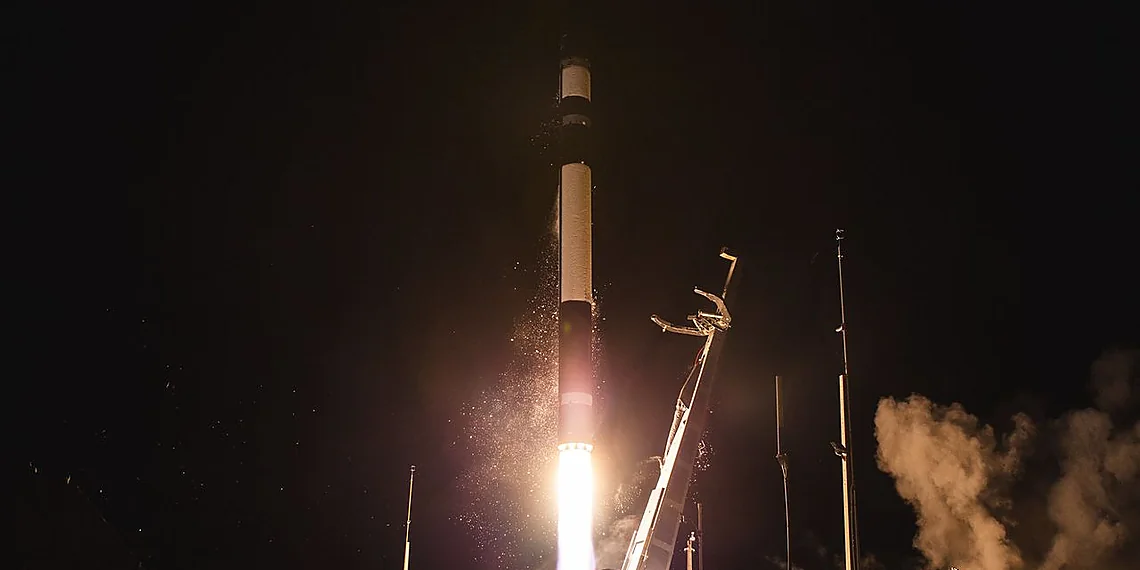

A groundbreaking moment for deep space communication recently occurred as NASA’s Optical Communications Telescope Laboratory, nestled near Wrightwood, California, successfully established a laser beacon link with the Psyche spacecraft. This infrared photograph captures this pivotal event, marking a significant leap towards faster and more efficient data transmission from distant probes. The advancement of optical communication technologies promises to revolutionize our ability to explore the cosmos.
The Significance of Optical Communication
For decades, radio waves have been the primary method for communicating with spacecraft exploring our solar system. While reliable, radio transmission speeds are relatively slow, limiting the amount of data that can be sent back to Earth. Optical communication – using lasers instead of radio waves – offers a dramatically faster alternative. Imagine downloading high-resolution images and videos from Mars in minutes rather than days!
Why Lasers?
Lasers carry far more information than radio waves within the same frequency range, essentially providing a much wider “pipe” for data to travel through. This increased bandwidth is crucial as missions become increasingly complex and generate larger datasets – think of detailed geological surveys of asteroids or high-definition video recordings from Europa. Furthermore, the precision of laser beams allows for more targeted communication, reducing interference and improving signal strength.
The Psyche Mission & DSOC
NASA’s Psyche mission, launched in October 2023, aims to study the asteroid 16 Psyche, a unique object orbiting between Mars and Jupiter. This asteroid is believed to be composed primarily of metallic iron, offering scientists an unprecedented opportunity to learn about planetary cores.
Deep Space Optical Communication (DSOC)
The DSOC experiment, a key component of the Psyche mission, is designed to test this optical communication technology in deep space. The telescope at Table Mountain Facility serves as the ground station, sending and receiving precisely aimed laser beams to and from the spacecraft’s transceiver. Notably, the success of DSOC demonstrates the feasibility of using laser technology for long-distance data transmission.
Challenges and Future Implications
Establishing a laser link across interplanetary distances presents significant technical challenges. The beam must be incredibly precise; even slight deviations can cause the signal to miss its target entirely. Atmospheric turbulence also distorts the beam, requiring sophisticated adaptive optics to correct for these distortions. As a result, maintaining stable communication requires advanced technology and careful calibration.
- Precision Targeting: Maintaining a laser lock across millions of miles requires extremely accurate pointing and tracking systems.
- Atmospheric Correction: Adaptive optics are crucial to compensate for atmospheric interference.
- Spacecraft Transceiver Development: Building robust and reliable laser transceivers capable of operating in the harsh environment of deep space is vital.
The successful demonstration of this technology paves the way for future missions that rely on high-bandwidth communication, enabling scientists to gather richer data and explore our solar system – and beyond – with greater detail than ever before. This advancement in optical communication will significantly enhance deep space exploration capabilities.
Conclusion
NASA’s laser beacon link with the Psyche spacecraft represents a monumental step forward in deep space communication. This innovative technology promises to revolutionize how we explore the cosmos, allowing us to unlock new scientific discoveries and gain a deeper understanding of our place in the universe. The future of optical communication is bright, promising even faster data transfer rates and more detailed insights into the mysteries of space.
Source: Read the original article here.
Discover more tech insights on ByteTrending.
Discover more from ByteTrending
Subscribe to get the latest posts sent to your email.