

The Growing Energy Demands of Artificial Intelligence
The rise of artificial intelligence (AI), particularly generative AI models like ChatGPT, presents exciting possibilities but also introduces significant concerns regarding AI energy use. A seemingly simple interaction, such as sending a “Hello” message to ChatGPT, requires substantial computational resources and consequently, a considerable amount of energy. Understanding the scale of this impact is crucial for fostering sustainable development within the burgeoning AI landscape.
This article is part of The Scale Issue.
Data Centers and the Escalating Power Consumption
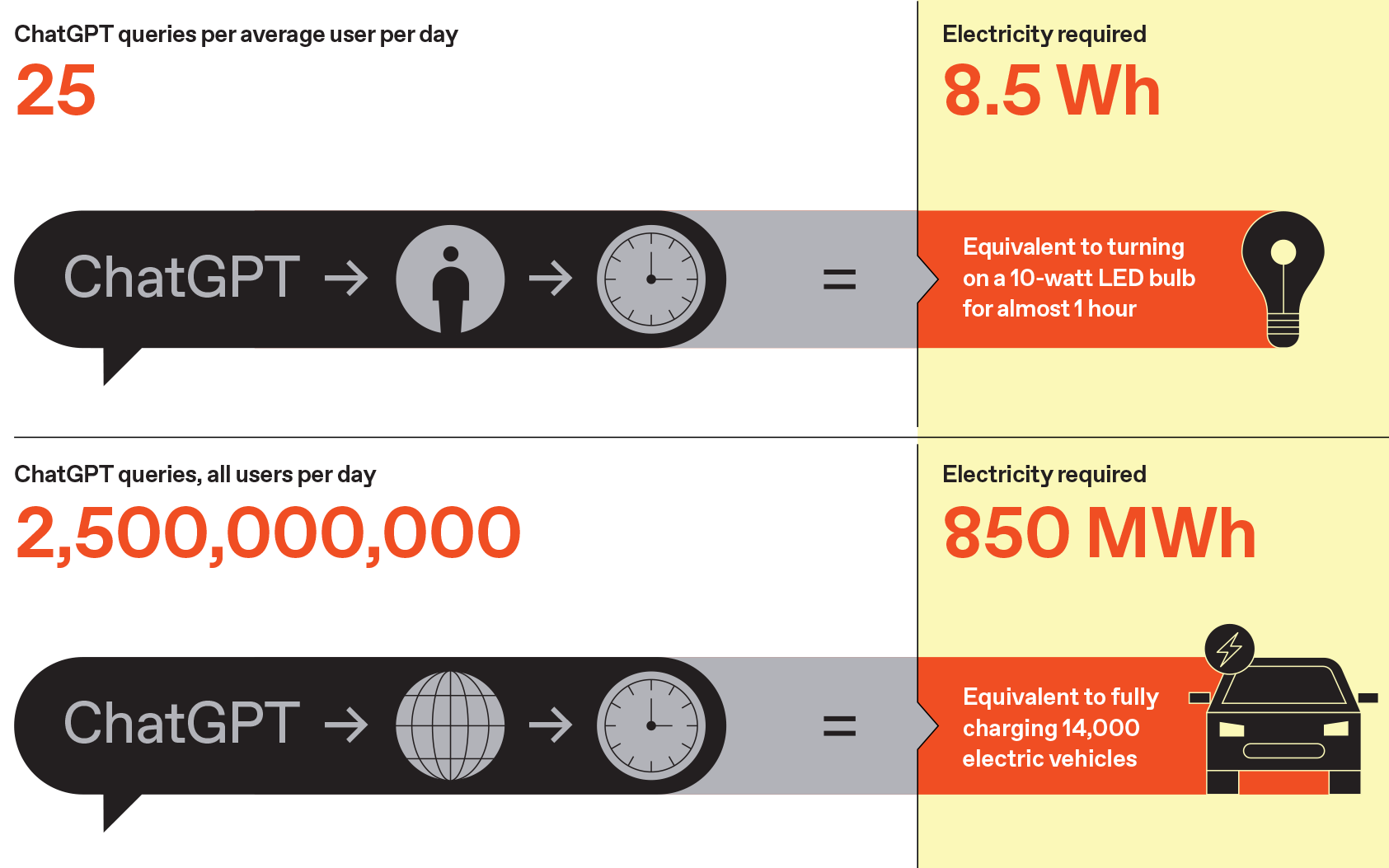
The computational demands of generative AI models are substantial, necessitating massive data center infrastructure to support them. To meet this demand, companies like OpenAI are investing heavily in expanding their data center capabilities. As part of the United States’ Stargate Project, AI leaders are collaborating to construct colossal data centers specifically designed for intensive AI workloads. Furthermore, estimates suggest that ChatGPT alone consumes approximately 850 MWh daily—a staggering amount of energy equivalent to powering around 14,000 electric vehicle charges. With annual query volumes already reaching 912 billion and projected to increase exponentially, the yearly AI energy use totals a significant 310 GWh, enough to supply roughly 29,000 US homes.

Projected Growth and Resource Implications
Looking ahead, the trend points towards accelerated growth in AI usage. Projections estimate generative AI queries could reach an astounding 120 trillion annually by 2030. Consequently, annual energy consumption is anticipated to surge to 15 TWh—the equivalent output of two nuclear reactors. To meet this demand, it’s been estimated that approximately 44 nuclear reactors or a total of 347 TWh would be required, highlighting the scale of the challenge associated with AI energy use.
Strategies for Mitigating Energy Consumption
The escalating power demands of generative AI present a significant sustainability hurdle. Fortunately, several avenues exist to mitigate these concerns and promote responsible innovation. Optimizing algorithms for greater efficiency is paramount, alongside improvements in hardware design specifically tailored for AI workloads. Moreover, transitioning to renewable energy sources will be critical to reducing the carbon footprint associated with AI energy use. For example, exploring techniques like model pruning and quantization can significantly reduce computational requirements.
Hardware Optimization and Efficient Algorithms
Developing specialized hardware accelerators designed for AI computations offers a promising path towards greater efficiency. These dedicated processors can perform complex calculations much faster than general-purpose CPUs, reducing energy consumption per query. Additionally, research into novel algorithmic approaches that require fewer computational resources is vital. For instance, exploring sparse neural networks and knowledge distillation techniques could lead to substantial improvements in overall efficiency.
Renewable Energy Integration
Powering data centers with renewable energy sources, such as solar and wind power, can dramatically reduce the environmental impact of AI energy use. Many AI companies are already investing in renewable energy credits and exploring on-site generation options to minimize their reliance on fossil fuels. However, ensuring a consistent supply of clean energy remains a challenge that requires further innovation and investment.
Conclusion: A Sustainable Future for Generative AI
The rapid advancement of generative AI presents both immense opportunities and significant challenges related to sustainability. Addressing the escalating AI energy use through optimized algorithms, efficient hardware, and renewable energy integration is crucial for ensuring a responsible and viable future for this transformative technology. Continued collaboration between researchers, policymakers, and industry leaders will be essential in navigating these complexities and fostering a sustainable AI ecosystem.
Source: Read the original article here.
Discover more from ByteTrending
Subscribe to get the latest posts sent to your email.